Organization Info
FITASC
Fédération Internationale de Tir aux Armes Sportives de Chasse

| Overview | |
|---|---|
Founded | 1921 |
Headquarters | Paris, France |
Disciplines | sporting clays, compak sporting, helice, trap, universal trench, combined game shooting |
Membership | |
Cost | Individual membership through national federation (e.g., NSCA in the U.S.); no direct FITASC individual membership |
Links | |
| www.fitasc.com | |
Federation Internationale de Tir aux Armes Sportives de Chasse (FITASC)
Reference article
From The Boise Gun Club Handbook
The Fédération Internationale de Tir aux Armes Sportives de Chasse (FITASC) is the Paris-based international governing body for a family of clay target and field shooting disciplines, most notably FITASC Sporting — a format that serious sporting clays shooters either love or find intimidating the first time they encounter it. The name translates roughly to "International Federation for Shooting with Sporting Hunting Weapons," which tells you something about the organization's roots: this started as a federation tied to hunting tradition, not Olympic sport.
FITASC is headquartered at 10 Rue Mederic, 75017 Paris, France, and its current president is Jean François Palinkas.
History & Foundingedit
FITASC was founded on June 4, 1921, making it one of the longest-running international shooting sport federations still in operation — over a century of clay target governance from the same city. Its origins were intertwined with the broader European tradition of shooting sports tied to hunting culture, at a time when the distinction between "hunting sport" and "Olympic shooting" was still being worked out internationally.
Key milestones in FITASC's century-long development from hunting federation to international clay target authority
Early Years (1921-1987)
For decades, FITASC operated in a world where shotgun sports had at least a plausible path to Olympic inclusion. That door closed when the International Olympic Committee removed hunting-style shotgun disciplines from the Olympic program — a decision that fundamentally shaped what FITASC would become.
Rather than chasing Olympic relevance, FITASC doubled down on its own championships and formats, building a structure parallel to the IOC-affiliated shooting world rather than subordinate to it.
The format itself evolved significantly over the decades. What shooters now call Old Style FITASC used a single shooting ring with four positions — a squad of six shooters rotating through, one parcour at a time, maximum 288 competitors at a World Championship. That worked fine until the sport outgrew it.
By the mid-1980s, events were filling up and turning people away.
| System | Era | Shooting Layout | Max Competitors | Key Features |
|---|---|---|---|---|
| Old Style | 1921-1987 | Single ring, 4 positions | 288 | Squad rotation, one parcour |
| New System | 1988-1999 | Linear layout, 4 stands | ~960 | Independent stands, golf-course style |
| Current System | 2000-present | Linear layout, 5 stands | 1,200+ | Fifth stand added at Durby 2000 |
The New System Revolution
The fix came from an unlikely direction. Field and Game Federation of Australia, hosting the 1988 World Championships in Geelong, proposed what became the "New System" — a linear layout where each of four or five shooting stands operates independently, like holes on a golf course.
Ray McFarlane traveled to La Rabot shooting ground in France to demonstrate the concept to FITASC leadership. They trialed it at the 1988 Worlds, it worked, and they adopted it permanently. By 2000, at the World Championships in Durby, Belgium, a fifth stand was added to parcours. The New System can now accommodate upward of 1,200 competitors at a single event — a fourfold increase over the old cap.
Modern Developments
Compak Sporting was introduced as a separate discipline in 1992, designed to bring FITASC-style shooting to venues that don't have the acreage for full sporting layouts.
Mission & Purposeedit
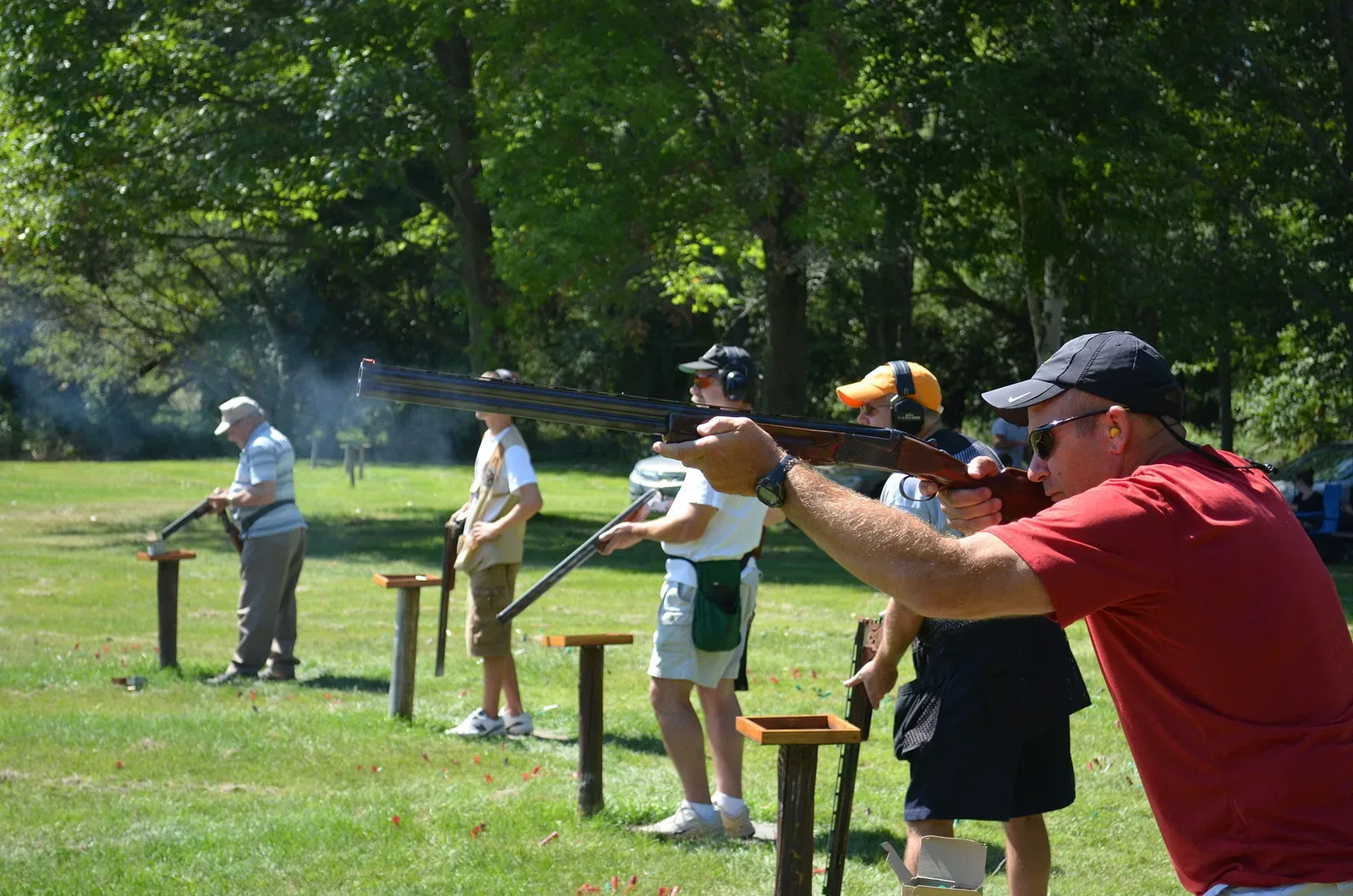
FITASC exists to accomplish several core functions:
- Set and maintain international rules for FITASC disciplines
- Sanction World and European Championships
- Coordinate national member federations
- Control the official rulebook and championship calendar
It does not run day-to-day club shooting — that's left to national bodies. What it controls is the rulebook and the championship calendar.
The federation's stated philosophy is participation: keeping competitions open to as many registered shooters as possible, which is part of what drove the New System adoption. That's not just altruism — more competitors means more affiliated national federations, more registration fees, and a healthier international calendar.
FITASC also holds authority over discipline development, meaning any formal changes to how FITASC Sporting is shot at the international level flow through Paris. National federations can run their own variations, but anything called an official FITASC event has to follow the federation's rules.
Programs & Competitionsedit
Championship Structure
FITASC sanctions World Championships and European Championships across its disciplines. The European Championship of Universal Trench, for example, reached its 47th edition in 2019 — held in Maribor, Slovenia — which gives you a sense of how long these events have been running.
The Six Disciplines
| Discipline | Description | Venue Requirements | Target Type |
|---|---|---|---|
| FITASC Sporting | Strategic trap placement simulating game | Large acreage parcour | Clay targets |
| Compak Sporting | Condensed sporting format | Small ranges | Clay targets |
| Helice (ZZ) | Live pigeon simulation | Specialized layout | Propeller-driven plastic |
| Universal Trench | Rotating trench format | Trench installation | Clay targets |
| Trap | Traditional trap shooting | Standard trap field | Clay targets |
| Combined Game | Mixed discipline format | Variable | Mixed |
FITASC Sporting Rules
For American shooters, the one that matters most is FITASC Sporting. The rules differ from standard NSCA sporting clays in ways that matter at the line. Gun must be mounted below the armpit ("gun-down" or "gun low") until the target is visible. You load one shell for singles, call for the bird, and you have a second shell available if you miss.
Doubles get two shells total. The menu card at each stand tells you the exact sequence — which trap, in what order — so there's no mystery about what's coming, but the targets themselves can be brutal.
FITASC Sporting shooting sequence showing the gun-down rule and menu-driven target presentation
The parcour format rewards consistency across a long sequence in a way that a single-station stand doesn't fully replicate.
Membership & Benefitsedit
FITASC does not have individual shooter memberships in the way NSCA does. The federation is structured around national member federations — organizations like the National Sporting Clays Association (NSCA) in the United States affiliate with FITASC, and their members participate in FITASC-sanctioned events through that national body.
To shoot a FITASC-sanctioned event in the U.S., you typically need a current NSCA membership. The cost and structure of that membership is governed by NSCA, not FITASC directly. If you're in another country, your national federation handles the same function.
For shooters who compete at the international level, FITASC membership through a national body is the only path to World and European Championship eligibility. For club-level shooters who enjoy FITASC-format events at their local range, the affiliation is largely invisible — you show up, you're NSCA-current, you shoot.
Notable Achievementsedit
Gebben Miles, an American professional clay target shooter, won the 2012 FITASC World Championship — one of the more prominent U.S. victories at the international level in the discipline.
The 1988 adoption of the New System parcour format stands as the federation's most consequential operational decision in decades. It's the reason FITASC Worlds can draw a field of over a thousand shooters rather than a few hundred.
FITASC's Helice World and European Championships have run continuously for decades, maintaining one of the only organized international competitive structures for that unusual discipline — one that most American shooters have never encountered.
| Achievement | Year | Significance |
|---|---|---|
| Founded | 1921 | One of longest-running international shooting federations |
| New System Adoption | 1988 | Increased capacity from 288 to 1,200+ competitors |
| Fifth Stand Addition | 2000 | Further capacity expansion at Durby, Belgium |
| Gebben Miles Victory | 2012 | Prominent U.S. World Championship win |
| ISSF Joint Action | 2023 | Coordinated response to EU lead restrictions |
The federation's longevity itself is notable. Surviving a century, two world wars, the exclusion of its disciplines from the Olympics, and ongoing regulatory pressure around lead ammunition represents institutional staying power that most sports organizations don't achieve.
Structure & Governanceedit
FITASC operates as an international federation with national member bodies doing the on-the-ground work in each country. The federation is led by a President — currently Jean François Palinkas — and governed by a structure of member federation representatives.
Decisions on rule changes, championship formats, and discipline additions flow through the federation's governing body, with national federations having representation in that process. The exact voting structure and weight of representation by country is not extensively documented in publicly available English-language sources.
FITASC's hierarchical structure from Paris headquarters through national federations to individual shooters
The federation publishes official rules for each discipline, maintains an international championship calendar, and produces official results. Its website (fitasc.com) serves as the central repository for current rules, competition calendars, and results — though navigating it in English requires some patience, as French remains the dominant working language of the organization.
Relationship to Other Organizationsedit
U.S. Partnership with NSSA-NSCA
In the United States, NSSA-NSCA (National Skeet Shooting Association / National Sporting Clays Association) is FITASC's recognized national federation. NSCA's rulebook explicitly acknowledges this relationship, and NSCA-sanctioned FITASC events follow FITASC's international rules under that affiliation.
| Country | National Federation | Status | Notes |
|---|---|---|---|
| United States | NSSA-NSCA | Active member | Primary pathway for U.S. shooters |
| Australia | Field and Game Federation | Active member | Originated New System format |
| South Africa | Various federations | Active member | Strong Compak Sporting scene |
| Europe | Multiple federations | Active members | Universal Trench and Helice stronghold |
Separation from Olympic Shooting
FITASC operates separately from the International Shooting Sport Federation (ISSF), which governs Olympic shooting disciplines. The two organizations are not competitors in any practical sense — they cover different disciplines with minimal overlap — but they do coordinate on regulatory issues. In 2023, FITASC and ISSF submitted a joint letter to the European Commission regarding ECHA's (European Chemicals Agency) proposal to restrict lead shot use in clay target sport, representing a shared interest in pushing back on ammunition regulations that would affect both organizations' disciplines.
That lead shot issue is a live challenge for FITASC, particularly for its European member federations. The regulatory pressure is real and ongoing, and it creates compliance questions for ranges and competitors across multiple disciplines.
International Federation Network
FITASC also has relationships with national federations in Australia (where the New System originated), South Africa (which has an active Compak Sporting scene), and across Europe, where Universal Trench and Helice have deeper roots than they do in North America.
The BGC Takeedit
If you're an American shooter asking whether FITASC matters to you, the honest answer is: it depends entirely on what you want to do.
For the Casual Shooter
If you shoot NSCA sporting clays at your local club and occasionally travel to registered shoots, FITASC is mostly background noise. You might shoot a FITASC-format event at a club that offers it, and you'll notice the gun-down rule and the menu card immediately. It's a different experience — tighter, more deliberate, less forgiving — and a lot of serious sporting clays shooters genuinely prefer it.
But the organizational layer above it doesn't affect you.
For the Serious Competitor
If you want to compete at the international level — World Championships, European Championships, or serious national FITASC events — then the federation's structure matters because it defines the path. You need NSCA membership, you need to be shooting under FITASC rules, and you need to be paying attention to the international calendar.
Format Assessment
The format itself has real merit:
- Gun-down rule eliminates premounting variables
- Squad rotation adds different competitive pressure
- Menu system requires better target reading skills
- Less room to muscle through with aggressive timing
Shooters who take it seriously tend to get better at the fundamentals faster, because there's less room to muscle through with a premounted gun and aggressive timing.
Organizational Critique
The organizational criticism that's fair to make: FITASC is a French-headquartered international body, and like most such bodies, it moves slowly, documents things primarily in French, and is not especially transparent about internal governance to outside observers. The website is functional but not exactly a model of accessibility for English-speaking shooters trying to find current championship information.
The lead ammunition issue in Europe is a genuine long-term threat to the organization's discipline portfolio. If ECHA restrictions move forward in the way they've been proposed, it creates compliance burdens that smaller national federations may struggle to navigate, and it puts venues in a difficult position. FITASC and ISSF are pushing back jointly, which is the right move, but the regulatory trajectory in the EU is not favorable.
Most people who try FITASC seriously either walk away unimpressed or become regulars — there's not much middle ground.
For American shooters: join NSCA, find a club that runs FITASC-format events, and shoot a few. Whether you seek out FITASC-sanctioned competitions after that depends on how hooked you get on the format.
Referencesedit
- FITASC Official Website. History. https://www.fitasc.com/en/organization/history/fitasc-history
- FITASC. History of the FITASC (PDF). https://www.fitasc.com/history/pdf/1992_03_01_History_Fitasc_ENG.pdf
- FITASC. The History of the FITASC Clay Target and Helice Shooting Disciplines (PDF). https://www.fitasc.com/history/20210209_ENG_Historique_1921_2017.pdf
- Wikipedia. Fédération Internationale de Tir aux Armes Sportives de Chasse. https://en.wikipedia.org/wiki/F%C3%A9d%C3%A9ration_Internationale_de_Tir_aux_Armes_Sportives_de_Chasse
- Sporting Clays Australia. FITASC. https://sportingclaysaustralia.com.au/about-us/fitasc/
- NSSA-NSCA. 2017 NSCA Rulebook (PDF). https://nsca.nssa-nsca.org/wp-content/uploads/sites/7/2017/10/2017_RULEBOOK_NSCAInteractive.pdf
- Compak SA. History. https://web.archive.org/web/20240803223241/https://compaksa.co.za/history.php
- ISSF / FITASC. Joint Letter to European Commission re: Lead Restriction (PDF). https://backoffice.issf-sports.org/getfile.aspx?mod=docf&pane=1&inst=477&file=20230901_joint_letter_issf_fitasc_to_european_commission.pdf
Last Updated: February 24, 2026
- Quail Creek Plantation(Okeechobee, FL)
- 2aHawaii(Honolulu, HI)
- Boston Firearms(Everett, MA)
- Safeshoot(Kingston, NY)
Loading comments...