Organization Info
MSW
MilSim West

| Overview | |
|---|---|
Founded | 2012 |
Headquarters | Western United States (exact location not publicly listed) |
Disciplines | airsoft |
Membership | |
Cost | No membership model — per-event ticket pricing |
Links | |
| milsimwest.com | |
MilSim West (MSW)
Reference article
From The Boise Gun Club Handbook
MilSim West (MSW) is a veteran-owned airsoft event production company founded in 2012 and based in the western United States. The organization runs large-scale, multi-day military simulation events — typically 40 hours of continuous play — built around a fictional but plausible near-future NATO versus Russia conflict narrative. MSW events sit at the serious end of the airsoft spectrum: they require functional military-style kit, enforce a formal chain of command, and place real veterans in leadership roles over civilian participants.
History & Foundingedit
Origins and Military Background
MSW was founded in 2012 by a group of friends who wanted something that didn't exist at the time in the American airsoft scene — a milsim event that took the simulation part seriously. The founders, who came from military backgrounds, saw a gap between casual airsoft games dressed up with military terminology and an actual structured, immersive experience that replicated the physical and organizational demands of light infantry operations.
The core idea from the start was to embed current and prior-service military members directly into the participant chain of command — not just as referees or safety officers, but as actual leaders players would report to and take orders from. That structural choice is what separates MSW from most airsoft events and is still the defining feature of the organization more than a decade later.
Campaign Universe Development
The fictional campaign setting MSW built — a sprawling NATO-Russia conflict playing out across the Caucasus, Central Asia, and southern Russia — gave the organization a consistent narrative universe to run events within. Early events included battles set in Dagestan, Chechnya, and Volgograd. Over time, the campaign expanded to include Kazakhstan, the Rostov region, the Caspian coast, and multiple multi-part story arcs that carried continuity between events.
Timeline showing the expansion of MSW's fictional campaign setting from 2012-2018
Mission & Purposeedit
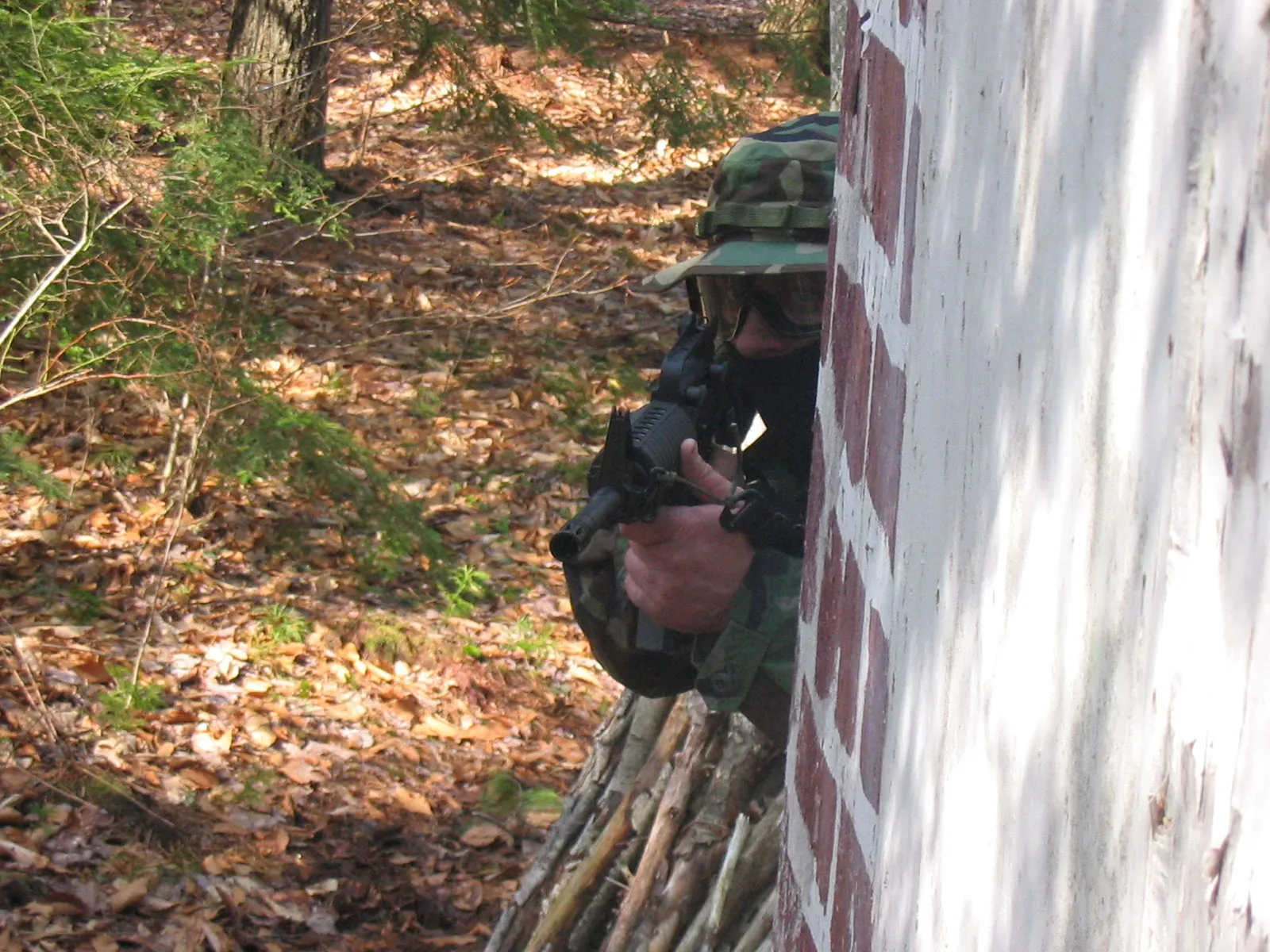
MSW describes itself as a military simulation production company. The operational goal is to give participants an experience that mirrors, as closely as an airsoft platform allows, the physical and organizational experience of light infantry combat operations.
That means 40 hours of continuous play with no scheduled breaks in the game. It means sleeping in the field, managing your own water and food resupply, receiving mission orders through an actual military command structure, and being held accountable to a Tactical Standard Operating Procedure (TACSOP) that governs everything from weapon requirements to player conduct to rules of engagement.
The veteran cadre integration isn't a marketing angle — it shapes how the event actually runs. Players aren't just showing up to shoot BBs at strangers.
The veteran cadre integration isn't a marketing angle — it shapes how the event actually runs. Players aren't just showing up to shoot BBs at strangers. They're slotted into squads, platoons, and companies with real leadership above them who know what they're doing. Whether that's something you want is a different question, but that's what you're getting.
Programs & Competitionsedit
MSW doesn't run competitions in the traditional sense — there are no divisions, brackets, or trophies. Events are structured as tactical scenarios with objectives, and outcomes are determined by how well each faction executes its mission during the event window.
Campaign Structure
The Campaign Setting is the connective tissue that makes individual events feel like more than one-off games. The fictional NATO-Russia conflict has played out in a serialized format since the early events, with each operation carrying consequences into the next. Events like Defense of Grozny, Clash on the Steppes, The Kazakh Insurgency, and The Caspian Breakout built on each other as chapters in a longer campaign arc.
| Notable Operations | Year | Setting | Key Features |
|---|---|---|---|
| Defense of Grozny | 2013-2014 | Chechnya | Urban combat scenarios |
| Clash on the Steppes | 2015 | Central Asia | Open terrain warfare |
| The Kazakh Insurgency | 2016 | Kazakhstan | Three-faction gameplay |
| The Caspian Breakout | 2017-2018 | Caspian coast | Multi-part story arc |
Faction Requirements
Playable Factions have historically included:
- NATO Forces — typically representing U.S.-backed conventional military units
- RUSFOR (Russian Forces) — Russian military and associated units
- Militia — irregular forces, introduced as a distinct faction to add asymmetric gameplay
- Kazakh Civilians — introduced during The Kazakh Insurgency as a third playable faction
| Faction | Typical Role | Kit Requirements | Leadership Structure |
|---|---|---|---|
| NATO Forces | Conventional military units | U.S./NATO standard gear | Military chain of command |
| RUSFOR | Russian military units | Russian/Eastern Bloc gear | Russian military structure |
| Militia | Irregular forces | Mixed military surplus | Loose command structure |
| Kazakh Civilians | Non-combatant influence | Civilian clothing | Civilian leadership |
Each faction has specific uniform and kit requirements outlined in the TACSOP. You don't show up in whatever you own — you show up in the right kit for your faction or you don't play.
Event Operations
Event Cadence has varied over the years, but MSW has historically run multiple events annually spread across spring, summer, and fall, with locations ranging across Washington State, Pennsylvania, and other sites depending on the year. Events are announced and ticketed individually rather than through a season pass or membership.
Membership & Benefitsedit
Participation Model
MSW doesn't operate a traditional membership program. You buy a ticket to a specific event, you attend, and that's the transaction. There's no annual membership fee, no card in your wallet, and no member number.
The TACSOP is publicly available on the MSW website and is the primary document governing participation. Reading it before your first event isn't optional — it covers weapons requirements, velocity limits, safety rules, chain of command structure, and conduct expectations in enough detail that showing up uninformed is a choice, not an accident.
Community Development
The community that builds up around repeat attendance is real. People who run multiple MSW events tend to find their people — other participants who are serious about the simulation, invest in accurate kit, and understand the organizational structure. That social layer has value for participants who stick around, even without a formal membership framework to hang it on.
Notable Achievementsedit
MSW carved out a specific niche in American airsoft that wasn't well-served before they existed. The 40-hour continuous format was not standard practice in the U.S. airsoft scene in 2012, and the veteran cadre integration model was unusual enough that it drew attention from both the airsoft community and people adjacent to it — military veterans curious about what civilian simulation looked like at its more serious end.
The multi-year campaign narrative is worth noting as an organizational accomplishment. Running a serialized fictional conflict across dozens of events over more than a decade, with continuity maintained between operations, requires organizational consistency that most event producers don't sustain. The archive of past operations on the MSW website documents that continuity clearly.
The introduction of a third playable civilian faction during The Kazakh Insurgency in 2016 was a design choice that pushed scenario complexity beyond what most airsoft events attempt — adding an influence and population layer that reflected actual counterinsurgency dynamics rather than just two sides shooting at each other.
Structure & Governanceedit
MSW is a private company, not a nonprofit association or member-governed organization. Decisions about events, rules, and direction come from the ownership and the cadre team, not from a board elected by participants.
MSW command structure showing integration of veteran cadre into participant chain of command
Command Structure
The cadre — current and prior-service military members who integrate into the player chain of command — are the functional leadership layer at events. They slot into command positions above participant leaders and run the operational structure. This is the mechanism that gives MSW events their distinctive feel and also the source of most friction for participants who come expecting to run their own show.
Regulatory Framework
The TACSOP is the primary governance document for event conduct. It has gone through multiple revisions over the years, with versioning tracked in the document header. The TACSOP covers weapons, equipment, conduct, chain of command, and the rules framework — it's a functional document, not a PR piece.
| TACSOP Coverage Areas | Details | Enforcement Level |
|---|---|---|
| Weapons Requirements | Velocity limits, approved models | Mandatory chronograph |
| Equipment Standards | Faction-specific kit lists | Pre-game inspection |
| Chain of Command | Rank structure, reporting | Enforced by cadre |
| Rules of Engagement | Engagement distances, safety | Zero tolerance policy |
| Conduct Expectations | Player behavior, immersion | Ejection for violations |
Relationship to Other Organizationsedit
MSW operates independently and isn't affiliated with USA Airsoft, ASTM International airsoft standards bodies, or any national governing organization for the sport. Airsoft in the United States lacks the kind of centralized governance structure that organizations like USA Shooting provide for Olympic shooting disciplines, so independent event producers like MSW exist entirely outside any sanctioning framework.
Within the airsoft community, MSW is positioned at the milsim end of the spectrum — distinct from recreational skirmish fields, speedsoft competitions, and casual backyard games. The comparison point most players use is Operation Irene and similar large-scale scenario events, though MSW's veteran cadre integration and continuous-play format remain distinguishing characteristics.
The broader milsim event market includes producers running similar formats, and the term "milsim" itself is used loosely enough across airsoft, paintball, and gaming marketing that MSW's positioning as a serious simulation operation gets diluted by association. This is a genuine source of tension in community discussions — participants who've attended MSW events frequently push back on casual use of "milsim" to describe experiences with significantly lower organizational rigor.
The BGC Takeedit
MSW is a specific product for a specific kind of person. If you've been playing airsoft for years, you have functional kit that meets their standards, and you've ever wanted to know what it feels like to operate inside an actual chain of command for 40 continuous hours — this is probably worth doing at least once. The veteran cadre integration is real, not decorative, and the continuous-play format changes how you think about logistics, rest, and mission planning in ways that a Saturday skirmish never will.
Read the TACSOP before you buy a ticket. If the document sounds like something you want to live inside for 40 hours, you'll probably love it. If it sounds like homework, you probably won't.
If you're newer to airsoft, don't have faction-appropriate kit, or you're the kind of person who chafes at being told what to do by someone you didn't choose — MSW is going to be a miserable weekend. That's not a criticism of either the event or the participant. It's just a mismatch.
Read the TACSOP before you buy a ticket. If the document sounds like something you want to live inside for 40 hours, you'll probably love it. If it sounds like homework, you probably won't.
The ticket-based model means you're not locked into anything. One event tells you everything you need to know. The community of repeat attendees tends to be people who got it and came back — which is a reasonable signal about what the experience delivers for the right person.
The lack of a formal membership structure means there's no easy on-ramp for staying connected between events outside of social media and the website. That's a real gap if you're trying to build relationships in the community or track upcoming events without actively monitoring their channels.
Worth it for the right person. Not for everyone. That's not a hedge — that's actually the honest answer.
Referencesedit
- MilSim West official website: https://milsimwest.com
- MSW Events Archive: http://www.milsimwest.com/archive
- MSW TACSOP (current version): https://milsimwest.squarespace.com/s/MSW-TACSOP-34.pdf
- Reddit r/MilSim community discussion threads
- Reddit r/tacticalgear first-attendee field reports
Last Updated: February 24, 2026
- Quail Creek Plantation(Okeechobee, FL)
- 2aHawaii(Honolulu, HI)
- Boston Firearms(Everett, MA)
- Safeshoot(Kingston, NY)
Loading comments...