Organization Info
SAAMI
Sporting Arms and Ammunition Manufacturers' Institute

| Overview | |
|---|---|
Founded | 1926 |
Headquarters | Shelton, CT |
Disciplines | multiple shooting sports |
Membership | |
Cost | Not publicly disclosed; commercial manufacturer membership |
Links | |
| saami.org | |
Sporting Arms and Ammunition Manufacturers' Institute (SAAMI)
Reference article
From The Boise Gun Club Handbook
The Sporting Arms and Ammunition Manufacturers' Institute (SAAMI, pronounced "Sammy") is an association of American manufacturers of firearms, ammunition, and components, headquartered in Shelton, Connecticut. SAAMI functions as an accredited standards development organization under the American National Standards Institute (ANSI), publishing the voluntary technical standards that govern chamber dimensions, pressure limits, velocity benchmarks, and safety testing procedures for commercial firearms and ammunition in the United States. If your ammunition feeds, fires, and doesn't blow up your gun, SAAMI's standards are part of the reason why.
History & Foundingedit
World War I Origins
SAAMI's roots trace to 1913 and a World War I-era body called the Society of American Manufacturers of Small Arms and Ammunition (SAMSAA), which the U.S. War Department encouraged into existence to get American factories sharing technical data. The goal was basic interoperability -- military arms accepting ammunition from a mix of civilian manufacturers and government contractors, which had not always been the case.
SAMSAA did its job during the war and quietly lapsed in the early 1920s.
Key milestones in SAAMI's organizational development
The Great Simplification
By the mid-1920s, the problems it had solved were coming back in a new form. Smokeless powder had replaced black powder in virtually all sporting ammunition, and the shooting public didn't fully understand the performance difference. Warehouses were stacked with over 4,000 different shotshell loads and 350 centerfire rifle and pistol loads -- many of them redundant, obsolete, or nearly identical under different names.
Meanwhile, the U.S. Department of Commerce was pressing Congress about strategic material shortages of brass, copper, and lead that had never fully recovered from WWI.
In 1925, Congress -- acting through the Commerce Department -- asked the industry to revive something like SAMSAA. In January 1926, representatives of all smokeless powder producers, every major ammunition manufacturer, and most major firearms makers met and formally founded the Sporting Arms and Ammunition Manufacturers' Institute. The first order of business was a mass culling of redundant product: by the time they were done, shotshell load variety had been reduced by 95 percent and metallic cartridge loads by 70 percent.
| Year | Event | Impact |
|---|---|---|
| 1913 | SAMSAA founded | Military-civilian interoperability during WWI |
| 1926 | SAAMI established | 95% reduction in shotshell loads, 70% in centerfire |
| 1928 | Funded Leopold wildlife surveys | Foundation of modern wildlife management |
| 1937 | Pittman-Robertson Act coalition | Billions in conservation funding via excise tax |
| 1961 | Created NSSF | Separated promotion from technical standards |
| 1970s | ANSI accreditation | Transition from CUP to PSI pressure measurement |
| 2005 | UN ECOSOC NGO status | International regulatory participation |
Conservation Leadership
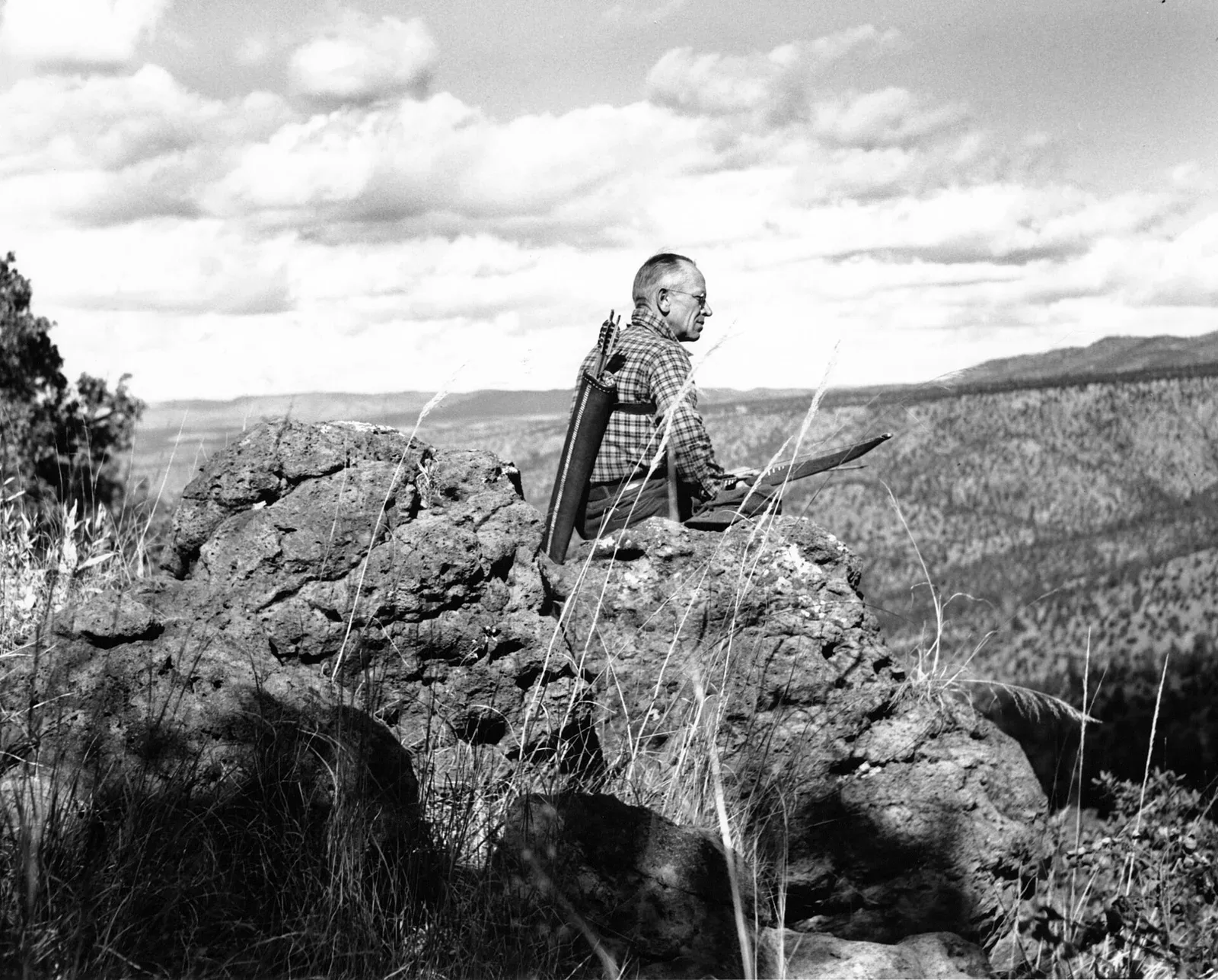
The organization's early decades extended well beyond product standards. In 1928, SAAMI funded wildlife surveys conducted by Aldo Leopold across nine Midwestern states -- work that directly shaped Leopold's landmark 1933 textbook Game Management and established the foundation of modern wildlife management through regulated sport hunting.
SAAMI also financially supported the Clinton Game School in New Jersey from 1931 through 1935, which trained 145 of the first professionally educated wildlife management employees at federal and state agencies.
In 1937, SAAMI's executive committee played a direct role in building the political coalition that passed the Pittman-Robertson Federal Aid in Wildlife Restoration Act -- the legislation that redirected an existing 11 percent excise tax on firearms and ammunition away from the general fund and into dedicated wildlife restoration. That money has funded conservation and hunter education programs ever since.
During the 1940s, SAAMI began publishing firearms safety literature, including "The Ten Commandments of Safety" -- a document that has been distributed by manufacturers and organizations in the millions of copies. Fatal firearm accidents have declined dramatically in the decades since, though attributing that entirely to any single publication would be a stretch.
In 1961, recognizing that its technical mission and a public education mission were pulling in different directions, SAAMI established the National Shooting Sports Foundation (NSSF) as an independent organization. The separation was deliberate -- SAAMI stayed in its lane as the technical standards body while NSSF took on promotion, public education, and what eventually became the SHOT Show.
Technical Modernization
The 1970s brought significant technical modernization. SAAMI became an accredited ANSI standards developer and began transitioning the industry away from the decades-old copper crusher unit (CUP) chamber pressure measurement system toward the more precise piezoelectric transducer (PSI) system. The five American National Standards that SAAMI publishes today were first developed during this period and have been revised or reaffirmed through the ANSI consensus process multiple times since.
In the 1980s, SAAMI conducted extensive testing on how sporting ammunition behaves in transportation accidents and submitted that empirical data to the U.S. Department of Transportation in support of classifying ammunition under the ORM-D shipping designation -- which enabled tens of millions of cost-effective small-package shipments. SAAMI also produced the first edition of Sporting Ammunition and the Fire Fighter, a video resource for fire departments dealing with the reality of structure fires involving stored ammunition.
International Recognition
By 2005, SAAMI had achieved UN Economic and Social Council (ECOSOC) Non-Governmental Organization (NGO) Consultative Status, giving it a seat at the table for international regulatory discussions. In the mid-2000s, SAAMI launched a harmonization partnership with the Commission Internationale Permanente pour l'Épreuve des Armes à Feu Portatives (C.I.P.) -- the European proof house standards body -- to reduce conflicts between the two systems. In 2012, SAAMI led the effort at the UN to modify the Limited Quantities (LQ) classification for 1.4S items, effectively replacing the ORM-D classification that was being phased out and extending similar shipping provisions internationally.
Mission & Purposeedit
SAAMI's stated mission is to create and publish voluntary technical, performance, and safety standards for firearms, ammunition, and their components -- and to provide science-based information to regulators, emergency responders, and the public on the safe transportation, storage, and use of those products.
The core of that mission is the standards work. When a manufacturer chambers a rifle in .308 Winchester or loads a box of 9mm, SAAMI's published specifications define the acceptable pressure limits, dimensional tolerances, and velocity parameters that determine whether that product is safe to use in any SAAMI-compliant firearm.
These are voluntary standards -- no federal law mandates compliance -- but the practical reality is that any manufacturer selling into the U.S. commercial market follows them.
Departing from SAAMI specs on a commercial product is a liability and a reputational problem that no serious manufacturer wants.
How SAAMI standards ensure ammunition-firearm compatibility
Beyond the technical work, SAAMI participates in domestic and international regulatory processes, monitors product liability law, provides technical resources to public policymakers, and serves as a technical reference for the UN and international standards bodies.
Programs & Competitionsedit
SAAMI does not run shooting competitions or public-facing programs in the way that organizations like the NRA or USA Shooting do. Its work is almost entirely technical, regulatory, and standards-based.
Committee Structure
The substantive work happens through its committee structure. The substantive work is organized through:
- Joint Technical Committee (JTC) - develops American National Standards
- SAAMI Logistics and Regulatory Affairs Committee (SLARAC) - tracks transportation regulations
- Legal and Legislative Affairs Committee - monitors product liability
- International Affairs Committee - tracks global regulatory developments
The Joint Technical Committee (JTC) is divided into Ammunition, Firearms, and Muzzleloader sections, develops and maintains SAAMI's American National Standards, publishes technical advisories and FAQs, and coordinates with C.I.P. on harmonization. The SAAMI Logistics and Regulatory Affairs Committee (SLARAC) tracks transportation and storage regulation changes domestically and internationally, and participates in UN committees on dangerous goods transport and chemical classification. The Legal and Legislative Affairs Committee monitors product liability developments and provides technical input to policymakers. The International Affairs Committee tracks international regulatory developments affecting members.
Public Resources
On the public-facing side, SAAMI's website provides free access to:
- Free cartridge and chamber drawings
- Interchangeability tables
- Pressure and velocity data
- Industry terminology glossary
- Sporting Ammunition and the Fire Fighter video resources
These are genuinely useful references -- the cartridge drawings in particular are the standard reference that gunsmiths, manufacturers, and reloaders consult when they need hard dimensional data.
Membership & Benefitsedit
SAAMI membership is not open to individual shooters, collectors, or enthusiasts. Membership is limited to commercial manufacturers of firearms, ammunition, and components. Member companies gain access to the standards development process -- meaning they can participate in the committees that write and revise the specifications their products are built to -- and receive updates on regulatory changes affecting transportation, storage, and manufacturing.
For the average shooter, SAAMI is relevant not as a membership organization but as the source of the standards that make your gear work. The free technical resources on the SAAMI website -- cartridge specs, chamber drawings, interchangeability guidance -- are accessible to anyone.
Notable Achievementsedit
Early Standardization Success
The 1926 product simplification program stands out as an early and concrete win: cutting the shotshell market from over 4,000 loads down by 95 percent, and reducing centerfire metallic cartridge offerings by 70 percent, addressed a real supply chain and safety problem in a short time.
Conservation Impact
Funding Aldo Leopold's 1928 wildlife surveys -- and underwriting publication of Game Management in 1933 -- had an impact that extended far beyond the firearms industry. Leopold became the acknowledged intellectual father of modern wildlife management, and SAAMI's financial backing was a direct contributor to that work reaching publication.
The Pittman-Robertson Act of 1937 remains one of the most durable pieces of conservation legislation in American history. The excise tax mechanism it established has generated billions of dollars for wildlife restoration, habitat acquisition, and hunter education over the following nine decades. SAAMI's role in building the coalition that passed it is well-documented.
Technical Advances
The transition from CUP to PSI pressure measurement -- started in the 1970s and carried forward over subsequent decades -- gave the industry a more accurate and consistent way to measure and communicate chamber pressure. The difference matters: CUP readings and PSI readings for the same cartridge are not directly comparable, which created (and still creates) confusion for handloaders working from older data.
Shipping Classifications
The ORM-D classification work in the 1980s, and the subsequent LQ classification work at the UN in 2012, kept affordable direct-to-consumer ammunition shipping viable. That's not a headline achievement, but it has a real effect on how ammunition moves through commerce.
Structure & Governanceedit
SAAMI is structured as a membership association of manufacturers. Its governance runs through a board drawn from member companies, with committee-based work organizing the technical, regulatory, legal, and international functions. The organization is headquartered in Shelton, Connecticut.
As an ANSI-accredited standards developer, SAAMI's standard-setting process is subject to ANSI's consensus procedures -- meaning standards are developed through a process that requires consideration of diverse perspectives and regular reaffirmation or revision cycles.
| Standard | Year | Coverage |
|---|---|---|
| SAAMI Z299.1 | 2018 | Rimfire sporting ammunition pressure and velocity |
| SAAMI Z299.2 | 2019 | Shotshell ammunition pressure and velocity |
| SAAMI Z299.3 | 2022 | Centerfire pistol and revolver ammunition pressure and velocity |
| SAAMI Z299.4 | 2015 | Centerfire rifle ammunition pressure and velocity |
| SAAMI Z299.5 | 2016 | Criteria for evaluation of new firearms designs under abusive mishandling conditions |
Relationship to Other Organizationsedit
NSSF Partnership
SAAMI and the NSSF share a founding relationship -- SAAMI created the NSSF in 1961 specifically to separate the public promotion and education mission from the technical standards mission. The two organizations remain distinct, with overlapping membership among major manufacturers, but separate charters and functions. NSSF runs the SHOT Show, manages retailer and range programs, and handles industry advocacy on legislative and cultural fronts. SAAMI stays in the technical lane.
International Standards
SAAMI and C.I.P. are the two internationally recognized standard-setting bodies for sporting arms and ammunition. C.I.P. covers most of Europe and a number of other countries; SAAMI covers the United States market. The two systems are not identical -- there are cartridges where SAAMI and C.I.P. pressure limits differ, sometimes meaningfully -- but the harmonization partnership that began in the mid-2000s has reduced the gaps in many areas. Shooters importing European ammunition or exporting American-spec firearms into European markets encounter this difference directly.
Industry Relationships
| Organization | Relationship | Function |
|---|---|---|
| NSSF | Created by SAAMI (1961) | Public promotion, SHOT Show, advocacy |
| C.I.P. | Harmonization partner | European proof house standards |
| NRA | Separate entities | Political advocacy, training, competition |
| ANSI | Accredited developer | Standards process validation |
SAAMI and the NRA operate in entirely different spaces. The NRA is a membership organization focused on political advocacy, marksmanship training, and competitive shooting programs. SAAMI is a manufacturer trade association focused on technical standards. They are not competitors or partners in any formal sense, though their member companies and the broader shooting sports community overlap considerably.
SAAMI and ANSI: SAAMI's role as an ANSI-accredited developer is what gives its standards their formal standing. The ANSI accreditation means SAAMI's process meets specific procedural requirements for openness, balance, and consensus -- and that SAAMI standards can be designated as American National Standards rather than purely internal industry guidelines.
The BGC Takeedit
SAAMI is one of those organizations that most shooters never think about until something goes wrong -- and the reason things rarely go wrong is partly because SAAMI has been doing its job for a hundred years.
The standards work is genuinely important. The fact that you can buy ammunition made by any of a dozen manufacturers and run it through a firearm made by any of another dozen manufacturers -- and have it chamber, fire, and extract reliably -- is not an accident. It's the result of everyone building to the same dimensional and pressure specs.
SAAMI didn't invent that concept, but it has been the organization that maintains and updates those specs for the U.S. market since 1926.
For individual shooters, the most practically useful thing SAAMI offers is free: the technical data on their website. The cartridge drawings and interchangeability tables are the reference that settles arguments about what ammo is safe in what chamber. If you're a handloader, the pressure limits in SAAMI's published standards are the ceiling your load data is built around. If you're a gunsmith or armorer, the chamber drawings are the dimensional reference you need.
SAAMI is a manufacturers' trade association, and its standards reflect the interests of manufacturers. It's not a neutral consumer protection body -- it's an industry group that happens to produce safety standards.
The criticism worth acknowledging is structural: SAAMI is a manufacturers' trade association, and its standards reflect the interests of manufacturers. In most cases those interests align with shooter safety and product reliability, because liability and reputation both push that direction.
That distinction matters when evaluating SAAMI's public positions on regulatory and legislative issues, where the organization advocates for its members' commercial interests.
The Pittman-Robertson history and the Leopold funding are genuine contributions to conservation that shouldn't be dismissed, but they also shouldn't be overstated. SAAMI was a trade association acting in an era when the hunting and ammunition industries had a direct economic stake in healthy wildlife populations. The interests aligned.
That doesn't diminish the impact, but it provides context.
For a working shooter or reloader, SAAMI matters in the same way that electrical codes matter to someone wiring a house -- you don't need to think about it constantly, but the fact that it exists and is maintained by people who know what they're doing is the reason the lights come on without burning the place down.
Referencesedit
- SAAMI. "History." saami.org. https://saami.org/about-saami/history/
- SAAMI. "About SAAMI." saami.org. https://saami.org/about-saami/
- Wikipedia contributors. "Sporting Arms and Ammunition Manufacturers' Institute." Wikipedia. https://en.wikipedia.org/wiki/Sporting_Arms_and_Ammunition_Manufacturers%27_Institute
- NSSF. "NSSF History." nssf.org. https://www.nssf.org/about-us/nssf-history/
- American Handgunner. "SAAMI 90 Years and Counting." americanhandgunner.com. https://americanhandgunner.com/gear/saami-90-years-and-counting/
- United Nations. "Sporting Arms and Ammunition Manufacturers' Institute, Inc. (SAAMI)." UN Small Arms Conference, 2006. https://www.un.org/events/smallarms2006/pdf/Sporting%20Arms%20and%20Ammunition%20Manufacturers'%20Institute,%20Inc.%20(SAAMI).pdf
Last Updated: February 24, 2026
- Quail Creek Plantation(Okeechobee, FL)
- 2aHawaii(Honolulu, HI)
- Boston Firearms(Everett, MA)
- Safeshoot(Kingston, NY)
Loading comments...