Details
Smokeless Powder

Cordite in a .303 British cartridge — the British smokeless standard from 1889 onward, identifiable by its distinctive stick geometry.
| Origins | |
|---|---|
| Invented | 1884 |
| Inventor | Paul Vieille |
| Country | France |
| Timeline | |
| Era | 1880s onwards |
| Replaced By | Black powder |
| Impact | |
| Significance | Smokeless powder replaced black powder as the dominant military and sporting propellant beginning in the 1880s, producing minimal smoke and enabling modern semi-automatic and fully automatic firearms. |
Smokeless Powder: The Chemistry That Rewrote the Rules of War
Firearms encyclopedia article
From The Boise Gun Club Handbook
Overviewedit
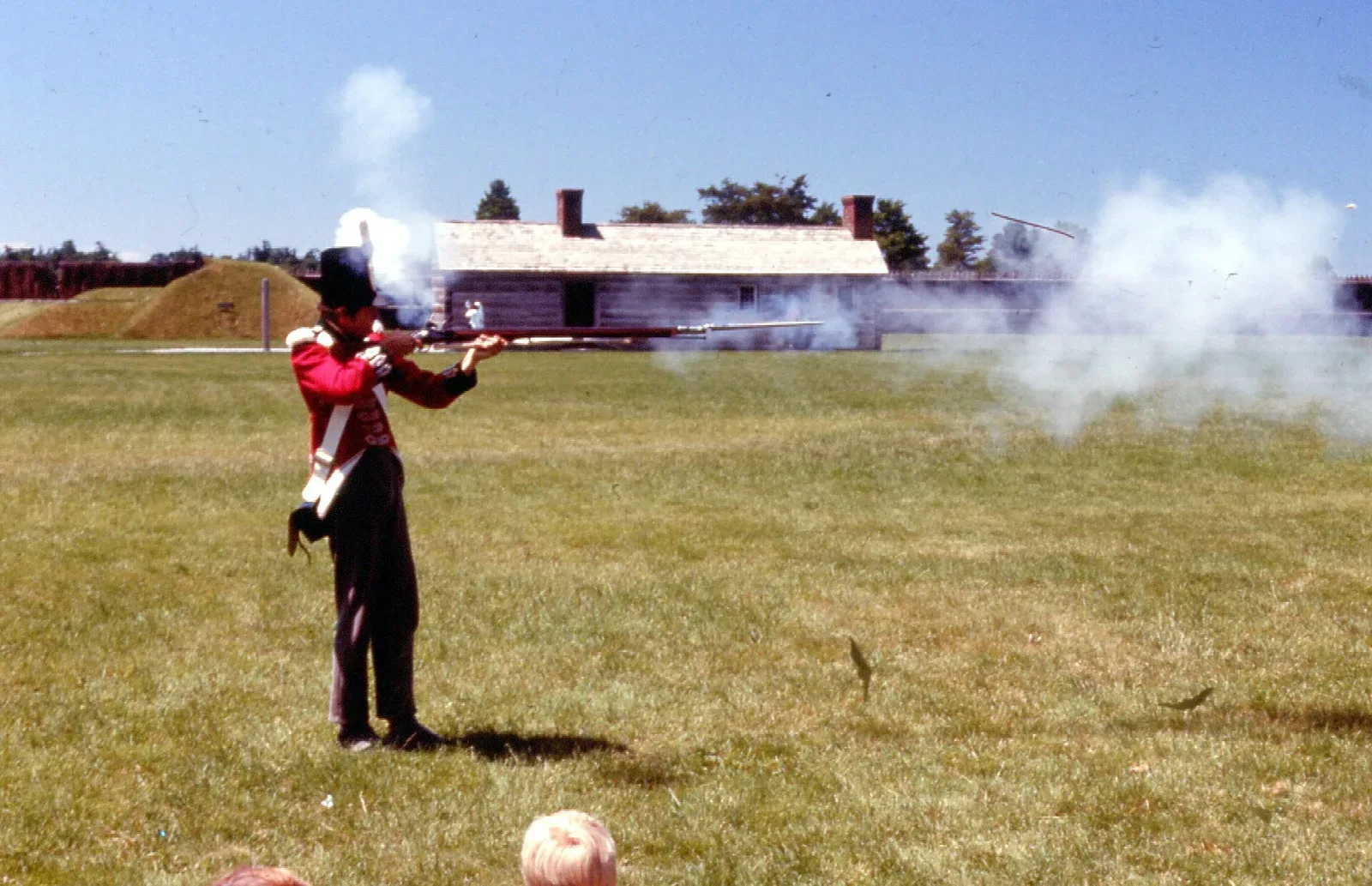
Smokeless powder is a firearm propellant that replaced black powder as the dominant military and sporting charge beginning in the 1880s. The name is slightly misleading — small arms produce little visible smoke, but artillery firing smokeless propellants can still generate substantial clouds. What the name actually captures is the contrast with the dense, battlefield-choking gray fog that black powder had been producing for five centuries.
The combustion products of smokeless powder are primarily gaseous. Black powder, by comparison, leaves around 55% solid residue — mostly potassium carbonate, potassium sulfate, and potassium sulfide — a hygroscopic mess that fouled actions, corroded barrels, and had to be cleaned out after every range session or the gun started rusting from the inside.
| Property | Black Powder | Smokeless Powder |
|---|---|---|
| Solid Residue | ~55% (K₂CO₃, K₂SO₄, K₂S) | <5% (gaseous products) |
| Hygroscopic | Yes | No |
| Fouling | Heavy, corrosive | Minimal |
| Cleaning Required | After every session | Occasional |
| Action Reliability | Jams under sustained fire | Reliable operation |
Smokeless powder changed all of that, and in doing so made the modern semi-automatic and fully automatic firearm mechanically possible.
The most common formulations are built on nitrocellulose, though the transition from black powder to what we use today took the better part of four decades of explosions, patent battles, and competitive espionage between European powers racing to arm their armies with the new propellant.
Development Historyedit
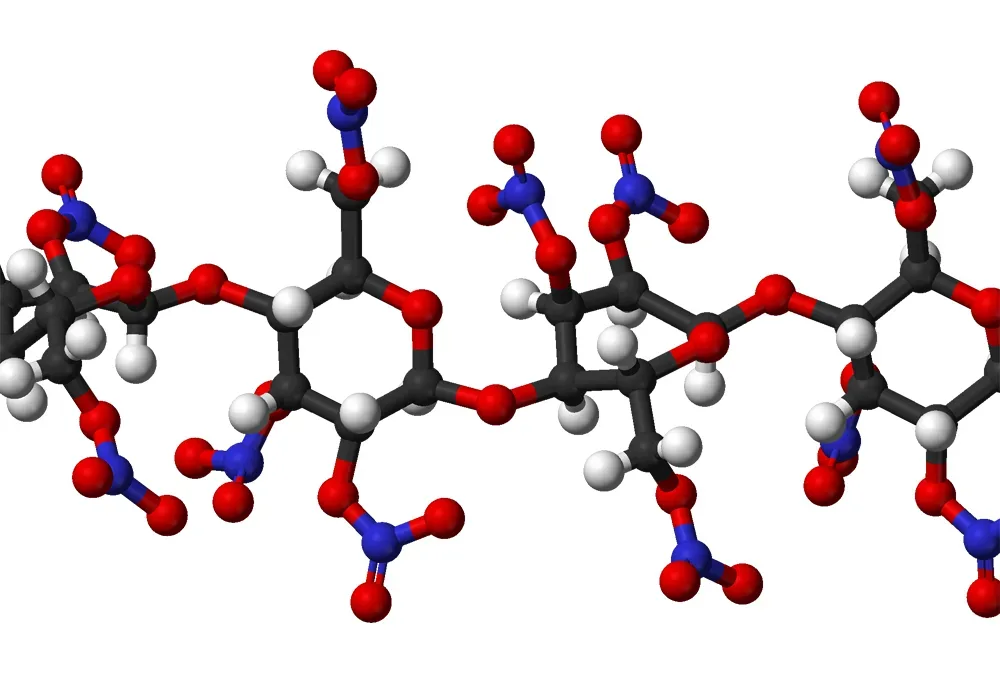
The Kitchen Accident That Started Everything
On a day in 1845, Christian Friedrich Schönbein, a professor of chemistry at the University of Basel, spilled nitric acid on his wife's kitchen table and mopped it up with a cotton apron. He hung the apron near the stove to dry before his wife could notice. The apron exploded.
A year later, Schönbein formally presented his technique — treating cotton with nitric and sulfuric acids to produce nitrocellulose, which he called guncotton — to a gathering of scientists. The military implications were immediately obvious. American ordnance specialist Alfred Mordecai reported that guncotton produced in a musket "an effect equal to about twice its weight of good rifle-powder."
Muzzle velocities exceeded 2,000 feet per second for military shoulder arms, compared to the 900–1,350 feet per second typical of the era. Unlike black powder, guncotton was nearly smokeless, producing only a faint bluish haze that dissipated quickly. It could even be wetted and dried without losing its properties.
The military establishment was electrified. Then the factories started blowing up.
Guncotton burned far faster than black powder, generating pressures that ruptured breeches, burst barrels, and sheared rifling. An English factory in Faversham was destroyed in 1847. Austrian Baron Wilhelm Lenk von Wolfsberg built two guncotton plants for artillery propellant, but guns that survived thousands of rounds on black powder wore out after only a few hundred shots with the more powerful guncotton.
By 1850, production had been largely banned across Europe.
The Long Road to Stability
Interest never fully died. British War Office chemist Sir Frederick Abel began systematic research at Waltham Abbey Royal Gunpowder Mills, developing a manufacturing process that removed the impurities from nitrocellulose, producing a more stable product. He patented this process in 1865 — the same year the second Austrian guncotton factory exploded. When the Stowmarket factory followed in 1871, Waltham Abbey began producing guncotton for torpedo and mine warheads, where controlled detonation rather than controlled deflagration was the goal.
In parallel, Ascanio Sobrero, an Italian chemist, had synthesized nitroglycerine in 1847. Alfred Nobel later developed it commercially as dynamite, but nitroglycerine detonated at supersonic speeds rather than deflagrating smoothly — it was more likely to shatter a barrel than propel a bullet, and its shock sensitivity made it worthless under battlefield conditions.
Various experimenters chipped away at the problem through the 1860s and 1870s. Prussian artillery captain Johann F. E. Schultze patented a small-arms propellant of nitrated hardwood in 1863. Frederick Volkmann produced a colloided version called Collodin near Vienna in 1871, until the Austrian government shut him down for violating their explosives monopoly. The Explosives Company at Stowmarket patented a gelatinized nitrocellulose formulation in 1882, but it was unsuitable for rifled barrels and only worked in shotguns.
Poudre B: The Breakthrough
In 1884, Paul Vieille, a young French military chemist, solved the core problem. He produced Poudre B — short for poudre blanche, or white powder, to distinguish it from black powder — made from 68.2% insoluble nitrocellulose, 29.8% soluble nitrocellulose gelatinized with ether, and 2% paraffin. The mixture was passed through rollers to form paper-thin sheets, then cut into flakes of consistent size.
Gelatinizing the nitrocellulose was the key. It slowed the furious burn rate that had been destroying guns since 1846, regulating pressure buildup and making smokeless powder viable as a propellant for the first time. The resulting pyrocellulose contained less nitrogen than straight guncotton, making it less volatile and — critically — it would not detonate unless compressed, making it safe to handle under normal conditions.
| Year | Country | Development | Key Figures |
|---|---|---|---|
| 1845 | Switzerland | Nitrocellulose discovery | Christian Friedrich Schönbein |
| 1863 | Prussia | Nitrated hardwood propellant | Johann F.E. Schultze |
| 1865 | Britain | Stable guncotton process | Sir Frederick Abel |
| 1884 | France | Poudre B breakthrough | Paul Vieille |
| 1886 | France | Lebel rifle adoption | - |
| 1887 | - | Ballistite patent | Alfred Nobel |
| 1891 | Britain | Cordite development | Abel & Dewar |
| 1897 | USA | W.A. smokeless powder | Whistler & Aspinwall |
Poudre B contained roughly three times the energy of an equivalent weight of black powder. Higher muzzle velocity meant a flatter trajectory, less wind drift, and practical shooting distances out to 1,000 meters. Because less powder was needed per round, cartridges could be made smaller and lighter, allowing troops to carry more ammunition for the same load weight.
- Three times the energy of equivalent weight black powder
- Higher muzzle velocity enabling flatter trajectory and less wind drift
- Practical shooting distances extended to 1,000 meters
- Smaller, lighter cartridges allowing more ammunition per soldier
- Burned even when wet, superior to black powder logistics
The powder burned even when wet — a logistical advantage black powder could never match.
Poudre B was adopted for the Lebel rifle, chambered in 8×50mmR Lebel, which entered French service in 1886.
The New York Times called the Lebel "the most vicious small arm in existence." Every other European power immediately recognized they had a problem.
The Powder Race
The scramble that followed had all the characteristics of an arms race — espionage, patent theft, and diplomatic maneuvering included. So tightly did France guard Vieille's process that it was not publicly divulged until the 1930s. When the Russian naval ministry sent Dmitry Mendeleev — creator of the periodic table — to France in 1890 to learn the secrets of smokeless powder, every door was initially shut to him. Only French-Russian diplomatic negotiations over a military treaty against the Triple Alliance eventually secured him a demonstration and a two-gram sample.
Alfred Nobel moved faster. In 1887, he patented ballistite — nitrocellulose with its fibrous cotton structure dissolved by a nitroglycerine solution rather than a conventional solvent — in England. He tried to sell it to the French first, but they had Poudre B and Vieille had the right connections. Nobel then sold ballistite to the Italians, and eventually to Germany, Austria-Hungary, Sweden, and Norway.
The British formed a special commission in 1888 to investigate both Vieille's and Nobel's discoveries. The commission included Sir Frederick Abel and physicist Sir James Dewar. Nobel, reasonably trusting men he knew professionally, supplied them with detailed production information and samples of ballistite. Abel and Dewar studied Nobel's patent carefully, noted that it specified nitrocellulose "of the well known soluble kind," and quietly developed a modification using insoluble nitrocellulose (guncotton) with vaseline instead of camphor as a stabilizer and a higher proportion of nitroglycerine.
They took out a patent in secret before informing Nobel.
They called it Cordite. Its main composition was 58% nitroglycerine, 37% guncotton, and 3% petroleum jelly. It entered British service in 1891 as Cordite Mark 1, manufactured at the Royal Gunpowder Factory at Waltham Abbey. A modified version, Cordite MD, followed in 1901 with increased guncotton content and reduced nitroglycerine — a change that reduced combustion temperature and barrel erosion.
Nobel sued for patent infringement. The case worked its way up through British courts, reaching the House of Lords in 1895, which ruled against him on the technicality that his patent specified soluble nitrocellulose while cordite used the insoluble form.
Lord Justice Kay acknowledged the obvious in his remarks: "It is quite obvious that a dwarf who has been allowed to climb up on the back of a giant can see farther than the giant himself."
Nobel was ordered to pay court costs. The British government declined to award his company any powder contracts for over a decade afterward, though his company eventually manufactured both ballistite and cordite and collected royalties.
Germany and Austria introduced their own smokeless powder weapons in 1888. Krupp began adding diphenylamine as a stabilizer that same year — an additive that would become standard across smokeless powder formulations.
America Catches Up
The United States was humiliatingly behind. In 1889, the Ordnance Department admitted every attempt to produce a viable smokeless powder had failed. Navy chemist Charles Munroe at the Naval Torpedo Station in Newport, Rhode Island, developed a formulation called Indurite in 1891, but scaling-up problems kept it from production.
Private industry was brought in. The Anglo-American Explosives Company began manufacturing shotgun powder in Oakland, New Jersey in 1890. DuPont started producing guncotton at Carneys Point Township, New Jersey in 1891. Winchester Repeating Arms Company began loading sporting cartridges with Explosives Company powder in 1893.
The Army evaluated 25 varieties and eventually settled on W.A. smokeless powder — developed by Lieutenant Whistler and factory superintendent Aspinwall at the reorganized American Smokeless Powder Company — as the standard for service rifles from 1897 until 1908. In 1897, Navy Lieutenant John Bernadou patented a nitrocellulose powder colloided with ether-alcohol; the Navy licensed it to DuPont and California Powder Works while retaining manufacturing rights for the Naval Powder Factory at Indian Head, Maryland, completed in 1900. The Army adopted this single-base formulation in 1908 and began manufacturing at Picatinny Arsenal.
By 1902, DuPont had purchased Laflin & Rand. Upon securing a 99-year lease of the Explosives Company in 1903, DuPont controlled virtually all significant smokeless powder patents in the United States. When antitrust action forced divestiture in 1912, DuPont retained the nitrocellulose formulations used by the military and spun off the double-base sporting formulations to the reorganized Hercules Powder Company.
Through the 1920s, Fred Olsen worked at Picatinny Arsenal salvaging tons of single-base cannon powder manufactured for World War I. He was hired by Western Cartridge Company in 1929 and by 1933 had developed a process for manufacturing spherical smokeless powder — the ball powder that handloaders still use today.
How It Worksedit
Deflagration vs. Detonation
Smokeless powder deflagrates — technically deflagrates — rather than detonating.
The distinction matters: detonation is supersonic and shatters things; deflagration is subsonic and pushes things.
Every smokeless propellant is engineered to stay on the deflagration side of that line under the pressures generated inside a firearm chamber.
How smokeless powder deflagration works and how grain geometry controls burn characteristics
Burning proceeds from the exposed surface of each grain inward, following Piobert's law. This means grain geometry directly controls burn rate. Larger pieces burn more slowly. Flake and ball powders with more surface area burn faster — suited to pistols and shotguns where pressure needs to peak and decay quickly in a short barrel.
Long, extruded stick powders burn more slowly, spreading peak pressure over a longer dwell time that keeps pushing a rifle bullet down a long barrel. Perforated cylinders burn at a more constant rate because the outside surface shrinks as the inside surfaces grow, compensating for the expanding barrel volume behind a departing projectile.
Types of Smokeless Powder
Smokeless powders fall into three categories based on their energetic components:
| Powder Type | Composition | Characteristics | Applications |
|---|---|---|---|
| Single-base | Nitrocellulose only | Most hygroscopic, prone to degradation | Military rifle cartridges |
| Double-base | Nitrocellulose + nitroglycerine | Higher energy density | Pistols, rifles, artillery |
| Triple-base | NC + NG + nitroguanidine | Reduced flame temperature, more smoke | Large-caliber artillery, tanks |
Single-base: Nitrocellulose only. Poudre B is the archetype. Hygroscopic and most susceptible to long-term degradation.
Double-base: Nitrocellulose plus nitroglycerine, or sometimes diethylene glycol dinitrate as a substitute that reduces flame temperature without sacrificing chamber pressure. Cordite and ballistite are the historical examples.
Triple-base: Nitrocellulose, nitroglycerine (or a substitute), and a substantial proportion of nitroguanidine, first developed at the Dynamit Nobel factory at Avigliana and patented in 1905. These "cold propellants" reduce both flash and flame temperature without sacrificing chamber pressure. They produce more smoke than single- or double-base powders, so they're reserved primarily for large-caliber artillery and tank guns where barrel erosion is the dominant concern.
Stabilizers and Additives
Because nitrocellulose degrades over time, releasing acidic byproducts that accelerate further decomposition, stabilizers are critical.
- Diphenylamine (0.5-2% of formulation) as primary stabilizer
- Calcium carbonate to neutralize acidic decomposition products
- Graphite coating to prevent static discharge during handling
- Periodic testing required as stabilizer depletes over time
Stored powder should be periodically tested — when stabilizer is depleted, auto-ignition becomes a real risk. Grains are coated with graphite to prevent static discharge during blending and handling.
Muzzle flash is a side effect of incomplete combustion inside the barrel. Nitrocellulose contains insufficient oxygen to fully oxidize its carbon and hydrogen; the hydrogen and carbon monoxide that escape the muzzle ignite when they mix with atmospheric oxygen. Triple-base propellants reduce this by generating a high proportion of inert nitrogen from the nitroguanidine, diluting the combustible gases. Potassium salts — potassium chloride, potassium nitrate, potassium sulfate — are also used as flash reducers in other formulations, though all flash reducers increase smoke.
Impact on Warfare & Societyedit
Tactical Revolution
Military commanders had been complaining about black powder smoke since the Napoleonic Wars. At the 1884 Battle of Tamai, Sudanese troops broke a British infantry square of soldiers armed with Martini-Henry rifles partly because the smoke from their own guns obscured their view. Sharpshooters firing from concealed positions were betrayed by smoke clouds. Entire battle lines lost visual contact with each other. The battlefield was a fog.
Smokeless powder cleared that fog — and in doing so, forced armies to adapt to a world where the enemy could suddenly see them.
The immediate tactical consequences were severe. Soldiers who had long relied on smoke as inadvertent concealment were now visible across open ground. The vivid uniforms of 19th-century armies — British red coats, Prussian dark blue — became liabilities. The U.S. Army relegated its dark blue to formal wear in 1902. Khaki, gunmetal gray, and olive drab replaced the old colors across every major army.
Breastplates, gorgets, and polished buckles that had for centuries signaled status on the battlefield were abandoned as the liabilities they suddenly were.
Industrial Consequences
Smokeless powder also drove a fundamental shift in how armies thought about ammunition. Union soldiers at Gettysburg carried 60 rounds. By the late 1890s, experts reckoned 175 rounds standard issue, with 300 the minimum before a major engagement. By Armistice Day 1918, American manufacturers were producing 525,000 pounds of smokeless powder per day.
The industrial scale required to sustain that output created entanglements between government, military, and private industry that had no precedent — an early iteration of what would later be called the military-industrial complex.
| Military Aspect | Before Smokeless | After Smokeless |
|---|---|---|
| Visibility | Dense smoke clouds | Clear battlefield |
| Uniforms | Bright colors (red, blue) | Earth tones (khaki, olive drab) |
| Ammunition Load | 60 rounds standard | 175-300 rounds standard |
| Effective Range | <500 meters | 1,000+ meters |
| Automatic Weapons | Unreliable (fouling) | Practical and reliable |
| Concealment | Smoke provided cover | Visual concealment lost |
Ballistic Advantages
The ballistic advantages compounded every other change. Black powder drove the venerable U.S. Army .45-70-405 — a .45-caliber, 405-grain bullet charged with 70 grains of black powder. Smokeless powder made the .30-40-220 possible, a round that contemporaries called a pipsqueak but that outperformed the old cartridge in every meaningful metric. Smaller, lighter rounds meant soldiers could carry more of them. Higher velocity meant flatter trajectories and effective range out to 1,000 meters — a distance at which black powder rifles were almost useless.
The cleaner-burning powder also removed a mechanical barrier. Black powder's heavy, hygroscopic fouling caused breech actions to jam under sustained fire — a fundamental problem for any repeating design. Without that fouling, autoloading mechanisms could function through extended strings of fire. The modern semi-automatic pistol, the self-loading rifle, the machine gun — all of these were mechanically conceivable before smokeless powder, but none were practically reliable until fouling stopped seizing actions after a few dozen rounds.
The Spanish-American War offered an early demonstration of the asymmetry between armies that had made the transition and those that hadn't. A British correspondent watching American forces described the Spanish advantage plainly: "It was almost impossible to say exactly where some of their batteries were placed, for there was nothing but the flash to guide one... The smoke lay in front of the American guns in the almost still air, and made prompt and opportune firing difficult." The Americans, still relying on traditional black powder in many units, were fighting partially blind against an enemy that had removed itself from the equation visually.
Modern Relevanceedit
Every centerfire cartridge loaded today uses a smokeless propellant. The basic chemistry Vieille worked out in 1884 — gelatinized nitrocellulose as the core energetic ingredient — remains the foundation. Single-base powders dominate small arms. Double-base powders appear across pistol, rifle, and shotgun applications. Triple-base formulations are reserved for large-caliber artillery and tank guns where barrel wear is the critical constraint.
The grain geometry that controls burn rate in modern handloading powders descends directly from the same principles. Fast-burning flake and ball powders for pistols and shotguns. Slow-burning extruded stick powders for magnum rifle cartridges. The handloader selecting between Hodgdon H110 and IMR 4350 is navigating the same surface-area-to-burn-rate relationship that powder chemists worked out in the 1880s and 1890s.
Contemporary Manufacturing
In the United States, modern smokeless powder is produced by St. Marks Powder, Inc., owned by General Dynamics. The manufacturing process for tubular powder — cotton linter boiled in sodium hydroxide, converted to nitrocellulose with nitric and sulfuric acids, extruded and cut to grain length, coated with graphite — has been refined continuously since the Naval Powder Factory at Indian Head, Maryland began production in 1900 and Picatinny Arsenal followed in 1907.
Ball powder, developed by Fred Olsen and commercialized through Western Cartridge Company by 1933, is made by dissolving nitrocellulose in ethyl acetate and agitating it with water until it forms spherical globules, which are then dried and coated.
Ongoing Safety Concerns
Stability monitoring remains a genuine concern for large powder stockpiles. As diphenylamine stabilizer depletes over time, the risk of auto-ignition climbs. Military stores require periodic testing. The same decomposition chemistry that drove 19th-century factory explosions is still present in every can sitting on a reloading bench — just managed far better than it was when Schönbein's kitchen apron went up in 1845.
The BGC Takeedit
Smokeless powder is one of those developments that looks inevitable in hindsight and was anything but in practice. Schönbein discovered the core material in 1846. It took nearly 40 years, scores of dead factory workers, and an enormous amount of parallel chemistry across multiple countries before Paul Vieille figured out the gelatinization trick that made it actually usable in a gun.
That's four decades of the most powerful militaries in the world throwing resources at a problem and mostly blowing themselves up.
What Vieille cracked wasn't just a chemistry problem — it was a pressure management problem. Gelatinizing the nitrocellulose slowed the burn rate enough to keep the pressure curve inside the window a firearm could tolerate.
That's the actual invention. Everything else — ballistite, cordite, modern IMR powders — is engineering on top of that insight.
The patent dispute between Nobel, Abel, and Dewar is worth knowing about, not because it's a great legal story, but because it illustrates how thin the line was between legitimate invention and opportunistic copying in a field where everyone was racing toward the same target. Nobel gave Abel and Dewar the rope with imprecise patent language; they used it. The House of Lords called it legal. Whether it was right is a different question, and Lord Justice Kay made clear he had opinions on that even while ruling against Nobel.
From a shooter's perspective, the long-term legacy is straightforward: without smokeless powder, there are no semi-automatics. The fouling from black powder seizes actions — that's not an engineering problem you can design your way out of, it's a chemistry problem. Browning's designs, the 1911, the M1 Garand, every modern pistol — none of it works reliably without clean-burning propellant. Vieille's kitchen-scale chemistry in 1884 is the reason you can run 500 rounds through a modern pistol without the action jamming solid.
Referencesedit
- https://en.wikipedia.org/wiki/Smokeless_powder
- https://spartacus-educational.com/FWWpowder.htm
- http://firearmshistory.blogspot.com/2017/02/smokeless-powders-cordite.html
- https://gunmagwarehouse.com/blog/smokeless-powder-a-history-and-evolution/
- https://www.americanrifleman.org/content/back-to-basics-gunpowder/
- https://historynet.com/clearing-fog-war/
- https://www.jstor.org/stable/23787093
- https://www.academia.edu/66012948/Paul_Vieille_Cordite_and_Ballistite
Last Updated: February 27, 2026
- Gls Guns(Sumner, IA)
- Bi-mart - Yakima (Fruitvale Ave)(Yakima, WA)
- New Philly Sportsman Specialities(New Philadelphia, OH)
- R&R Sports & Outdoors(Brandon, FL)
Loading comments...