Specifications
SIG Sauer P320 / M17
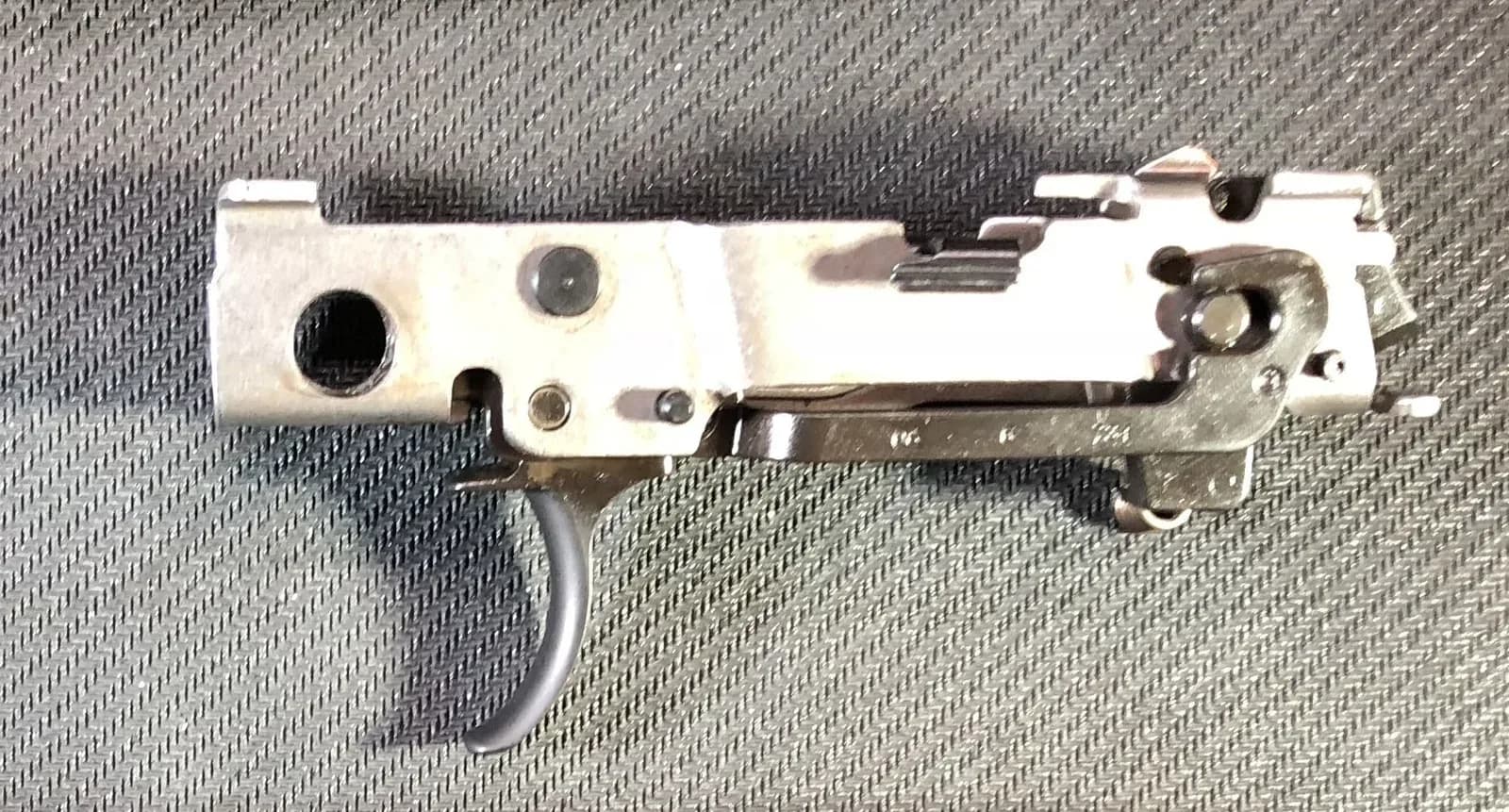
The P320's serialized fire control unit — the modular core that enables rapid caliber and frame swaps while maintaining legal registration.
Digitallymade (CC BY-SA 4.0)
| Manufacturer | |
|---|---|
| Made By | SIG Sauer |
| Designer | SIG Sauer engineering team |
| Origin | United States |
| Specifications | |
| Caliber | 9x19mm ParabellumAlso: .357 SIG, .40 S&W, .45 ACP, 10mm Auto (XTEN) |
| Action | Striker fired, short recoil |
| Capacity | 17+1 (full-size 9mm), 21-round extended |
| Barrel | 4.7 in (119 mm) |
| Length | 8.0 in (203 mm) |
| Weight | 29.6 oz (839 g) unloaded |
| Sights | SIG contrast sights (M17: SIGLITE night sights) |
| Production | |
| Designed | 2014 |
| In Production | 2014-present |
| Unit Cost | $580-800 (civilian), $207 (military contract) |
| Variants | |
| |
| Service Use | |
U.S. Armed Forces (M17/M18, MHS program)U.S. Coast GuardDanish Armed Forces | |
| Cultural Note | |
| Won the U.S. Modular Handgun System (MHS) competition in 2017, replacing the Beretta M9 after 32 years of service. First modular pistol adopted by the U.S. military. | |
| Related Firearms | |
SIG Sauer P320 / M17
Firearms encyclopedia article
From The Boise Gun Club Handbook
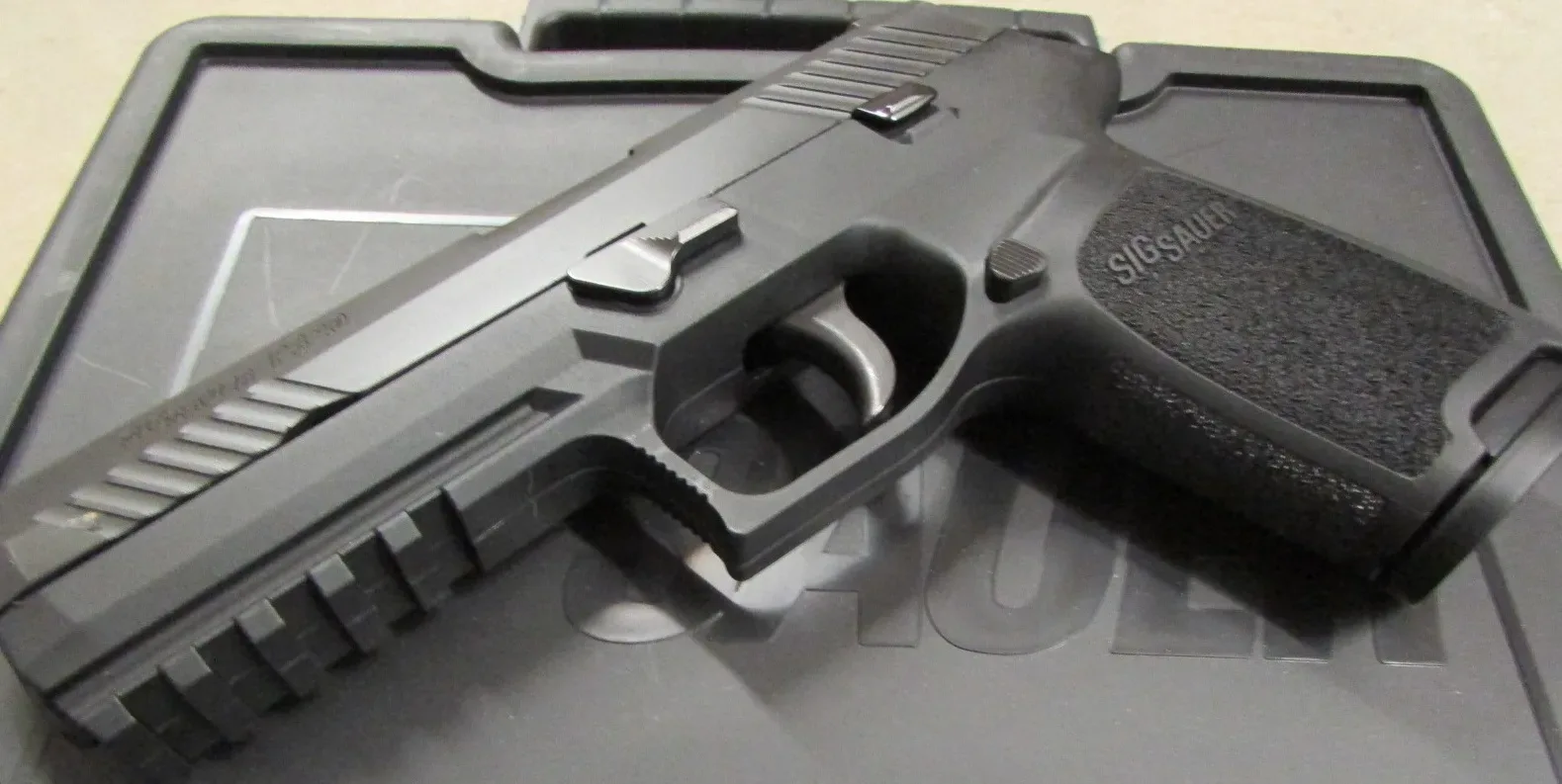
The P320 is the pistol that finally knocked Beretta off the U.S. military's hip after 35 years. SIG Sauer won the Army's Modular Handgun System competition not just with another striker-fired pistol, but with genuine modularity that lets you swap sizes and calibers using the same serialized fire control unit.
That modularity isn't marketing fluff. You can turn a full-size duty gun into a subcompact carry piece or switch from 9mm to .40 S&W without buying a whole new pistol. The fire control unit (FCU) is the actual firearm--everything else bolts on around it.
The fire control unit (FCU) is the actual firearm--everything else bolts on around it.
This design philosophy changed how SIG Sauer approaches manufacturing and how users think about pistol ownership. Instead of owning multiple guns, you own one FCU and multiple configurations.
History & Developmentedit
Original Development (2014-2015)
SIG Sauer introduced the P320 in 2014 when everyone was chasing Glock's striker-fired dominance. Instead of tweaking an existing design, they started fresh with the modular FCU concept. The serialized part contains the trigger mechanism, sear, and firing pin--everything else becomes a swappable component.
The real validation came during the Army's MHS trials starting in 2015. SIG Sauer squared off against Glock, Smith & Wesson, and others in testing that covered everything from accuracy to lifecycle costs.
| Year | Milestone |
|---|---|
| 2014 | SIG introduces P320 with modular FCU design |
| 2015 | Army MHS trials begin |
| 2017 | Army adopts P320 as M17/M18 |
| 2017 | Drop-fire controversy emerges |
| 2018 | SIG launches voluntary upgrade program |
| 2019-Present | Post-upgrade reliability established |
The P320's modularity won the day--the military could field full-size M17s and compact M18s while keeping training simple and parts common.
Military Adoption & Controversy
In 2017, the Army officially adopted the P320 as the M17. Then came the controversy. Reports surfaced about unintended discharges during drop tests, and SIG Sauer initially pushed back.
Eventually they acknowledged the problem and launched a voluntary upgrade program that redesigned the trigger mechanism, lightened the striker, and modified the sear geometry.
Key milestones in P320 development and adoption
Post-Upgrade Evolution
The platform recovered from that setback. Post-upgrade P320s demonstrated the reliability that won the original competition, and today's family includes dozens of configurations built around that proven modular architecture.
Technical Specificationsedit
Core Operating System
| Specification | Details |
|---|---|
| Operating System | Short recoil, striker-fired |
| Trigger | Pre-tensioned striker, 5.5-6.5 lb pull |
| Feed System | Double-stack steel magazines |
| Standard Capacity | 17 rounds (9mm), 14 rounds (.40), 10 rounds (.45) |
| Sights | SIGLITE night sights, drift-adjustable rear |
| Safety Features | Striker safety, disconnect safety, optional manual safety |
| Variants | Subcompact to full-size, multiple calibers |
The fire control unit uses a partially pre-cocked striker that completes its cycle when you pull the trigger. No magazine disconnect--it'll fire with the magazine out.
P320 modular architecture - FCU plus swappable components
Magazine & Safety Systems
Three-point safety system handles drop protection, though early models needed that upgrade.
Magazines are well-built steel with polymer baseplates. Extended options available, but they cost more than Glock or M&P magazines.
Configurations You'll Actually Seeedit
| Configuration | Size | Key Features | Best For |
|---|---|---|---|
| M17/M18 | Full/Compact | Coyote tan, manual safety | Military collectors |
| Standard P320 | Sub to Full | Black, no manual safety | General use |
| Carry | Compact frame, full slide | Best size balance | Duty/home defense |
| X-Series | Various | Enhanced trigger, grip | Serious shooters |
| RX Models | Various | Romeo1 red dot included | Optics users |
| AXG Series | Various | Metal frame | Competition |
Military Variants
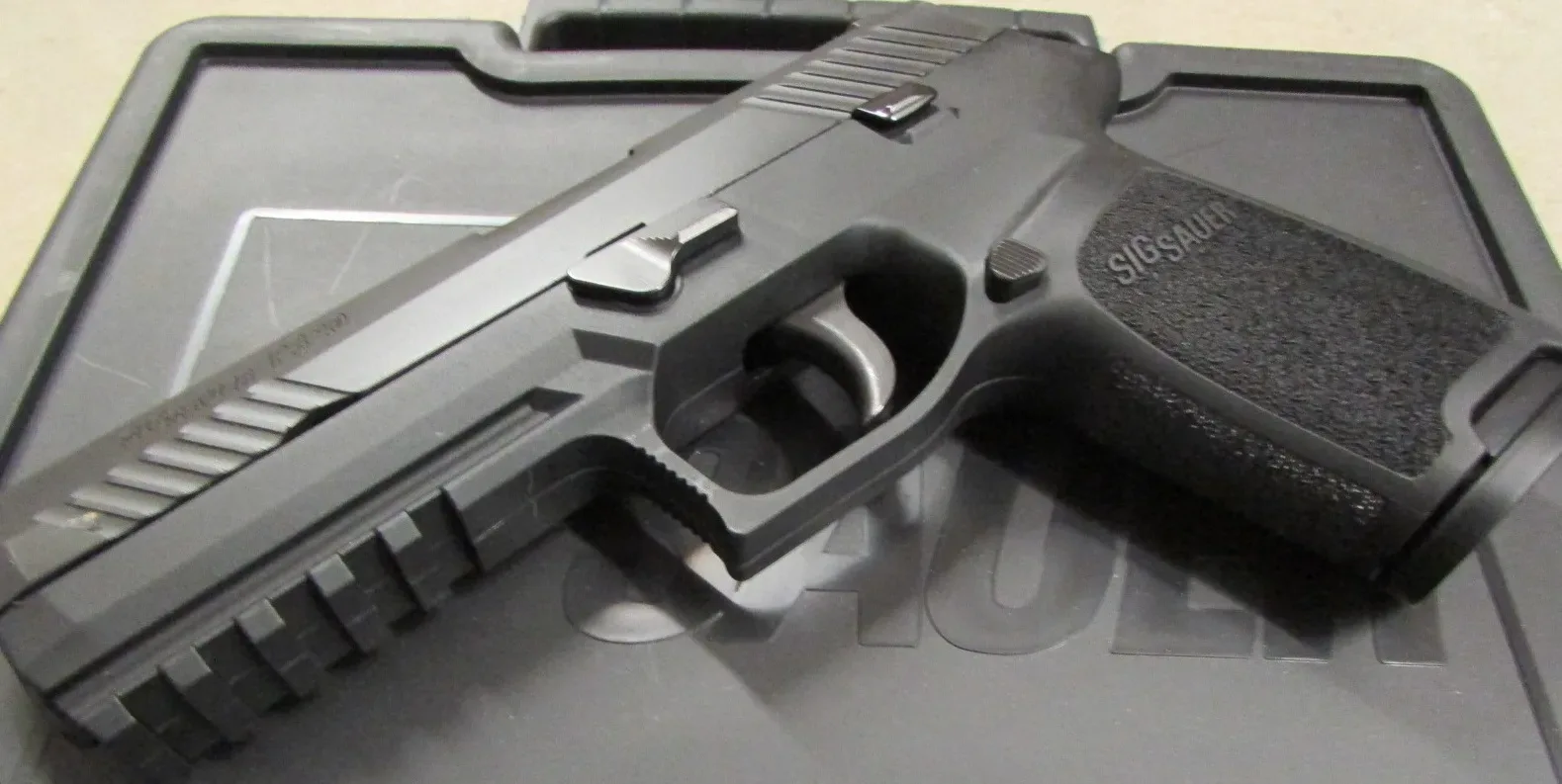
M17/M18: Military versions in coyote tan with manual safeties. The M17 is full-size, M18 is compact. Civilians can buy them, but you're paying extra for the color and thumb safety most people don't want.
Civilian Models
Standard P320s: Black finish, no manual safety, available in subcompact through full-size. The Carry model gives you a compact frame with full-size slide--solid choice for duty or home defense.
Specialized Versions
X-Series: Enhanced versions with better triggers and improved grip textures. Worth the upcharge if you're serious about shooting.
RX Models: Come with Romeo1 red dots pre-installed. The optics mounting system works, though other footprints require adapter plates.
AXG Series: Metal frames for competition use. Heavier but more precise than polymer versions.
P320 family tree showing major variants and their distinguishing features
How It Shootsedit
Accuracy & Trigger Performance
Accuracy runs 2-3 inches at 25 yards with decent ammunition--right in the service pistol sweet spot. The trigger breaks clean around six pounds, but it's not as crisp as a Walther or as short as a Glock.
Reset is positive but longer than some shooters want for rapid fire.
| Performance Metric | P320 Rating | Notes |
|---|---|---|
| Accuracy | 2-3" @ 25 yards | Service pistol standard |
| Trigger Pull | ~6 lbs | Clean break, longer reset |
| Reliability | High | Current production |
| Cold Weather | Good | Heavier trigger pull |
| Recoil Management | Very Good | Well-balanced weight distribution |
Reliability & Handling
Reliability in current production models is solid. Most users report minimal issues through thousands of rounds, and the platform eats different ammunition weights without major point-of-impact changes.
Cold weather can make the trigger heavier, but nothing that stops function.
The grip angle and weight distribution handle recoil well. Bore axis sits slightly higher than a Glock, but you won't notice in practical shooting. Magazine changes are smooth thanks to decent mag wells, and slide manipulation feels substantial without being stiff.
What Worksedit
| Pros | Impact |
|---|---|
| True modularity | One FCU, multiple configurations |
| Military adoption | Long-term parts/service support |
| Standard night sights | Ready for low-light use |
| Optics-ready options | Modern shooting compatibility |
| Wide aftermarket | Extensive customization options |
- The modularity actually works--not just on paper
- Military adoption means parts and service support won't disappear
- Ergonomics fit most hand sizes
- Night sights come standard on most models
- Wide aftermarket support covers everything from triggers to holsters
Optics-ready versions handle most mounting systems, and the platform's accuracy makes red dots worthwhile. Competitive shooters use them successfully in USPSA and IDPA.
What Doesn'tedit
| Cons | Impact |
|---|---|
| Drop-fire history | Reputation damage, upgrade needed |
| Trigger feel | Longer reset than competitors |
| Premium pricing | More expensive than Glock/M&P |
| Magazine cost | Higher ongoing expense |
| Polymer wear | Grip modules show use faster |
That early drop-fire issue damaged the platform's reputation, even though SIG Sauer fixed it. If you're buying used, make sure it's been upgraded or is recent production.
- The trigger reset and length won't impress anyone coming from premium striker guns
- Polymer grip modules show wear faster than steel frames
- Manual safety versions have awkwardly placed thumb safeties
Price point runs higher than comparable Glocks or M&Ps, and magazines cost more. Some aftermarket trigger work voids the warranty, limiting upgrade paths.
The BGC Takeedit
When It Makes Sense
The P320 succeeds because the modularity isn't a gimmick. If you want to own one pistol that can be a duty gun, carry piece, and bedside gun, this system works.
If you want to own one pistol that can be a duty gun, carry piece, and bedside gun, this system works.
The military contract validates the basic reliability, and current production guns run fine.
Reality Check
That said, you're paying extra for modularity you might never use. If you know exactly what size and caliber you want, a Glock 19 or M&P will do the same job for less money.
If you know exactly what size and caliber you want, a Glock 19 or M&P will do the same job for less money.
The P320 makes sense when you value options or need to satisfy multiple roles with one serialized firearm. The early safety issues are fixed, but they show SIG Sauer rushed the initial design. Today's P320s are solid, but this platform needed a learning curve that competitors like Glock worked through decades ago.
- Gls Guns(Sumner, IA)
- Bi-mart - Yakima (Fruitvale Ave)(Yakima, WA)
- New Philly Sportsman Specialities(New Philadelphia, OH)
- R&R Sports & Outdoors(Brandon, FL)
Loading comments...