Specifications
Smith & Wesson M&P Shield Plus
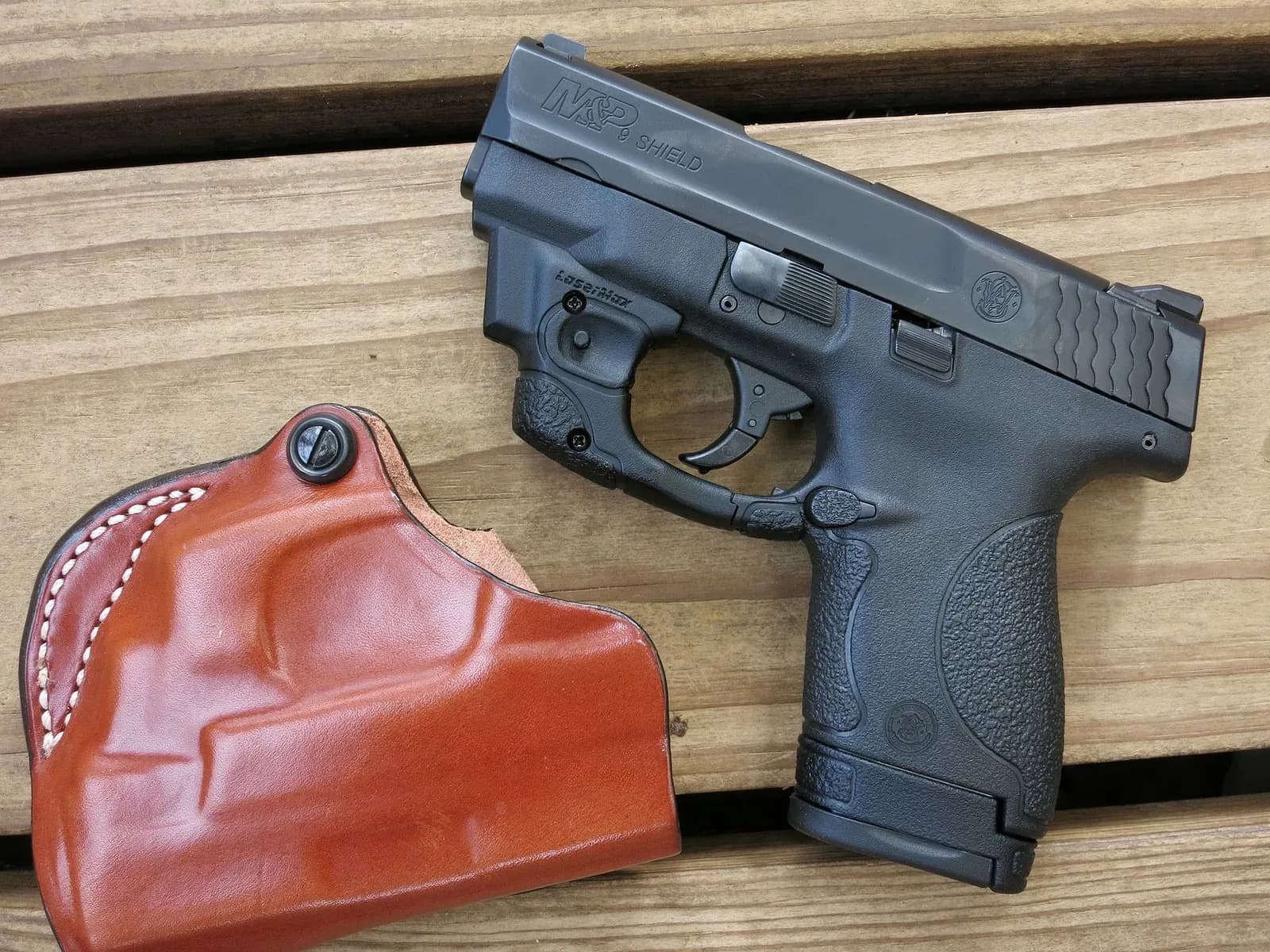
The original M&P Shield 9mm — Smith & Wesson's subcompact design that established the single-stack compact category upon its 2012 launch.
James Case from Philadelphia, Mississippi, U.S.A. (CC BY 2.0)
| Manufacturer | |
|---|---|
| Made By | Smith & Wesson |
| Origin | United States |
| Specifications | |
| Caliber | 9mm Luger |
| Action | striker fired |
| Capacity | 13+1 rounds (10+1 available) |
| Barrel | 3.10 inches |
| Length | 6.10 inches |
| Weight | 20.20 oz |
| Feed | Detachable box magazine |
| Sights | White dot front, white outline rear |
| Production | |
| Designed | 2021 |
| In Production | 2021 |
| Variants | |
| |
| Service Use | |
Federal agencies (off-duty/backup)Police departments (backup/plainclothes) | |
| Cultural Note | |
| Evolution of the popular M&P Shield platform, addressing market demand for higher-capacity concealed carry pistols while maintaining slim profile. Direct competitor to Sig Sauer P365 and Springfield Hellcat. | |
| Related Firearms | |
| |
Smith & Wesson M&P Shield Plus
Firearms encyclopedia article
From The Boise Gun Club Handbook
The Shield Plus fixed the biggest complaint about the original Shield--magazine capacity--while keeping everything that made it a solid carry gun.
The Smith & Wesson M&P Shield Plus is a striker-fired sub-compact 9mm that holds 13+1 rounds in a package you can actually conceal. Smith & Wesson introduced it in 2021 after watching Sig Sauer clean up with the P365 and realizing their 7-round Shield was looking pretty dated.
This isn't a ground-up redesign. Smith & Wesson took their proven Shield platform and widened the frame just enough to fit a double-stack magazine. You get nearly double the capacity--13+1 versus the original's 7+1--without turning it into a brick.
The pistol measures 6.10 inches overall with a 3.10-inch barrel and weighs 20.20 ounces loaded. At 1.1 inches wide, it's still thin enough for comfortable concealed carry but thick enough to get a proper grip on it.
History and Developmentedit
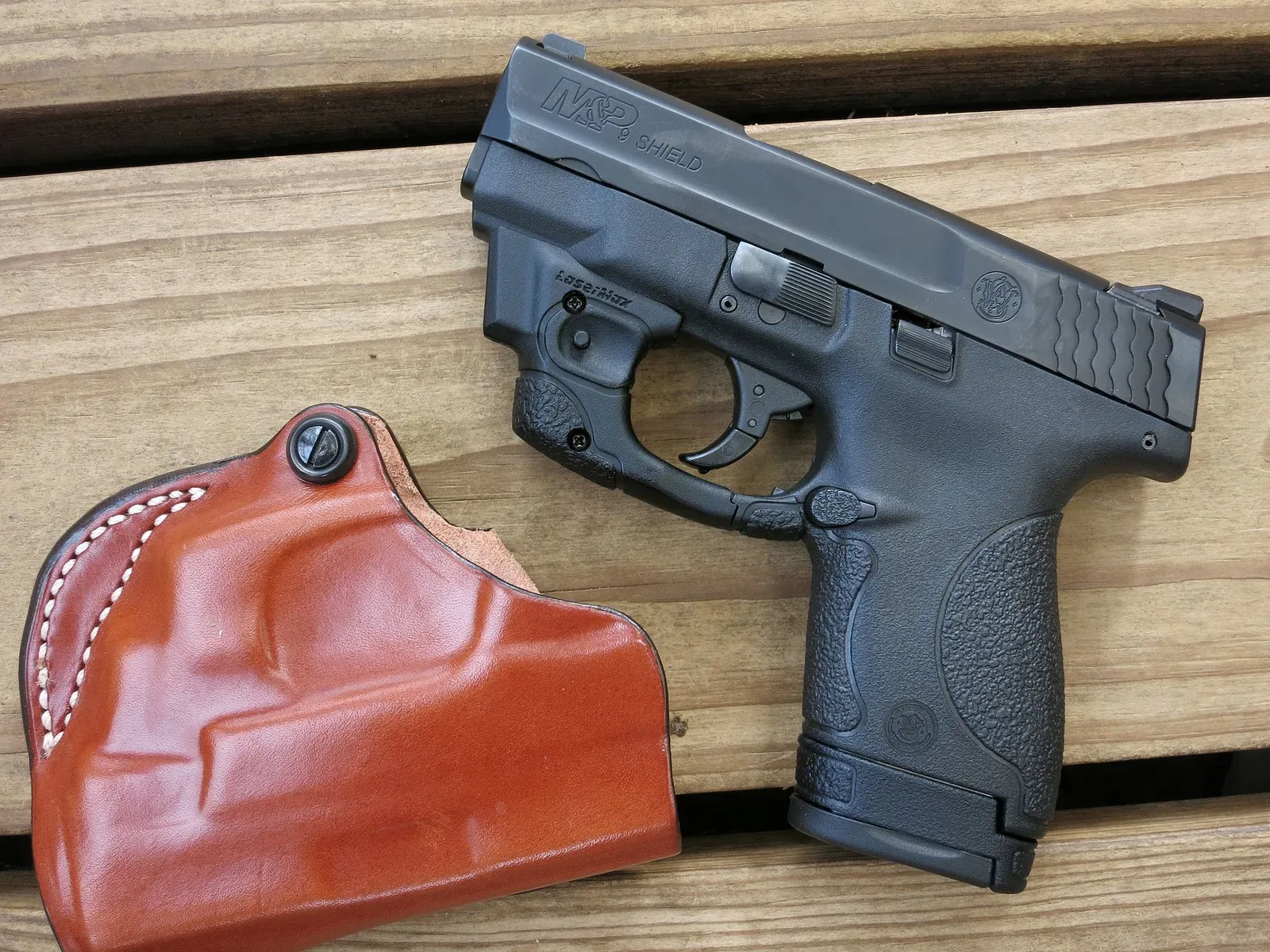
Market Context
Smith & Wesson spent most of the 2010s watching their original Shield dominate the single-stack market. Then Sig dropped the P365 in 2017 and suddenly everyone wanted more rounds in the same space. The writing was on the wall--single-stack sub-compacts were becoming yesterday's solution.
| Year | Event | Impact |
|---|---|---|
| 2012 | Original Shield launched | Dominated single-stack market |
| 2017 | Sig P365 introduced | Disrupted market with high capacity |
| 2021 | Shield Plus launched | Smith & Wesson re-entered competition |
| 2021+ | Market response | Other manufacturers increased capacity |
Development Approach
Rather than start over, Smith & Wesson did what they do when something works: they improved it. The Shield had proven reliable and shootable over nearly a decade. The grip angle felt natural to most shooters. The trigger was decent. Why throw all that away?
The development team widened the grip frame to accept a double-stack magazine and reinforced the polymer with a steel chassis. They kept the same striker system, the same controls, and the same overall feel. If you could shoot the original Shield, you could shoot the Plus.
Market evolution driving Shield Plus development
The 2021 launch put Smith & Wesson back in the game against the P365 and Hellcat. More importantly, it kept existing Shield users in the family when they wanted to upgrade capacity.
Design and Mechanismedit
Operating System
The Shield Plus uses the same striker-fired system as every other M&P--a pre-cocked striker that needs the trigger pull to finish the job. No external safety unless you specifically buy the thumb safety version.
The frame is reinforced polymer with a steel insert that holds all the fire control parts.
Frame and Materials
The slide is stainless steel with Smith & Wesson's black Armornite coating that actually holds up to carry wear. The barrel has conventional rifling with a 1:10 twist that stabilizes everything from 115-grain practice ammo to 147-grain defensive loads.
Smith & Wesson kept the aggressive grip texture that bites your hands just enough without shredding your shirt. The grip angle puts the pistol naturally on target for most shooters--no weird wrist contortion needed.
Shield Plus striker-fired operating cycle
Controls and Ergonomics
Controls are ambidextrous where it matters:
- Ambidextrous slide stop works from both sides
- Reversible magazine release
- Undercut trigger guard for higher grip
- Short Picatinny rail for light mounting
The trigger is flat-faced, which most people find easier to control than a curved trigger. Pull weight runs 5.5 to 6.5 pounds with about a quarter-inch of travel. It's not a match trigger, but it's predictable and breaks clean enough for defensive work.
Specificationsedit
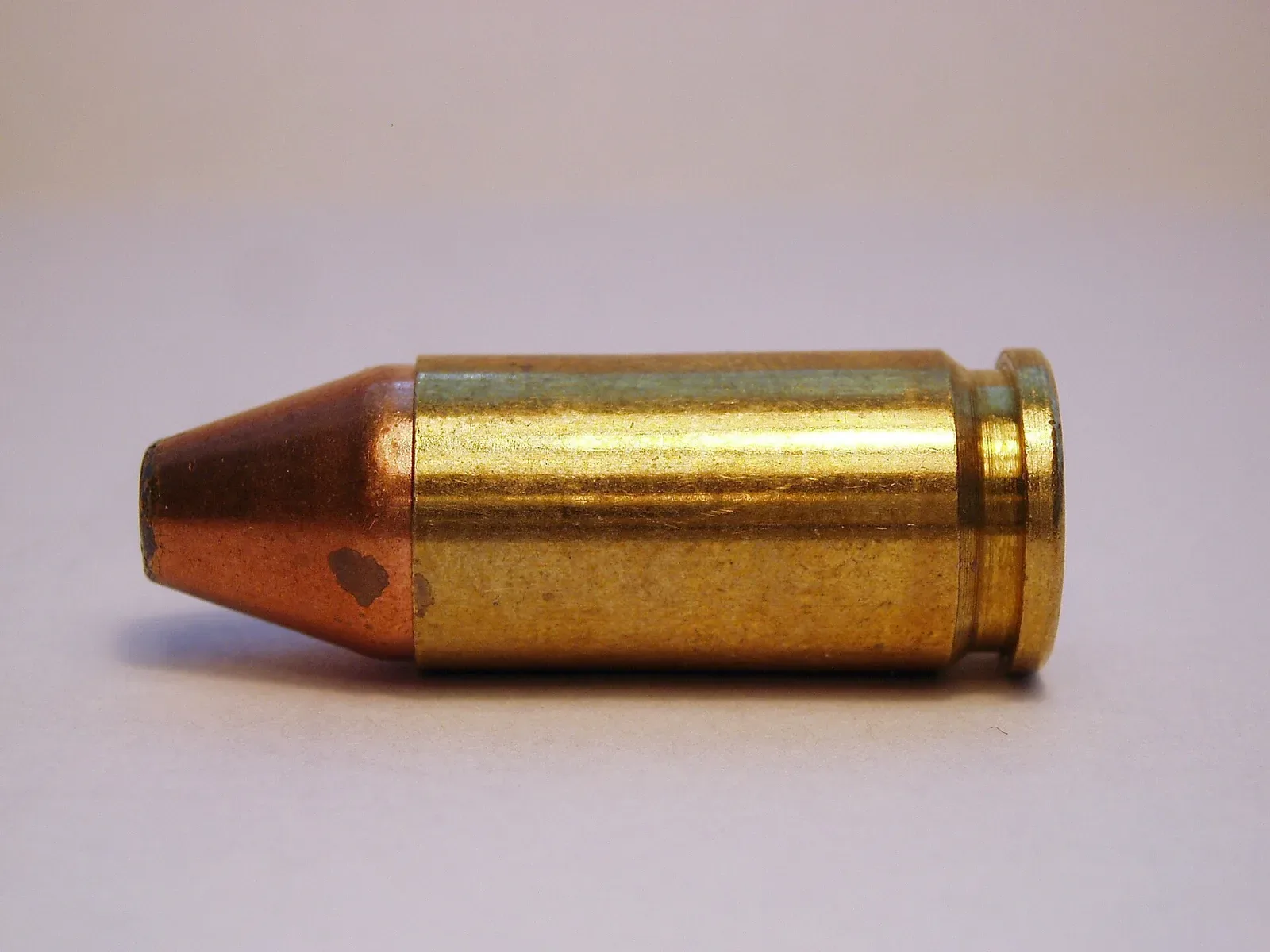
| Specification | Value |
|---|---|
| Caliber | 9mm Luger |
| Action | Striker-fired |
| Capacity | 13+1 rounds |
| Barrel Length | 3.10 inches |
| Overall Length | 6.10 inches |
| Height | 4.6 inches |
| Width | 1.1 inches |
| Weight | 20.20 oz |
| Sights | White dot front, white outline rear |
| Feed System | Detachable box magazine |
| Frame Material | Polymer with steel insert |
| Slide Material | Stainless steel |
| Finish | Black Armornite |
| Trigger Pull | 5.5-6.5 lbs |
Variants and Modelsedit
| Variant | Features | Best For |
|---|---|---|
| Standard | 10 & 13-round mags, white dot sights | General carry use |
| Thumb Safety | Ambidextrous frame safety | Required states, preference |
| Ported | Barrel/slide ports for recoil reduction | Competition shooting |
| Optics Ready | Pre-cut for micro red dots | Advanced users |
| Restricted Capacity | 10-round magazines only | Capacity-limited states |
If your state requires it or you just like the extra control, the thumb safety version adds an ambidextrous frame-mounted safety that blocks the trigger bar. It's low-profile enough that it won't hang up on your holster.
The ported models have holes drilled in the barrel and slide to reduce muzzle flip. These are aimed at competition shooters who want faster follow-up shots. For carry, the flash and blast aren't worth the minor recoil reduction.
Optics-ready versions come with the slide already cut for micro red dots. The cuts fit the Shield RMSc footprint, which covers most of the popular micro dots. You get cover plates to fill the cuts if you don't mount an optic right away.
Some states cap magazines at 10 rounds, so Smith & Wesson makes restricted-capacity versions that ship with 10-round magazines only.
Military and Law Enforcement Useedit
You won't find many cops carrying Shield Plus pistols as their primary duty weapon--most departments want full-size service pistols for that role. But plenty of agencies approve it for off-duty and backup carry.
Federal agents seem to like it for plainclothes work where concealment matters more than maximum firepower. The capacity advantage over the original Shield makes it more attractive for situations where backup might be far away.
Some departments adopted it as an optional backup gun, especially if they're already running other M&P pistols. Parts commonality makes the armorer's life easier, and officers who already know the M&P system don't need additional training.
Military use is basically nonexistent. The military wants full-size service pistols or specialized weapons for particular missions.
Civilian Use and Applicationsedit
This is a concealed carry pistol first and everything else second--Smith & Wesson designed it for people who need to hide a gun under normal clothes while carrying enough ammunition to handle most defensive situations.
Primary Role
The 13+1 capacity puts you in the same ballpark as compact pistols while staying thin enough for appendix carry or inside-the-waistband carry under a t-shirt. At 20 ounces loaded, it's light enough for all-day carry without being so light that recoil becomes punishing.
Competition Use
Competitive shooters have found success with the Shield Plus in Enhanced Service Pistol division, where sub-compact pistols compete against each other. The capacity and shootability give it an edge over true pocket pistols.
| Use Case | Advantages | Considerations |
|---|---|---|
| Concealed Carry | 13+1 capacity, 1.1" width | Primary design purpose |
| Competition | Good for IDPA ESP division | Aftermarket trigger helpful |
| Home Defense | Rail for lights, manageable recoil | Full-size better if no carry need |
| New Shooters | Manageable recoil, extensive support | Good instructor recommendation |
Aftermarket Support
Aftermarket support is extensive. Every holster maker worth mentioning offers options for the Shield Plus, from basic Kydex inside-the-waistband rigs to full-featured duty holsters. Night sights are available from all the usual suspects--Trijicon, Ameriglo, XS Sights.
The 9mm chambering keeps practice ammunition costs reasonable, and the pistol digests everything from cheap 115-grain FMJ to premium 147-grain defensive hollow points.
It's not picky about ammunition, which matters when you're trying to find practice ammo during shortages.
Common modifications include sight upgrades, extended magazine releases for competition, and aftermarket triggers for those who want a lighter, crisper pull. The rail section accommodates compact weapon lights from Streamlight and SureFire if you plan to use it for home defense.
Cultural Impactedit
The Shield Plus proved that established manufacturers could adapt to changing market demands without reinventing the wheel. While Sig Sauer got credit for creating the high-capacity micro-compact category with the P365, Smith & Wesson showed that evolutionary improvements could be just as effective as revolutionary designs.
Its success forced other manufacturers to increase capacity in their sub-compact offerings. Single-stack sub-compacts went from mainstream to niche almost overnight. If you couldn't fit at least 10 rounds in a carry gun, you were behind the curve.
In training circles, the Shield Plus became a frequent recommendation for new concealed carry permit holders. It offers enough capacity to handle most defensive scenarios, manageable recoil for new shooters, and extensive holster availability. Instructors like recommending guns that students can actually find accessories for.
The pistol reinforced Smith & Wesson's position in the civilian market and proved that listening to customer feedback pays off. Sometimes the right answer isn't starting over--it's making what works work better.
See Alsoedit
- Smith & Wesson M&P Shield
- Sig Sauer P365
- Springfield Hellcat
- Glock 43X
- Ruger MAX-9
The BGC Takeedit
The Shield Plus is what the original Shield should have been if double-stack magazine technology had been better in 2012. Smith & Wesson took their time getting into the high-capacity micro-compact game, but they got it right.
No gimmicks, no revolutionary features that might fail when you need them most--just a proven design with more rounds.
This isn't the most exciting pistol on the market, and that's exactly why it works. The trigger is good enough, the sights are adequate, and the reliability is what you'd expect from a modern Smith & Wesson.
At current street prices, it competes directly with the P365 and Hellcat. The Smith has better ergonomics than the Sig and feels more substantial than the Springfield. If you're already comfortable with M&P pistols, the Shield Plus is the obvious choice.
The only real downside is that it's not groundbreaking enough to generate much enthusiasm. It's like buying a reliable truck--it does the job without drama, which is exactly what you want in a carry gun but doesn't make for exciting range conversations.
- R&R Sports & Outdoors(Brandon, FL)
- Bi-mart - Yakima (Fruitvale Ave)(Yakima, WA)
- Gls Guns(Sumner, IA)
- New Philly Sportsman Specialities(New Philadelphia, OH)
No reviews yet
Be the first to review the Smith & Wesson M&P Shield Plus. Share your experience with the community.
Write the First ReviewLoading comments...