Legal Details
Texas Gun Laws / Constitutional Carry (HB 1927)

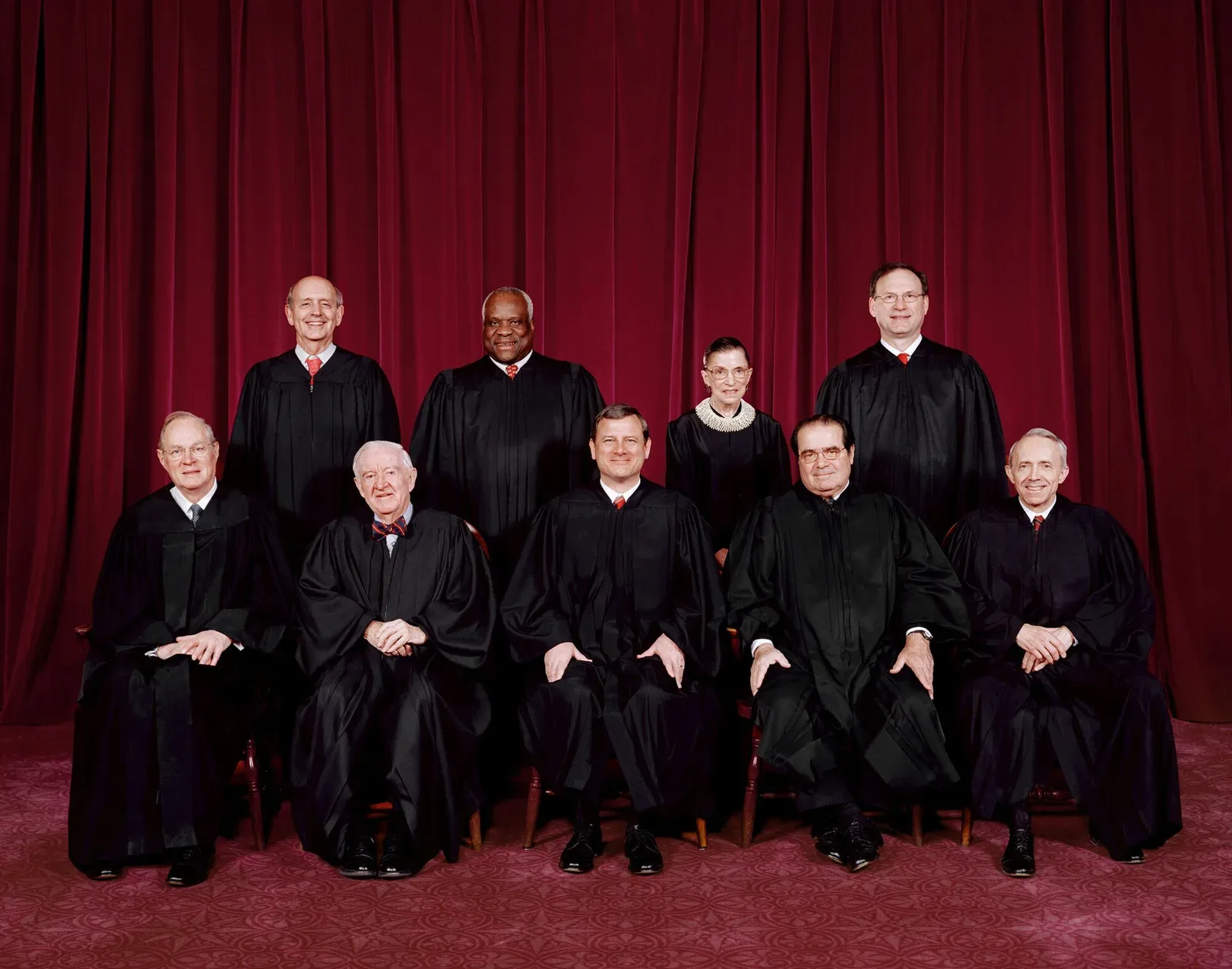
The U.S. Supreme Court — the final arbiter of Second Amendment scope and individual carry rights under the Constitution.
Steve Petteway (Public domain)
| Identification | |
|---|---|
Citation | Tex. Penal Code Ch. 46; Tex. Gov't Code Ch. 411, Subchapter H |
| Code Sections |
|
| Bill Number | H.B. 1927 |
| Jurisdiction | |
Territory | Texas |
Enacted By | Texas Legislature |
Administered By | Texas Department of Public Safety (DPS) |
| Timeline | |
| Effective | September 1, 2021 |
| Key Provisions | |
| |
| Applicability | |
| Applies To | All persons in the state of Texas who carry, possess, or use firearms, including residents and visitors |
| Exemptions |
|
| Penalties | Unlawful carrying of a handgun under Tex. Penal Code § 46.02 can result in criminal charges up to felony level depending on circumstances. Unlawful possession of a firearm by a felon is a third-degree felony under Texas law (2–10 years imprisonment) and up to 10 years federally (more with qualifying prior convictions). |
Related Laws | |
Legislative History | |
2021Texas Legislature passed HB 1927 (constitutional carry) and HB 918 (18–20 LTC exception for protective order holders) September 1, 2021HB 1927 and HB 918 took effect 2023Federal court issued injunction in Firearms Policy Coalition, Inc. v. McCraw, barring DPS from denying LTC applications solely on the basis of applicants being aged 18–20 2024U.S. Supreme Court decided United States v. Rahimi, upholding the federal prohibition on firearm possession for persons subject to qualifying domestic violence protective orders as consistent with the Second Amendment | |
| Major Amendments | |
September 1, 2021HB 1927 enacted constitutional/permitless carry, removing the requirement to hold an LTC to carry a handgun in most public places September 1, 2021HB 918 allowed Texans aged 18–20 protected by certain active protective orders or magistrate's emergency protective orders to obtain an LTC under Tex. Gov't Code § 411.172(i) 2023Federal court in Firearms Policy Coalition, Inc. v. McCraw enjoined enforcement of Texas's 21-and-older age floor for carry, extending permitless carry eligibility to otherwise-qualified adults aged 18–20 | |
Texas Gun Laws Complete Guide 2026
Legal information and analysis
From The Boise Gun Club Handbook
Updated August 15, 2026. The law moved twice since this article was written. The $200 making and transfer tax on suppressors, SBRs, SBSs and AOWs was eliminated effective January 1, 2026 by the One Big Beautiful Bill Act. Then on August 5, 2026 a federal court in Silencer Shop Foundation v. ATF struck down the NFA registration and approval requirements for those same items, and that injunction took effect August 13. It covers only the plaintiffs, their members and their customers. Living in a plaintiff state does not make you covered. Machine guns and destructive devices are unchanged. Read the current guide: NFA Items in 2026: What Actually Changed.
This is educational information, not legal advice. Laws change. Consult an attorney for your specific situation.
Texas has some of the most permissive carry laws in the country, but "permissive" doesn't mean "no rules" — the prohibited places list is long, the federal layer never goes away, and getting it wrong can mean felony charges.
The Legal Frameworkedit
Almost everything about carrying and possessing firearms in Texas runs through Texas Penal Code Chapter 46. That's your starting point for carry rules, prohibited locations, weapon definitions, and what gets you charged. Other statutes matter too — Texas Government Code Chapter 411, Subchapter H governs the License to Carry (LTC) program, and federal law (primarily 18 U.S.C. § 922) sits on top of all of it.
When state and federal law conflict, federal wins. The federal layer never goes away.
One thing Texas does well: preemption. Under state law, cities and counties cannot enact their own firearms regulations that conflict with or exceed state law. You don't have to research Austin's or Houston's local ordinances separately — the statewide rules in Chapter 46 control. The exceptions are certain specific locations (airports, courthouses, schools) that have their own statutory rules.
Constitutional Carry: What Changed in 2021edit
House Bill 1927, effective September 1, 2021, eliminated the requirement to have a license to carry a handgun in most public places. This is what people call "constitutional carry" or "permitless carry." Before that date, carrying a handgun in public without an LTC was a criminal offense. Now, most eligible Texans can carry openly or concealed without obtaining any permit.
Key legislative milestones in Texas constitutional carry implementation
The LTC didn't disappear — it still exists, still gets issued by the Texas Department of Public Safety (DPS), and still carries real benefits.
The LTC didn't disappear — it still exists and still carries real benefits. But for day-to-day carry in most public places, it's optional.
But for day-to-day carry in most public places, it's optional. Texas Penal Code § 46.02 is the statute that defines unlawful carrying of a handgun. If you meet all the requirements in that section, you're legal. If you don't, you're not — and the license doesn't fix it.
Who Can Carryedit
To carry a handgun in public under permitless carry, you must clear every item on this list:
| Requirement | Details | Disqualifiers |
|---|---|---|
| Age | 21+ (18-20 with court ruling) | Under 18 |
| Federal Status | Not prohibited under 18 U.S.C. § 922 | Felons, domestic violence convictions, etc. |
| Texas Felonies | No disqualifying felony convictions | Any felony under § 46.04 |
| Recent Misdemeanors | Clean for past 5 years | Assault, deadly conduct, terroristic threat, disorderly conduct with firearm |
| Protective Orders | No active orders under § 46.04(c) | Current restraining orders |
| Gang Membership | Not a criminal street gang member | Active gang affiliation |
| Intoxication | Not intoxicated while carrying | Under influence of drugs/alcohol |
All of those have to be true simultaneously. A five-year-old misdemeanor assault conviction doesn't disqualify you — a four-year-old one does.
The 18–20 Exception
In 2023, a federal court in Firearms Policy Coalition, Inc. v. McCraw enjoined enforcement of Texas's 21-and-older age floor, finding it unconstitutional under the Second Amendment. As a result, DPS no longer denies LTC applications solely because the applicant is 18–20 years old, and adults in that age range who are otherwise legally eligible may carry.
"Otherwise legally eligible" means everything on the list above except age still applies. A 19-year-old with a misdemeanor assault conviction from last year still can't carry. If you're in that age bracket and have any complicating factors in your history, talk to an attorney before you strap on a gun.
Separately, HB 918 (effective September 1, 2021) allows Texans aged 18–20 who are protected under certain active protective orders or magistrate's emergency protective orders to obtain an LTC under Texas Government Code § 411.172(i).
Who Cannot Possess Firearms at Alledit
Carry restrictions and possession restrictions are different problems. Some people can't legally own or hold a firearm anywhere — not just in public.
Federal and state firearm possession prohibitions decision tree
Felons
Under Texas Penal Code § 46.04, a person convicted of a felony cannot possess a firearm anywhere, including at home, until five years have passed since release from confinement or supervision, whichever is later. After five years, they may possess a firearm only at the premises where they live.
Federal law is stricter and permanent. 18 U.S.C. § 922(g)(1) permanently prohibits anyone convicted of a crime punishable by more than one year in prison from possessing firearms anywhere. That federal prohibition doesn't expire when Texas's five-year clock runs out.
A felon who legally possesses a handgun at home under Texas law can still face federal prosecution.
Unlawful possession of a firearm by a felon is a third-degree felony under Texas law (2–10 years), and up to 10 years federally — more if you have qualifying prior convictions.
Family Violence Convictions
A conviction for Class A misdemeanor assault of a family member under Texas Penal Code § 22.01 triggers a five-year state prohibition on firearm possession. Federally, the Lautenberg Amendment (18 U.S.C. § 922(g)(9)) permanently prohibits possession for anyone convicted of a misdemeanor crime of domestic violence — no expiration, no exceptions.
Protective Orders
If you're subject to certain active protective orders, you cannot possess firearms while that order is in effect. Federal law (18 U.S.C. § 922(g)(8)) covers orders restraining individuals from harassing or threatening an intimate partner. The Supreme Court upheld this prohibition in United States v. Rahimi (2024), confirming it's consistent with the Second Amendment where the individual poses a credible threat.
An active LTC gets suspended if the holder becomes subject to a qualifying protective order.
Other Federal Prohibitions
18 U.S.C. § 922(g) also bars possession for fugitives from justice, unlawful drug users or addicts, persons adjudicated mentally defective or committed to a mental institution, illegal aliens, persons dishonorably discharged from the military, persons who renounced U.S. citizenship, and certain others. These are federal prohibitions that apply in Texas regardless of what state law says.
Deferred Adjudication
If you're on deferred adjudication for a felony, you cannot possess a firearm during your community supervision period. Doing so creates new charges and can result in adjudication on the original felony.
How to Carry: Open and Concealededit
Concealed Carry
A concealed handgun must not be visible based on ordinary observation. Beyond that, the statute doesn't dictate method — holster, waistband, bag, whatever keeps it out of sight. There are no specific holster requirements for concealed carry.
Open Carry
If the handgun is partially or wholly visible, it must be in a holster. The 2021 law changed "shoulder or belt holster" to just "holster" under § 46.02(a-5), and the statute doesn't define the term. Ankle holsters, appendix holsters, chest rigs, and backpack holsters have all been discussed as potentially qualifying — but the lack of a statutory definition means there's legal gray area at the edges. The firearm needs to stay in that holster unless you're actually using it.
Displaying a handgun in public in a manner calculated to alarm others is disorderly conduct under Texas Penal Code § 42.01(a)(8) — a Class B misdemeanor. Open carry done right keeps the gun holstered. Open carry done wrong gets you arrested.
Long Guns
Texas has no permit requirement for carrying rifles or shotguns, and no specific holster or carry method requirement. The disorderly conduct statute still applies — carrying a rifle through a crowd in a way that's calculated to alarm people is still a crime under § 42.01.
Prohibited Placesedit
This is where people get themselves in trouble. Constitutional carry didn't eliminate gun-free zones — it just reorganized them.
Constitutional carry didn't eliminate gun-free zones — it just reorganized them.
The list under Texas Penal Code § 46.03 is where you'll find locations that are off-limits regardless of whether you have an LTC.
| Location Category | Penalty Level | Key Details |
|---|---|---|
| Schools (K-12) | 3rd Degree Felony | Campuses, grounds, buses; no exceptions |
| Polling Places | 3rd Degree Felony | Election Day and early voting |
| Courts | 3rd Degree Felony | Courtrooms and court offices |
| Airports | 3rd Degree Felony | Secured areas past TSA only |
| Hospitals and Nursing Facilities | Class A Misdemeanor | Unless the facility's administration gives written authorization |
| Correctional Facilities | 3rd Degree Felony | All detention facilities |
| Racetracks | 3rd Degree Felony | Licensed pari-mutuel facilities |
| Amusement Parks | Class A Misdemeanor | Only parks that meet the statutory definition: county over 1 million people, 75+ acres, controlled entries |
| 51% Establishments | 3rd Degree Felony | Businesses with a TABC alcohol permit that earn 51% or more of income from on-premises alcohol sales |
| Private Property | Trespass Offense | Only with proper 30.05/30.06/30.07 notice |
Always Off-Limits (Felony Violations)
Carrying a firearm in these locations is a third-degree felony (2–10 years):
- Schools and educational institutions — K-12 campuses, grounds where school-sponsored activities occur, school buses. Exception: LTC holders may carry concealed in parking lots, driveways, and walkways of colleges unless effectively noticed otherwise.
- Polling places — on Election Day and during early voting
- Courts and court offices — any government court and offices utilized by the court
- Racetracks — facilities licensed for pari-mutuel wagering
- Secured areas of airports — past TSA checkpoints; the public areas before security are generally not prohibited
- Within 1,000 feet of the execution location when a death row execution is scheduled
- Mental hospitals, unless the person has written authorization of the administration
- Correctional facilities
- Bars and other businesses that earn 51% or more of income from on-premises alcohol sales
These places are Class A misdemeanors instead: hospitals and nursing facilities (unless the facility gives written authorization), civil commitment facilities, qualifying amusement parks, and high school, collegiate and professional sporting events (§ 46.03(g-2)).
College and University Campuses
Campus carry deserves its own discussion because it's a hybrid situation. Permitless carry does not apply on college campuses — that's explicit in HB 1927. Only LTC holders may carry concealed handguns on public university and community college campuses, under Senate Bill 11 (effective August 1, 2016 for four-year schools, August 1, 2017 for community colleges).
Open carry remains prohibited on all college campuses, regardless of LTC status. And each institution can designate exclusion zones — specific buildings or areas where even LTC holders can't carry. They have to provide effective notice of those zones, and they can't make the exclusions so broad that they effectively ban carry across the entire campus.
Places Where Notice Makes It Criminal
Certain places become off-limits only after the property owner or operator provides proper statutory notice:
- Private businesses and property — owners can prohibit carry by posting specific notices. For LTC holders carrying concealed, the required sign is the 30.06 notice. For open carry by LTC holders, it's the 30.07 notice. Permitless carriers are covered by a separate notice provision under § 30.05. Ignoring a valid notice after being told to leave becomes a criminal trespass offense.
- Religious organizations — can prohibit carry on their premises using proper notice, or can allow it. No default rule either way.
- Bars and establishments with 51% or more of income from on-premises alcohol sales are off-limits to LTC holders and permitless carriers alike, and carrying there is a third-degree felony under § 46.03(a)(7). The statute does not turn on a posted sign. The Texas Alcoholic Beverage Commission decides which businesses meet the 51% test.
Government Buildings
Government buildings that aren't courts are a complicated area. Generally, government entities can restrict carry in their buildings by posting proper notice. Some government-owned facilities have specific statutory rules. If you're unsure about a specific government building, the safest move is to leave your firearm in the vehicle.
Purchasing Firearms in Texasedit
Background Checks
All purchases through a Federal Firearms Licensee (FFL) — any gun store or dealer — require a NICS (National Instant Criminal Background Check System) check, per federal law. Texas does not run a separate state background check system — NICS is the check. There is no waiting period in Texas for firearm purchases.
Private Sales
Texas does not require background checks on private party sales between individuals who are both Texas residents. One person can sell a firearm to another without going through a dealer, as long as neither party has reason to believe the other is a prohibited person. Selling to someone you know or have reasonable cause to believe is prohibited is a federal crime.
Private sales across state lines must go through an FFL in the buyer's state, per federal law.
Age Requirements for Purchase
Federal law sets 18 as the minimum age to purchase long guns from a dealer and 21 for handguns from a dealer. Private party sales of handguns to 18–20-year-olds are not federally prohibited, though the Firearms Policy Coalition v. McCraw ruling affects carry rights for that age group in Texas.
Registration
Texas has no firearm registration requirement. There is no state database of who owns what guns.
Ghost Guns
Unserialized firearms built from kits or 3D-printed are currently legal to possess in Texas for personal use, provided you're not otherwise prohibited. Manufacturing them with intent to sell without an FFL violates federal law. Federal rules on serialization of privately made firearms have been in regulatory flux — check current ATF guidance before building.
NFA Items in Texasedit
Texas is generally NFA-friendly at the state level, with a significant update in 2025.
| NFA Item Type | Texas Law Status | Federal Requirements | Key Changes |
|---|---|---|---|
| Suppressors | Legal | Form 4, $0 tax, NICS | Lone Star Suppressor Act (limited effect) |
| Short-Barreled Rifles | Legal (2025) | Form 4, $0 tax, NICS | State prohibition repealed SB 1596 |
| Short-Barreled Shotguns | Legal (2025) | Form 4, $0 tax, NICS | State prohibition repealed SB 1596 |
| Machine Guns | Prohibited* | Pre-1986 + Form 4 | *Except federal compliance |
| AOW/Destructive Devices | Follow Federal | Various forms/taxes | No state changes |
Suppressors
Suppressors are legal to own in Texas. You still have to comply fully with the federal National Firearms Act — ATF Form 4, NICS check, and the wait. The $200 tax stamp ended January 1, 2026. Once you have an approved Form 4 in hand, you're good under Texas law. Texas passed the Lone Star State Suppressor Act in 2021, which attempted to exempt Texas-made, Texas-sold suppressors from federal regulation, but federal courts have not validated that theory. Treat suppressors as federally regulated items regardless.
Short-Barreled Rifles and Short-Barreled Shotguns
Effective September 1, 2025, Senate Bill 1596 repealed all state-level criminal prohibitions on short-barreled rifles (SBR) and short-barreled shotguns (SBS). Texas no longer imposes any criminal penalty at the state level for possessing, manufacturing, transporting, repairing, or selling these firearms.
Federal law did not change. SBRs and SBSs remain NFA-regulated items requiring ATF registration and an approved Form 4 before you take possession. The $200 tax stamp ended January 1, 2026. Possessing an unregistered SBR or SBS is a federal felony punishable by up to 10 years in federal prison. Texas eliminating its state charge doesn't give you any protection from federal prosecution.
Machine Guns
Fully automatic firearms remain prohibited under Texas Penal Code § 46.05 unless possessed in compliance with federal law — meaning a properly registered pre-1986 machine gun with an approved ATF Form 4. Texas has not changed its machine gun prohibition. Illegal possession is a third-degree felony under state law and a federal felony carrying up to 10 years.
Other NFA Items
Destructive devices (except items in compliance with federal law) and short-barreled firearms as previously defined remain regulated at the federal level. AOW (Any Other Weapon) items require ATF registration federally. The $5 AOW tax is now $0. Texas follows federal rules on these.
Prohibited Weapons Under Texas Lawedit
Texas Penal Code § 46.05 lists weapons that are prohibited regardless of your criminal history or license status:
- Explosive weapons
- Machine guns (fully automatic)
- Armor-piercing ammunition
- Chemical dispensing devices (other than small personal-protection sprays)
- Zip guns
- Tire deflation devices
Short-barreled firearms were removed from this list effective September 2025. Possession of a prohibited weapon is generally a third-degree felony (2–10 years). Items possessed in compliance with federal law — like a properly registered machine gun — have a statutory exception.
Vehicles and Transportedit
In Your Car
Texas law has always been relatively permissive about firearms in vehicles. Under Texas Penal Code § 46.02, a person can carry a handgun in their vehicle or watercraft if:
- The handgun is not in plain view, OR
- The person is traveling (a legal concept that Texas courts have interpreted broadly)
With constitutional carry now in effect, the vehicle rules are somewhat simplified for eligible carriers. If you can legally carry in public, you can have the handgun in your vehicle. If you're a prohibited person, none of this applies to you.
A loaded firearm in the center console or glove box is generally legal for a person who isn't prohibited. A handgun sitting visibly on the seat is a different matter — that falls into open carry territory and the holster requirement applies.
FOPA Safe Passage
The Firearm Owners Protection Act (FOPA) provides a federal safe passage provision for transporting firearms through states where they might otherwise be illegal. To use it, the firearm must be unloaded and stored in a locked container (not the glove box or console) that's not readily accessible, and possession must be legal at both the origin and destination.
This protects you in transit through states like New York or New Jersey — it does not protect you once you stop and start doing things with the firearm.
FOPA applies to transport, not carry.
Airports
Firearms are prohibited in secured areas of airports under § 46.03 — that means past TSA checkpoints. The public areas before security are not prohibited by Texas law, though individual airports may have their own rules for their public spaces.
For air travel, TSA requires firearms to be unloaded, in a hard-sided locked container, and declared at check-in as checked baggage. Ammunition must also be in checked baggage. The airline has its own rules on top of TSA's — check with your carrier before you fly.
Self-Defense: Castle Doctrine and Stand Your Groundedit
The Castle Doctrine
Texas has a strong Castle Doctrine codified in Texas Penal Code § 9.31 and § 9.32. You have no duty to retreat when you're in your habitation, vehicle, or workplace. The law presumes your use of deadly force was reasonable if someone unlawfully and forcibly entered your home, vehicle, or business — or if they attempted to remove you from one of those places by force.
"Habitation" under Texas law includes your home, a room in a hotel, any structure adapted for overnight accommodation, and components like attached garages and porches.
Stand Your Ground
Texas goes further than just protecting you in your home. § 9.31(e) provides that a person has no duty to retreat from any location where they have a right to be, as long as they were not the initial aggressor and were not engaged in criminal activity at the time. Texas's Stand Your Ground protection applies in public spaces — you don't have to run if you're somewhere you're legally allowed to be.
Deadly Force
Under § 9.32, deadly force is justified when you reasonably believe it's immediately necessary to protect yourself or another against another person's use or attempted use of deadly force, or to prevent aggravated kidnapping, murder, sexual assault, aggravated sexual assault, robbery, or aggravated robbery. Texas also allows deadly force to protect property in limited circumstances under § 9.42 — specifically to prevent arson, burglary, robbery, aggravated robbery, theft during the nighttime, or criminal mischief during the nighttime, when the use of force other than deadly force would expose you to substantial risk of death or serious bodily injury.
This is a nuanced area of law — if you're considering property defense scenarios, consult an attorney.
Civil Immunity
Texas Civil Practice and Remedies Code § 83.001 provides civil immunity for persons who use deadly force that is justified under the Penal Code. If your use of force is legally justified, you generally can't be successfully sued for it by the attacker or their estate.
Red Flag / ERPO Lawsedit
Texas does not have a red flag law or Extreme Risk Protection Order (ERPO) statute as of 2026. No such law has passed the Texas Legislature. Legislation to enact one has been introduced in prior sessions and has not advanced. If this changes, it will be a significant development — watch the 2025 legislative session outcomes and any 2027 session activity.
The closest Texas analog is the prohibition on firearm possession while subject to a protective order — but that requires a court proceeding with due process, not an ex parte order based on someone's concern about future behavior.
Preemptionedit
Texas has strong state preemption of local firearm regulations. Local governments cannot enact ordinances that regulate the transfer, possession, carrying, storage, or discharge of firearms or ammunition in ways that conflict with or exceed state law. This has been litigated and upheld repeatedly.
Practically speaking: Austin, Houston, Dallas, and San Antonio cannot have their own carry permit requirements, their own prohibited places lists beyond what state law allows, or their own registration schemes. The rules in Chapter 46 apply statewide.
The exceptions are genuinely narrow — state-authorized entities like universities, hospitals, and courts have statutory authority to regulate firearms on their specific premises. That's different from a city passing an ordinance.
License to Carry (LTC): Why Bother?edit
If you can carry without a license, why get one? Several concrete reasons:
Primary benefits of obtaining a Texas License to Carry despite constitutional carry
Access to campus carry. LTC holders can carry concealed handguns on college campuses. Permitless carriers cannot.
Reciprocity. Many states recognize Texas LTCs for carry privileges within their borders. If you travel with a firearm and want to carry in other states, the LTC is your ticket. An LTC is far more portable than permitless carry rights.
Business notice. Some businesses may post only the 30.05 notice (prohibiting unlicensed carry) while not posting 30.06 (prohibiting licensed concealed carry). An LTC holder can carry concealed in that business. A permitless carrier cannot.
Duty to inform. LTC holders have a statutory duty under Texas Government Code § 411.205 to display both their driver's license and LTC when a peace officer asks for ID during a stop where they're carrying. Non-LTC carriers have no such duty — there is no general duty to inform in Texas for permitless carriers.
NICS bypass. Federally, an LTC can substitute for a NICS check at the point of sale if it meets currency requirements. This speeds up dealer purchases.
LTC Requirements
Texas Government Code Chapter 411, Subchapter H governs the LTC program. DPS administers it. Requirements include:
- Meet all eligibility criteria (no disqualifying convictions, no protective orders, etc.)
- Complete a 4–6 hour handgun proficiency course from a certified instructor
- Pass a written exam and shooting proficiency demonstration
- Submit fingerprints and a completed application to DPS
- Pay the required fee (reduced or waived for certain veterans and active military)
DPS can issue or deny LTCs, and there's an appeal process for denials.
Reciprocity: Taking Your Texas LTC to Other Statesedit
Texas has reciprocity agreements with a substantial number of states. The DPS maintains a current list — it changes periodically as states update their own laws.
| Recognition Status | States | Notes |
|---|---|---|
| Full Recognition | AL, AK, AZ, AR, CO, FL, GA, ID, IN, IA, KS, KY, LA, ME, MI, MS, MO, MT, NE, NV, NM, NC, ND, OH, OK, PA, SC, SD, TN, UT, VA, WV, WI, WY | May have additional restrictions |
| No Recognition | CA, CT, DE, HI, IL, MD, MA, MN, NJ, NY, OR, RI, WA | Cannot carry with TX LTC |
| Partial/Restricted | Varies by state | Check specific state laws |
| Constitutional Carry | Many overlap with recognition states | May not need permit |
States that do not honor Texas LTCs include California, Connecticut, Delaware, Hawaii, Illinois, Maryland, Massachusetts, Minnesota, New Jersey, New York, Oregon, Rhode Island, and Washington, among others.
This list changes. Before you travel with a firearm and intend to carry, verify current reciprocity on the DPS Reciprocity page (linked in Resources below). Some states honor Texas LTCs but have additional restrictions on where you can carry or how — read those states' laws before you go.
Out-of-state visitors coming to Texas: if your home state has a carry license and Texas recognizes it, you can carry in Texas under the terms Texas law sets for LTC holders. Texas is generally permissive about honoring other states' licenses.
Gifts, Inheritances, and Transfersedit
Transferring a firearm as a gift or through inheritance between Texas residents does not require going through an FFL, as long as both parties are residents of the same state and the recipient is not a prohibited person. You cannot give a firearm to someone you know or have reasonable cause to believe is prohibited.
If you're transferring a firearm to a resident of another state, the transfer must go through an FFL in the recipient's state, per federal law — even if it's a gift or inheritance.
There is no Texas requirement to register transferred firearms or notify any state agency of a private transfer.
Storageedit
Texas has no mandatory safe storage law for general adult firearm owners. However, Texas Penal Code § 46.13 creates criminal liability for leaving a firearm in a place where a child (under 17) gains access to it and the firearm is used to cause death or serious bodily injury, or the child carries it to school. This is a Class C misdemeanor, elevated to a Class A misdemeanor if the child discharges the firearm and causes death or serious bodily injury to themselves or another person.
Securing the firearm in a locked container or with a trigger lock defeats the offense, because the crime is failing to secure it (§ 46.13(a)(3), (b)). The statute also lists affirmative defenses: the child's access was supervised by an adult over 18 for hunting, sporting or other lawful purposes; the child was lawfully defending people or property; the child gained access by entering the property in violation of the code; or the access happened while the actor was engaged in an agricultural enterprise.
The Bottom Lineedit
Texas gives you a lot of room as a gun owner, but the federal layer never goes away, the prohibited places list is longer than most people realize, and the consequences for getting it wrong run from misdemeanor to federal felony.
Texas gives you a lot of room as a gun owner, but know your status, know where you're going, and if your situation has any complexity, spend the money on an attorney before you spend it on a gun.
Know your status, know where you're going, and if your situation has any complexity — prior convictions, protective orders, NFA items — spend the money on an attorney before you spend it on a gun.
Resourcesedit
- Texas Penal Code Chapter 46 (Weapons): https://statutes.capitol.texas.gov/Docs/PE/htm/PE.46.htm
- Texas Government Code Chapter 411, Subchapter H (LTC Program): https://statutes.capitol.texas.gov/Docs/GV/htm/GV.411.htm
- Texas State Law Library — Gun Laws Guide: https://guides.sll.texas.gov/gun-laws
- Texas DPS Handgun Licensing Program: https://www.dps.texas.gov/section/handgun-licensing
- Texas DPS LTC Reciprocity Agreements: https://www.dps.texas.gov/section/handgun-licensing/state-reciprocity-information
- Texas DPS LTC FAQs: https://www.dps.texas.gov/section/handgun-licensing/handgun-licensing-faqs
- HB 1927 (Constitutional Carry, 87th Legislature): https://capitol.texas.gov/BillLookup/History.aspx?LegSess=87R&Bill=HB1927
- SB 1596 (SBR/SBS repeal, effective September 1, 2025): https://capitol.texas.gov/BillLookup/History.aspx?LegSess=89R&Bill=SB1596
- 18 U.S.C. § 922 (Federal firearms prohibitions): https://uscode.house.gov/view.xhtml?req=granuleid:USC-prelim-title18-section922
- ATF NFA information: https://www.atf.gov/rules-and-regulations/national-firearms-act
- TSA firearms and ammunition rules: https://www.tsa.gov/travel/security-screening/whatcanibring/items/firearms
- Firearms Policy Coalition, Inc. v. McCraw (N.D. Tex. 2023): https://www.courtlistener.com/docket/14482896/firearms-policy-coalition-inc-v-mccraw/
- United States v. Rahimi, 602 U.S. ___ (2024): https://www.supremecourt.gov/opinions/23pdf/22-915_8o6b.pdf
Last Updated: February 23, 2026
- Ace Hardware of Sandusky(Sandusky, MI)
- New Philly Sportsman Specialities(New Philadelphia, OH)
- Atwoods Ranch & Home #46(LACY LAKEVIEW, TX)
- G & P Distributors(McConnellsburg, PA)
This is not legal advice
This guide provides general information about federal and state firearms laws based on publicly available statutes. Laws change frequently and vary significantly by state. Always verify current laws in your jurisdiction. Consult a qualified attorney for legal advice on your specific situation. When in doubt, contact local law enforcement or state police.
Loading comments...