Quick Reference
Understanding Ammunition Basics

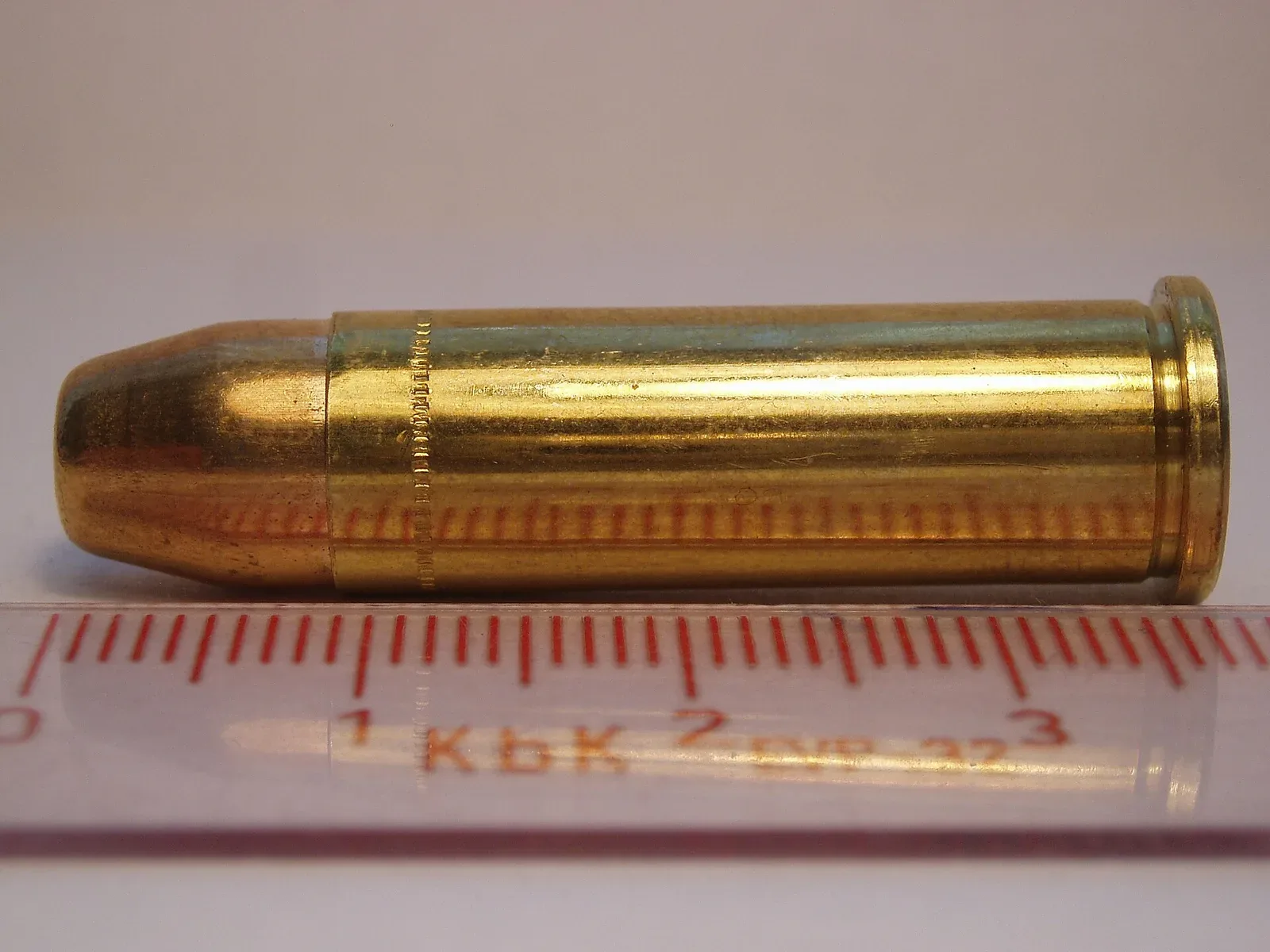
The .38 Special FMJ round — a revolver cartridge whose case, primer, powder charge, and bullet components define modern ammunition construction.
user:Malis (Public domain)
| Time & Effort | |
|---|---|
Read Time | 10 min read |
Safety | |
| |
Key Takeaways | |
| |
Related Topics | |
| |
Understanding Ammunition Basics
essential knowledge for responsible gun owners
From The Boise Gun Club Handbook
You can't shoot what you don't understand--and mixing up ammunition can wreck your gun or worse. Every round has four parts that work the same way every time: firing pin hits primer, primer lights powder, powder pushes bullet down the barrel.
- The safety rule: Match the headstamp on your brass to the marking on your barrel
- The wallet rule: Know what you're buying before you buy a case of it
- The range rule: Different ammo does different things--practice ammo isn't defense ammo
Reading the Brassedit
The headstamp tells you what you're actually shooting, not the box it came from. I've watched shooters grab .40 S&W from a 9mm box because someone dumped the wrong ammo back in at the range.
Federal 9mm shows "FC 9MM LUGER" stamped right into the case head. Your barrel has matching info somewhere on it. Find both markings and make sure they match--that's your real safety check.
Never trust boxes alone. The headstamp on the brass is your real safety check—match it to your barrel marking every time.
Why Caliber Names Make No Senseedit
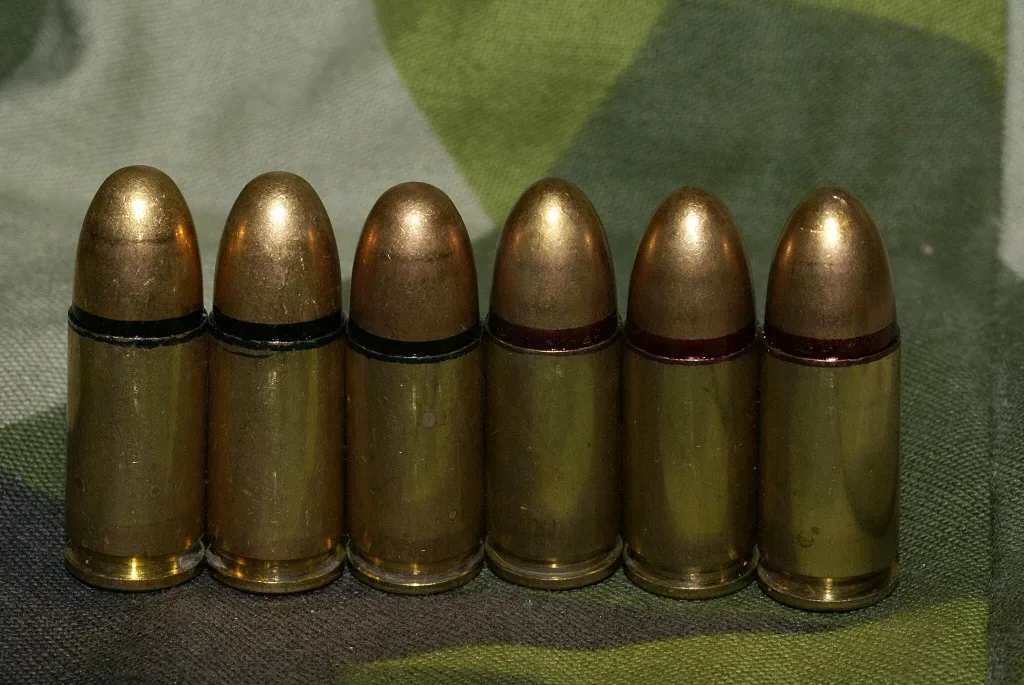
Ammunition naming follows zero logic because it's 150 years of different companies calling their cartridges whatever sounded good for marketing.
Some examples that'll save you confusion: .308 bullets actually measure 308 thousandths of an inch across. 9mm bullets run roughly 9 millimeters.
But .38 Special uses .357-inch bullets, and 9x19mm means 9mm bullet in a 19mm-long case.
| Common Name | Alternative Names | Actual Bullet Diameter | Case Length | Notes |
|---|---|---|---|---|
| 9mm Luger | 9x19mm, 9mm Parabellum | 9mm | 19mm | Most common pistol round |
| .38 Special | .38 Spl | .357 inches | 1.155 inches | Uses .357" bullets despite name |
| .223 Remington | .223 Rem | .224 inches | 1.76 inches | Lower pressure than 5.56 |
| 5.56 NATO | 5.56x45mm | .224 inches | 1.76 inches | Higher pressure than .223 |
| .308 Winchester | .308 Win | .308 inches | 2.015 inches | Civilian version of 7.62 NATO |
| 7.62 NATO | 7.62x51mm | .308 inches | 2.015 inches | Military specification |
Your gun eats one specific cartridge. 9mm Luger and 9mm Makarov are both "9mm" but won't swap. The wrong cartridge might not chamber, might chamber loose, or might chamber tight--none of those outcomes end well.
The Four Parts That Matteredit
| Component | Function | Key Variations | What to Know |
|---|---|---|---|
| Case | Contains powder, holds primer, supports bullet | Brass, steel, aluminum | Brass reloads best, steel rougher extraction |
| Primer | Ignites powder charge | Small/large, Boxer/Berdan | Boxer = American standard, easier to reload |
| Powder | Creates pressure to propel bullet | Fast-burning (pistol), slow-burning (rifle) | Never exceed published load data |
| Bullet | Projectile that hits target | FMJ, JHP, soft point, ballistic tip | Construction determines terminal performance |
How ammunition functions from firing pin strike to bullet exit
Cases Do the Heavy Work
Brass expands under pressure to seal your chamber, then contracts enough for smooth extraction. Steel cases work fine but feel rougher coming out. Aluminum is range-only stuff you can't reload.
Case shape determines how your round sits in the chamber. Pistol cartridges usually headspace off the case mouth--the chamber stops the cartridge when the case mouth hits the right spot. Rifle rounds typically headspace off the shoulder angle.
Get headspacing wrong and your gun either won't fire or fires when it shouldn't. Both problems suck.
Primers Start the Party
Two sizes exist: small and large. The firing pin whacks the primer, primer shoots flame through the flash hole into your powder charge.
Boxer primers have one center flash hole and reload easily--that's the American standard. Berdan primers use multiple offset holes and are a pain to reload--that's the European way.
Some indoor ranges require lead-free primers to prevent heavy metal contamination. Check their rules before you show up with a case of surplus ammunition.
Powder Provides the Push
Modern smokeless powder burns at controlled rates to build pressure without turning your gun into a hand grenade. Fast-burning powder works for pistols, slower powder for rifles.
Powder charges get measured in grains--7,000 grains equals one pound. More powder generally means higher velocity, but you can't just dump extra in there. Pressure limits exist for good reasons.
Bullets Do the Job
Everything else just delivers the bullet to target. What happens when it gets there depends on bullet construction:
- Full Metal Jacket (FMJ) - Lead core wrapped in copper jacket, cheap range ammunition
- Jacketed Hollow Point (JHP) - Expands on impact, defensive ammunition
- Soft Point - Exposed lead tip with partial copper jacket, hunting ammunition
- Ballistic Tip - Polymer tip over hollow point, hunting and some defensive use
Bullet weight affects performance--light bullets run fast, heavy bullets hit hard. Your gun might prefer different weights, so test what you'll actually use.
Rimfire vs Centerfire Basicsedit
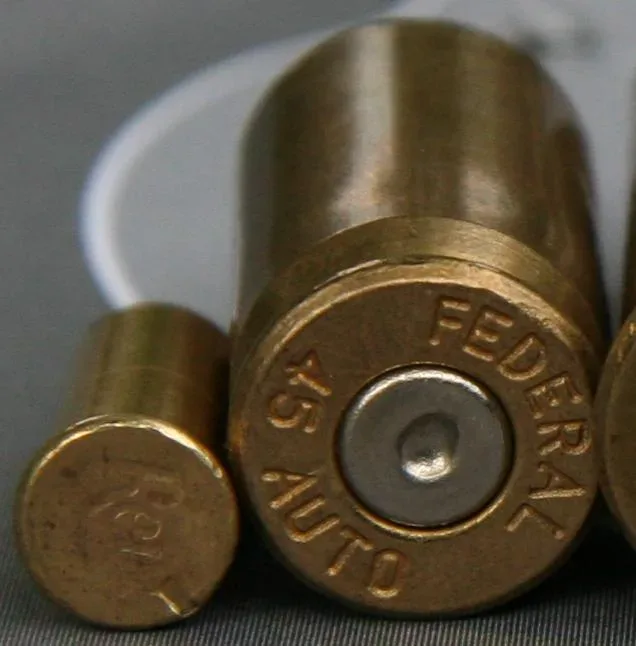
.22 Long Rifle is rimfire--primer compound gets spun into the rim during manufacturing, and the firing pin crushes the rim to ignite it. Cheap to shoot, low recoil, can't be reloaded. Every shooter in Idaho owns at least one .22.
Centerfire puts the primer in the center of the case head. This covers everything else you'll shoot--9mm Luger, .45 ACP, .308 Winchester, .30-06, whatever. Reloadable, handles higher pressures, costs more per round.
Matching Ammunition to Purposeedit
| Purpose | Ammunition Type | Key Features | Recommended Brands | Cost Level |
|---|---|---|---|---|
| Practice | FMJ, steel-cased OK | Cheapest reliable option | Federal, Winchester, Remington, CCI | Low |
| Defense | JHP, premium quality | 12-18" penetration, reliable expansion | Federal HST, Speer Gold Dot, Hornady Critical Defense | High |
| Hunting | Soft point, ballistic tip | Match bullet to game size | Barnes TTSX, Nosler Ballistic Tip | Medium-High |
| Competition | Match grade | Consistent powder charges | Federal Gold Medal, Black Hills Match | Very High |
Decision tree for selecting appropriate ammunition type
Practice Ammunition
Buy the cheapest Full Metal Jacket from reputable manufacturers you can find. Federal, Winchester, Remington, and CCI make solid practice loads. You're punching paper and learning fundamentals--save money here.
Steel-cased stuff like Tula and Wolf runs fine in most guns and costs less than brass-cased. Some ranges ban it because steel damages backstops or they want to resell your brass. Call ahead.
Surplus military ammunition can offer good value if you know what you're buying. Most of it's decent quality, but storage conditions vary wildly.
Defensive Ammunition
This isn't where you save five dollars per box. Federal HST, Speer Gold Dot, and Hornady Critical Defense get tested by people who actually get shot at professionally.
Your defensive loads should penetrate 12-18 inches in ballistic gelatin while expanding reliably. That's the FBI standard based on real shootings, not marketing claims.
Test your carry ammunition in your actual gun first. Some pistols are picky about what they'll feed reliably. Replace carry ammo annually even if you don't shoot it--ammunition ages over time.
Hunting Loads
Match your bullet to your game. Deer don't need the same ammunition as elk. Soft points and ballistic tips handle most hunting situations well.
Premium loads like Barnes TTSX cost more but perform when you've hiked three hours for one shot opportunity. Bullet construction matters more than velocity for clean kills.
Bullet weight affects penetration and expansion. Light bullets expand fast--good for deer-sized animals. Heavy bullets punch through bone and muscle--better for elk and larger game.
Match Ammunition
Competition shooters pay extra for consistent powder charges and tight quality control. Federal Gold Medal Match, Hornady ELD Match, Black Hills Match--you're buying shot-to-shot consistency.
For casual shooting at 25 yards, match ammunition is expensive overkill. Save the money for more practice rounds.
Understanding Performance Numbersedit
| Cartridge | Typical Velocity (fps) | Typical Energy (ft-lbs) | Bullet Weight (grains) | Use Category |
|---|---|---|---|---|
| .22 LR | 1,070 | 102 | 40 | Practice/small game |
| 9mm Luger | 1,150 | 350 | 115-147 | Defense/practice |
| .45 ACP | 850 | 400 | 230 | Defense |
| .223 Rem | 3,240 | 1,282 | 55 | Varmint/target |
| .308 Win | 2,820 | 2,648 | 150 | Hunting/precision |
| .30-06 | 2,900 | 2,872 | 150-180 | Big game hunting |
Muzzle velocity measures bullet speed leaving your barrel in feet per second. Typical 9mm runs around 1,150 fps, .45 ACP hits about 850 fps, rifle rounds reach 3,000+ fps.
Muzzle energy combines velocity and bullet weight into foot-pounds of energy. Energy numbers matter, but bullet construction and shot placement matter more for actual results.
Trajectory describes the arc gravity pulls your bullet through. Faster bullets fly flatter because they reach the target before gravity drags them down as much.
Storage That Worksedit
Keep ammunition cool, dry, and at stable temperatures. Properly stored modern ammunition lasts decades--I've shot 1960s surplus that worked perfectly.
Basements usually work well in Idaho. Garages get hot during summer--heat degrades powder over time. Store in original boxes or quality ammo cans with good seals.
Label everything clearly. Mixed-up loose rounds cause problems you don't want to discover at the range.
Problems You'll Run Intoedit
Emergency procedures for common ammunition malfunctions
Failure to fire means the primer didn't light. Usually caused by a dirty firing pin or bad ammunition. Rotate the round 180 degrees and try again. Two failures on the same round means bad primer--dispose of it safely.
Squib loads make a weak pop instead of a normal bang, and the bullet gets stuck in your barrel. Stop immediately. Do not fire another round. Clear the gun and check your barrel with a cleaning rod.
A second round behind a stuck bullet will destroy your gun and possibly you. Always check your barrel after a squib load.
Hangfires create a delay between trigger pull and ignition. Rare but dangerous. Keep the gun pointed downrange for 30 seconds before handling a round that didn't fire immediately.
What to Buy Firstedit
Start with 500-1,000 rounds of quality practice ammunition in your gun's caliber. Add 50-100 rounds of premium defensive ammunition if you're carrying the gun.
Shoot at least one box of your defensive loads to verify reliable function. Some guns are picky about what they'll eat--test different brands and bullet weights to see what yours prefers.
Buy from established dealers with good reputations. If the price seems impossible, it probably is. Quality control costs money, and ammunition manufacturing tolerances matter for safety.
- Cash America Pawn(BRYAN, TX)
- R&R Sports & Outdoors(Brandon, FL)
- Bi-mart - Yakima (Fruitvale Ave)(Yakima, WA)
- Gls Guns(Sumner, IA)
Loading comments...