Details
Boxer Primer

Percussion caps in 4.5mm and 6.0mm sizes — the copper cups filled with fulminate that replaced flintlock mechanisms in the 1820s.
| Origins | |
|---|---|
| Invented | 1860s |
| Inventor | Colonel Edward Mounier Boxer |
| Country | England |
| Patent Date | 1866 (England), 1869 (United States) |
| Timeline | |
| Era | 19th century onwards |
| Impact | |
| Significance | Self-contained centerfire primer system with integrated anvil that enabled reliable ammunition reloading and became the standard for American ammunition manufacturing and civilian reloading |
Boxer Primer: The Small Component That Shaped Modern Ammunition
Firearms encyclopedia article
From The Boise Gun Club Handbook
Overviewedit
Tuck a spent cartridge case primer-side up and you're looking at the result of one of the most consequential design decisions in ammunition history. That small circular pocket -- and the single hole at its center -- is the signature of the Boxer primer, a system invented in 1860s England that became the backbone of American ammunition manufacturing and, by extension, the recreational reloading industry.
The Engineering Choice
The primer itself is deceptively simple: a small metal cup containing a pressure-sensitive explosive compound and, in the Boxer design, an integrated metal anvil. When a firing pin strikes the base of the cup, it crushes the priming compound between the cup and that anvil, generating a flash of hot gas and incandescent particles that travel through a single central flash hole into the powder charge. The whole sequence takes fractions of a millisecond.
But getting to that reliable, repeatable ignition took nearly 800 years of iteration -- from glowing matchcord to flintlock to percussion cap to the centerfire primer we load into brass today.
Why Boxer Won
The Boxer primer didn't win on performance — it won on logistics. That single engineering choice rippled outward into military doctrine, civilian shooting culture, and the entire American reloading industry.
The Boxer primer didn't win on performance — it won on logistics. That single engineering choice rippled outward into military doctrine, civilian shooting culture, and the entire American reloading industry.
Per the sources available, there is no meaningful ballistic difference between Boxer and Berdan primer systems when all other variables are equal. It won on logistics -- specifically, on how easy it is to knock out a spent primer, seat a fresh one, and run the case again.
Development Historyedit
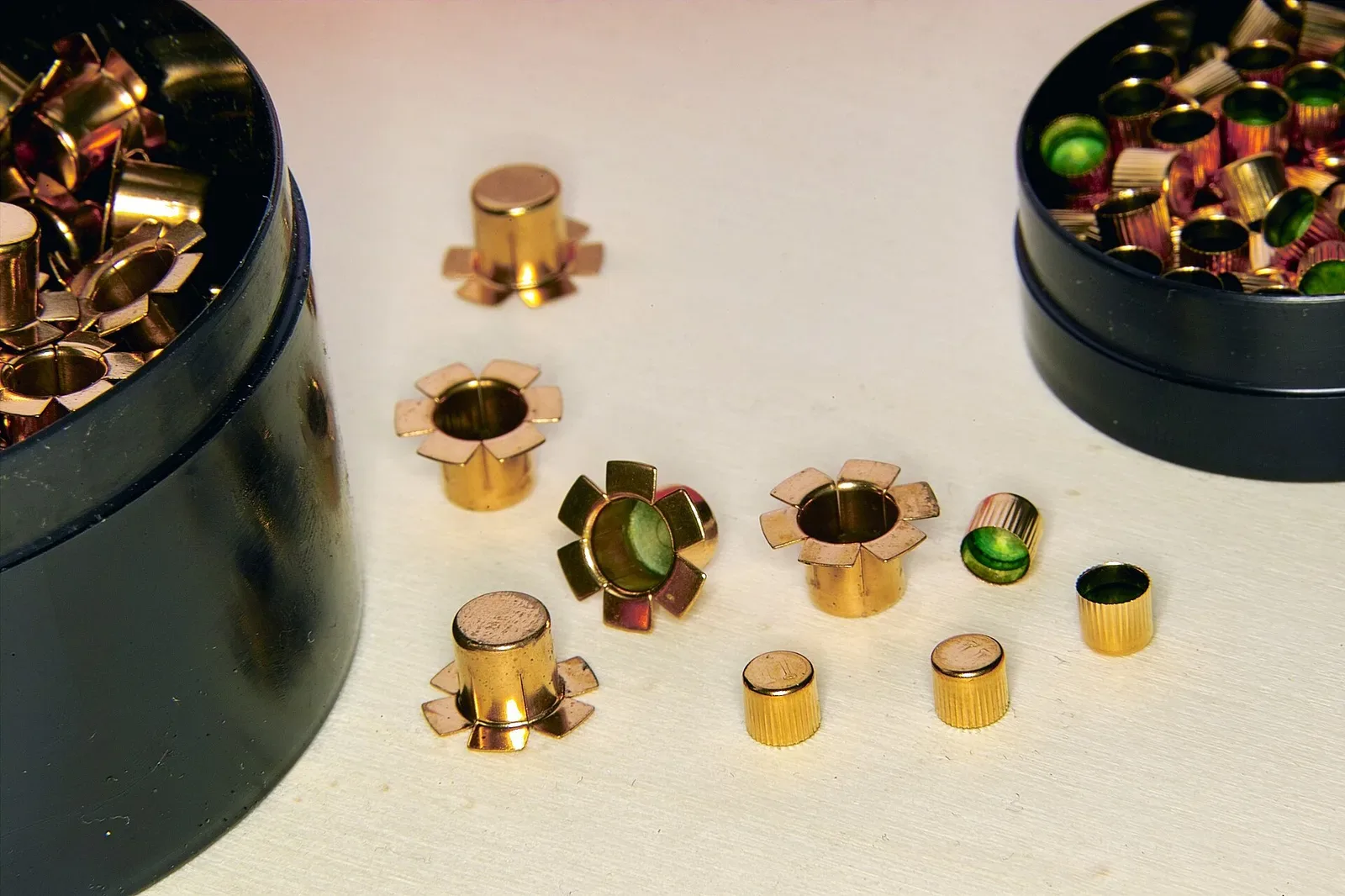
Pre-Primer Systems
The story starts well before Colonel Edward Mounier Boxer sat down at his drafting table. According to American Rifleman, primers date back to 1828 when Casimir Lefaucheaux developed the first pinfire primer, using fulminate of mercury as the priming compound. Fulminate of mercury is highly sensitive to shock and heat -- useful properties in a primer -- but it left corrosive residue, degraded during storage, and caused misfires in smokeless powder ammunition stored for extended periods.
The pinfire system that Lefaucheaux pioneered used cartridges with a small pin protruding from the base. The hammer drove the pin into the priming compound. It worked, but pinfire cartridges were fragile and prone to accidental ignition if bumped. The design had a short operational life.
The next major step came with the percussion cap in the early 19th century -- a small metal cup of priming compound placed over a nipple on the firearm's breech. It was more consistent and faster than the flintlock, but still a separate component from the cartridge. Military use in particular demanded something more weather-resistant and self-contained.
Key milestones in primer development from pinfire to modern lead styphnate
The Two Inventors
Two inventors addressed that need almost simultaneously in the 1860s, and the coincidence of their timing -- and the irony of what happened afterward -- is one of the better stories in firearms history.
Hiram Berdan, born September 6, 1824, in Phelps, New York, was a U.S. Army Major General and engineer. According to Gun Mag Warehouse, he began experimenting with improved ignition systems in the early 1850s and patented the Berdan primer in March 1866. His design placed the priming compound in a soft copper cup pressed into a pocket at the rear of the cartridge case. The anvil was formed as a raised protuberance built directly into the case's primer pocket, and two small flash holes flanked it. The American Rifleman notes the U.S. Army recognized the advantages of Berdan's system early, though the specific adoption details in the sources are somewhat inconsistent between accounts.
Almost concurrently, Colonel Edward Mounier Boxer of the Royal Arsenal, Woolwich, England -- born June 11, 1824, in Gloucester, England, per Gun Mag Warehouse -- developed a different approach. Rather than building the anvil into the cartridge case, Boxer put the anvil inside the primer cup itself, making the primer a fully self-contained unit. The case needed only a single, centrally punched flash hole. Boxer patented his design in England in 1866 and in the United States in 1869, according to Ammo.com.
| Inventor | Country | Birth Date | Patent Date | Key Design Features |
|---|---|---|---|---|
| Hiram Berdan | United States | September 6, 1824 | March 1866 | Anvil built into case; two flash holes |
| Edward Mounier Boxer | England | June 11, 1824 | 1866 (UK), 1869 (US) | Anvil in primer cup; single flash hole |
Geographic Split
The British military adopted the Boxer primer for the .577/450 Martini-Henry cartridge. The United States adopted it as well, most notably for the .45 Colt and .45-70 Government cartridges, per Gun Mag Warehouse. Both systems were demonstrably reliable. But the two designs diverged in one critical way that would determine which system dominated which market: what happens when you want to reload the case.
With a Berdan case, the anvil is part of the brass. Removing the spent primer requires hydraulic or lever-assisted tools that work around the anvil -- more complex, more specialized. With a Boxer case, the spent primer pops straight out through the single central flash hole using a simple decapping pin. The case is then ready for a fresh primer.
For military armorers in the field and civilian reloaders at the bench, that difference was not minor. The result was a geographic split that has lasted 160 years. American-manufactured ammunition standardized on Boxer primers. Most European military and commercial ammunition went with Berdan.
Their use is almost 100% inverted from where they were invented — American ammunition uses the British invention, while European ammunition uses the American design.
Chemical Evolution
Early primers relied on fulminate of mercury, which was corrosive and caused rapid bore deterioration. Adding potassium chlorate helped distribute hot particles through smokeless powder charges but left hygroscopic salt residues that accelerated corrosion -- the source of the pitted bores found in many older military rifles. The first non-corrosive sporting primers appeared in the 1920s, but per American Rifleman, military forces continued using mercuric-potassium chlorate primers through World War II and beyond.
According to the Hi-Lux Optics source, primer mixtures for military application changed around 1955, when lead styphnate (C₆HN₃O₈Pb) became the standard priming compound along with other non-corrosive additives. That transition ended the requirement to scrub a bore immediately after firing to prevent rust.
How It Worksedit
Construction and Chemistry
A Boxer primer is a metal cup -- stamped from copper-alloy sheet stock and typically nickel plated -- containing three functional elements: the priming compound, the anvil, and the cup itself. Per the Hi-Lux Optics source, wet priming compound is rubbed across a perforated metal sheet to fill each cup, then allowed to dry. Priming compound is a serious explosive, handled wet specifically because it is far safer in that state.
Modern Boxer primers contain a mixture of lead styphnate, antimony sulfide, barium nitrate, and other compounds, per American Handgunner. These are the same class of compounds used in fireworks and matches -- primary explosives that respond to sharp mechanical impact.
Firing Sequence
The firing sequence goes like this:
- Firing pin drives into primer cup base
- Cup compresses priming compound against integrated anvil
- Pressure causes compound to ignite
- Hot gas and particles push through central flash hole
- Powder ignites and expanding gas sends bullet down bore
The entire chain from firing pin strike to bullet movement happens in milliseconds.
Boxer primer firing sequence from pin strike to bullet movement
A slow impact from a firing pin — even at adequate pressure — may not set off a primer. The strike needs to be sharp.
One important mechanical note from the Hi-Lux Optics source: a slow impact from a firing pin -- even at adequate pressure -- may not set off a primer. The strike needs to be sharp. A light primer strike can leave a small dent in the cup without igniting the compound, and that round should be treated as a live but potentially delayed-fire cartridge.
Standardized Sizes
Boxer primers come in four standardized sizes. According to both American Rifleman and the Hi-Lux Optics source:
| Primer Size | Diameter | Applications | Example Cartridges |
|---|---|---|---|
| Small | 0.175" (4.45mm) | Small pistol & rifle | .38 Special, .223 Remington |
| Shotgun | 0.209" (5.31mm) | Shotgun shells, muzzleloaders | 12 gauge, 20 gauge |
| Large | 0.210" (5.33mm) | Large rifle & pistol | .308 Winchester, .44 Magnum |
| BMG | 0.315" (8mm) | Large-bore cartridges | .50 BMG |
Within each size, primers are further divided into standard and magnum variants. Magnum primers burn hotter and are designed for cartridges loaded with large charges of slow-burning powder that can be difficult to ignite reliably -- particularly in cold weather. Per American Handgunner, the specific primer specified in published reloading data should be followed; using the wrong primer can cause misfires, hang-fires, or damage.
Primer Selection Considerations
The cup thickness varies between pistol and rifle primers. Pistol primers have thinner, softer cups because handgun firing pins deliver less force and pistol chambers operate at lower pressures. Rifle primers are thicker and require more energy to ignite. American Rifleman notes that large rifle primers are 0.008" thicker than large pistol primers -- a small number that matters when you are running high-pressure cartridges. A few high-pressure handgun cartridges, including the .454 Casull and .221 Fireball, use small rifle primers specifically because the pressures involved demand the stronger cup.
| Primer Type | Cup Thickness | Typical Use | Pressure Resistance |
|---|---|---|---|
| Small/Large Pistol | Thinner, softer | Handgun cartridges | Lower pressure |
| Small/Large Rifle | 0.008" thicker | Rifle cartridges | Higher pressure |
| Magnum | Standard thickness | Large powder charges | Cold weather ignition |
Primer seating matters too. Per American Handgunner, a primer must sit flush with the base of the case. In a revolver, a high primer can prevent the cylinder from rotating. In any firearm, improper seating produces inconsistent ignition.
Impact on Warfare & Societyedit
Military Advantages
The Boxer primer's military significance was immediate and practical. The British military's adoption of the system for the Martini-Henry rifle put a self-contained, weather-resistant ignition system in the hands of soldiers operating across the British Empire's global theater. The United States military's adoption for the .45-70 Government -- the cartridge of the Springfield Model 1873 trapdoor rifle -- brought the same advantages to American forces during the post-Civil War period.
The logistical argument for Boxer priming in military contexts was straightforward. A soldier or armorer in the field could, in principle, reload expended brass without specialized tools. The single flash hole and self-contained primer made the process accessible. As Gun Mag Warehouse notes, the convenience of replacing primers efficiently on the battlefield enhanced the effectiveness of troops armed with Boxer-primed ammunition.
Civilian Reloading Culture
The broader social impact was in what Boxer priming enabled on the civilian side. The American reloading industry -- which today encompasses millions of hobbyists, competitive shooters, and working hunters who save brass and load their own rounds -- exists in its current form because of the Boxer system's accessibility. Four standardized sizes, a decapping pin, a hand press or bench press, and a new primer: that's the core of the process.
The fact that American manufacturers standardized on Boxer while European manufacturers went Berdan meant that American shooters could realistically participate in reloading without specialized or expensive equipment.
The Corrosive Legacy
The corrosive primer era left a physical legacy that any collector of milsurp rifles understands firsthand. Bores and chambers in firearms that saw extensive use with pre-1955 military ammunition frequently show pitting from potassium chloride and mercuric salts left behind after firing. The Hi-Lux Optics source is direct on this: if firing surplus ammunition with corrosive primers, clean the bore thoroughly and immediately afterward.
There is no middle ground -- a primer is either corrosive or it isn't. The transition to lead styphnate-based compounds in the mid-1950s eliminated that maintenance requirement for new production ammunition and extended the service life of both firearms and brass cases significantly.
NATO standardization further entrenched the Boxer system in Western military logistics. Per Gun Mag Warehouse, the Boxer primer's ease of reloading and reliable ignition contributed to its prevalence in NATO ammunition standards, which has practical implications for allied forces using common ammunition across different national firearms.
Modern Relevanceedit
Today's Shooter
The Boxer primer is not a historical artifact. It is the standard -- the system in virtually every round of American commercial centerfire ammunition manufactured today, and in the brass that reloaders run through their presses tens of millions of times per year.
For a shooter who never reloads, the Boxer versus Berdan distinction is mostly invisible. The primer does its job, the round fires, the case goes in a bucket or on the ground. But for anyone who picks up brass -- and a significant portion of American centerfire shooters do -- the primer type determines whether that case has a second life.
Import Considerations
Berdan-primed cases turn up in imported military surplus ammunition and some Eastern European commercial loads. TulAmmo, for example, is predominantly Berdan-primed, per Ammo To Go. Steel-cased imported ammunition is almost always Berdan-primed and generally considered non-reloadable -- both because of the primer system and because steel cases are harder on sizing dies. Brass-cased imported ammunition can go either way, and it is worth checking before assuming a batch of once-fired brass is reloader-friendly.
The four standardized Boxer sizes have remained stable, which in itself is significant. Standardization means a reloader who learned the craft thirty years ago is using the same primer sizes today. It means components are interchangeable across brands -- Winchester, Remington, and Federal primers all fit the same primer pockets. That consistency reduces the complexity of a hobby that already involves enough variables.
Precision Applications
Precision shooters have pushed primer consistency into new territory. Per American Rifleman, serious benchrest and long-range precision shooters often buy primers in matched lots and weigh or sort them to ensure each round receives as uniform an ignition impulse as possible. The primer is the first link in the accuracy chain, and at distances where wind flags and heart rate matter, even small variations in ignition timing are worth minimizing.
The shift away from lead styphnate compounds is an ongoing development. Lead-free primers -- driven by environmental regulations at indoor ranges and concerns about shooter exposure to lead vapor -- are increasingly available, though they present their own challenges around sensitivity and cup hardness. The fundamental Boxer architecture remains intact; the chemistry inside the cup continues to evolve:
- Lead-free primers for environmental compliance
- Indoor range regulations driving chemistry changes
- Sensitivity and cup hardness challenges remain
- Boxer architecture stays constant while chemistry evolves
The BGC Takeedit
The Boxer primer is one of those components that does its job so reliably that most shooters never think about it until they can't find any. The primer shortages of the early 2020s made that point more directly than any technical explanation could -- when primers dried up, reloading stopped, and a lot of people realized how foundational that little copper cup actually is.
The historical irony deserves more attention than it usually gets. Hiram Berdan was an American who invented a primer system now dominant in Europe. Edward Boxer was a British Army officer whose invention became the foundation of American ammunition culture. Neither man could have predicted that outcome. The market sorted it out based on one practical criterion: which system is easier to reload? The Boxer system won that argument convincingly, and American civilian shooting culture -- built substantially around the ability to reuse brass -- is the direct downstream result.
For a new reloader trying to figure out which brass to save: check for the single central flash hole. If it's there, you've got Boxer-primed brass and you're in business. If you see two small holes flanking a raised protuberance in the primer pocket, set it aside. Life is too short to wrestle with Berdan decapping tools when Boxer brass is everywhere.
The chemistry change in the mid-1950s -- away from corrosive compounds -- was arguably as significant as the original design. It eliminated a cleaning discipline that bordered on ritual, and it extended the practical service life of both firearms and cases in ways that were not fully appreciated at the time. Old-timers who grew up shooting milsurp will tell you about the bores they ruined by not cleaning fast enough. That's a problem the modern shooter has largely inherited in the form of pitted milsurp rifles, but doesn't have to repeat with current production ammo.
Edward Mounier Boxer never got the credit he deserved in his home country, where his primer was eventually displaced by the Berdan system. In the United States, his name is on every round of centerfire ammunition in the country, even if nobody says it out loud at the range.
Referencesedit
- True Shot Ammo: https://trueshotammo.com/blogs/true-shot-academy/what-is-boxer-primed-ammo
- American Handgunner: https://americanhandgunner.com/ammo/a-primer-about-primers/
- Ammo To Go: https://www.ammunitiontogo.com/lodge/boxer-vs-berdan-primers/
- Hi-Lux Optics: https://hi-luxoptics.com/blogs/leatherwood-hi-lux/the-primer
- American Rifleman (NRA): https://www.americanrifleman.org/content/back-to-basics-primers/
- Gun Mag Warehouse: https://gunmagwarehouse.com/blog/berdan-vs-boxer-primer-a-history-of-the-modern-primer/
- International Ammunition Association Forum: https://forum.cartridgecollectors.org/t/us-cartridge-history/54461
- Ammo.com: https://ammo.com/primer-type/boxer
- Shooting Times: https://www.shootingtimes.com/editorial/the-difference-between-boxer-and-berdan-primers/99464
- All About Guns: http://www.allaboutguns.net/Berdan-Primers.html
Last Updated: February 27, 2026
- Gls Guns(Sumner, IA)
- Bi-mart - Yakima (Fruitvale Ave)(Yakima, WA)
- New Philly Sportsman Specialities(New Philadelphia, OH)
- R&R Sports & Outdoors(Brandon, FL)
Loading comments...