State Details
West Virginia

Overview | |
|---|---|
State | West Virginia (WV) |
Capital | Charleston |
Statehood | 1863 |
Population | 1,770,071 |
Gun Ownership | 58.5% |
Active FFLs | 665 |
Carry Laws | |
Constitutional Carry | Yes (2016) |
Open Carry | Yes |
CCW Permit Available | Yes |
Permit Reciprocity | 36+ states |
Self-Defense | |
Castle Doctrine | Yes |
Stand Your Ground | Yes |
Duty to Retreat | No |
Regulations | |
State Preemption | Yes |
Red Flag / ERPO | No |
Waiting Period | None |
Universal BGC | No |
NFA Items | Yes |
Assault Weapons Ban | No |
Magazine Limit | None |
Key Legislation | |
| |
West Virginia Firearms History
Reference article
From The Boise Gun Club Handbook
Overviewedit
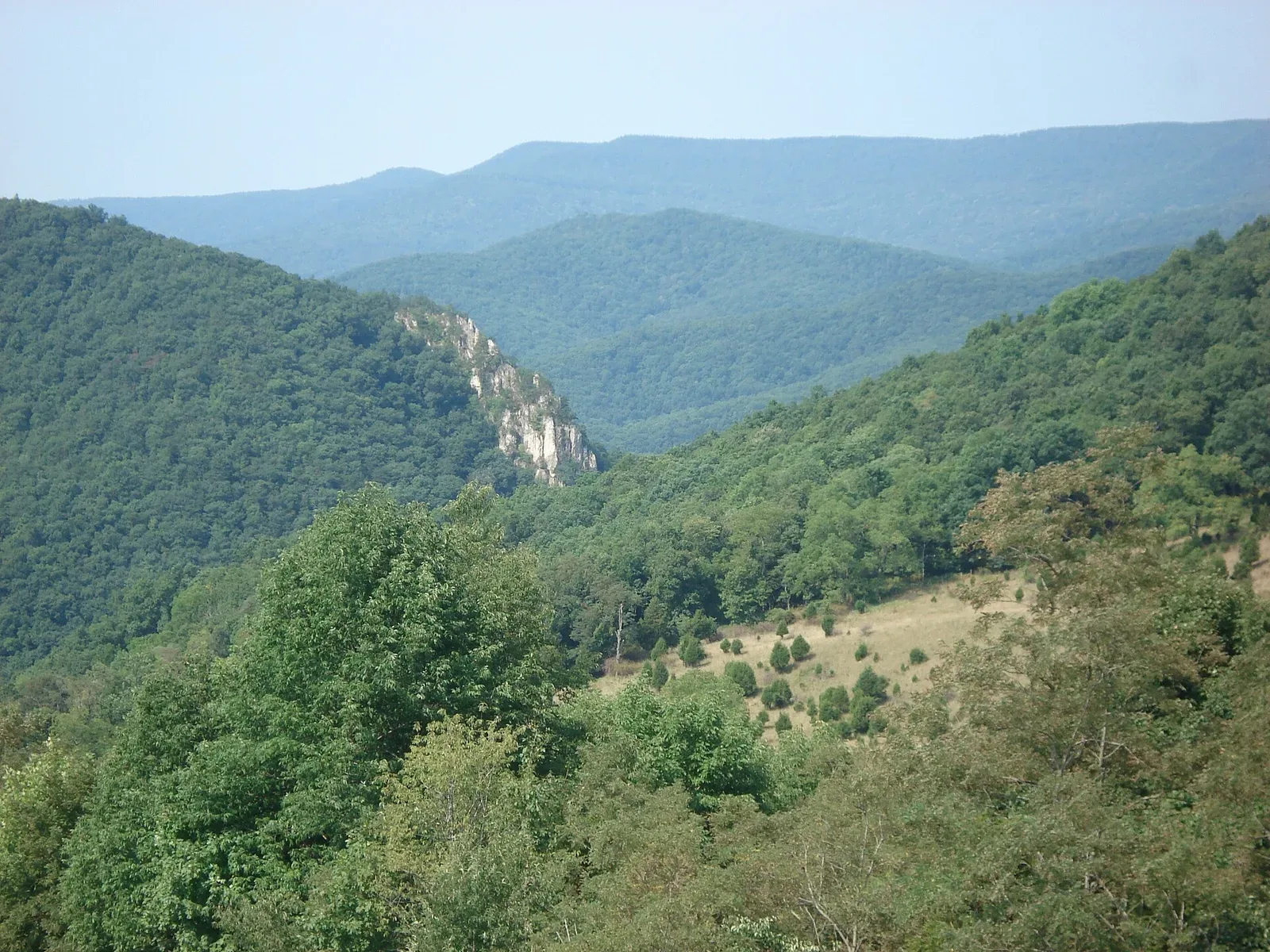
West Virginia is the only state carved out of another state during wartime, and that origin story shapes everything about its culture -- including its relationship with firearms. When Unionist counties of Virginia broke away in 1863 to form their own state, it was armed men who held the territory and made the politics possible. The mountains weren't a backdrop to that history; they were a participant in it.
Guns in West Virginia have never been primarily a political symbol. They've been tools -- for putting meat on the table in some of the most isolated terrain east of the Mississippi, for defending homesteads when the nearest sheriff was half a day's ride away, and occasionally for settling the kind of industrial disputes that nobody in Washington wanted to acknowledge were happening.
| Metric | West Virginia | National Average |
|---|---|---|
| Household Gun Ownership | 3rd nationally | ~32% |
| Gun Death Rate | 15.3 per 100,000 | 13.0 per 100,000 |
| Everytown Law Strength Score | 18.5/100 | Variable |
| Constitutional Provision | Art. III, Sec. 22 | Varies by state |
The state ranks third nationally in household gun ownership, and that number reflects a lived reality, not a talking point.
A person has the right to keep and bear arms for the defense of self, family, home and state, and for lawful hunting and recreational use. — West Virginia Constitution, Article III, Section 22
Article III, Section 22 of the West Virginia Constitution states plainly this right. That language is broader than most state constitutional provisions -- it names specific contexts -- and it reflects a population that has thought carefully about why the right exists.
What follows is the actual history: who carried, why, what laws got passed, what laws got fought, and what the landscape looks like today.
Pre-Statehood: Frontier Settlement and the Virginia Yearsedit
Early Settlement and Frontier Defense
The land that became West Virginia was among the last parts of the original colonial territory to be settled by Europeans, largely because it was so difficult to reach and hold. The Allegheny Mountains formed a near-impenetrable barrier, and the valleys beyond were contested ground between the Haudenosaunee (Iroquois) Confederacy, the Shawnee, the Delaware (Lenape), and Cherokee nations, all of whom used the region as hunting ground and, later, as a theater of conflict during the colonial period.
The first European settlement of consequence was Fort Henry, established at present-day Wheeling in 1774. The fort's garrison and surrounding settlers were armed almost entirely with long rifles -- the so-called Pennsylvania rifle, a design refined by German immigrant gunsmiths in Lancaster County whose elongated barrel and smaller bore made it dramatically more accurate than the smoothbore muskets common elsewhere.
Settlers in the western Virginia mountains adopted this rifle almost universally because they couldn't afford to miss. Powder and lead had to be carried over the mountains on horseback, ammunition wasn't cheap, and game couldn't be wasted.
Revolutionary War Period
Lord Dunmore's War in 1774 and then the American Revolutionary War brought sustained violence to the region. The Battle of Point Pleasant on October 10, 1774 -- fought at the confluence of the Kanawha and Ohio rivers in what is now Mason County -- was one of the most significant frontier engagements in pre-Revolutionary history. Colonel Andrew Lewis led Virginia militia against Shawnee forces under Cornstalk, and the militia's marksmanship with long rifles proved decisive. The engagement is commemorated today at Tu-Endie-Wei State Park in Point Pleasant, West Virginia.
During the Revolutionary War itself, western Virginia militiamen served prominently in engagements throughout the frontier. Capt. James Graham and other local commanders organized irregular forces that defended settlements along the Monongalia, Ohio, and Greenbrier river valleys while the Continental Army operated further east.
These men were not professional soldiers -- they were farmers with rifles, fighting to protect their own land.
Early Industrial Development
The early 19th century brought some industrial development to the region, particularly salt production in the Kanawha Valley around Malden, but the mountains remained deeply rural. Firearms manufacturing was largely a local craft: individual gunsmiths produced rifles to order in towns like Morgantown, Lewisburg, and Clarksburg. There was no large-scale manufacturing to speak of -- the great arsenals were in Harper's Ferry to the east and Springfield to the north.
But the culture of marksmanship was pervasive. Shooting matches were social events. County fairs included rifle competitions. The ability to shoot accurately was a practical skill, not a sport.
Statehood and the Civil War Era (1861–1865)edit
Armed Resistance to Secession
The firearms history of West Virginia is inseparable from the politics of secession. When Virginia voted to leave the Union in April 1861, the western counties -- which had long felt economically and politically marginalized by the slaveholding Tidewater establishment -- began organizing resistance almost immediately. Critically, much of that resistance was armed and organized through local militia structures that had existed since the frontier era.
Wheeling became the organizing center for Unionist sentiment, and in June 1861, delegates convened what became known as the Second Wheeling Convention, which established a Reorganized Government of Virginia loyal to the Union. Francis H. Pierpont served as its governor. The political legitimacy of this government rested on the presence of Union Army forces under General George B. McClellan, who moved quickly to secure the Baltimore and Ohio Railroad corridor and control the Monongahela and Ohio valleys.
Timeline of West Virginia's formation during Civil War armed conflict
Harper's Ferry and Federal Arsenal
The Harper's Ferry Armory -- located in what is now Jefferson County, West Virginia -- was one of the two primary federal arsenals in the country at the time of secession, producing roughly 10,000 rifles and muskets per year. John Brown's raid on the armory on October 16, 1859 had already made it a national flashpoint. When Virginia seceded, Confederate forces seized and partially destroyed the armory in April 1861 to prevent its machinery from falling into Union hands. The remaining machinery was shipped south to Fayetteville, North Carolina and Richmond, Virginia. The armory never fully resumed production and was effectively destroyed by the end of the war -- a significant blow to Confederate supply logistics.
| Battle/Event | Date | Location | Significance |
|---|---|---|---|
| Carnifex Ferry | Sept 10, 1861 | Nicholas County | Early Union victory |
| Droop Mountain | Nov 6, 1863 | Pocahtontas County | Ended Confederate presence |
| Harper's Ferry Seizure | April 1861 | Jefferson County | Arsenal destroyed |
| WV Statehood | June 20, 1863 | — | Only wartime state admission |
Military Engagements
Fighting within the new state's borders was a genuine civil war in the small sense: neighbor against neighbor, with families divided. The Greenbrier Valley and areas around Lewisburg saw Confederate control for stretches of the conflict. Carnifex Ferry Battlefield in Nicholas County (September 10, 1861) and Droop Mountain Battlefield in Pocahontas County (November 6, 1863) were the largest engagements fought entirely within what became West Virginia's borders. At Droop Mountain, Union forces under General William W. Averell effectively ended organized Confederate military presence in the state.
West Virginia achieved formal statehood on June 20, 1863 -- the only state admitted to the Union during the Civil War. The irony is that armed conflict both necessitated and enabled that statehood. Without Union troops holding the territory and Unionist militia organizing local control, the political process that created the state couldn't have occurred.
19th Century: Reconstruction, Feuds, and the Industrializing Mountainsedit
Industrial Transformation
The post-Civil War decades brought rapid industrial transformation to West Virginia, and with it a pattern of violence that defined the state's social history for generations. The coal and timber industries moved into the mountains in force after the war, building company towns, importing labor from across Europe and the American South, and establishing systems of economic control that amounted to private governance over large populations.
The Hatfield-McCoy Feud
The most famous firearms episode of this era has nothing to do with industry and everything to do with the older frontier culture: the Hatfield-McCoy feud. The conflict between the Hatfield family of Logan County, West Virginia and the McCoy family of Pike County, Kentucky ran from roughly 1863 to 1891 and resulted in multiple deaths on both sides. While it's been romanticized almost beyond recognition, the feud was a genuine example of how firearms functioned in the context of Appalachian justice -- where legal authority was distant, personal honor was paramount, and disputes were settled directly.
Devil Anse Hatfield and his sons were skilled marksmen who operated largely outside any meaningful law enforcement apparatus. The feud eventually drew national attention and prompted the U.S. Supreme Court to hear Mahon v. Justice (1888) regarding the extradition of Hatfield clan members from West Virginia to Kentucky.
Early Labor Conflicts
The National Guard of West Virginia was formally organized during this period, partly in response to the labor violence that was becoming endemic to the coal fields. The Great Railroad Strike of 1877 -- which began in Martinsburg when Baltimore and Ohio Railroad workers walked off the job on July 16 of that year -- was the first major national strike in American history. Governor Henry M. Mathews called out the state militia to restore order, but many militiamen refused to fire on striking workers, some of whom were their neighbors. President Rutherford B. Hayes ultimately dispatched federal troops to Martinsburg -- the first use of federal military force against a labor strike in American history. The strikes spread across the country from this West Virginia flashpoint.
Through the 1880s and 1890s, coal operators brought in Baldwin-Felts Detective Agency agents -- a private security firm headquartered in Bluefield, West Virginia -- to suppress union organizing. These men were effectively armed enforcers, and their presence escalated tensions that would eventually produce the bloodiest labor conflicts in American history.
20th Century: Mine Wars, World Wars, and the First Regulationsedit
Paint Creek-Cabin Creek Strike
The first two decades of the 20th century in West Virginia were defined by armed conflict between coal miners and the industrial apparatus that controlled their lives. This was not metaphorical conflict. Men died with rifles in their hands.
The Paint Creek-Cabin Creek Strike of 1912-1913 set the template. Miners in Kanawha County walked out over wages, working conditions, and the right to organize. Baldwin-Felts agents responded with armed force, including an armored train outfitted with a machine gun that miners called the "Bull Moose Special." Governor William E. Glasscock declared martial law three separate times. Mother Jones -- the 83-year-old labor organizer Mary Harris Jones -- was arrested by military authorities and held without trial at Pratt, West Virginia. Her imprisonment caused a national outcry. The conflict eventually ended without a decisive resolution, leaving the underlying tensions intact.
| Conflict | Dates | Key Events | Casualties |
|---|---|---|---|
| Paint Creek-Cabin Creek Strike | 1912-1913 | "Bull Moose Special" armored train | Multiple |
| Matewan Massacre | May 19, 1920 | Sid Hatfield vs Baldwin-Felts | 10 dead |
| Battle of Blair Mountain | Aug 25 - Sep 2, 1921 | 10,000 miners vs 3,000 company men | 50-100 estimated |
| Federal Intervention | Sep 1921 | Harding sends troops | Conflict ended |
Matewan and Escalation
Those tensions exploded in 1920-1921 in what became known as the West Virginia Mine Wars. The Matewan Massacre on May 19, 1920, was the trigger event. In the town of Matewan, Mingo County, Police Chief Sid Hatfield (a distant Hatfield relation) and armed miners confronted Albert Felts and a team of Baldwin-Felts agents who had been evicting miners and their families from company-owned housing. The confrontation ended in a gunfight that killed Albert Felts, his brother Lee Felts, Mayor Cabell Testerman, and several others.
Sid Hatfield survived and became a hero to the union movement. Hatfield was assassinated on the steps of the McDowell County Courthouse in Welch on August 1, 1921, by Baldwin-Felts agents who had lured him there under the pretense of facing charges. His murder was the final provocation.
Battle of Blair Mountain
What followed was the Battle of Blair Mountain -- fought from August 25 to September 2, 1921, in Logan County. An estimated 10,000 armed miners marched from the Kanawha Valley toward Logan and Mingo counties to free imprisoned union members and confront the coal companies. Sheriff Don Chafin of Logan County -- a company man funded directly by coal operators -- organized a defense force of deputies and company guards estimated at 2,000 to 3,000 men along the ridge of Blair Mountain. The miners carried rifles, pistols, and in some cases machine guns. Chafin's forces had additional machine guns and aircraft dropping gas bombs and explosives.
President Warren G. Harding threatened to send federal troops, and eventually did -- though their arrival effectively ended the battle before sustained combat with the Army occurred. Estimates of casualties range widely; between 50 and 100 men are believed to have died. Nearly 1,000 miners were indicted for treason and murder, though most were acquitted or had charges dropped.
Escalation of the West Virginia Mine Wars from strike to armed insurrection
Blair Mountain remains the largest armed insurrection in the United States since the Civil War. The site was listed on the National Register of Historic Places in 2009, though it has faced ongoing threats from mountaintop removal mining operations.
World War Service
Both World War I and World War II brought West Virginia men into military service in large numbers. The state contributed more than 85,000 men to World War I service proportional to its population, and 220,000 served in World War II. The federal presence at Camp Dawson in Preston County -- which has served as a National Guard training facility since 1913 -- expanded significantly during both wars. The Greenbrier Resort in White Sulphur Springs was commandeered during World War II as a federal internment facility for Axis diplomats and later as a military hospital, a reminder that even the state's civilian infrastructure was absorbed into the war effort.
Federal Firearms Regulation
The Federal Firearms Act of 1938 and the Gun Control Act of 1968 applied to West Virginia as federal law, though neither generated the political controversy in the state that they did in some urban states. West Virginia's firearms regulations during this period were primarily carried by federal law rather than state statute. The state's rural character and the absence of major urban gun violence meant that there was limited political appetite for state-level restriction.
Modern Era (2000–Present)edit
Political Realignment
The modern era of West Virginia firearms law has moved consistently in one direction: expansion of rights and removal of restrictions. The state has been among the more active in the country on Second Amendment legislation, driven by a political realignment that transformed West Virginia from a reliably Democratic state -- rooted in union labor -- to one of the most consistently Republican states in the country.
That realignment accelerated through the 1990s and was essentially complete by the 2010s. The coal industry's decline, the collapse of the United Mine Workers of America as a political force, and the cultural shift in the state's Democratic Party away from the working-class Appalachian identity that had sustained it for decades all contributed. By the time Joe Manchin was the last Democrat holding statewide office, he was doing so largely by presenting himself as an outlier within his own party on issues like guns and energy.
Political realignment driving expansion of gun rights in West Virginia
Castle Doctrine Era
Castle Doctrine was enacted in West Virginia on April 10, 2008, when Governor Joe Manchin signed the bill into law. West Virginia Code §55-7-22 establishes that a person who is not engaged in unlawful activity and who is attacked in any place where they have a legal right to be has no duty to retreat and may use force, including deadly force, if they reasonably believe it necessary to prevent death or serious bodily harm.
Constitutional Carry
Permitless carry -- also called constitutional carry -- took effect on May 24, 2016, under West Virginia Code §61-7-7. Under this law, any person 21 or older who is legally permitted to possess a firearm may carry it concealed without obtaining a permit. A provisional permit system exists for persons aged 18 to 20. The state still issues optional concealed carry permits for those who want reciprocity in other states; as of 2024, West Virginia's permit is recognized by a large number of other states. The application goes to the county sheriff, the fee is $75, and a training course is required for first-time applicants.
Second Amendment Preservation
On April 27, 2021, Governor Jim Justice signed HB 2694, the Second Amendment Preservation and Anti-Federal Commandeering Act. This legislation, codified at West Virginia Code §61-7B, prohibits state and local law enforcement agencies and officers from enforcing federal firearms laws or executing federal search warrants related to firearms, accessories, or ammunition against law-abiding persons. It explicitly prohibits state employees from being commandeered by federal agencies for firearms enforcement and bars the enforcement of red flag laws by state or local police. The legislation was part of a wave of similar Second Amendment Preservation Acts passed in multiple states following the 2020 elections, though West Virginia's version is among the more specific in its anti-commandeering provisions.
State preemption of local firearms ordinances has been in place since 1999 under West Virginia Code §8-12-5a, which bars municipalities from restricting the purchase, possession, transfer, ownership, carrying, transport, sale, or storage of firearms in any manner inconsistent with state law. Local ordinances predating 1999 were grandfathered; Charleston, Dunbar, and South Charleston retain ordinances prohibiting weapons on city property. Martinsburg passed a post-1999 ordinance prohibiting weapons in city buildings, which technically conflicts with state preemption but has not been definitively adjudicated.
| Legislation | Date Enacted | Key Provisions |
|---|---|---|
| Castle Doctrine | April 10, 2008 | No duty to retreat, stand your ground |
| Permitless Carry | May 24, 2016 | Constitutional carry for 21+, provisional 18-20 |
| 2A Preservation Act | April 27, 2021 | Anti-federal commandeering, prohibits red flag enforcement |
| State Preemption | 1999 | Bars local firearms restrictions |
Sanctuary Movement
The Second Amendment Sanctuary movement gained significant traction in West Virginia beginning around 2019-2020. Putnam County became the state's first Second Amendment sanctuary county, and dozens of counties and municipalities followed with resolutions expressing opposition to state or federal gun control measures and declaring local law enforcement would not enforce laws deemed unconstitutional.
West Virginia mandated that public higher education institutions allow concealed carry permit holders to carry on campus -- a policy that generated significant opposition from university administrators but passed through the legislature with a comfortable majority. The West Virginia University and Marshall University systems were required to accommodate permit holders.
Notable Figures & Manufacturersedit
Labor War Figures
Sid Hatfield (1893–1921) remains the most iconic firearms figure in West Virginia history -- not because of anything he manufactured or invented, but because of what he represented. A coal miner's son who became police chief of Matewan, he stood against the Baldwin-Felts agents with a pistol in his hand and became a symbol of armed resistance to industrial power. His assassination at the McDowell County Courthouse galvanized the labor movement and directly precipitated Blair Mountain.
Mother Jones (1837–1930) isn't a firearms figure per se, but her presence during the armed conflicts of the Mine Wars era is inseparable from the firearms history of the state. Her arrest by military authorities during the Paint Creek strike and her advocacy following the Matewan Massacre made her the most visible national figure associated with West Virginia's labor-gun conflicts.
Feud Era Leaders
"Devil Anse" Hatfield (1839–1921) was a Confederate guerrilla during the Civil War and the patriarch of the Hatfield clan in the Logan County feud. A skilled hunter and marksman, he lived by the rifle in a literal sense -- timber and hunting were his primary occupations outside the feud years. He died peacefully of pneumonia at 81, having outlived most of his contemporaries from the conflict.
Manufacturing History
John Henry Browning -- no, not that Browning -- but the Springfield Armory's influence over West Virginia was significant through the Harper's Ferry Armory connection. Before its destruction in 1861, Harper's Ferry was producing the Model 1855 Rifle-Musket and the Model 1859 Sharps Rifle under license. The armory's craftsmen scattered when it was destroyed, some going south to serve Confederate manufacturing, others going north to contribute to Union production.
On the manufacturing side, West Virginia has never been a major center of firearms production on the scale of Connecticut, Massachusetts, or Ohio. The state's industrial economy was built on coal, timber, chemicals (particularly in the Kanawha Valley around Charleston and Institute), and later steel. That said, the Tri-State area around Huntington has supported small custom gunsmiths and dealers throughout the 20th and 21st centuries.
Modern Political Figures
The West Virginia Citizens Defense League (WVCDL) -- founded in 2007 -- has been the most effective state-level Second Amendment advocacy organization in West Virginia's recent history. The WVCDL was instrumental in advancing the constitutional carry legislation that passed in 2016 and has been active in pushing state preemption enforcement and other firearms rights issues. It operates without the national brand of the NRA but has arguably been more operationally effective on state-specific legislation.
Joe Manchin deserves mention not as a supporter of firearms rights but as the defining political figure in the tension between West Virginia's gun culture and national Democratic politics. After the Sandy Hook shooting in December 2012, Manchin co-sponsored the Manchin-Toomey amendment with Republican Senator Pat Toomey of Pennsylvania -- a bipartisan background check expansion bill that failed in the Senate 54-46 in April 2013 (requiring 60 votes for cloture). The bill's failure was significant nationally; its political cost to Manchin in West Virginia was substantial and contributed to his eventual switch to the Republican Party in August 2023.
Current Legal Landscapeedit
West Virginia operates as a permitless carry state for residents 21 and older. The basic framework:
- No permit required to purchase any firearm (rifle, shotgun, or handgun)
- No registration of firearms
- No licensing of owners
- Open carry is legal at age 18 without a permit
- Concealed carry is legal at age 21 without a permit
- A provisional permit is available for ages 18-20 for concealed carry
- Optional concealed carry permits are available through the county sheriff ($75 fee, training required) for reciprocity purposes
- Private sales are legal and do not require a background check
- Full state preemption of local firearms ordinances (with narrow grandfathered exceptions)
- Castle Doctrine in effect with no duty to retreat
Prohibited locations under current law:
| Prohibited Locations | Details |
|---|---|
| Correctional facilities | All state and local |
| Schools | K-12 property (vehicle exception) |
| School buses | All school transportation |
| Courthouses | All judicial facilities |
| State Capitol | Building and grounds |
| Private events | When prohibited by organizer |
| Posted property | Private property with signage |
| Grandfathered cities | Charleston, Dunbar, South Charleston (limited) |
Prohibited persons mirror federal categories: persons convicted of crimes punishable by more than one year imprisonment, persons dishonorably discharged from the Armed Forces, persons adjudged mentally incompetent or involuntarily committed, illegal aliens, and unlawful users of controlled substances or alcohol. West Virginia also adds domestic violence protective order subjects and domestic violence misdemeanor convicts to the prohibited list.
The Second Amendment Preservation and Anti-Federal Commandeering Act (§61-7B) remains in effect as of this writing, though its enforceability in the face of federal Supremacy Clause challenges has not been fully litigated. Similar laws in other states have faced mixed results in federal courts.
West Virginia does not have:
- Assault weapons restrictions
- Magazine capacity limits
- Red flag / extreme risk protection order laws
- Waiting periods
- Ghost gun regulations
- Universal background check requirements
- Safe storage mandates
Everytown Research rates West Virginia in its "Weak Systems" tier, scoring the state 18.5 out of 100 on its gun law strength composite -- a score that reflects the state's deliberate policy choices rather than oversight. The state's gun death rate of 15.3 per 100,000 residents is above the national average of 13.0, though the composition of that figure in West Virginia skews heavily toward suicide rather than homicide, a pattern consistent with rural states generally and one that gun regulation advocates and gun rights advocates interpret very differently.
The BGC Takeedit
West Virginia is about as honest a gun state as you'll find. There's no performance here -- no trucks with gun stickers driven by guys who've never hunted anything. When West Virginians carry, it's usually because they live somewhere that a backup drive to a hospital is an hour, the nearest police response might be twenty minutes, and they grew up in a family where the rifle over the door was as normal as the wood stove in the corner.
The Mine Wars context matters more than people outside the state appreciate. West Virginia has a genuine historical memory of what happens when armed industrial power meets an unarmed or disarmed workforce. The Baldwin-Felts agents were carrying firearms. The company men on Blair Mountain ridge had machine guns. The argument for armed self-reliance in West Virginia isn't purely philosophical -- it comes from an actual event within living memory of people's grandparents. That doesn't mean every policy position is correct, but it means the underlying attitude isn't paranoia. It's institutional memory.
West Virginia has a genuine historical memory of what happens when armed industrial power meets an unarmed or disarmed workforce.
The political realignment from Democrat to Republican -- which was functionally complete by the 2016 election -- didn't change the gun culture. The culture was always there. What changed was which party was willing to represent it. The UMWA's political power held the state blue for decades even as cultural attitudes were more aligned with what the Republican Party was offering. When the union collapsed as a political force, the underlying cultural alignment asserted itself quickly.
For gun owners moving to or visiting the state: it's a straightforward environment. Constitutional carry is in effect, the state preempts local nonsense (with the Charleston caveat), and nobody is going to look at you sideways at a gun counter. Small-town gun stores in the coalfields are some of the more knowledgeable retail environments you'll encounter -- these guys have been around the same communities for decades and they know what their customers actually use.
The honest complexity is this: West Virginia has a genuinely high rate of gun deaths, and a meaningful portion of those are suicides in a state that has been economically devastated by deindustrialization. That's not a gun control argument on its own -- it's a poverty and mental health argument that happens to intersect with guns. Anyone who tells you the solution is simple in either direction isn't paying attention.
West Virginia has a genuinely high rate of gun deaths, and a meaningful portion of those are suicides in a state that has been economically devastated by deindustrialization. That's not a gun control argument on its own — it's a poverty and mental health argument that happens to intersect with guns.
Referencesedit
- West Virginia Constitution, Article III, Section 22 — Right to Keep and Bear Arms
- West Virginia Code §61-7-4 — License to carry deadly weapons; how obtained
- West Virginia Code §61-7-7 — Persons prohibited from possessing firearms; penalties
- West Virginia Code §55-7-22 — Civil relief for persons resisting certain criminal activities (Castle Doctrine)
- West Virginia Code §8-12-5a — Limitations upon municipalities' power to restrict firearms
- West Virginia Code §61-7B — Second Amendment Preservation and Anti-Federal Commandeering Act (HB 2694, 2021)
- NRA-ILA, "West Virginia State Gun Laws," updated March 2020
- Everytown Research & Policy, "West Virginia Gun Law Rankings," 2024
- Wikipedia, "Gun laws in West Virginia," accessed February 2026
- West Virginia Encyclopedia (e-WV), "History of West Virginia," WVU Press
- Savage, Lon. Thunder in the Mountains: The West Virginia Mine War, 1920-21. University of Pittsburgh Press, 1990.
- Corbin, David Alan. Life, Work, and Rebellion in the Coal Fields: The Southern West Virginia Miners, 1880-1922. University of Illinois Press, 1981.
- Bailey, Rebecca J. Matewan Before the Massacre: Politics, Coal, and the Roots of Conflict in a West Virginia Mining Community. West Virginia University Press, 2008.
- West Virginia Citizens Defense League (WVCDL), Legislative History and Position Papers, 2007-2024
- National Register of Historic Places, "Blair Mountain Battlefield," 2009 listing documentation
- U.S. Senate Roll Call Vote 113th Congress — Manchin-Toomey Amendment (S.Amdt. 715), April 17, 2013
- Porterfield, Mannix. "Manchin signs 'Castle Doctrine' bill." The Register-Herald, April 10, 2008
- Severino, Joe. "Putnam is WV's first 'Second Amendment sanctuary' county." Charleston Gazette-Mail, 2021
- Mahon v. Justice, 127 U.S. 700 (1888)
- Tu-Endie-Wei State Park interpretive materials, Point Pleasant, WV — Battle of Point Pleasant, October 10, 1774
Last Updated: February 24, 2026
- Quail Creek Plantation(Okeechobee, FL)
- 2aHawaii(Honolulu, HI)
- Boston Firearms(Everett, MA)
- Safeshoot(Kingston, NY)
Loading comments...