Specifications
Browning Arms Company

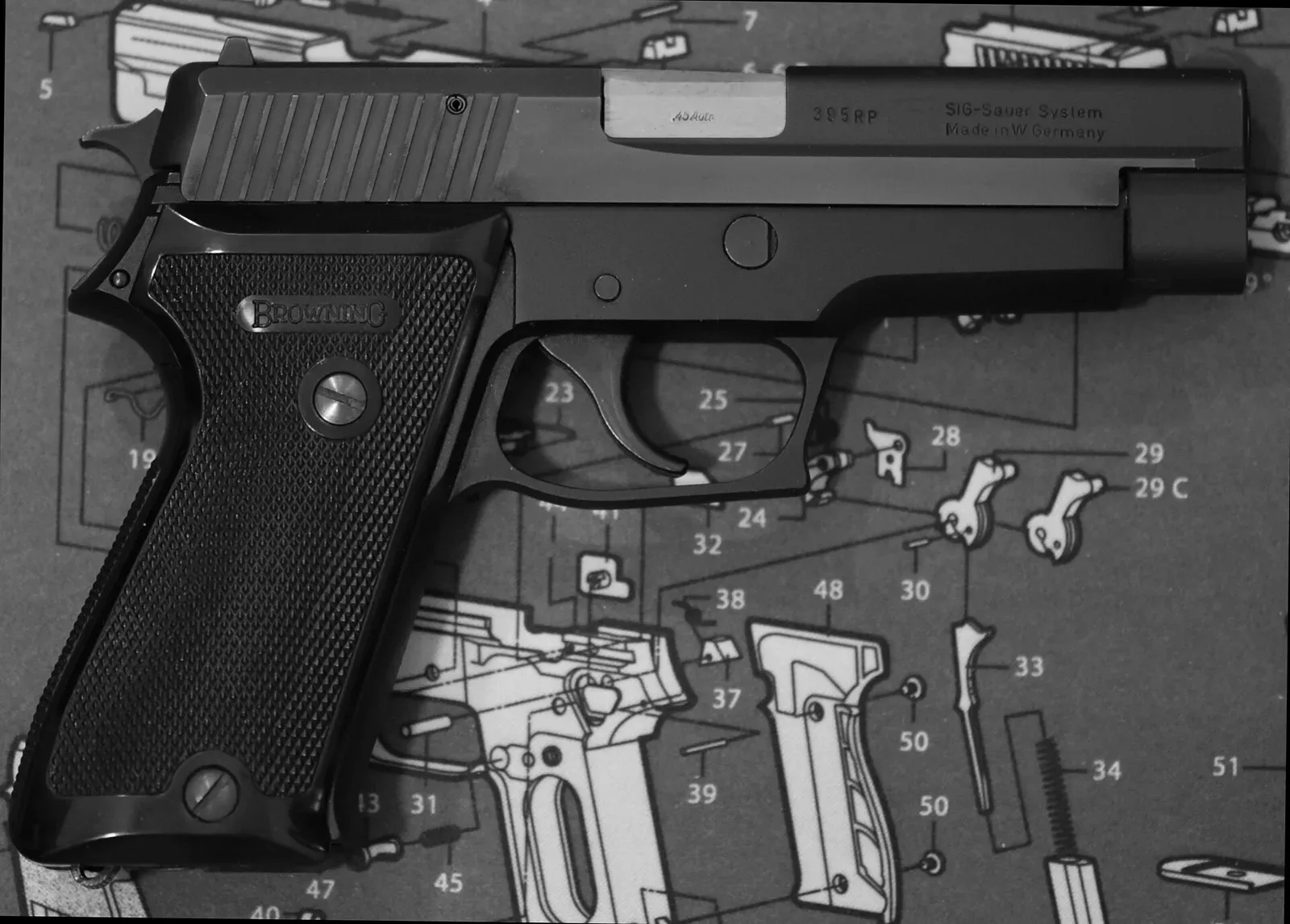
The Browning BDA 45 — a licensed variant of the FN Model 1935, produced from 1981–1989 and prized by duty shooters for its reliability.
Digitallymade (CC BY-SA 4.0)
| Manufacturer | |
|---|---|
| Made By | Browning Arms Company |
| Designer | John Moses Browning |
| Origin | United States |
| Specifications | |
| Caliber | MultipleAlso: .22 LR, .243 Win, .270 Win, .30-06, .300 Win Mag, 12 ga, 20 ga, 28 ga, .410, 9mm, .45 ACP |
| Production | |
| Designed | 1878 |
| In Production | 1878 |
| Unit Cost | $800-$3000+ |
| Variants | |
| |
| Service Use | |
U.S. MilitaryNATO forcesProfessional huntersOlympic shootersLaw enforcement agencies | |
| Cultural Note | |
| Created many of the most influential firearm designs in history including the M1911 pistol and Auto-5 shotgun | |
| Related Firearms | |
Browning Arms Company
Firearms encyclopedia article
From The Boise Gun Club Handbook
Quick Statsedit
- Founded: 1878
- Headquarters: Morgan, Utah, USA
- Key Designer: John Moses Browning (1855-1926)
- Notable Products: Auto-5, BAR, M1911, Hi-Power, X-Bolt, Citori
- Production Status: Active
- Parent Company: FN Herstal (since 1977)
When you pick up a Browning, you're holding more than a century of firearms evolution. John Moses Browning didn't just make guns--he created the blueprints that everyone else still follows. The 1911 in your holster? That's his short-recoil system. The semi-auto shotgun your buddy swears by? Browning figured that out in 1905. Even the .50 cal on military vehicles traces back to his designs.
What makes Browning different isn't marketing hype--it's that their founder understood firearms mechanics at a level that bordered on supernatural. While other companies were making incremental tweaks, John Browning was solving fundamental problems that had stumped engineers for decades. That DNA still runs through everything they make today.
History & Developmentedit
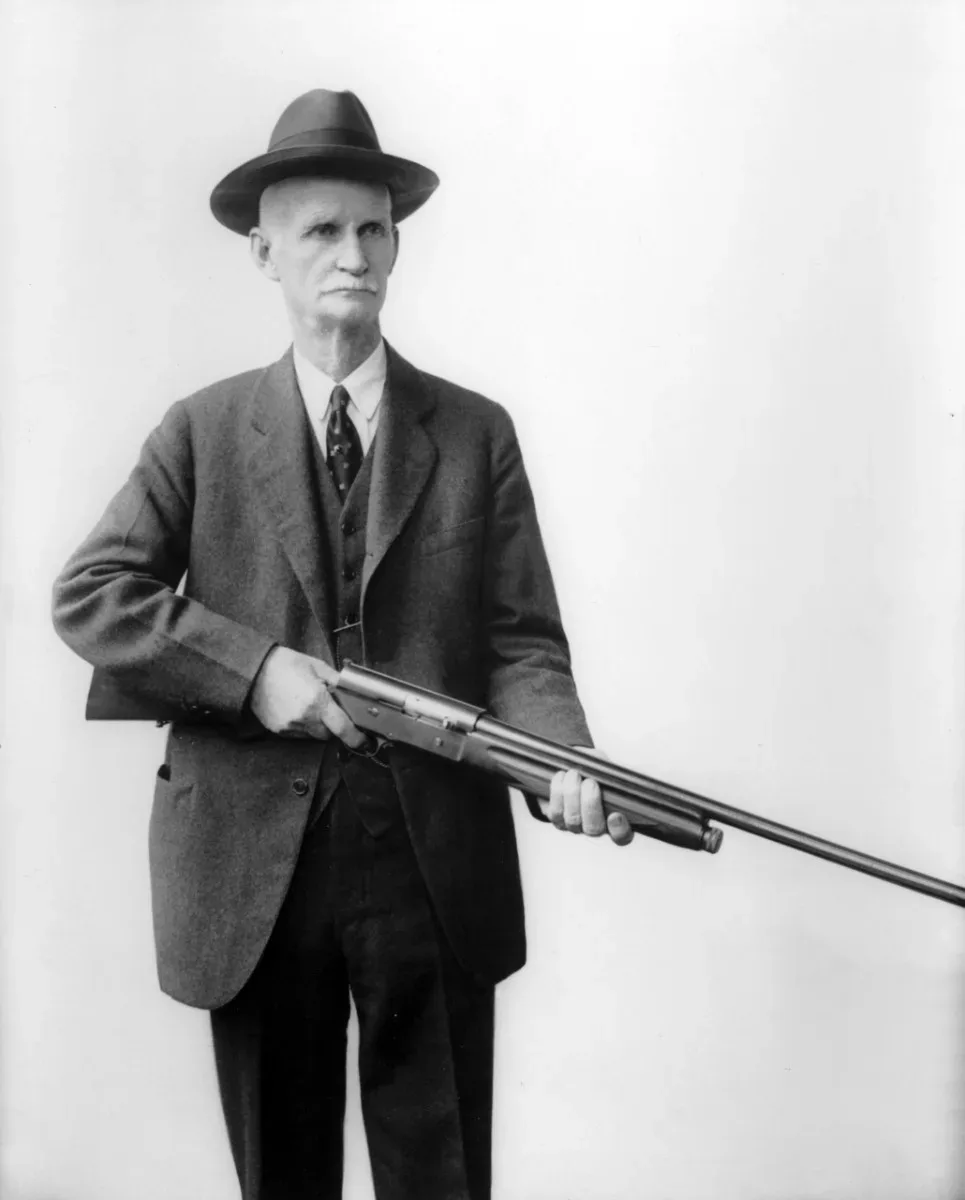
The story starts in 1878 when 23-year-old John Moses Browning and his brother Matthew set up shop in Ogden, Utah. John was a Mormon gunsmith's son who could look at a firearm and immediately see how to make it work better. Their Browning Single Shot rifle caught Winchester's attention, kicking off a 19-year partnership that produced the lever-actions everyone thinks of when they hear "Winchester"--the Models 1886, 1892, and 1894.
The Winchester deal went south over semi-auto shotgun rights. Winchester wanted to sit on the technology; Browning wanted to build it. So in 1902, he took his designs to Fabrique Nationale in Belgium. FN had the manufacturing muscle and European market access that American companies lacked--a partnership that changed firearms history.
The Auto-5 shotgun hit the market in 1905 and stayed in production for nearly a century. That's not nostalgia--that's proof of concept. It worked in duck blinds, police departments, and everywhere else people needed a reliable semi-auto shotgun.
Then came the war years. Browning's M1917 water-cooled machine gun, M1918 BAR, and .50 caliber M2 didn't just arm troops--they redefined infantry tactics. The M1911 became America's service pistol for 74 years. The Hi-Power, finished after John died in 1926, influenced every service pistol that followed.
After John's death, Browning evolved from design innovator to premium brand manager. FN bought controlling interest in 1977, and today's production happens mainly at Miroku in Japan for rifles and shotguns, with FN handling pistols in Belgium. It's not the same scrappy Utah operation, but it maintains the obsessive attention to detail that made the name famous.
Technical Legacyedit
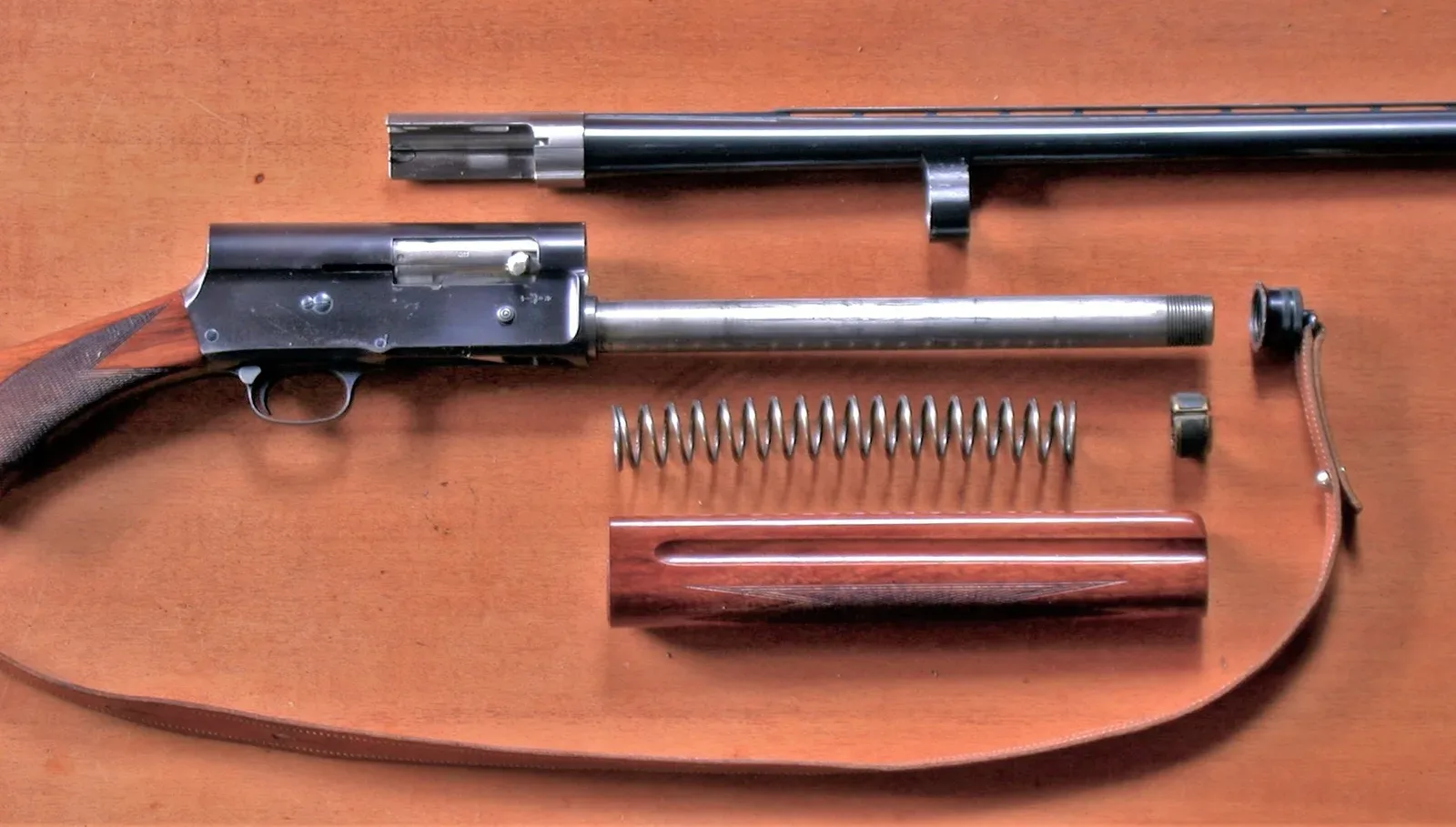
Here's what Browning actually contributed: the operating systems that run modern firearms. The short-recoil system in your 1911 became the template for service pistols. The long-recoil system in the Auto-5 proved semi-auto shotguns could be reliable. The gas operation in the BAR influenced everything from the M1 Garand to today's rifles.
Modern Browning focuses on refinement over reinvention. The X-Bolt rifles deliver sub-MOA accuracy with free-floating barrels and triggers you can actually adjust. The Citori over/unders blend old-school craftsmanship with metallurgy that'll outlast your grandkids. It's not flashy--it just works.
Quality control borders on obsessive. Browning's inspection system requires every gun to meet specs "in all points" before shipping. That's why they cost more than the competition--and why they hold their value better at trade-in time.
Current Product Linesedit
Rifles:
- X-Bolt series (bolt-action hunting rifles)
- BAR series (semi-automatic hunting rifles)
- BLR series (lever-action rifles)
- T-Bolt (rimfire bolt-action)
Shotguns:
- Citori (over/under)
- Cynergy (over/under with modern styling)
- Maxus (semi-automatic)
- Silver (semi-automatic)
- BPS (pump-action)
Pistols:
- Hi-Power (classic 9mm, recently reintroduced)
- Buck Mark (rimfire target pistol)
Performance Characteristicsedit
Browning guns consistently shoot better than they need to for their intended purpose. X-Bolt rifles will put three shots into an inch at 100 yards with decent ammo. Citori shotguns point where you're looking and swing smooth enough for competitive clays. This isn't luck--it's engineering with safety margins built into every tolerance.
Reliability remains the hallmark, though modern versions trade some bombproof durability for weight and manufacturing efficiency. The original Auto-5 would cycle in conditions that stop current semi-autos, but it weighed like a boat anchor. Today's gas guns are faster and kick less, but they need more cleaning to stay happy.
Recoil management shows Browning's engineering philosophy. Instead of just adding weight or porting barrels, they use systems like Inflex recoil pads and back-boring to reduce felt recoil without hurting performance. The result? Browning shotguns are comfortable to shoot even in magnum chamberings.
Strengths & Weaknessesedit
What Works:
- Engineering that's proven itself over decades
- Fit and finish that justifies the price tag
- Strong resale values--they hold their worth
- Wide range of calibers and configurations
- Customer service that actually helps
- Triggers, barrels, and actions built to last
The Downsides:
- You'll pay premium prices up front
- Some designs are over-engineered for typical use
- Limited options if you want tactical/modern sporting rifles
- Complex mechanisms can be pain to field-strip
- Parts cost more when you need replacements
- Limited customization on some models
- Traditional designs carry extra weight
Notable Users & Impactedit
The U.S. military carried Browning designs through two world wars and beyond--M1911 pistols, BAR rifles, M2 machine guns. NATO countries adopted the Hi-Power. Olympic shooters still choose Citori shotguns. Professional hunters and guides rely on X-Bolt rifles because their reputation depends on guns that work.
Browning designs show up in every military conflict since 1911, countless movies, and gun safes across America. When someone says "they don't make them like they used to," they're usually talking about the mechanical elegance of classic Browning engineering.
The BGC Takeedit
Browning occupies a unique spot in the firearms world--they're expensive enough to make you think twice, but they deliver on what you pay for. If you want a gun that'll work for your grandkids and look good doing it, Browning makes sense. If you're budget-conscious or need something tactical, look elsewhere.
The modern company isn't the innovative powerhouse that John Moses built, but they've figured out how to maintain quality while scaling production globally. A Miroku-made Browning rifle or Citori shotgun will serve you as well as anything coming out of custom shops at twice the price.
Here's the real test: walk into any gun shop and check the used rack. Browning firearms hold their value better than most competitors because people know they're getting proven engineering. That's not marketing--that's market reality.
Last updated: 2024
- Gls Guns(Sumner, IA)
- Bi-mart - Yakima (Fruitvale Ave)(Yakima, WA)
- New Philly Sportsman Specialities(New Philadelphia, OH)
- R&R Sports & Outdoors(Brandon, FL)
Loading comments...