Quick Reference
First-Time Gun Buyer's Complete Guide

The S&W 625 is a modern .45 ACP revolver — uncommon among revolvers, this model uses semi-automatic cartridges via moon clips, bridging revolver simplicity with auto-pistol power.
Hrd10 (Public domain)
| Time & Effort | |
|---|---|
Read Time | 7 min read |
Equipment Needed | |
| |
| Prerequisites | |
Safety | |
| |
Key Takeaways | |
| |
Organization | |
| National Rifle Association (NRA) ↗ | |
Related Topics | |
First-Time Gun Buyer's Guide
Handbook article
From The Boise Gun Club Handbook
You've decided to buy a gun. Maybe it's for home defense, maybe you want to get into shooting sports, maybe a family member handed one down and you want to understand what you're holding. Doesn't matter. The process of buying your first firearm is more straightforward than the internet makes it look -- and less casual than the movies suggest.
Here's everything you actually need to know before you walk into a gun store.
Start With the Whyedit
Before you research a single model, nail down what you need this gun to do. According to TacticalGear.com, most first-time buyers fall into one of three categories: self-defense, recreational shooting, or hunting. Each pulls you toward a different type of firearm, and buying the wrong tool for the job leads to a frustrating experience and a gun that collects dust.
Self-defense buyers typically want something reliable, concealable, and easy to operate under stress. Recreational shooters can prioritize affordability and simplicity. Hunters need caliber and platform matched to what they're pursuing. You might have more than one reason -- plenty of people do -- but be honest about your primary use case before you start browsing.
Key Point: The type of firearm you need is determined by what you're going to do with it. Don't buy a hunting handgun when what you actually need is a home defense pistol.
Know the Law Before You Shopedit
This part isn't optional. Firearm laws in the U.S. vary significantly -- not just state to state, but sometimes county to county within the same state. Per TacticalGear.com, in cases where federal, state, and local laws conflict, the stricter law applies.
Federal minimums to purchase a handgun from a licensed dealer:
- Must be at least 21 years old (18 for private-party purchases; 18 for rifles and shotguns from any source)
- Must be a U.S. citizen or legal immigrant
- No felony convictions
- No disqualifying mental health adjudications
- No domestic violence restraining orders or convictions
- Not a fugitive, unlawful drug user, or dishonorable discharge
Per Liberty Safe, when you buy from a Federal Firearms Licensed (FFL) dealer, you'll fill out ATF Form 4473 -- the Firearms Transaction Record. You sign it, the dealer submits it, and the FBI runs your information through three databases. The FBI can approve, deny, or delay the sale. If they don't issue a decision within three business days, that's called a default proceed, and the dealer may legally transfer the firearm.
Your approved 4473 is valid for 30 days and covers only one transaction. Buy two guns on the same trip and you fill out two forms.
As for carrying that gun outside your home -- that's a separate legal question entirely. TacticalGear.com breaks down the four carry frameworks you'll encounter:
| Carry Type | What It Means |
|---|---|
| Constitutional Carry | No permit required if you can legally own the gun |
| Shall-Issue | Authority must issue a permit to any eligible applicant |
| May-Issue | Authority decides case-by-case; no guaranteed outcome |
| No-Issue | Permits effectively unavailable to most civilians |
Figure out where your state sits before you buy anything, especially if concealed carry is part of the plan.
What You'll Need at the Counteredit
Per Liberty Safe, almost every state requires a valid government-issued photo ID -- your driver's license works -- plus proof of current residence. A utility bill or phone bill with your current address is generally sufficient, though your dealer can confirm exactly what they need.
If you're buying online, the firearm must ship to an FFL dealer near you. Per Wes Siler's guide, that dealer will charge a transfer fee and conduct the same background check process as if you'd bought in-store.
Revolver or Semi-Automatic?edit
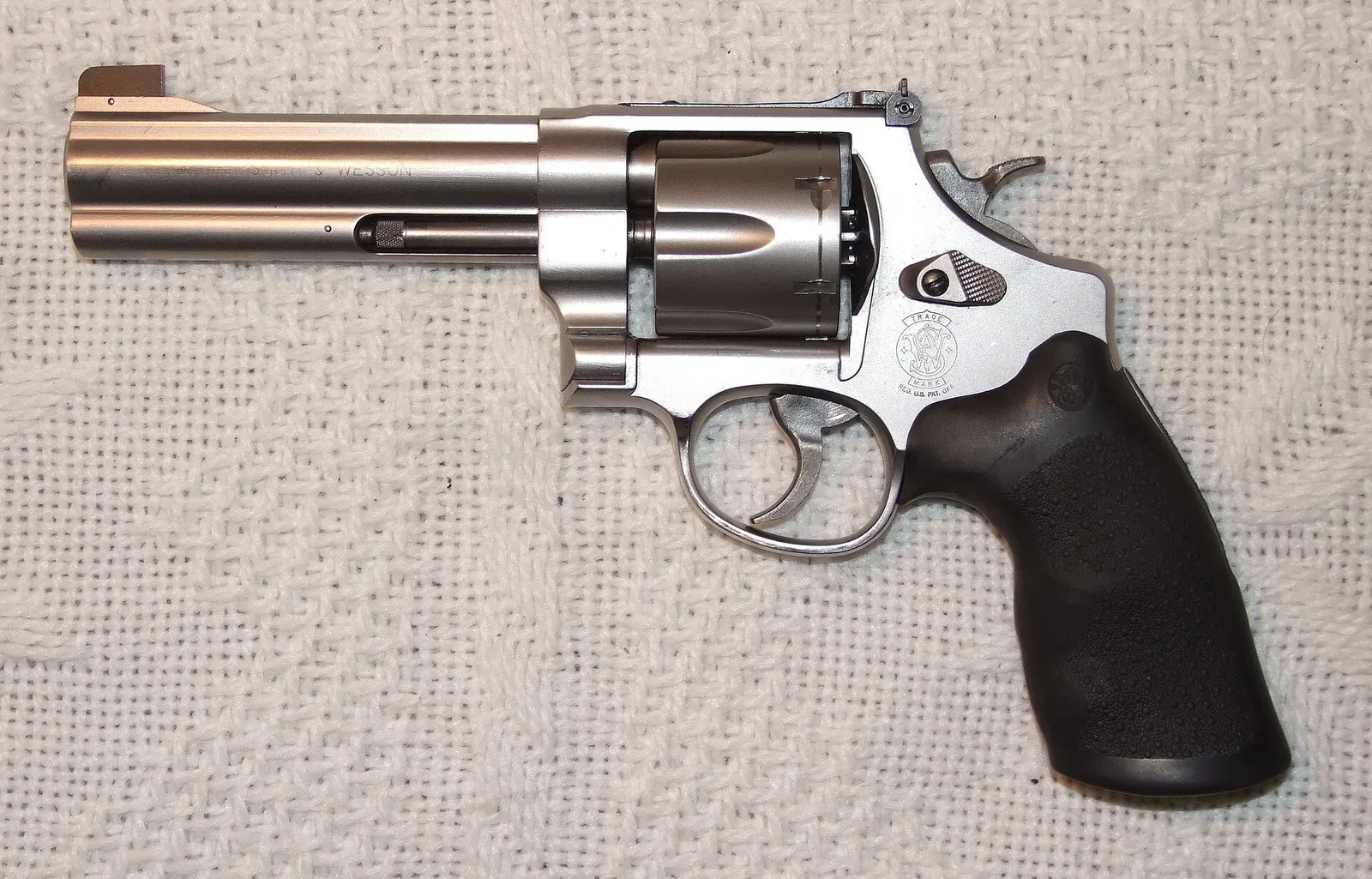
This is probably the first question a gun store employee will ask you. It's worth thinking through before you go.
Revolvers are mechanically simpler -- fewer moving parts, fewer potential malfunctions, no magazine to manage. Per TacticalGear.com, they're a reasonable choice for brand-new shooters who want to focus on safety fundamentals without managing a slide or a detachable magazine. The tradeoffs are real though: limited ammunition capacity, slow reloads, and fewer customization options.
Semi-automatic pistols hold more rounds, reload faster, and generally fit the hand better for most people. TacticalGear.com notes that high-quality semi-automatics today malfunction far less than they did twenty years ago. They do require learning how to run a slide, manage a magazine, and clear malfunctions -- but those are learnable skills.
For most first-time buyers focused on self-defense, a semi-automatic 9mm is where the majority of experienced shooters will point you.
Picking a Caliberedit
Handgun calibers get grouped roughly into small, medium, and large. Per TacticalGear.com:
| Size | Common Calibers |
|---|---|
| Small | .22 LR, .32 ACP, .380 ACP |
| Medium | 9mm, .38 Special, .40 S&W |
| Large | .45 ACP, 10mm, .357 Mag, .44 Mag |
Here's something that surprises most new shooters: a compact .32 is not easier to handle than a full-sized 9mm. Per TacticalGear.com, a larger, heavier frame absorbs significantly more force than a small, light one -- so you feel less recoil even though the 9mm round is more powerful. New shooters who buy tiny guns because they seem less intimidating often end up with something that's harder to control, not easier.
The 9mm is the right starting point for the vast majority of first-time buyers. Per Wes Siler's guide, it's the caliber used by most militaries and law enforcement agencies, which keeps ammunition universally available and relatively affordable. It produces manageable recoil for shooters of any size or experience level.
What Gun Should You Actually Buy?edit
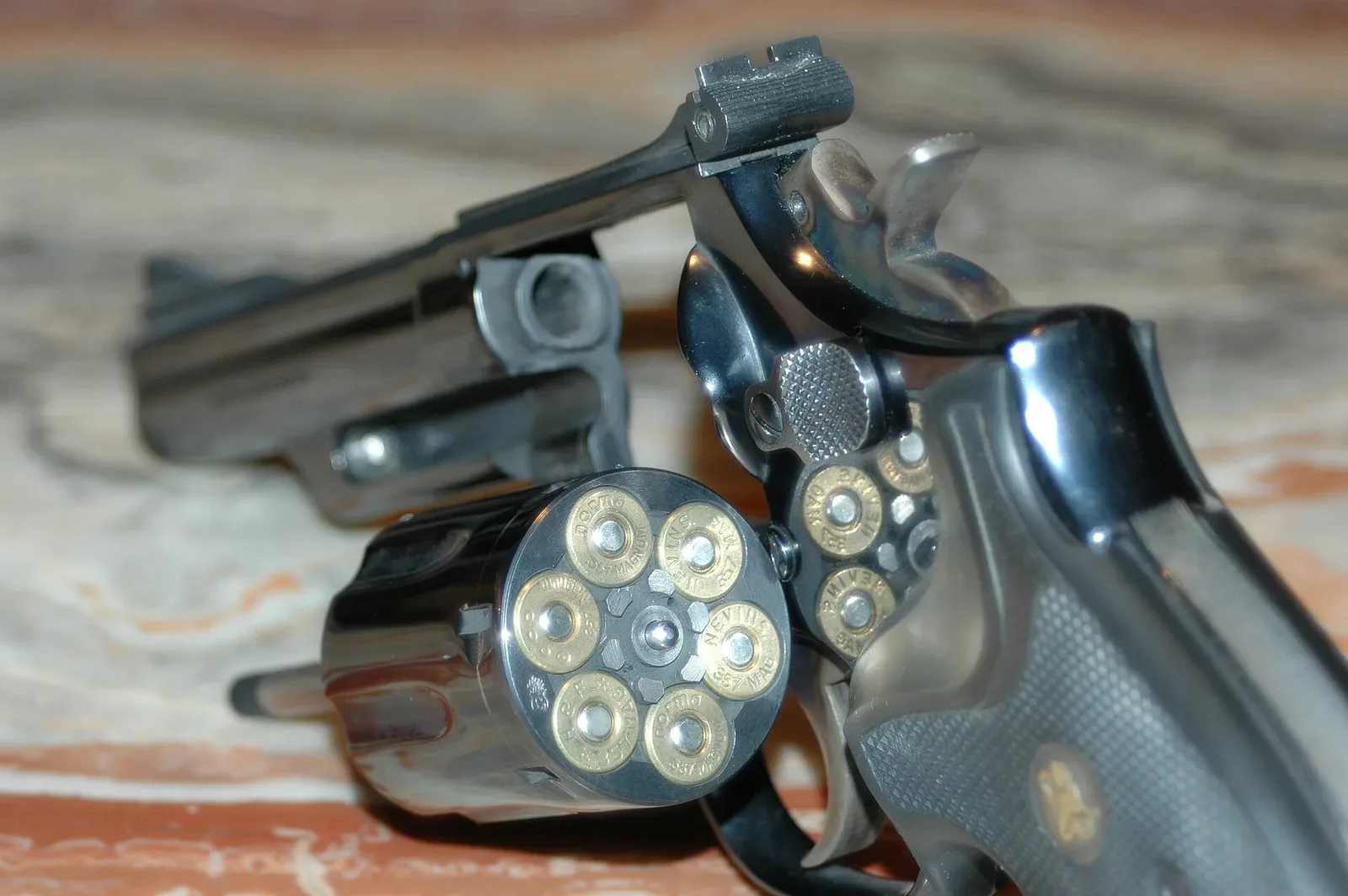
Once you've decided on a semi-automatic 9mm, the field narrows considerably. The Glock 19 comes up repeatedly as the default recommendation for first-time buyers. Per Wes Siler's guide, it's chambered in 9mm, available at gun stores in all 50 states, priced around $500, and offers a practical balance between being large enough to shoot comfortably and compact enough to carry.
Glocks don't have an external manual safety switch, which some new shooters find unsettling. Siler's guide addresses this directly: internal safety devices prevent the gun from firing by anything other than a trigger pull, and external safeties can add complication during stressful moments without meaningfully improving safety.
That said, TacticalGear.com recommends choosing a model with no known design or manufacturing safety issues and that has been tested for at least 5,000 rounds without malfunction. If you end up looking at other brands -- Heckler & Koch, Smith & Wesson, Sig Sauer, Springfield Armory -- apply that same standard.
SDI's buyer guidance makes a point worth repeating: starting with a full-size handgun rather than a compact model generally improves accuracy and comfort for new shooters. You can always move to something smaller once you've developed your fundamentals.
If a Handgun Isn't Your First Choice
Not everyone's first gun is a pistol. SDI's guide covers the other common starting points:
- A .22 LR rifle (bolt-action or semi-auto) is one of the most recommended first guns period -- low recoil, cheap ammo, and simple operation make it ideal for learning fundamentals.
- A 20-gauge shotgun is a reasonable entry point for hunting or home defense, with less recoil than a 12-gauge. The Mossberg 500 and Remington 870 are the workhorses in this category.
- An AR-15 can be a solid first rifle for adults interested in home defense or sport shooting, but SDI's guide is clear: it requires strong safety discipline and ideally some mentorship from an experienced shooter.
Try Before You Buyedit
This is the single most practical piece of advice in every source. You wouldn't buy a car without driving it first.
Many gun ranges rent firearms -- TacticalGear.com puts the typical cost at around $10 to $20 per hour. Before you commit to any gun, at minimum handle it at the counter and run through these checks per Liberty Safe's guidance:
- Does it fit your hand comfortably?
- Can you reach and operate all the controls?
- Is the weight manageable?
- Can you operate the safety (if present) without fumbling?
- Can you rack the slide or open the action?
If something feels wrong -- grip too wide, controls awkward, weight off -- that's real information. Don't let a salesperson talk you past it.
Safety Note: When handling any gun at a store counter, keep your finger off the trigger and outside the trigger guard. Keep the muzzle pointed in a safe direction. These habits start the moment you pick up your first gun, not after you've had training.
The Four Rules -- Learn These Firstedit
Every shooter, beginner or otherwise, operates by four fundamental safety rules. Both Liberty Safe and Wes Siler's guide state them clearly. Violate all four simultaneously and you have a negligent discharge. The rules exist because keeping even one of them intact prevents accidents.
- Treat every gun as if it's loaded -- even if you just unloaded it yourself.
- Never point the muzzle at anything you're not willing to destroy -- including your own hands, feet, and bystanders.
- Keep your finger off the trigger until your sights are on target and you've made the decision to shoot -- this is the one new shooters break most often without realizing it.
- Be sure of your target and what's behind it -- bullets don't stop at the thing you're aiming at.
These aren't suggestions. They're the foundation everything else is built on.
What to Budget Beyond the Gunedit
The firearm is just the starting line. Per the sources, here's what you should plan to spend:
| Item | Approximate Cost | Notes |
|---|---|---|
| Handgun (mid-range, e.g. Glock 19) | ~$500 | Street price varies |
| Ammunition (self-defense) | ~$30–$60/box | Ask dealer for a recommended defensive load |
| Ammunition (practice) | ~$15–$25/box | Buy as much as you can for training |
| Holster (OWB belt holster) | $50–$80 | Required if carrying; protects trigger |
| Hard-sided lockable case | $20–$50 | Minimum storage solution |
| Gun safe (optional but recommended) | Varies widely | Required for storage in some jurisdictions |
| Basic cleaning kit | $20–$40 | Non-negotiable; guns need maintenance |
| Cable lock | ~$10 | Often included with new firearm |
Per TacticalGear.com: don't buy the cheapest gun in the store. An inexpensive gun from a reputable manufacturer is fine -- a no-name budget gun with unknown reliability is a different thing entirely.
Storage: Get This Right From Day Oneedit
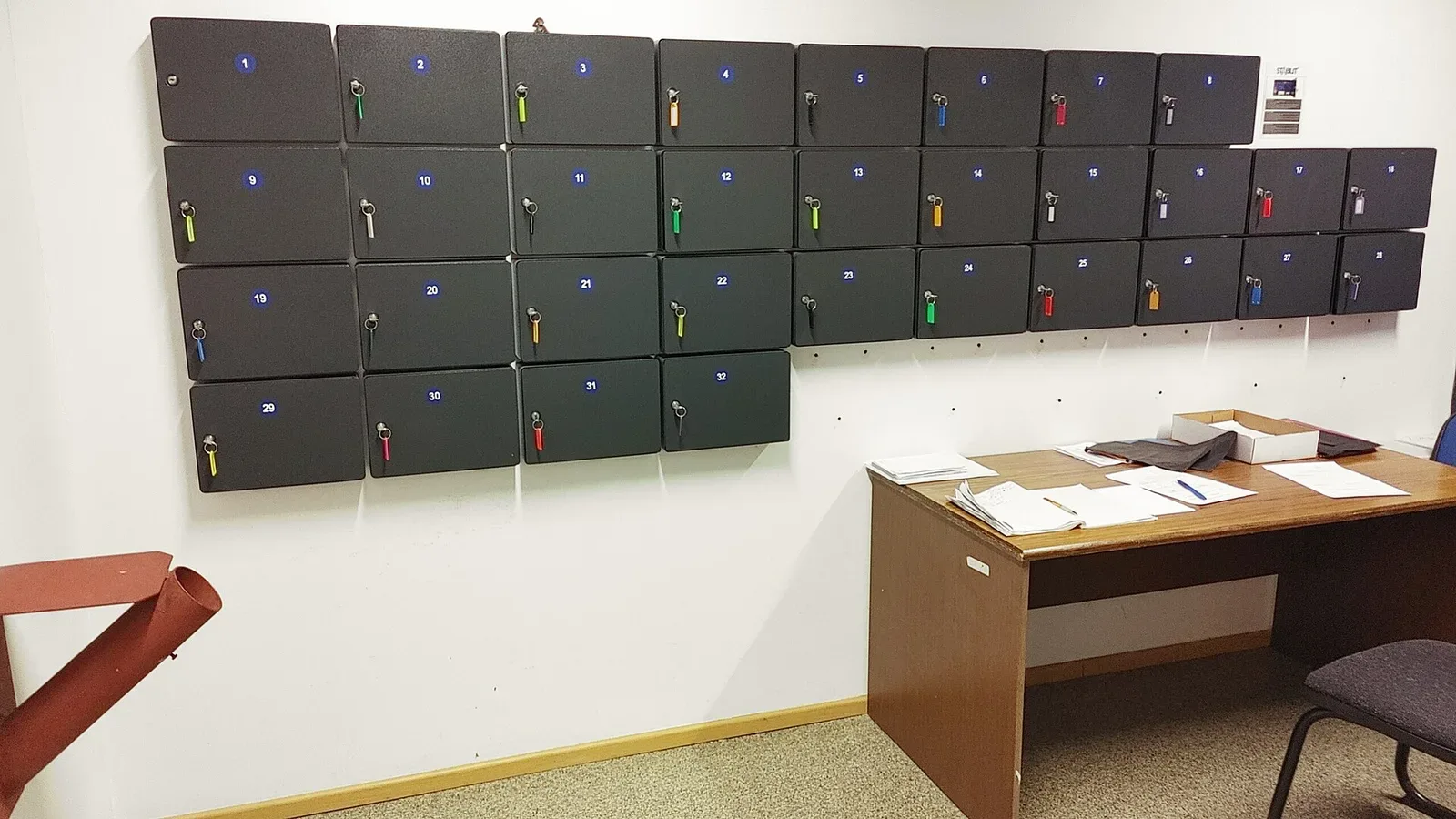
This is not an area to wing it. Per Liberty Safe, in some jurisdictions you can face criminal liability for failing to store firearms properly -- and even where there's no legal requirement, keeping guns secured from unauthorized access is just responsible ownership.
At minimum, every gun not on your person should be secured. Your options range from a simple cable lock (often included with the gun) to a lockable hard-sided case to a full gun safe. Per Wes Siler's guide, separating the gun from its ammunition when stored is another layer of safety -- a gun with no magazine and a clear chamber cannot fire accidentally.
If you have children in the home, this isn't optional. It's urgent.
Safety Note: Safe storage is always a tradeoff between accessibility and security. Err toward security. If you're concerned about access speed in a home defense scenario, add layers elsewhere -- motion lights, door reinforcement, an alarm -- rather than leaving a gun unsecured.
Get Trainingedit
Owning a gun you don't know how to use safely is not a security asset. Per Liberty Safe, shooting is a perishable skill -- you build it and you maintain it or you lose it.
The starting point for most new owners is a basic firearms safety course. If you're planning to carry concealed, per Wes Siler's guide, a CCW class is worth taking regardless of whether your state requires it -- not just for the legal framework around use of force, but for the practical skills. Beyond that, dedicated firearms schools exist across the country at a range of price points.
For dry-fire practice at home, Liberty Safe notes that practicing trigger control and muzzle discipline with an unloaded, verified-clear firearm goes a long way between range sessions. This is safe and free.
The Gun Store Experienceedit
Walking into a gun store for the first time can feel intimidating. It shouldn't. Per Wes Siler's guide, gun store staff are typically knowledgeable and genuinely interested in helping you find the right firearm. Ask questions. Tell them you're a first-time buyer. Show them your research and ask for their input.
Per Liberty Safe: if the employees aren't interested in answering your questions, take your business elsewhere. There are plenty of shops that want it.
SDI's buyer guidance adds a useful frame for this interaction: come in with your intended use case clear in your mind. Staff can help you prioritize from there. If you walk in with a wishlist from the internet, that's fine -- you're not uninformed, you're just sorting through a lot of information at once. A good dealer helps you cut through it.
Practical Next Stepsedit
- Look up your state's firearm laws before you go shopping -- your state's government website is the most reliable source
- Decide on your primary use case: self-defense, hunting, or recreation
- Visit at least one gun store with a range so you can rent and handle guns before buying
- Budget for the full picture: gun, ammo, storage, training, and a holster if you're carrying
- Take a basic safety or CCW course before or shortly after your purchase
- Read the owner's manual for whatever gun you buy -- cover to cover, before you load it Last Updated: March 30, 2026
- Phils Custom Handloads(Swartz Creek, MI)
- Gls Guns(Sumner, IA)
- J & L Gunsmithing(Chesapeake, VA)
- Oliver Firearms(Spartanburg, SC)
Loading comments...