Legal Details
Legislation

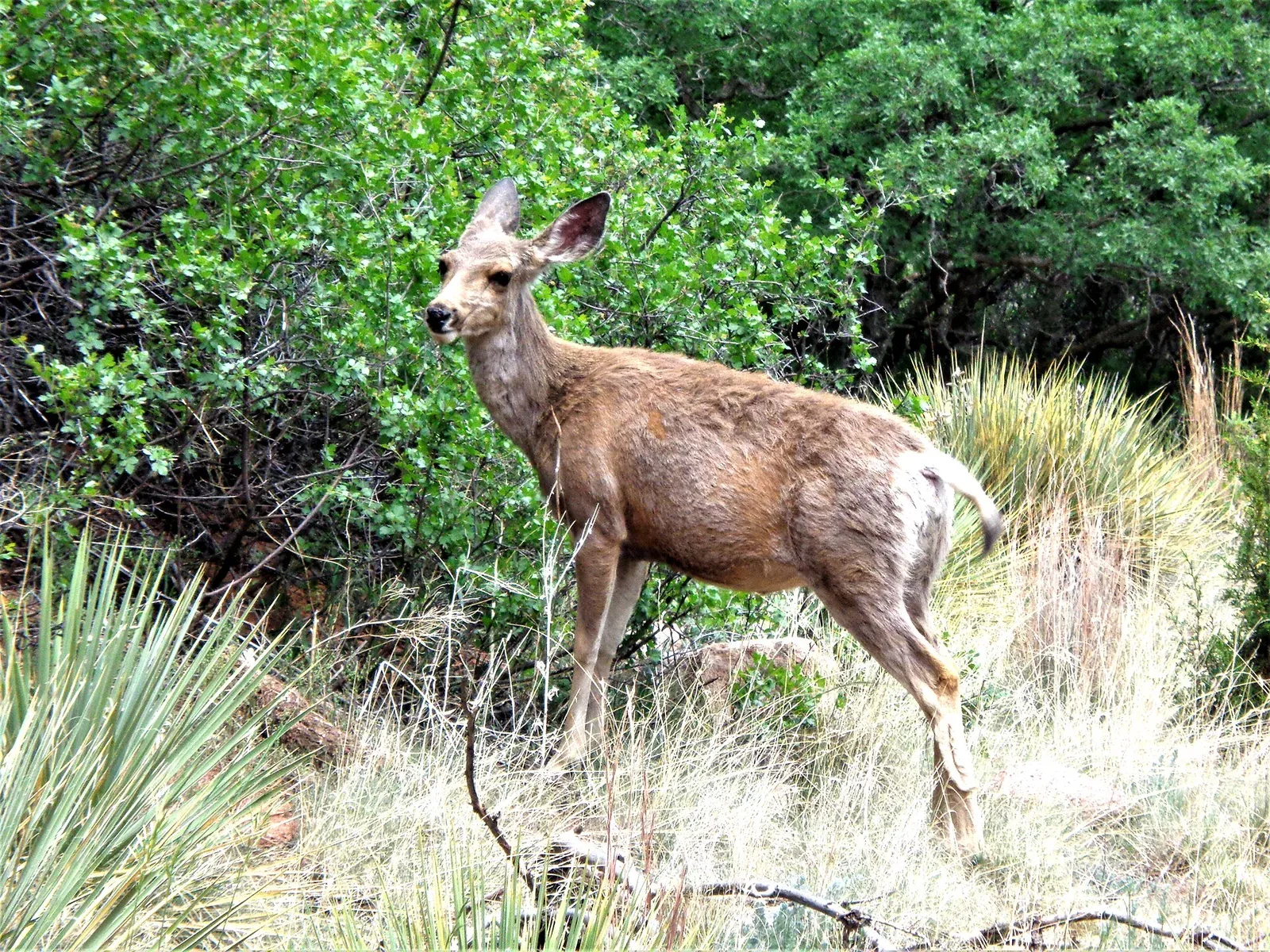
A female mule deer in Colorado — the species is distributed across western North America from Canada to Mexico, making it central to regional hunting regulations.
Sarbjit Bahga (CC BY-SA 4.0)
| Identification | |
|---|---|
| Jurisdiction | |
Territory | Utah |
| Timeline | |
| Effective | 2026 hunting season |
| Applicability | |
| Penalties | $50 late fee for harvest reports submitted after deadline |
Utah 2026 Hunting Regulations: What Changed
Legal information and analysis
From The Boise Gun Club Handbook
This is educational information, not legal advice. Laws change. Consult an attorney or the Utah Division of Wildlife Resources for your specific situation.
Utah's 2026 season is coming in with more deer permits on the table, a raft of new laws out of the legislative session, and a harvest reporting system that now has real teeth. If you hunted Utah in 2025, some of this will catch you off guard — particularly the $50 late fee on harvest reports that didn't exist last year.
Big Game Permit Numbers for 2026edit
Deer permits are up across the board. According to the Utah Division of Wildlife Resources, biologists are recommending a total of 86,625 general-season deer permits for 2026 — that's a 6,425-permit increase from the 80,200 issued in 2025. The increase reflects positive population responses to habitat improvement projects, predator management, and favorable conditions over the past year.
Of Utah's 31 general-season buck deer hunting units, 28 fell within the 20% automatic adjustment threshold established in the Utah Mule Deer Statewide Management Plan (approved by the Utah Wildlife Board in December 2024 and in effect through 2030). Three units — Beaver West, Kamas, and Wasatch Mountains West — exceeded that threshold, and the DWR is recommending a net increase of 1,300 permits across those three units combined.
"The most important factors that drive population size are the survival rates of adult does, fawn production and fawn survival. The way we hunt buck deer in Utah doesn't drive deer populations, but what happens with deer populations drives how we hunt buck deer." — DWR Big Game Coordinator Mike Wardle
Limited-entry deer recommendations also moved up slightly, from 1,547 permits in 2025 to a recommended 1,708 for 2026.
Elk numbers are being managed down slightly. The statewide elk management plan targets 80,600 elk in Utah. Current estimates put the population at approximately 83,020 — above objective. In response, biologists are recommending a slight decrease in public draw limited-entry bull elk permits, from 3,533 in 2025 to 3,497 for 2026, while antlerless elk permits are going up — from 20,483 to a recommended 21,650 — to bring overall population numbers back in line with objectives.
Pronghorn permits are also up modestly, with buck pronghorn recommendations moving from 1,739 to 1,827.
Here's the full recommended permit picture for 2026:
| Species / Hunt Type | 2025 Permits | 2026 Recommended |
|---|---|---|
| General-season buck deer | 80,200 | 86,625 |
| Limited-entry deer | 1,547 | 1,708 |
| Antlerless elk | 20,483 | 21,650 |
| Limited-entry bull elk | 3,533 | 3,497 |
| Buck pronghorn | 1,739 | 1,827 |
| General any-bull elk (early, adults) | 15,000 | 15,000 |
| General spike bull elk (OTC cap) | 15,000 (cap 4,500 multi-season) | 15,000 (cap 4,500 multi-season) |
Source: Utah DWR, April 2026 recommendations. Numbers are proposed and subject to approval through the Regional Advisory Council and Utah Wildlife Board process.
The antlerless permit picture is more surgical than population-wide. According to DWR, all recommended doe deer hunts are targeted at localized concerns — depredation issues, habitat overgrazing, or public safety — not broad population reduction. The DWR is also recommending a total of 228 public and 62 private antlerless big game CWMU (Cooperative Wildlife Management Unit) permits for 2026, covering nine CWMUs that are new, renewed, or changing antlerless allocations.
What Changed in the 2026 Legislative Sessionedit
Governor Spencer Cox signed several wildlife-related bills before the March 26, 2026 deadline. Here's what hunters and outdoor users need to know.
HB30: WMA Access Requirements Revised
This one affects everyone who uses Wildlife Management Areas — not just hunters. Legislation passed in 2025 required anyone 18 or older to hold a hunting, fishing, or combination license to access WMAs in Davis, Salt Lake, Utah, and Weber counties. HB30 modifies that requirement.
Under the new law, people without a hunting or fishing license can instead watch a free educational video about wildlife management areas and obtain a free digital access permit. They'll also have the option to donate toward conservation or habitat projects on a specific WMA.
A hunting or fishing license or free digital access permit registration will be required to enter Utah Wildlife Management Areas, with the requirement expanding statewide by July 2028. — Per HB30 and Salt Lake Tribune reporting
The rollout is phased:
| Effective Date | Counties/Areas Covered |
|---|---|
| July 1, 2026 | Class 1 & 2 counties: Davis, Salt Lake, Utah, Weber |
| July 1, 2027 | First-, second-, third-, and fourth-class counties |
| July 1, 2028 | All WMAs statewide |
According to the DWR, there are currently 149 WMAs throughout Utah totaling over 500,000 acres. Previous exemptions remain in effect, and a few new exemptions were added under HB30.
HB93: Goshen Bay Waterfowl Management Area
A new WMA is coming. HB93 creates the Goshen Bay Waterfowl Management Area, to be managed by the DWR along Utah Lake. The land is held in public trust by the Utah Division of Forestry, Fire and State Lands as sovereign lands. This law takes effect May 6, 2026.
HB125: Aquatic Invasive Species Course Changes
Previously, anyone operating motorized or nonmotorized watercraft in Utah had to complete the Mussel Aware Education Course annually. Under HB125, boaters using nonmotorized watercraft and motorized inflatables are no longer required to take that course. Anyone operating a motorized watercraft still must complete it each year (expiring December 31), and under a separate bill (HB54), that course will be combined with the Watercraft Operator Safety Course going forward. These provisions take effect January 1, 2027.
HB431: Wildlife Crossing Funding
$2 million per year is now earmarked for wildlife crossings. HB431 allocates $2 million annually toward wildlife-connectivity projects and establishes a Wildlife Crossing Account within the Utah Department of Transportation. Hunters purchasing a permit — or any Utah resident renewing a vehicle registration — will now have the option to donate toward wildlife crossing projects. The law also directs UDOT, in consultation with the DWR and other stakeholders, to recommend crossing and road fencing projects to the Transportation Commission. This takes effect July 1, 2026.
HB376: Forest Restoration Funding
This law established the Utah Forest Restoration Institute within Utah State University and allocated $1.9 million for watershed and forest health research and restoration. The institute will coordinate with Utah's Watershed Restoration Initiative, a DNR partnership program focused on water quality, biological diversity, and wildlife habitat. Effective May 6, 2026.
Harvest Reporting: Now Has Real Penaltiesedit
This is the rule change most likely to bite someone in 2026. Utah implemented mandatory harvest reporting for all general-season hunts in 2025, but the first year carried no financial penalty — you just had to report to stay eligible for future applications.
Starting in 2026, that changes:
- Late report (submitted after 30 days from hunt end): $50 fee
- No report at all: Ineligible to apply for big game and antlerless hunts for one year
If you failed to file your 2025 harvest survey by the deadline, you can still restore your eligibility for 2026 by paying the $50 late fee and filing the report. Per Huntin' Fool, you can reach the DWR at 800-221-0659 for that process.
The 30-day clock starts from the last day of your hunt as printed on your license. The e-tagging system (see below) automatically completes your harvest survey when you submit an e-tag after a harvest — but if you don't harvest or don't use e-tagging, you still need to file manually.
E-Tagging Is Now an Optionedit
Utah now has a voluntary e-tagging option for all big game, according to Huntin' Fool. The system works through the Utah Hunting and Fishing mobile app, and an e-tag is legally equivalent to notching and detaching a paper tag. You can carry both paper and digital, but you can only harvest one animal.
The e-tag process requires you to:
- Download your permit to the app before hunting
- After harvest, open the app and tap "Submit E-Tag" before moving the carcass or leaving the kill site
- Input your harvest location and four photos of the animal
- Receive an electronic harvest code — keep this with you
If you're out of cell service, the app saves the submission and sends it when you regain connectivity. Anyone transporting e-tagged wildlife must carry proof of legal harvest — a screenshot of the e-tag with the harvest code, access to the used permit in the app, or written permission from the permit holder with required details.
Key Point: If you e-tag a harvested animal, the harvest survey is automatically completed. That's one less thing to forget.
New Application Vendor for the 2026 Drawedit
Utah switched to a new application vendor for the 2026 big game draw. Applications are now handled at utahdraws.com. The interface will look different from prior years. Per Huntin' Fool, applicants are encouraged to log in early, verify account access, and get familiar with the new system before the deadline.
The application window for all big game runs March 19 through April 23, 2026. Draw results will be emailed and posted by May 31, 2026.
Non-Resident Fee Increases Are Now in Full Effectedit
Fee hikes that took effect September 1, 2025 are hitting the draw for the first time in 2026 — last year's applicants applied before the increases. Non-residents need to budget accordingly.
| License / Permit Type | Previous Cost | New Cost (as of Sept 1, 2025) |
|---|---|---|
| Non-resident annual hunting license | $120 | $144 (approx. $147 with 2.2% processing fee) |
| Drawing application fee (per species) | $16 | $21 (approx. $21.46 with fee) |
| General-season deer permit | ~$418 | |
| Limited-entry deer permit | ~$670 | |
| Premium LE multi-season deer | — | ~$2,309–$2,381 with fee |
| Limited-entry elk | — | ~$1,993 with fee |
| Bison | — | ~$4,946 with fee |
| Desert/RM Bighorn Sheep | — | ~$4,076 with fee |
| Moose | — | ~$3,565 with fee |
| Mountain Goat | — | ~$3,565 with fee |
Fees per Huntin' Fool, current as of September 2025. A 2.2% processing fee applies to all transactions.
There is also a new 2.2% processing fee added to all transactions — Huntin' Fool notes this is included in the figures they publish. Credit cards used for draw applications must be valid through June 2026.
Season Dates: Key Windows for 2026edit
Season dates shift year to year. These are the confirmed or proposed 2026 dates pulled from DWR-sourced material across multiple sources. Always verify your specific unit in the current DWR guidebook before hunting.
Deer
| Season Type | Dates | Bag Limit |
|---|---|---|
| General Archery | Aug 15 – Sept 11, 2026 | 1 buck |
| Extended Either-Sex Archery (select units) | Sept 12 – Nov 30, 2026 | Varies by unit |
| Muzzleloader General | Sept 23 – Oct 1, 2026 | 1 buck |
| Early Rifle (specific units) | Oct 7–11, 2026 | 1 buck |
| General Any-Weapon (Rifle) | Oct 17–25, 2026 | 1 buck |
| Restricted Rifle | Oct 17–25, 2026 | 1 buck |
| HAMSS | Nov 7–30, 2026 | 1 buck |
Elk
| Season Type | Dates | Bag Limit |
|---|---|---|
| LE Archery (Early) | Aug 15 – Sept 15, 2026 | 1 elk |
| General Any-Bull Archery | Aug 15 – Sept 16, 2026 | 1 bull |
| General Spike Archery | Aug 15 – Sept 4, 2026 | 1 spike bull |
| General Any-Bull First Rifle | Oct 3–9, 2026 | 1 bull |
| General Any-Bull Second Rifle | Oct 10–16, 2026 | 1 bull |
| General Spike Rifle | Oct 3–15, 2026 | 1 spike bull |
| General Muzzleloader (all units) | Oct 28 – Nov 5, 2026 | 1 bull |
| LE Bull Rifle (Late) | Nov 7–15, 2026 | 1 bull |
| Extended Archery (West Cache) | Through Jan 31, 2027 | 1 elk |
| Any Legal Weapon Bull | Dec 1–3, 2026 | 1 bull |
| Any Legal Weapon Cow | Through Jan 13, 2027 | 1 cow |
Pronghorn
| Season Type | Dates | Bag Limit |
|---|---|---|
| Archery | Aug 15 – Sept 11, 2026 | 1 buck |
| Rifle | Sept 12–20, 2026 | 1 buck |
| Muzzleloader | Sept 23 – Oct 1, 2026 | 1 buck |
All pronghorn hunts are draw-only. No over-the-counter pronghorn tags exist in Utah.
Once-in-a-Lifetime Species
| Species | Season Window | Notes |
|---|---|---|
| Moose | Sept 12 – Oct 31 / Dec 31, 2026 | Draw only; 1 per lifetime |
| Desert Bighorn Sheep | Sept 12 – Dec 25, 2026 | Draw only; 1 per lifetime |
| Rocky Mountain Bighorn Sheep | Sept 14 – Nov 30, 2026 | Draw only; 1 per lifetime |
| Mountain Goat | Sept 5 – Nov 25, 2026 | Draw only; orientation course required |
| Bison | Aug 1, 2026 – Jan 31, 2027 | Draw only; new cow hunt added for 2026 |
No group applications are allowed for once-in-a-lifetime species.
The New Bison Cow Huntedit
Henry Mountain bison hunt dates were modified to accommodate a new cow hunt in 2026. According to Huntin' Fool, this new hunt is not available to non-residents. Specific dates for the cow hunt were listed as TBD in available sources. If you're a resident interested in this opportunity, check the current DWR guidebook or utahdraws.com for the final dates and permit details.
Draw System: How It Works in 2026edit
Utah runs two parallel point systems depending on the species. For limited-entry deer, elk, antelope, and once-in-a-lifetime species, Utah uses a bonus point system — points increase your odds but don't guarantee a draw. The state issues 50% of limited-entry and once-in-a-lifetime permits to max-point holders, with the other 50% going into a weighted random draw where each bonus point equals one additional entry.
For general-season deer, Utah uses a preference point system — a true preference draw where max-point holders get permits first, working down through point levels. If you draw any of your five choices (first through fifth), you lose all accrued preference points.
Key Point: Utah does not allow you to hold two limited-entry draw tags in the same year. The draw runs in sequence — limited-entry deer, limited-entry elk, limited-entry antelope, once-in-a-lifetime species, then general-season deer. If you draw a limited-entry deer tag, your general-season deer application won't be considered (though you'll still receive a preference point).
A five-year waiting period applies after drawing a limited-entry deer or elk tag. The waiting period for limited-entry antelope is two years. Bighorn sheep, bull moose, mountain goat, and bison are once-in-a-lifetime regardless of harvest outcome.
Utah allocates 10% of draw permits to non-residents. Non-residents can apply for all species, including limited-entry and general-season deer, but cannot apply for both a permit and a bonus point for the same species in the same year.
Group Applicationsedit
Up to four hunters can apply together for limited-entry deer, elk, and antelope and general-season deer hunts. Group applications are not permitted for management buck or once-in-a-lifetime species. All group members must have identical bonus or preference points — and point totals are averaged and rounded down. Non-residents and residents can apply together, but if no non-resident permits are available for your selected hunt, the entire group application won't be considered.
Weapon Restrictions Worth Knowingedit
Restricted-weapon units for mule deer were created in 2025 and remain in effect. The units enrolled are Beaver/West, Boulder/Kaiparowits, Cache, and Thousand Lakes. These units have specific archery, muzzleloader, and rifle definitions more restrictive than standard:
- Archery: Single-stringed longbow or recurve only — no cables, pulleys, cams, or sights. Minimum 40-pound draw weight.
- Muzzleloader: No 209 primers or centerfire primers. Traditional flintlock, matchlock, wheelock, and percussion or musket caps only.
- Rifle: No scopes of any kind; no semi-automatic rifles.
Muzzleloaders statewide may no longer use variable power scopes. Only open sights, red dots, or 1x power scopes are allowed on muzzleloader-only hunts.
Electronic rangefinders may not be attached to bows for big game hunting. Broadheads must have two or more sharp edges that cannot pass through a 7/8" diameter ring. Expandable broadheads are legal; draw-lock devices and crossbows are not.
Hunter orange is required during any centerfire rifle hunt — at minimum one article (hat, shirt, jacket, coat, vest, or sweater) from the hunter orange list. This does not apply to archery seasons, muzzleloader seasons, or bighorn sheep, moose, mountain goat, or bison hunts.
Age Requirements and Hunter Educationedit
| Requirement | Details |
|---|---|
| Minimum age to apply / hunt | 12 years old by December 31, 2026 |
| Youth classification for general-season permits | 12–17 years old on July 31 |
| Adults under 16 | Must be accompanied by a guardian or responsible adult 21+ |
| Hunter education requirement | Required for anyone born after December 31, 1965 |
| Hunter education certificate cost | $12 |
| Trial Hunting Program | Ages 12+ may hunt with a licensed adult 21+ for a few years before completing hunter ed |
Youth hunters have dedicated general-season elk permits (unlimited for any-legal-weapon, muzzleloader, and multi-season hunts) and 20% of general-season buck deer permits are set aside for youth in the drawing. Additional over-the-counter youth archery deer permits go on sale at 8:00 a.m. on July 8 for youth who don't draw.
All successful mountain goat applicants must complete an online orientation course before receiving their permit. Find it at wildlife.utah.gov/biggame after draw results post in May.
WMA Access: What Non-Hunters Need to Knowedit
This is new ground for Utah public land management. Starting July 1, 2026, anyone 18 or older entering a WMA in Davis, Salt Lake, Utah, or Weber counties needs either:
- A valid Utah hunting, fishing, or combination license, or
- A free digital access permit (obtained after watching an educational video)
Birders, hikers, dog walkers, and mountain bikers using these areas are now covered under this requirement — not just hunters. The DWR notes that WMAs are primarily funded through hunting and fishing license sales, and the educational video requirement is meant to help non-consumptive users understand that connection.
By 2028, this requirement covers every WMA in the state. Per the Salt Lake Tribune, legislators may revisit certain aspects of this law, so watch for updates if you're a regular WMA user outside of hunting season.
New Zealand Mud Snail Reclassificationedit
This one matters if you run a private hatchery or stock a private pond. The DWR is proposing to reclassify the New Zealand mud snail from a prohibited species to a controlled species. The snail has been in Utah since the 1990s and has been monitored since then. After 25 years of data, the DWR determined it has not had a detectable impact on Utah's fish populations, though it remains a threat to native spring snails.
The reclassification would allow private hatcheries with New Zealand mud snails to stock private fish ponds, provided they hold a certificate of registration. This change is proposed — check the DWR website for final status.
CWMU Program and Private Land Accessedit
The Cooperative Wildlife Management Unit program has opened more than 2 million acres of private land to public hunting in Utah, according to the DWR. The program gives landowners deer, elk, antelope, and moose tags tied to their property, with liberal seasons. Landowners can transfer those tags. In exchange, they must allow a certain number of resident hunters selected through the draw to hunt on their land.
The DWR's Walk-In Access (WIA) program also leases private land for public hunting and recreation access. The DWR cannot provide landowner names or contacts for non-enrolled private land — you'll need to make your own arrangements.
Public Comment: Get Your Input Inedit
The 2026 permit recommendations are still going through the public process as of this writing. The DWR is accepting public comments through its website before each Regional Advisory Council meeting. Members of the public can attend in person or watch online, but you must attend in person to comment during the meeting. Online comments are only accepted until the deadlines below.
| Meeting | Date | Deadline for Online Comments |
|---|---|---|
| Central Utah RAC (Springville) | April 14, 2026 | April 9, 11:59 p.m. |
| Northern Utah RAC (Ogden) | April 15, 2026 | April 9, 11:59 p.m. |
| Southern Utah RAC (Cedar City) | April 21, 2026 | April 16, 11:59 p.m. |
| Southeastern Utah RAC (Green River) | April 22, 2026 | April 16, 11:59 p.m. |
| Northeastern Utah RAC (Vernal) | April 23, 2026 | April 16, 11:59 p.m. |
| Utah Wildlife Board (Farmington) | April 30, 2026 | April 22, 11:59 p.m. |
Resourcesedit
- https://wildlife.utah.gov/news/2026/04/01/dwr-releases-recommendations-for-2026-big-game-hunting-permits
- https://wildlife.utah.gov/news/2026/03/27/a-new-wildlife-management-area-updates-to-wma-access-requirements-and-3-other-wildlife-related-laws-passed-during-the-2026-legislative-session
- https://www.huntinfool.com/states/utah
- https://huntinglocator.com/blog/utah-hunting-season-guide/
- https://huntwise.com/field-guide/state-hunting-guide/utah-hunting-seasons
- https://www.sltrib.com/news/environment/2026/03/17/utah-will-soon-require/
- https://wildlife.utah.gov/hunting/hunting-regulation.html
Last Updated: April 03, 2026
- Ace Hardware of Sandusky(Sandusky, MI)
- New Philly Sportsman Specialities(New Philadelphia, OH)
- Atwoods Ranch & Home #46(LACY LAKEVIEW, TX)
- G & P Distributors(McConnellsburg, PA)
This is not legal advice
This guide provides general information about federal and state firearms laws based on publicly available statutes. Laws change frequently and vary significantly by state. Always verify current laws in your jurisdiction. Consult a qualified attorney for legal advice on your specific situation. When in doubt, contact local law enforcement or state police.
Loading comments...