State Details
Minnesota

Overview | |
|---|---|
State | Minnesota (MN) |
Capital | Saint Paul |
Statehood | 1858 |
Population | 5,737,915 |
Gun Ownership | 36.7% |
Active FFLs | 1,078 |
Carry Laws | |
Constitutional Carry | No |
Open Carry | Licensed |
CCW Permit Available | Yes |
Permit Reciprocity | 20+ states |
Self-Defense | |
Castle Doctrine | Yes |
Stand Your Ground | No |
Duty to Retreat | Yes |
Regulations | |
State Preemption | Partial |
Red Flag / ERPO | Yes |
Waiting Period | None |
Universal BGC | Yes |
NFA Items | Yes |
Assault Weapons Ban | No |
Magazine Limit | None |
Key Legislation | |
| |
Notable Manufacturers | |
| |
Minnesota Firearms History: From Fur Trade Forts to Modern Gun Law Debates
Reference article
From The Boise Gun Club Handbook
Overviewedit
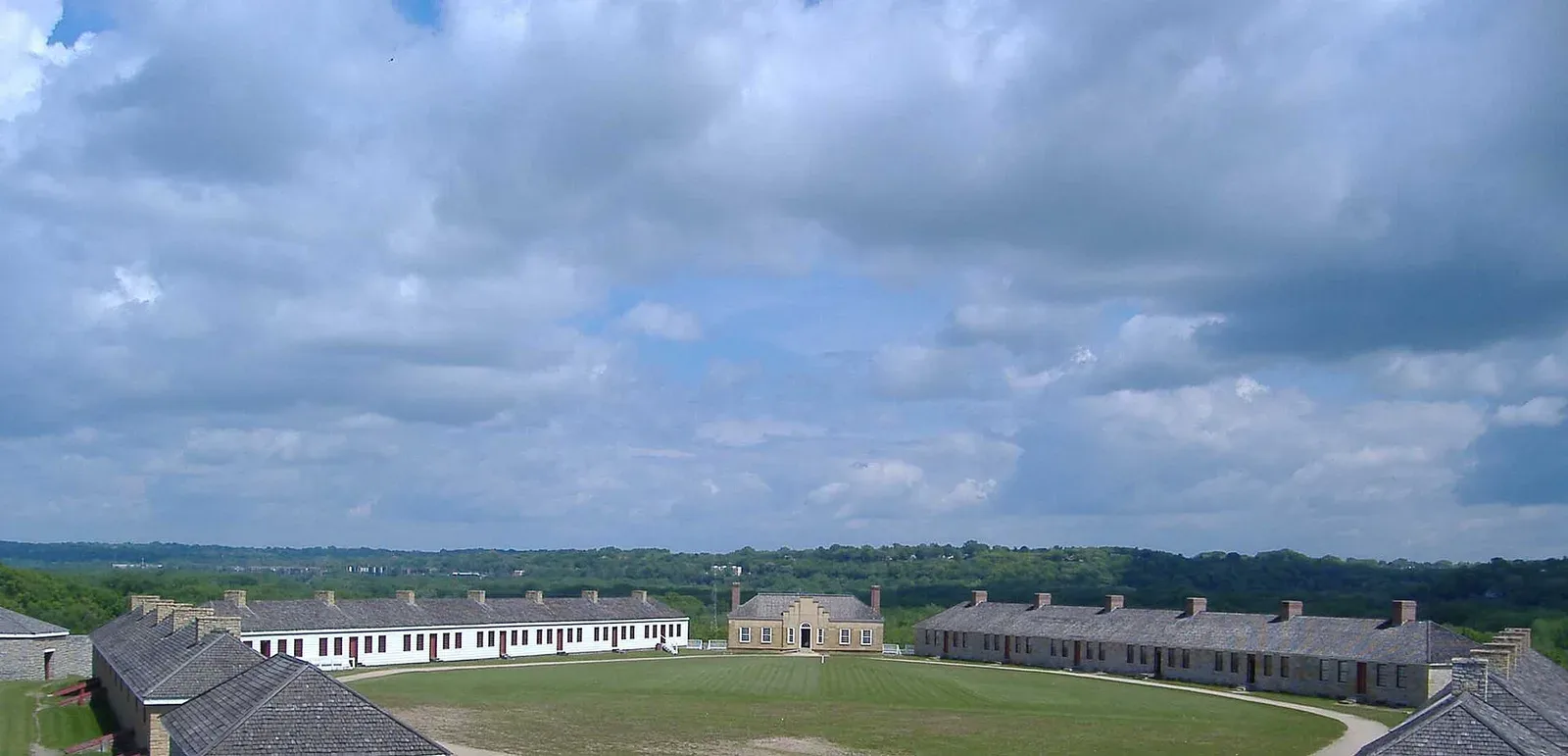
Minnesota sits at a crossroads that shaped its firearms culture from the beginning — literally. The upper Mississippi, the Minnesota River valley, and the Great Lakes trade routes made this territory a meeting point for Native nations, French voyageurs, British traders, American soldiers, and eventually hundreds of thousands of European immigrants, all of whom brought their own relationship with firearms. The state's gun history isn't a single thread.
It runs through birchbark portages and fur trade economics, through the bloodiest Native conflict in American history, through two world wars that turned Twin Cities factories into military production lines, and through a modern political divide that has made Minnesota one of the more contested battlegrounds in state-level gun policy.
Minnesota is also an outlier in one important legal sense: it has no right to keep and bear arms provision in its state constitution — one of only six states in the country without one. That absence shapes everything downstream.
For gun owners here, that's not a footnote. It's a structural reality.
The state runs about 500,000 licensed deer hunters most seasons. It has produced major ammunition manufacturing at scale. It shifted to shall-issue carry permits in 2003, then passed some of the most aggressive gun legislation in its history in 2023. It is, in short, a complicated place — and the history explains why.
Fur Trade & Early Settlement Era (Pre-1850)edit
French Contact and Trade Networks
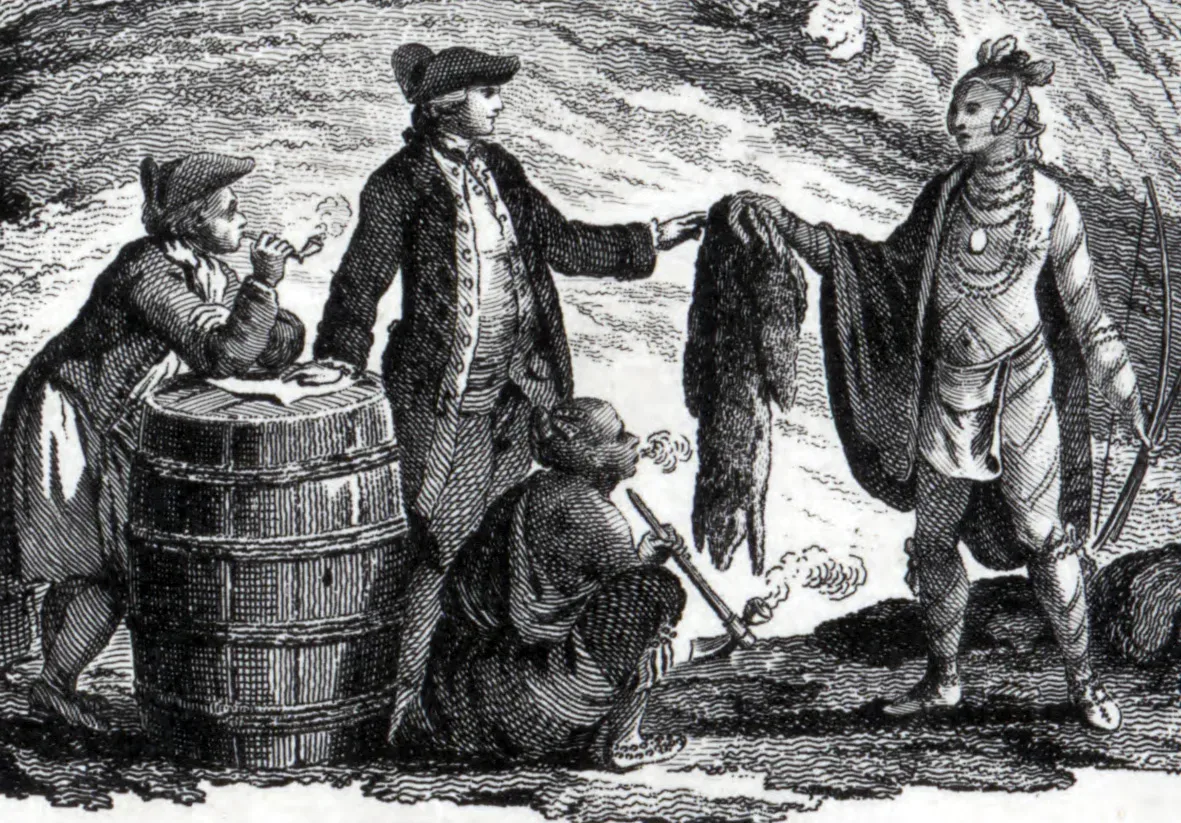
The first European firearms to reach what is now Minnesota arrived with French explorers and missionaries in the mid-1600s. Pierre-Esprit Radisson and Médart des Groseilliers reached the western Lake Superior region around 1659–60, and French contact with the Dakota and Ojibwe peoples — the two dominant nations in the region — brought trade muskets into an economy already organized around hunting and warfare.
Evolution of firearms introduction and integration in pre-territorial Minnesota
| Year | Event | Firearms Significance |
|---|---|---|
| 1659-60 | Radisson & Groseilliers reach western Lake Superior | First European firearms arrive |
| 1700s | Northwest Company/Hudson's Bay trade networks | Trade muskets become currency |
| 1780s | Grand Portage trading post established | Major firearms distribution node |
| 1819 | Fort Snelling established | First U.S. military installation |
| 1849 | Minnesota Territory organized | Formal American governance begins |
| 1851 | Treaties of Traverse des Sioux and Mendota | Land cessions enable mass settlement |
| 1858 | Minnesota statehood | Constitutional framework established |
By the early 1700s, the fur trade had made firearms a commercial staple. The Northwest Company and later the Hudson's Bay Company used trade muskets — typically smoothbore flintlocks of modest quality — as one of the primary currencies of exchange. Beaver pelts went east; guns, powder, and ball went west. The North West Company post at Grand Portage, established in the 1780s on the Lake Superior shore, was one of the major nodes in this network. Firearms weren't a luxury at Grand Portage. They were inventory.
Fort Snelling and American Control
The U.S. military established Fort Snelling in 1819 at the confluence of the Mississippi and Minnesota rivers, and it became the first significant American military installation in the region. The fort's garrison was equipped with the standard-issue U.S. Army flintlock muskets of the period, later transitioning to percussion arms as that technology matured. Fort Snelling served not just as a military post but as the de facto government of the upper Mississippi for decades before territorial organization — it mediated disputes, managed Indian affairs, and controlled access to the region.
The Ojibwe and Dakota peoples had been living with European firearms for over a century by the time American settlement began in the 1830s and 1840s. Firearms had already been integrated into hunting practices, intertribal conflict, and trade relationships. The idea that guns arrived with American settlers misreads the timeline by 150 years in Minnesota's case.
Territorial Organization and Settlement
When Minnesota Territory was organized in 1849, the population outside of Native communities was still small — a few thousand settlers concentrated around Fort Snelling, St. Paul, and Stillwater. But the land cession treaties of 1851, particularly the Treaties of Traverse des Sioux and Mendota, opened vast acreage to settlement and set the stage for the demographic explosion of the 1850s. Immigrants — many of them German, Scandinavian, and Irish — arrived with the firearms common to their backgrounds: hunting rifles, shotguns, and military surplus arms from European conflicts. Minnesota achieved statehood in 1858, just as the eastern United States was sliding toward civil war.
The U.S.-Dakota War of 1862edit
Outbreak and Early Battles
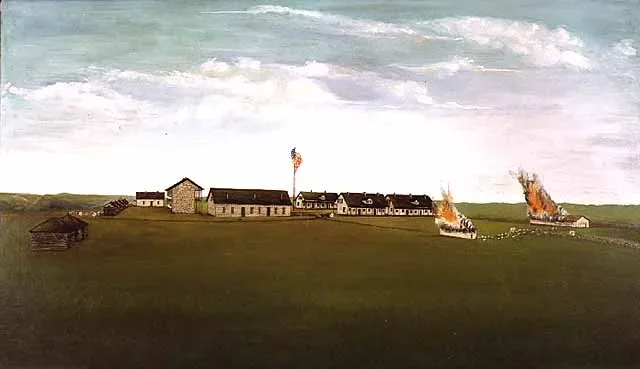
No event in Minnesota firearms history carries more weight than the U.S.-Dakota War of August–September 1862. It was the deadliest conflict between the U.S. government and a Native nation in the 19th century, and it unfolded entirely within the state's borders over roughly six weeks.
The war began on August 17, 1862, when four young Dakota men killed five settlers near Acton in Meeker County. The incident escalated into a coordinated uprising led by Little Crow (Taoyateduta), rooted in years of treaty violations, withheld annuity payments, and starvation-level conditions on the Lower Sioux Agency. The Dakota were armed — through trade, through earlier treaty provisions, and through whatever weapons could be seized — but they were significantly outgunned by federal forces once those forces were organized.
| Date | Battle/Event | Outcome | Firearms Notes |
|---|---|---|---|
| Aug 17, 1862 | Acton incident | 5 settlers killed | War begins |
| Aug 18, 1862 | Lower Sioux Agency massacre | Traders/employees killed | Dakota seize agency weapons |
| Aug 19 & 23 | Battle of New Ulm | Town held by defenders | Citizens fight with hunting rifles |
| Aug 20 & 22 | Fort Ridgely attacks | Fort holds | Artillery advantage decisive |
| Sep 23, 1862 | Battle of Wood Lake | Dakota defeated | End of main fighting |
| Dec 26, 1862 | Mankato executions | 38 Dakota hanged | Largest mass execution in U.S. history |
The early days of the war saw settlers and soldiers alike caught unprepared. The massacre at the Lower Sioux Agency on August 18 killed traders and agency employees. Fort Ridgely, garrisoned by a small detachment under Captain John Marsh and later Lieutenant Timothy Sheehan, was attacked twice and held — primarily because the defenders had artillery, which the Dakota could not effectively counter. The Battle of New Ulm on August 19 and 23 saw townspeople fight from improvised barricades with hunting rifles and whatever arms they had on hand.
Military Response and Aftermath
The state's response was immediate and shaped by near-panic. Governor Alexander Ramsey authorized Henry Sibley to lead a force of volunteers and regular troops, and Sibley's Army of Expeditionary Forces engaged the Dakota at the Battle of Wood Lake on September 23, 1862, which effectively ended the main fighting. The aftermath was severe: 303 Dakota men were sentenced to death by military tribunal, 38 were hanged at Mankato on December 26, 1862 — the largest mass execution in U.S. history — and most of the remaining Dakota population was expelled from Minnesota.
The war produced lasting changes in how Minnesota thought about civilian armament and state militia. The rural/urban divide in attitudes toward firearms has never fully closed.
The Minnesota Home Guard and county-level militia units were formalized in the immediate aftermath. Settlers in southern and western Minnesota who had been attacked or displaced became deeply invested in personal armament in ways that urban Minnesotans never were.
19th Century: Statehood, the Civil War & Frontier Settlementedit
Minnesota was only four years into statehood when the Civil War began, but the state's contribution was disproportionate to its size. Minnesota was the first state to offer troops to the Union after Fort Sumter — Governor Ramsey was in Washington when the news broke and personally offered 1,000 men to Secretary of War Simon Cameron on April 14, 1861, before Lincoln had formally called for volunteers.
The First Minnesota Volunteer Infantry became one of the most celebrated Union regiments, most famously at Gettysburg on July 2, 1863, where the regiment suffered 82% casualties in a charge ordered by General Winfield Hancock to buy time against a Confederate breakthrough. They were armed with the standard Union infantry weapon of the period, the Springfield Model 1861 rifled musket — a .58 caliber percussion arm that represented the dominant infantry technology of the war.
By war's end, Minnesota had raised eleven infantry regiments, two cavalry regiments, and several artillery batteries. Veterans returned home with practical firearms knowledge and, in many cases, brought their service arms or purchased surplus weapons. The postwar surplus market flooded Minnesota gun stores and hardware shops — as it did everywhere — with military revolvers, carbines, and rifles at prices accessible to working people.
Post-Civil War settlement accelerated dramatically. The Homestead Act of 1862 drew waves of Scandinavian and German immigrants to the prairie counties of southern and western Minnesota. Firearms were working tools on these farms — for hunting, for pest control, for the occasional wolf or bear. The Winchester Model 1873 and Marlin lever-actions found their way to Minnesota farms and lumber camps. The Red River Valley wheat country to the northwest, the iron range that would begin developing in the 1880s, and the massive white pine logging operations across northern Minnesota all had their own firearms cultures.
The Minnesota State Rifle Association traces organizational roots to this era, though the formal structure came together in the late 19th century under the influence of the post-Civil War National Guard and the National Rifle Association, which had been founded in 1871 partly to address the poor marksmanship that had plagued Union troops.
20th Century: Wars, Industry & Regulationedit
World War I and Industrial Foundation
World War I put Minnesota's industrial capacity to work in ways that mattered for firearms production. The Twin Cities Arsenal — which would later become the Twin Cities Army Ammunition Plant (TCAAP) in Arden Hills — had its roots in federal military production needs during this period, though the major expansion came during World War II. What WWI did establish was the infrastructure: federal investment in Minnesota manufacturing, and a workforce with industrial skills transferable to munitions work.
Federal Cartridge and WWII Production
Timeline of major Minnesota firearms industry milestones
Federal Cartridge Company, founded in Anoka in 1922, became one of the defining facts of Minnesota's firearms industry. The company was established to produce affordable .22 LR ammunition for the civilian market at a time when shooting sports were growing rapidly. Anoka — a modest city north of Minneapolis — would become one of the most important addresses in American ammunition manufacturing. Federal grew steadily through the 1920s and 1930s, survived the Depression, and positioned itself for what was coming.
World War II transformed both Federal Cartridge and the Twin Cities Arsenal into essential military production nodes. The TCAAP facility in Arden Hills was established in 1941 and at peak production employed tens of thousands of workers manufacturing artillery shells, small arms ammunition, and other ordnance. The plant sprawled across 2,400 acres in Ramsey County and became one of the largest ammunition production facilities in the country during the war years. Federal Cartridge similarly pivoted to military production, supplying .30 caliber and .50 caliber ammunition for the war effort.
| Company/Facility | Founded | Peak Employment | Products | Current Status |
|---|---|---|---|---|
| Federal Cartridge | 1922 | Several thousand (WWII) | .22 LR, shotshells, centerfire | Active (Anoka) |
| Twin Cities Army Ammunition Plant | 1941 | Tens of thousands (WWII) | Artillery shells, small arms ammo | Closed 1999 |
| Alliant Techsystems (ATK) | Corporate presence | N/A | Owned Federal, CCI, Speer, RCBS | Split 2015 |
| Vista Outdoor | 2015 | N/A | Current Federal parent company | Active |
Postwar Growth and Corporate Changes
The postwar period brought a return to civilian production at Federal, now with expanded capacity and technical expertise. Through the 1950s and 1960s, Federal grew its shotshell and centerfire lines, eventually becoming a major player across all categories of sporting ammunition. In 1985, Federal Cartridge was acquired by American Brands (later Fortune Brands), bringing institutional capital into an operation that had been largely independent for six decades. Alliant Techsystems (ATK) acquired Federal in 2001, and the brand eventually passed to Vista Outdoor in 2015 following ATK's split into two companies.
Federal's headquarters and primary manufacturing remain in Anoka today — one of the few cases where a major American firearms industry company never left the city where it was founded.
Regulatory Development
On the regulatory side, the 20th century saw Minnesota develop a more structured approach to firearms than most of its neighbors. The state's Permit to Purchase system for handguns predates the federal Gun Control Act of 1968 in concept, though the modern statutory framework was consolidated and clarified through legislative action in 1975. Under this system, anyone purchasing a handgun from a dealer must either present a valid permit to purchase (issued by local law enforcement) or go through a seven-day waiting period with a transfer report filed with local authorities. This system made Minnesota an outlier in the region — Wisconsin, Iowa, and the Dakotas had no comparable requirement — and it became a recurring flashpoint in state gun debates.
The Minnesota Citizens' Personal Protection Act was the defining gun legislation fight of the late 20th and early 21st century. For decades, Minnesota operated under a may-issue system for carry permits, meaning local sheriffs had discretion to deny applications even from qualified applicants. In practice, this meant carry permits were essentially unavailable in Hennepin and Ramsey counties (Minneapolis and St. Paul) while being relatively accessible in rural counties. The inequity was real and documented.
After multiple failed attempts in the 1990s, the shall-issue legislation passed in 2003 as Minnesota Statutes Chapter 624.714, signed by Governor Tim Pawlenty. The law required sheriffs to issue permits to any applicant who met objective statutory criteria — background check, training, no disqualifying history. The Minneapolis city government, under Mayor R.T. Rybak, immediately passed a city ordinance attempting to circumvent the state law, which was struck down in court. The 2003 bill was a significant realignment — Minnesota's carry permit system has been shall-issue ever since.
The 1994 federal assault weapons ban had a Minnesota-specific wrinkle: the state's definition of "semiautomatic military-style assault weapon" under Minnesota Statutes § 624.712 extended the permit to purchase requirement to cover certain semi-automatic firearms, a category broader in some respects than the federal definition. That state-level classification survived the expiration of the federal ban in 2004 and remains in effect.
Modern Era (2000–Present)edit
Shall-Issue Era and Stability
The 2003 shall-issue reform was followed by years of relative legislative stability on guns in Minnesota. Carry permit numbers climbed steadily — from roughly 50,000 active permits in the mid-2000s to over 300,000 by the late 2010s. The Star Tribune's 2018 analysis of federal background check data showed a pronounced shift in Minnesota purchase patterns toward handguns over the same period, tracking a national trend but pronounced here given the permit system's structure.
2020 Social Unrest and Gun Sales Spike
The 2020 murder of George Floyd by Minneapolis police officer Derek Chauvin, and the subsequent civil unrest, produced a documented spike in Minnesota firearms purchases. NICS checks in Minnesota jumped sharply in the summer of 2020.
Gun stores across the metro reported months-long waits on background checks and empty shelves. A meaningful portion of first-time buyers during this period were people who had not previously owned firearms — and some of them were not the demographic that gun stores had historically served. The political implications of that shift were not lost on anyone.
2023 Legislative Package
The 2022 midterm elections gave Democrats a narrow trifecta — control of the governorship, the state House, and the state Senate simultaneously — for the first time in nearly a decade. Gun policy advocates had been waiting for exactly this alignment.
The 2023 legislative session produced the most extensive package of firearms legislation in Minnesota history. The session's output included:
- Universal background checks on all firearm transfers, eliminating private sales without a background check (signed May 19, 2023)
- Extreme Risk Protection Orders (ERPO), commonly called a red flag law, allowing courts to temporarily remove firearms from individuals deemed dangerous (effective January 1, 2024)
- Expansion of domestic violence firearm prohibitions, including requiring surrender of firearms upon issuance of a domestic abuse order for protection
- A requirement that lost or stolen firearms be reported to law enforcement within 48 hours
2023 Minnesota gun legislation package and implementation pathway
| 2023 Legislation | Effective Date | Key Provisions | Status |
|---|---|---|---|
| Universal Background Checks | May 19, 2023 | All transfers require check | In effect |
| Extreme Risk Protection Orders | Jan 1, 2024 | Court-ordered temporary removal | Under litigation |
| Domestic Violence Prohibitions | 2023 | Expanded surrender requirements | In effect |
| Lost/Stolen Reporting | 2023 | 48-hour reporting requirement | In effect |
Governor Tim Walz signed the package into law. Legislative opponents, primarily Republican legislators from greater Minnesota, argued the laws would burden law-abiding gun owners while doing little to address crime concentrated in urban areas. Supporters pointed to polling showing majority support for background check expansion even among households with guns.
The ERPO law faced immediate legal scrutiny and was challenged in state court. As of early 2026, the law remains in effect while litigation continues. The Gun Owners Civil Rights Alliance (GOCRA), Minnesota's primary state-level gun rights organization, was central to the legal challenges.
Hunting Law Changes
On the hunting side, 2025 brought a significant regulatory change: as of January 1, 2025, centerfire rifles became legal for deer hunting statewide in Minnesota during the firearms season. Previously, rifles were prohibited in most of the agricultural zone — the southern and western portions of the state — due to concerns about flat-trajectory rounds in densely settled farmland. The change followed years of lobbying from hunters who argued that modern deer hunting cartridges could be used safely and that the prohibition was outdated. The Minnesota DNR conducted a review process before implementing the change. This ended one of the longer-running debates in Minnesota hunting regulation.
Minnesota still has no constitutional carry as of early 2026. Bills to eliminate the carry permit requirement have been introduced but have not advanced under Democratic legislative control. The permit system remains in place, and Minnesota does not recognize all other states' carry permits on a reciprocal basis — the state extends conditional recognition based on training standards equivalency.
Notable Figures & Manufacturersedit
Federal Premium Ammunition (Anoka) is the single most significant firearms industry presence in Minnesota's history. Founded in 1922 by Charles L. Horn, Federal built its reputation on affordable .22 ammunition before expanding into shotshells and centerfire rifle and handgun cartridges. The Trophy Bonded Bear Claw bullet, developed in the 1980s and later refined by Federal after acquisition, became a standard for dangerous-game hunting. Federal's HST line of defensive handgun ammunition has been widely adopted by law enforcement agencies. The Anoka facility remains operational and employs hundreds of people in the metro area.
Alliant Techsystems (ATK), headquartered in Eden Prairie for much of its history, was a defense and aerospace contractor that at various points owned Federal Cartridge, CCI, Speer, and RCBS — essentially a significant portion of the American ammunition and reloading supply chain operating out of Minnesota corporate offices. ATK's 2015 split produced Vista Outdoor (which took the ammunition brands) and Orbital ATK (defense). Vista Outdoor maintained Minnesota connections through its supply chain and brand management, though its corporate domicile moved.
Henry Sibley — the first governor of Minnesota — was a former fur trader and American Fur Company agent before his political career, and his background was thoroughly shaped by the firearms-dependent economy of the fur trade. His role commanding Minnesota forces during the U.S.-Dakota War makes him a central figure in the state's military history, though a deeply contested one given the aftermath of the war and the mass execution at Mankato.
Sergeant William Colville commanded the First Minnesota at Gettysburg and survived wounds that should have killed him. His story is the most cited example of Minnesota's Civil War sacrifice, and the regiment's charge has been commemorated repeatedly in state historical observance.
Jane Strait, a longtime lobbyist and president of GOCRA, was one of the architects of the 2003 shall-issue reform and has been a consistent presence in Minnesota gun rights advocacy for over two decades. GOCRA differs from the NRA in focusing specifically on Minnesota legislative and legal work and has been the primary organizational voice for gun owners in the state Capitol.
Browning has no manufacturing presence in Minnesota, but the company's history intersects with the state in one specific way: John Moses Browning's designs were chambered and loaded by Federal's Anoka plant for decades, and the .45 ACP cartridge that Browning developed for his 1911 pistol was among Federal's major production lines throughout the 20th century.
Current Legal Landscapeedit
Minnesota's current firearms law sits in a specific place on the national spectrum — more regulated than most of the upper Midwest, less regulated than the Pacific Coast states, and internally contested in ways that reflect its political geography.
Permit Systems
| Requirement | Scope | Process | Cost | Validity |
|---|---|---|---|---|
| Permit to Purchase | Handguns & assault weapons | Background investigation by police/sheriff | Free | 1 year |
| Carry Permit | Concealed/open carry | Shall-issue with training | Varies by county | 5 years |
| Universal Background Check | All transfers (since 2023) | Through licensed dealer | Standard fee | Per transaction |
| ERPO | Court petition (since 2024) | Hearing process | Court costs | Temporary orders |
Permit to Purchase: Required for handguns and semi-automatic military-style assault weapons as defined under state statute. A permit is issued by the local police chief or county sheriff after a background investigation, costs nothing, is valid for one year, and allows multiple purchases. The alternative is a seven-day waiting period with a transfer report. Long guns other than those meeting the assault weapon definition require no permit.
Carry Permits: Shall-issue under MN Stat. § 624.714. Training is required. The permit is issued by the county sheriff. Minnesota extends conditional reciprocity to permits from states with training requirements deemed equivalent — in practice, this means many but not all other states' permits are recognized.
Recent Legislative Changes
Universal Background Checks: As of May 2023, all firearm transfers, including private sales, require a background check. The mechanism runs through a licensed dealer for private transfers. Exceptions exist for:
- immediate family member transfers
- antique firearms
Red Flag / ERPO: Effective January 1, 2024. Allows law enforcement, family members, or household members to petition a court for an Extreme Risk Protection Order. The subject has an opportunity for a hearing. Challenged in litigation as of early 2026.
No State Registration: Minnesota does not require registration of firearms. The permit-to-purchase system creates a record at the point of transfer, but there is no ongoing registry.
No Assault Weapons Ban: Minnesota's semi-automatic military-style assault weapon definition, while broader than the expired federal definition in some respects, functions as a permit-to-purchase trigger rather than an outright ban.
Constitutional and Preemption Issues
No Constitutional Right to Bear Arms: Minnesota is one of approximately six states with no RKBA provision in its state constitution. This has practical consequences — courts reviewing Minnesota gun laws apply only federal Second Amendment analysis, without any additional state constitutional floor. Legislative proposals to add a RKBA amendment have been introduced periodically and have not advanced.
Preemption: Minnesota has partial state preemption. Local governments cannot regulate carry permits differently from state law — the Minneapolis ordinance attempt in 2003 established that. However, some local regulation remains possible in specific contexts, and the scope of preemption has been the subject of ongoing legal and legislative debate.
Hunting: As of January 1, 2025, centerfire rifles are legal statewide for deer season. Blaze orange requirements remain in effect. The DNR administers the firearms safety certification program, which has certified over 1.3 million Minnesota hunters since 1955.
The BGC Takeedit
Minnesota is not an easy state to summarize for gun owners, and anyone who tries to do it in a sentence is leaving out half the picture. The rural gun culture here is genuine and deep.
The pheasant hunters in the southwestern counties, the deer camps in Itasca and Cass and St. Louis counties, the waterfowlers along the Mississippi flyway — these aren't people who think about guns politically most of the time. A firearm is a seasonal tool, maybe an heirloom, maybe both. The over 500,000 licensed deer hunters who take to the woods every November represent one of the largest concentrations of armed citizens engaged in a single activity anywhere in the country. That's not nothing, and it's not a political abstraction.
The urban reality is different. Minneapolis and St. Paul have been dealing with genuine gun violence problems — spiking homicide rates in 2020–2022, followed by political pressure to do something visible. The 2023 legislation came out of that pressure, and it passed because the DFL held all three branches. Whether it will accomplish what its supporters claim is genuinely uncertain. Universal background check laws in other states have had mixed results on crime metrics, and the populations driving Minneapolis violence were not, as a practical matter, purchasing firearms through channels that background checks would intercept.
The red flag law is the more contested piece. The concept is defensible in specific, narrow circumstances. The implementation — who can petition, what standard of proof applies, what due process looks like — matters enormously, and those details are exactly what's being litigated right now. Minnesota gun owners who have watched ERPOs abused in other states have legitimate concerns that are not simply paranoia.
When the legislature swings, there is no state constitutional floor to fall back on. That asymmetry is real, and it's why organizations like GOCRA push periodically for a state constitutional amendment.
It hasn't happened. In the current political environment, it's not happening soon.
What does Minnesota look like as a place to own guns in 2026? Rural Minnesota is still fundamentally gun-friendly — the carry culture is established, hunting is woven into local identity, and most sheriffs are not looking for reasons to deny permits. The metro is more complicated, with local politics running hotter on the issue than almost anywhere in the Midwest. If you're a gun owner here, the 2023 session was a warning shot — when the political alignment exists, Minnesota's legislature will move, and there's no state constitutional backstop to slow it down.
The Federal ammunition plant in Anoka is still running. The deer camps are still full in November. Both of those things are true at the same time as red flag laws and universal background check requirements. That's Minnesota — it contains multitudes, and the tension between them isn't going away.
Referencesedit
- Minnesota Statutes Chapter 624 (Firearms, Explosives) — revisor.mn.gov
- Minnesota House Research Department, Minnesota Firearms Laws (PDF) — house.mn.gov
- NRA-ILA, Minnesota Gun Laws — nraila.org (last updated March 2020)
- Wikipedia, Gun Laws in Minnesota — en.wikipedia.org
- Minnesota DNR, Hunter Education and Firearms Safety — dnr.state.mn.us
- Star Tribune, 8 Charts That Show Changes in Minnesota's Gun Culture (2018) — startribune.com
- FindLaw, Minnesota Gun Control Laws — findlaw.com
- Dassel-Cokato Enterprise Dispatch, Minnesota Hunting Laws Overhauled for 2025 Season — dasselcokato.com
- Minnesota Revisor of Statutes, Chapter 97B (Game and Fish) — revisor.mn.gov
- Minnesota Historical Society, U.S.-Dakota War of 1862 — mnhs.org
- Federal Premium Ammunition, company history — federalpremium.com
- Vista Outdoor corporate history documentation
- Gun Owners Civil Rights Alliance (GOCRA) legislative archive — gocra.org
Last Updated: February 24, 2026
- Quail Creek Plantation(Okeechobee, FL)
- 2aHawaii(Honolulu, HI)
- Boston Firearms(Everett, MA)
- Safeshoot(Kingston, NY)
Loading comments...