State Details
Nebraska

Overview | |
|---|---|
State | Nebraska (NE) |
Capital | Lincoln |
Statehood | 1867 |
Population | 1,978,379 |
Gun Ownership | 42.6% |
Active FFLs | 540 |
Carry Laws | |
Constitutional Carry | Yes (2023) |
Open Carry | Yes |
CCW Permit Available | Yes |
Permit Reciprocity | 35+ states |
Self-Defense | |
Castle Doctrine | Yes |
Stand Your Ground | Yes |
Duty to Retreat | No |
Regulations | |
State Preemption | Yes |
Red Flag / ERPO | No |
Waiting Period | None |
Universal BGC | No |
NFA Items | Yes |
Assault Weapons Ban | No |
Magazine Limit | None |
Key Legislation | |
| |
Notable Manufacturers | |
| |
Nebraska Firearms History: From the Platte River Trail to Constitutional Carry
Reference article
From The Boise Gun Club Handbook
Overviewedit
Nebraska sits at the geographic center of the American firearms story in a way most people don't fully appreciate.
Nebraska sits at the geographic center of the American firearms story in a way most people don't fully appreciate. Before it was a state, it was the highway.
Before it was a state, it was the highway. The Platte River valley funneled hundreds of thousands of emigrants westward between the 1840s and 1870s, every wagon train carrying rifles and shotguns as working tools for survival. Before the emigrants, it was a trading corridor where Pawnee Confederacy, Lakota Sioux, Omaha, and Ponca nations exchanged furs for firearms with French, British, and eventually American traders. Before the traders, it was contested hunting ground where the arrival of the horse and the gun reshaped plains warfare in ways that are still being studied.
Nebraska achieved statehood in 1867—the same year the Union Pacific Railroad was hammering rails westward across the state—and its firearms culture has always reflected that frontier inheritance. It is not a state with a strong hunting tradition layered on top of a colonial past, the way New England states are. It is a state where the gun was genuinely necessary for a long time, and where that memory runs close to the surface in ways you can still feel at a gun show in Grand Island or a ranch in the Sandhills.
Today Nebraska is a constitutional carry state, having passed Legislative Bill 77 in 2023. Its gun violence rate of roughly 11.1 deaths per 100,000 residents sits measurably below the national average of 13.0. The legal environment is permissive, the political culture is conservative outside Omaha and Lincoln, and the debate over firearms policy follows the familiar urban-rural divide that shapes every other political question in the state.
Territorial Era: Trade Guns, Trail Emigrants & the Platte River Corridoredit
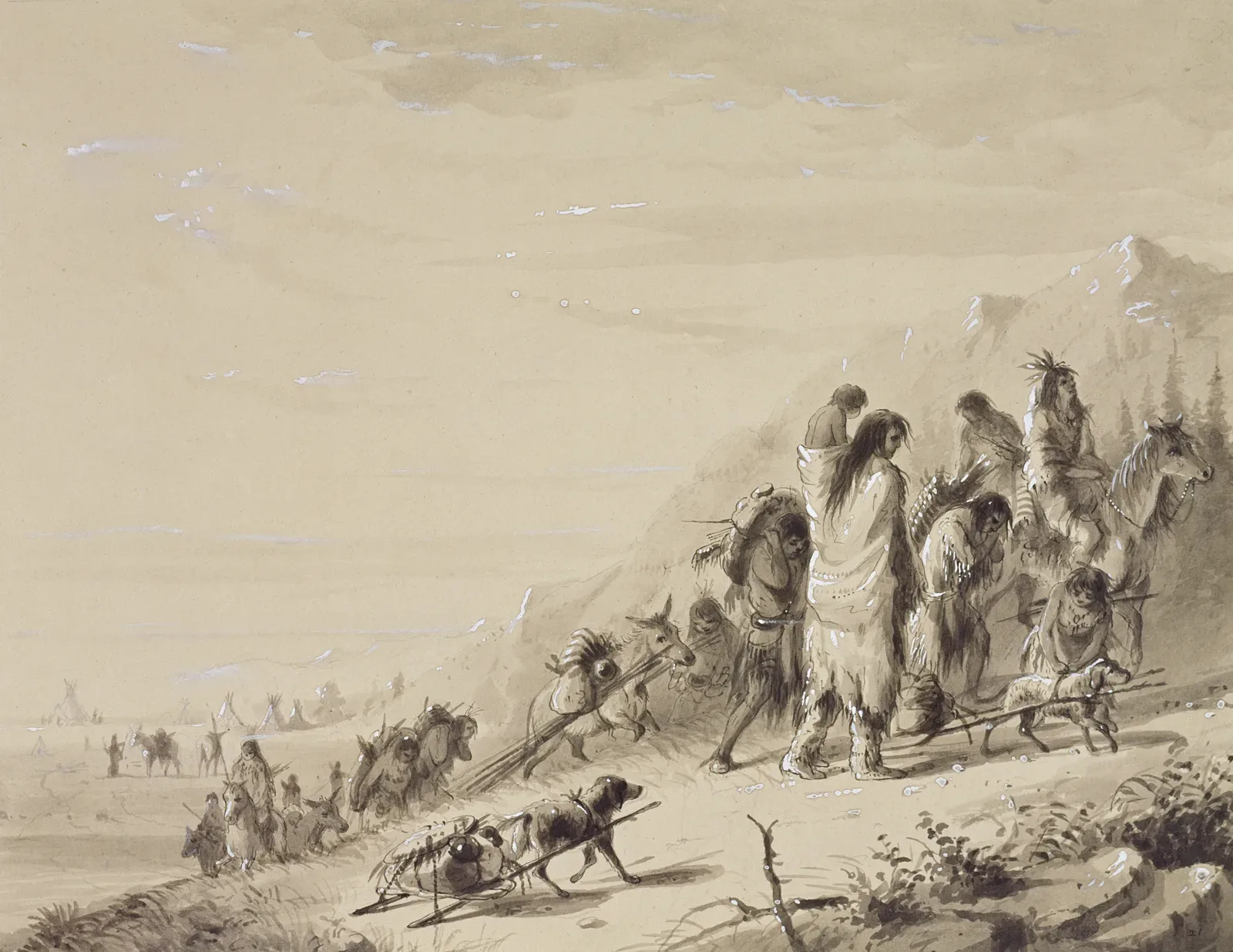
Early Trade Networks (1720s-1820s)
The gun arrived in what is now Nebraska well before any American settlement. French traders operating out of the Mississippi valley were moving flintlock trade muskets into the Platte River country by the early 1700s. The Pawnee Confederacy—four bands occupying the central Platte River valley—became active firearms traders and eventually became among the better-armed nations on the central plains. Spanish colonial authorities in Santa Fe worried explicitly about French gun distribution to plains nations in correspondence dating to the 1720s, which gives you a sense of how far the ripple effects traveled.
The Lakota Sioux pressed into western Nebraska with horses and firearms through the late 1700s, pushing the Pawnee Confederacy and other established nations eastward in a series of conflicts that reshaped the entire regional balance of power before any American explorer had set foot there. When Meriwether Lewis and William Clark passed through eastern Nebraska in 1804 and again in 1806, they documented this already-armed landscape in their journals—the Omaha nation near present-day Macy had British trade guns, and the expedition's own firearms were objects of intense interest wherever they stopped.
Key events in Nebraska's territorial firearms development
The American Fur Company established Bellevue trading post near present-day Omaha around 1823, and it became one of the primary points where American-manufactured firearms entered the Nebraska trade network. Hawken-style rifles—most actually made in St. Louis—moved through posts like Bellevue into the hands of both Native nations and the growing population of mountain men working the Rockies.
| Year | Event | Firearms Impact |
|---|---|---|
| 1720s | French traders distribute flintlocks to Pawnee | Pawnee become well-armed plains nation |
| 1804-1806 | Lewis & Clark expedition | Document existing British trade guns among Omaha |
| 1823 | American Fur Company establishes Bellevue | American-made firearms enter Nebraska trade |
| 1841-1869 | Emigrant trail era | 300,000-500,000 armed emigrants cross Nebraska |
| 1848 | Fort Kearny established | First major military firearms depot in territory |
| 1854 | Kansas-Nebraska Act | Territorial government chooses minimal gun regulation |
The Great Migration Period
The emigrant trail era changed everything about the scale of firearms in Nebraska. Between 1841 and 1869, an estimated 300,000 to 500,000 emigrants crossed Nebraska along the Oregon Trail, California Trail, and Mormon Trail, nearly all of them armed. The typical emigrant outfit included at least one rifle or shotgun and often a pistol. Contemporary emigrant diaries from the 1840s and 1850s record gunfire constantly—Contemporary emigrant diaries from the 1840s and 1850s record gunfire constantly:
- At buffalo herds near the Platte River
- At coyotes raiding camps
- At perceived threats from Native nations
- Frequently at each other by accident
The Platte River Road may have seen more firearms pass through it in a thirty-year period than any comparable stretch of geography in North America.
Territorial Organization
Fort Kearny, established in 1848 near present-day Kearney, Nebraska, was built explicitly to protect this emigrant corridor. It became the first major military post in Nebraska and its supply and armament requirements shaped commerce in the region. The fort's garrison used Model 1841 Mississippi Rifles and later Springfield Model 1855 percussion rifles, and the post's ordnance records provide some of the earliest detailed documentation of military firearms inventory in the territory.
Nebraska was organized as a formal territory under the Kansas-Nebraska Act of 1854, signed by President Franklin Pierce. The act was primarily about slavery's potential extension westward—it inflamed the country and led directly to the formation of the Republican Party—but for everyday Nebraskans, the practical immediate effect was that the territorial government now had authority to establish law, including whatever firearms regulations it chose to enact. It chose essentially none. The territorial legislature's priorities were land claims, road building, and trying to keep the peace between settlers and Native nations, and it left firearms largely unregulated.
19th Century: Statehood, the Indian Wars & Railroad Gunsedit
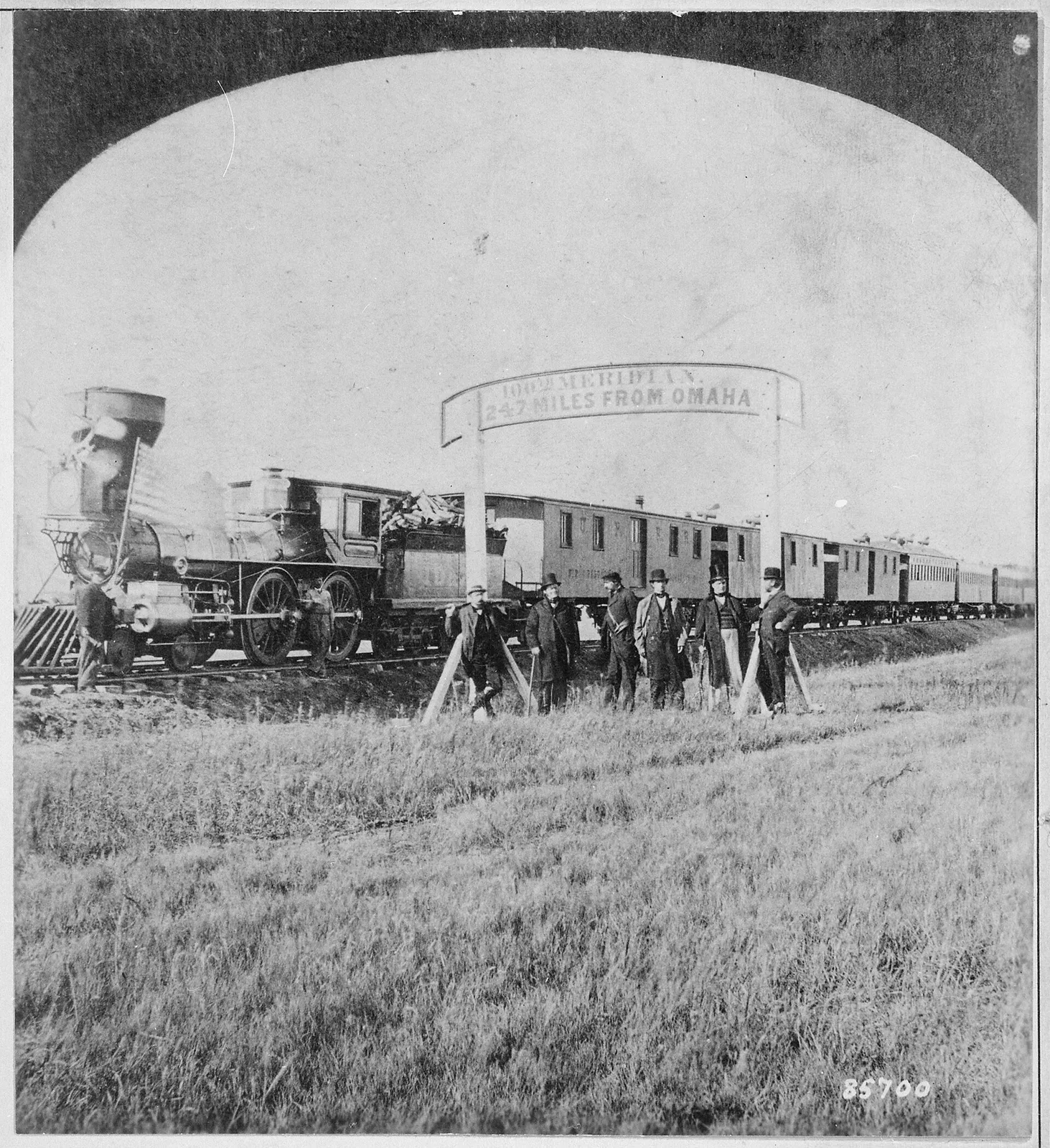
Statehood and Military Infrastructure
Nebraska entered the Union on March 1, 1867, as the 37th state. The timing could not have been more consequential for its firearms history. The Union Pacific Railroad was already under construction across the state, and the combination of railroad construction crews, military escorts, and the systematic effort to displace the Lakota and Cheyenne from the Platte corridor produced sustained armed conflict throughout the late 1860s.
Fort McPherson, established in 1863 near present-day North Platte, and Fort Hartsuff, built in 1874 along the North Loup River, were both products of this era. But Fort Robinson, established in 1874 in the northwestern corner of the state near Crawford, became arguably the most historically significant military installation in Nebraska's history. Fort Robinson was the site of Crazy Horse's death on September 5, 1877, during an altercation when soldiers attempted to confine him to the guardhouse.
The Cheyenne Outbreak of January 1879—when Dull Knife's Northern Cheyenne band attempted to escape imprisonment and return to their homeland—also played out at Fort Robinson, with a military engagement that killed dozens of Cheyenne men, women, and children. The fort's armory records from this period document the transition from Springfield Model 1873 trapdoor carbines to later bolt-action designs and represent a direct material record of how the Army fought the Indian Wars in Nebraska.
| Fort | Established | Location | Historical Significance |
|---|---|---|---|
| Fort McPherson | 1863 | Near North Platte | Protected Union Pacific construction |
| Fort Robinson | 1874 | Crawford, NW Nebraska | Site of Crazy Horse's death (1877), Cheyenne Outbreak (1879) |
| Fort Hartsuff | 1874 | North Loup River | Protected Loup Valley settlements |
| Fort Kearny | 1848 | Near Kearney | Protected Oregon/Mormon/California Trails |
The Pawnee Scouts
The Pawnee Scouts, formally organized as the Pawnee Battalion under Major Frank North in 1864, deserve specific mention. Frank North recruited Pawnee warriors as Army scouts, and they served effectively against Lakota and Cheyenne raiding parties throughout the 1860s. The Scouts were issued standard Army Springfield rifles and revolvers—primarily Colt Model 1851 Navy and later Colt Single Action Army revolvers—and their service represents a complicated chapter where one Native nation's traditional enemies were partly defined by access to American military firearms.
Railroad Development and Cattle Towns
The Union Pacific Railroad's completion to Promontory Summit in 1869 transformed Omaha permanently. As the eastern terminus of the transcontinental railroad, Omaha became a major commercial hub, and firearms commerce was part of that. Gun dealers, hardware stores carrying ammunition, and gunsmiths proliferated along the Farnam and Douglas Street corridors.
The cattle drives that pushed north from Texas into Nebraska—culminating at railheads in Ogallala and Schuyler—brought the revolver culture of the Texas trail drives with them. Ogallala earned a reputation through the 1870s and early 1880s as a rough terminus town where the combination of trail hands, gamblers, and railroad workers produced regular violence. The local law enforcement response was ad hoc at best.
Buffalo Bill and Cultural Impact
Buffalo Bill Cody has a direct Nebraska connection that goes beyond mythology. Cody was born in Le Claire, Iowa, but grew up in the Loup Valley area of Nebraska and later based his operations out of North Platte, where he established Scout's Rest Ranch in 1886. His Wild West show did more than any other single cultural product to define how Americans—and Europeans—understood the relationship between the frontier, firearms, and American identity.
The show's performances, including the trick shooting of Annie Oakley, created a romanticized image of western gun culture that reverberated through American popular consciousness for generations. Buffalo Bill Cody's use of a Springfield Model 1873 trapdoor rifle in his bison hunting days, and his later endorsement of Winchester rifles in promotional materials, tied specific firearms brands to his celebrity in ways that were early examples of what we'd now call influencer marketing.
The state's 1875 constitution contained no meaningful firearms restrictions, and through the remainder of the 19th century Nebraska law left gun ownership essentially unregulated. The primary firearms-related legislation of this era addressed discharge of weapons within city limits and the carrying of concealed weapons—the latter occasionally enforced in Omaha and Lincoln but largely ignored in rural areas.
20th Century: World Wars, the Cornhusker Ordnance Plant & Postwar Regulationedit
World War II Production
Nebraska's most significant direct contribution to American military firearms production in the 20th century came through the Cornhusker Army Ammunition Plant, located near Grand Island. Established in 1942 following the United States' entry into World War II, the plant manufactured artillery shells, bomb components, and small arms ammunition throughout the war.
| Facility | Years Active | Purpose | Peak Employment |
|---|---|---|---|
| Cornhusker Army Ammunition Plant | 1942-1945, reactivated Korean War | Artillery shells, bomb components, small arms ammo | 3,000+ workers |
| Fort Robinson (WWII) | 1942-1948 | K-9 training, German POW camp | N/A |
At peak production it employed over 3,000 workers, many of them women filling manufacturing roles vacated by men serving overseas. The plant operated under the Army Ordnance Corps and processed millions of rounds of ammunition for the Pacific and European theaters. It was decommissioned after the war, reactivated during the Korean War era, and its industrial legacy shaped Grand Island's economy for decades.
Fort Robinson was reactivated during World War II as a K-9 training facility and a prisoner of war camp housing German POWs—a different kind of firearms context, but one that kept the post operationally active through 1948 when it was finally closed as a military installation.
Postwar Veteran Culture
Nebraska sent roughly 140,000 men and women into service during World War II relative to its population, a significant mobilization for an agricultural state. The return of veterans after 1945 brought firearms familiarity home in the way it did across the country—men who had trained on M1 Garand rifles, M1 Carbines, and 1911-pattern pistols came back to a civilian market and often purchased similar or related firearms.
The postwar sporting goods trade in Omaha and Lincoln reflected this: military surplus firearms moved through hardware stores and early sporting goods retailers throughout the late 1940s and 1950s.
Late 20th Century Regulation
The Nebraska Legislature—which uniquely operates as a unicameral body, the only such state legislature in the country—handled firearms policy through most of the 20th century with a light touch consistent with the state's rural, agricultural character. The major shift came in 1991 when the Legislature passed a handgun purchase permit requirement.
Under this system, anyone seeking to purchase a handgun in Nebraska had to obtain a Firearm Purchase Certificate from their local county sheriff, which required a background check. The permit cost a nominal fee and was valid for three years, allowing multiple purchases. This system predated the federal Brady Handgun Violence Prevention Act of 1993, which established the NICS (National Instant Criminal Background Check System), and Nebraska maintained its parallel state system even after federal background checks became the national standard.
The Concealed Handgun Permit Act was passed by the Legislature in 2006, making Nebraska a shall-issue state for concealed carry permits. Before 2006, concealed carry was effectively prohibited for ordinary citizens—Nebraska had been a no-issue state for most of its history, consistent with its Great Plains neighbors at the time. The 2006 bill was LB 454, and its passage reflected a national trend toward shall-issue concealed carry that had been sweeping the country since Florida's 1987 law began the wave. The Nebraska State Patrol administered the permit system, which required a firearms training course, background check, and application fee. Reciprocity agreements with other states were established progressively after 2006.
The University of Nebraska system and Omaha's growing urban political class provided the primary organized opposition to expanded gun rights through the late 20th and early 21st centuries, a pattern that has continued to define the state's internal firearms policy debates.
Modern Era (2000–Present)edit
The post-2000 period in Nebraska firearms history is defined by a series of legislative battles that tracked closely with national trends but played out with Nebraska-specific dynamics—particularly the outsized political influence of Omaha and Lincoln relative to the rest of the state.
Constitutional Carry Achievement
Legislative Bill 77, introduced in the 108th Nebraska Legislature and signed by Governor Jim Pillen on April 25, 2023, made Nebraska a constitutional carry state. The bill had been attempted in previous legislative sessions and failed, but the 2023 attempt succeeded.
| Year | Legislation | Impact |
|---|---|---|
| 2006 | Concealed Handgun Permit Act (LB 454) | Made Nebraska shall-issue for concealed carry |
| 2021 | Preemption law | Prohibited local firearms regulations stricter than state |
| 2023 | Constitutional carry (LB 77) | Eliminated permit requirement for concealed carry |
Under LB 77, any Nebraska resident 21 or older who is legally permitted to possess a firearm can carry a concealed handgun without a permit. The existing Concealed Handgun Permit (CHP) system was retained for those who want to maintain permits for reciprocity purposes when traveling to other states.
The debate over LB 77 was sharp. Supporters cited the constitutional carry laws already in place in neighboring Iowa (2021), Wyoming (2011), and South Dakota (2019), arguing Nebraska was an outlier among its neighbors. The bill's opponents—primarily Omaha-area senators and advocacy groups—argued the elimination of the training requirement removed a meaningful safety check. The bill passed on a 33-16 vote, reflecting the rural-urban divide in the Legislature fairly precisely.
The 2021 preemption law deserves mention alongside LB 77. Nebraska enacted stronger firearms preemption language that year, clarifying that cities and towns cannot impose firearms regulations stricter than state law. The practical target was Omaha, which had historically maintained some local ordinances that went beyond state law. The preemption law effectively standardized firearms regulation statewide at the state level, removing Omaha's ability to operate as a regulatory outlier within Nebraska.
Nebraska's handgun purchase permit system—the 1991 Firearm Purchase Certificate requirement—remained in place even after LB 77. This is worth noting because it creates a somewhat unusual situation: you can carry a concealed handgun without any permit, but if you want to buy a handgun from a licensed dealer in Nebraska, you still need to obtain a purchase certificate from the county sheriff or pass a NICS check. As of early 2026, efforts to repeal or modify the purchase permit requirement have continued in the Legislature but have not yet succeeded.
Urban-Rural Dynamics
The Omaha metropolitan area has seen the most acute gun violence debates in Nebraska. Douglas County (Omaha) accounts for a disproportionate share of the state's firearm homicides, and the contrast between urban gun violence statistics and rural gun culture creates a persistent tension in state policy conversations.
Gun-rights advocates point to Nebraska's below-national-average overall firearms death rate; gun-control advocates point to Omaha-specific homicide rates and argue statewide permissive laws leave urban communities without tools to address their specific situation.
Hunting and Rural Culture
Nebraska's hunting culture remains a strong secondary foundation for gun ownership. Pheasant and deer seasons draw significant participation, and the Sandhills region in north-central Nebraska supports a ranching culture where working firearms—bolt-action rifles for predator control, shotguns for upland birds—are as practical as any other piece of farm equipment.
The Nebraska Game and Parks Commission reported over 130,000 deer hunting licenses issued in recent years, a number that implies a very large base of licensed, actively hunting gun owners in a state of fewer than 2 million people.
Current Nebraska firearms legal framework decision tree
Notable Figures & Manufacturersedit
Frank North (1840–1885) of Columbus, Nebraska, organized and commanded the Pawnee Scouts during the Indian Wars period and is one of the few Nebraskans with a direct military-firearms command legacy from that era. His brother Luther North served alongside him, and together they led one of the most effective irregular military units operating in Nebraska during the 1860s and 1870s.
Buffalo Bill Cody, while Iowa-born, spent formative years in Nebraska and conducted his business operations from North Platte for decades. His connection to Winchester Repeating Arms through promotional relationships, his documented use of the Winchester Model 1873 in his Wild West show performances, and the cultural weight his Nebraska-based celebrity put behind the mythology of the western gun make him impossible to omit from any honest accounting of Nebraska firearms culture.
Standing Bear (Ponca), whose landmark 1879 court case Standing Bear v. Crook was heard in Omaha federal court, is not primarily a firearms figure—but the context of that case, which established Native Americans' right to habeas corpus protection, came directly out of the armed displacement policies that had shaped Nebraska's military-frontier era. The case was argued before Judge Elmer Dundy in the U.S. District Court for the District of Nebraska.
On the manufacturing side, Nebraska has not historically been a center of firearms manufacturing. The state produced ammunition at the Cornhusker Army Ammunition Plant in Grand Island on a significant scale during wartime, but no major firearms manufacturer has been headquartered in Nebraska. The state's firearms commerce has been oriented toward distribution and retail—Omaha's position as a rail and highway hub made it a natural regional distribution point for sporting goods including firearms—rather than production.
Cabela's, while founded in Chappell, Nebraska in 1961 by Dick Cabela and later headquartered in Sidney, Nebraska, became one of the largest outdoor sporting goods retailers in the country and a significant channel for firearms sales nationwide. The original business—Dick Cabela mailing handwritten advertisements for fishing flies from his kitchen table—grew into a catalog and retail operation that at its peak operated dozens of destination retail stores. Cabela's firearms department became a major revenue category, and the Sidney headquarters employed thousands before Bass Pro Shops acquired the company in 2017 for approximately $5 billion. The Sidney facility has been scaled back since the acquisition, but Cabela's origin story is genuinely Nebraska-specific: a mail-order business from a small Panhandle town that became a national outdoor retail force partly on the strength of its firearms inventory and expertise.
Current Legal Landscapeedit
Nebraska's current firearms legal framework is the product of layered legislation from 1991 through 2023, and it has a few quirks worth understanding clearly.
Carry Laws
Constitutional Carry has been in effect since April 25, 2023, under LB 77. Any resident 21 or older who can legally possess a firearm can carry concealed without a permit. The minimum age aligns with federal law for handgun purchases from licensed dealers.
Concealed Handgun Permits (CHP) remain available and are issued by the Nebraska State Patrol. The CHP requires a firearms training course, background check, and application fee. The primary reason to obtain one in 2026 is reciprocity—other states that recognize Nebraska permits require the actual permit, not just the state's constitutional carry status.
Open carry is legal statewide with no permit required. Nebraska has no law prohibiting the open carry of firearms.
Purchase Requirements
Handgun Purchase Permits (Firearm Purchase Certificates) are still required under Neb. Rev. Stat. § 69-2404. You get this from your county sheriff. It requires a background check, costs a small fee, and is valid for three years with no limit on the number of purchases during that period. Alternatively, you can pass a NICS check at the point of sale, which satisfies the same requirement. Private party handgun sales technically still fall under this framework under Nebraska law, though enforcement of private sale permit requirements is limited.
| Requirement | Status | Details |
|---|---|---|
| Concealed Carry Permit | Optional (constitutional carry) | Available for reciprocity purposes |
| Handgun Purchase Permit | Required | County sheriff issues, 3-year validity |
| Open Carry | Legal statewide | No permit required |
| Machine Guns | Legal with federal compliance | NFA registration required |
| Local Restrictions | Prohibited | Strong state preemption |
| Assault Weapons/Mag Limits | No restrictions | Not regulated at state level |
State vs. Local Authority
Preemption is strong. Under Neb. Rev. Stat. § 17-556 and related statutes, local municipalities cannot enact firearms regulations beyond what state law permits, with the specific carve-out for concealed carry compliance with state law. Cities can regulate discharge within city limits—that's it.
Assault weapons bans, magazine capacity limits, and bump stock bans do not exist at the state level. Nebraska has none of these restrictions.
Machine guns are legal to own in Nebraska if possessed in compliance with applicable federal law (NFA registration, tax stamp, etc.). State law technically prohibits machine gun possession, but the statute includes an explicit exception for those who comply with federal law, which aligns Nebraska with the national framework.
Range protection is written into state statute under Neb. Rev. Stat. § 37-1305, which protects existing shooting ranges from noise ordinances and similar regulations enacted after the range was established. This is meaningful for rural ranges that have found suburban development creeping toward them.
Constitutional Protections
State constitutional protection is explicitly stated in Article 1, Section 1 of the Nebraska Constitution:
All persons have certain rights, among these are the right to keep and bear arms for security or defense of self, family, home, and others, and for lawful common defense, hunting, recreational use, and all other lawful purposes.
This language is broader than the federal Second Amendment text and explicitly names hunting and recreational use as protected purposes.
The Castle Doctrine in Nebraska is partial. Nebraska does not have an explicit statutory Castle Doctrine law, but Neb. Rev. Stat. § 28-1409 and related self-defense statutes provide a defense of justification for force used to protect oneself or others from imminent threat of serious bodily harm or death. There is no "Stand Your Ground" law on the books—Nebraska requires a duty to retreat in most circumstances outside the home, which is a meaningful distinction.
Prohibited persons under Nebraska law mirror federal prohibitions:
- Felony convictions
- Domestic violence misdemeanor convictions
- Subject to qualifying restraining orders
- Involuntary psychiatric commitment
- Fugitive status
- Additional state-level stalker prohibitions
- Violent misdemeanor convictions
The BGC Takeedit
Nebraska is a gun state the way farming is a Nebraska thing—it's not performative, it's structural.
Nebraska is a gun state the way farming is a Nebraska thing—it's not performative, it's structural.
The people in the Sandhills and the Panhandle who own guns are not making a political statement; they're managing a ranch. The guy in Kearney with a .30-06 in the gun safe has probably been hunting since he was twelve. The constitutional carry debate was real, but in most of the state it felt less like a political victory and more like the Legislature finally catching up to how people had been living anyway.
The honest friction in Nebraska is geographic. Omaha is a real city with real urban gun violence concentrated in specific zip codes, and the people who live there have legitimate concerns that get steamrolled by a Legislature where rural districts hold the balance of power. The preemption law was specifically designed to prevent Omaha from doing anything about that locally, and depending on your perspective that's either a principled stand for statewide uniformity or a case of rural Nebraska telling Omaha to live with their problems. Both of those readings have merit.
The handgun purchase permit system is the odd artifact sitting in the middle of all this. You have constitutional carry—no permit to carry—but you still need a sheriff's certificate to buy the handgun you're now legally carrying without a permit. The logic is not hard to follow historically (the 1991 law predates NICS and was designed to add a state-level check), but it creates a genuinely strange situation that gun owners in Nebraska find mildly annoying. Efforts to repeal it have stalled, and it will probably stall again because Omaha-area senators can block it in a unicameral body where a smaller minority can hold things up than in a bicameral system.
Cabela's deserves a sentence here because it shaped how a generation of Nebraskans thought about gun buying. Walking through the Sidney store in the 1990s and 2000s, the firearms section wasn't an afterthought—it was a serious operation with knowledgeable staff and a broad selection at a time when most rural Nebraskans had limited options. That culture—firearms retail as a legitimate, normalized part of outdoor commerce—is genuinely Nebraska-grown and it spread nationally through Cabela's catalog and store expansion.
For gun owners considering Nebraska, the legal environment is permissive and the culture is welcoming outside the Omaha metro. Hunting opportunities are excellent. Range infrastructure is decent, with a solid network of club-affiliated ranges across the state. The political trajectory has been consistently toward fewer restrictions over the past two decades, and there's no realistic legislative majority in sight to reverse that. The unicameral Legislature's structure means change moves slowly in either direction, which suits most Nebraska gun owners just fine.
Referencesedit
- Nebraska Legislature, Firearm Laws in Nebraska (Research Office, 2016 and 2021 editions), nebraskalegislature.gov
- NRA-ILA, Nebraska State Gun Laws, nraila.org (updated January 2026)
- Nebraska Revised Statutes §§ 28-1201 through 28-1212 (criminal provisions); § 69-2401 et seq. (purchase certificate); § 37-1305 (range protection)
- Nebraska Constitution, Article 1, Section 1
- Legislative Bill 77 (108th Nebraska Legislature, 2023), signed April 25, 2023
- Legislative Bill 454 (Nebraska Concealed Handgun Permit Act, 2006)
- Olson, James C., History of Nebraska (University of Nebraska Press, 1955)
- Larsen, Lawrence H., and Barbara J. Cottrell, The Gate City: A History of Omaha (University of Nebraska Press, 1997)
- Hyde, George E., Pawnee Indians (University of Oklahoma Press, 1974)
- Utley, Robert M., Frontier Regulars: The United States Army and the Indian, 1866–1891 (University of Nebraska Press, 1984)
- Nebraska Game and Parks Commission, Annual Hunting License Reports
- Standing Bear v. Crook, 25 F. Cas. 695 (C.C.D. Neb. 1879)
- Cornhusker Army Ammunition Plant, U.S. Army historical records, Army Center of Military History
- Everytown Research & Policy, Nebraska Gun Law Profile, everytownresearch.org
- Nebraska State Patrol, CHP Frequently Asked Questions, statepatrol.nebraska.gov
- Nebraska Examiner, "Gun rights advocates flex muscles, advance constitutional carry bill", March 3, 2023
Last Updated: February 24, 2026
- Quail Creek Plantation(Okeechobee, FL)
- 2aHawaii(Honolulu, HI)
- Boston Firearms(Everett, MA)
- Safeshoot(Kingston, NY)
Loading comments...