State Details
Oregon

Overview | |
|---|---|
State | Oregon (OR) |
Capital | Salem |
Statehood | 1859 |
Population | 4,240,137 |
Gun Ownership | 39.8% |
Active FFLs | 947 |
Carry Laws | |
Constitutional Carry | No |
Open Carry | Yes |
CCW Permit Available | Yes |
Permit Reciprocity | limited |
Self-Defense | |
Castle Doctrine | Yes |
Stand Your Ground | No |
Duty to Retreat | Partial |
Regulations | |
State Preemption | Partial |
Red Flag / ERPO | Yes |
Waiting Period | None |
Universal BGC | Yes |
NFA Items | Yes |
Assault Weapons Ban | No |
Magazine Limit | None |
Key Legislation | |
| |
Notable Manufacturers | |
| |
Oregon Firearms History
Reference article
From The Boise Gun Club Handbook
Overviewedit
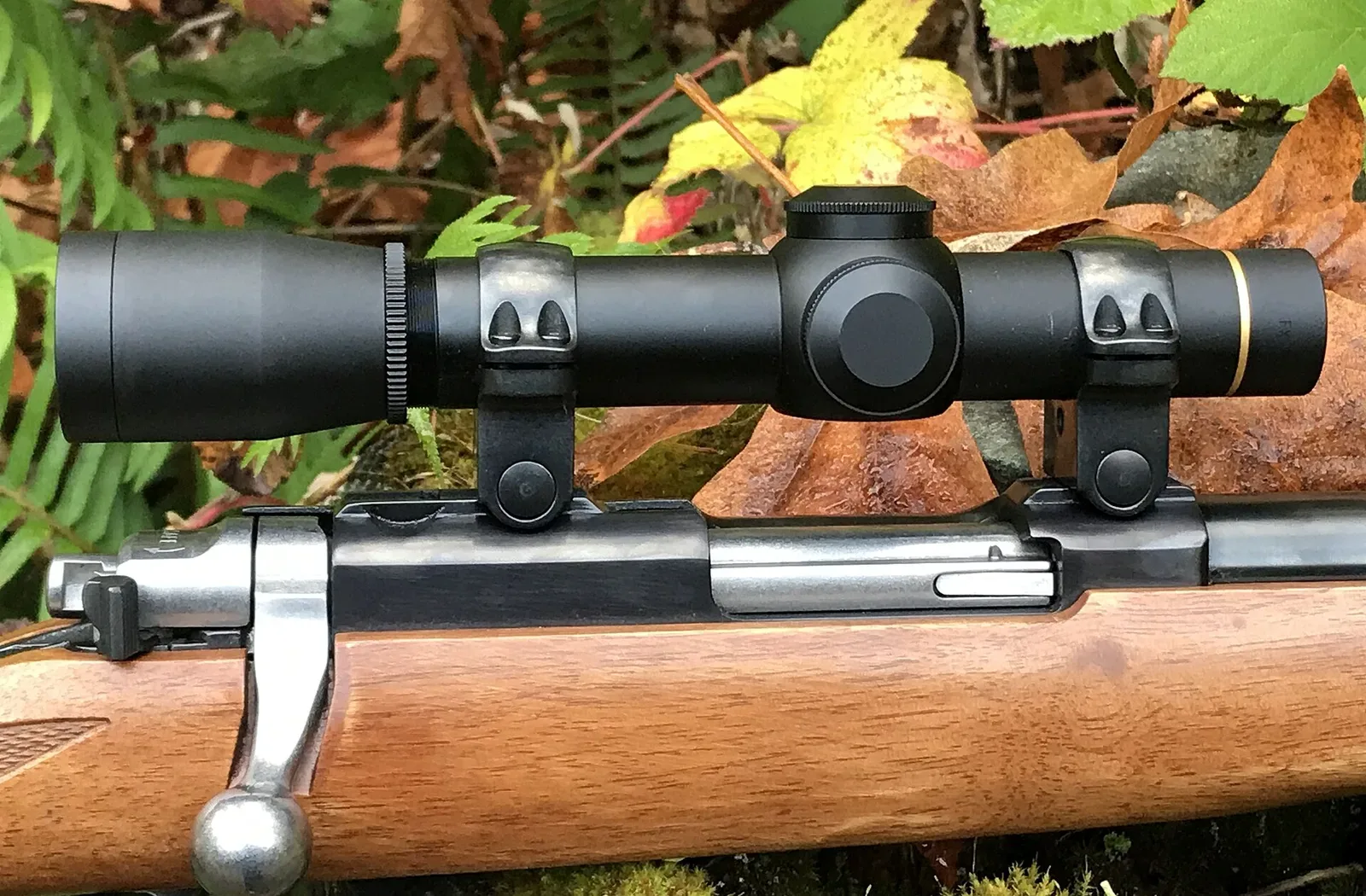
Oregon's relationship with firearms doesn't fit neatly into any single American archetype. It isn't the Deep South, where gun culture is woven into identity from birth. It isn't New England, where colonial militias predated the nation itself. Oregon came to firearms through the fur trade, the emigrant trail, Indian wars, and a frontier economy that demanded self-reliance long before statehood arrived in 1859.
What grew from that is a state with a genuinely deep shooting tradition — hunting, ranching, and backcountry life — that now sits in uncomfortable tension with an increasingly urban, left-leaning political majority concentrated in the Willamette Valley.
Understanding Oregon's firearms history means understanding a state that contains multitudes: elk hunters in Harney County and anti-gun ballot initiatives funded by Portland philanthropists, sometimes in the same election cycle.
The state produced one of America's most respected optics companies in Leupold & Stevens, hosted significant military infrastructure during both World Wars, and in 2022 passed Measure 114 — a ballot initiative so legally contentious it has spent more time in federal court than in effect.
Pre-Statehood & Fur Trade Eraedit
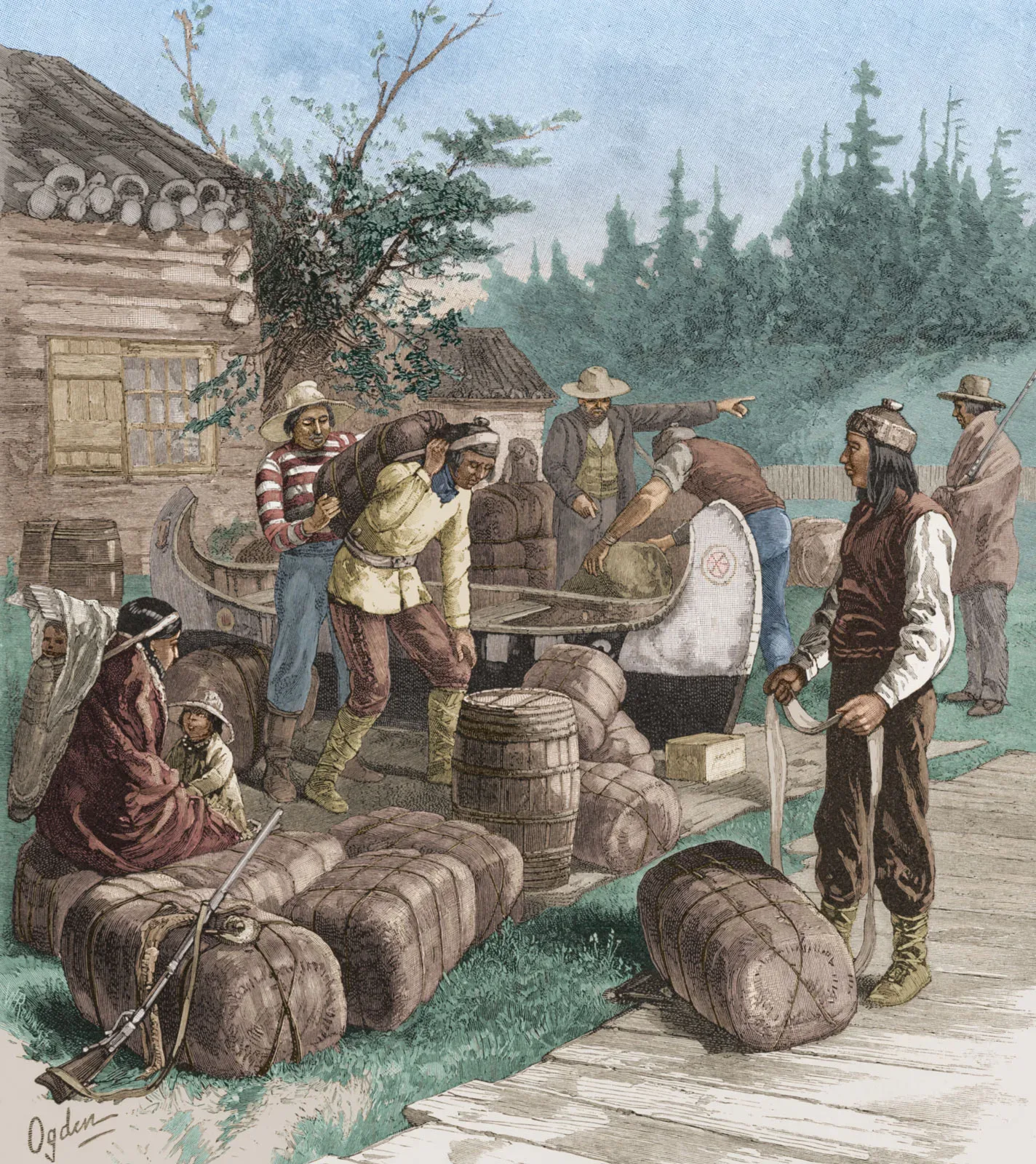
Hudson's Bay Company Operations
The first sustained armed European presence in what is now Oregon arrived not through colonial settlement but through commerce. The Hudson's Bay Company established Fort Vancouver in 1825 on the north bank of the Columbia River — present-day Washington state, but the administrative heart of the entire Oregon Country — under Chief Factor John McLoughlin. The HBC's operations across the Oregon Country depended on firearms both as trade goods and as tools of institutional power.
Flintlock muskets, pistols, and later percussion-cap arms moved through Fort Vancouver as currency, diplomatic instruments, and practical necessities for the company's trappers working the Snake River and Willamette Valley drainages.
Key events in Oregon's pre-statehood firearms development
| Event | Year | Significance |
|---|---|---|
| Fort Vancouver established | 1825 | HBC administrative center for Oregon Country |
| Oregon Trail era begins | 1843 | Mass emigrant movement with firearms |
| Whitman Massacre | 1847 | Triggers Cayuse War, draws U.S. Army |
| Oregon Territory organized | 1848 | Legal framework for militia system |
Indigenous Firearms Acquisition
Indigenous peoples of the region — the Cayuse, Nez Perce, Kalapuya, Molalla, and dozens of other nations — had been acquiring firearms through trade networks well before permanent Euro-American settlement. By the 1830s, guns had fundamentally altered the balance of power in intertribal conflicts and in interactions with settlers.
The Nez Perce in particular became skilled horsemen and marksmen, a fact that would become tragically relevant decades later.
Oregon Trail & Territorial Organization
The Oregon Trail era, roughly 1843 to 1869, brought tens of thousands of emigrants through the territory carrying whatever firearms they owned — predominantly percussion-cap rifles and shotguns, with Colt revolvers among those who could afford them. The Whitman Massacre of 1847, in which Cayuse warriors killed Marcus and Narcissa Whitman and twelve others near present-day Walla Walla, Washington, triggered the Cayuse War and drew the U.S. Army into the region in force.
Oregon's Provisional Government, established in 1843, had already organized militia companies — armed, if irregularly equipped — that would serve as the template for territorial defense through the 1850s. The Oregon Territory was formally organized in 1848, and with it came the legal framework for a militia system. The territorial legislature wrestled immediately with questions of arms distribution and frontier defense, particularly as emigrant traffic increased pressure on Indigenous land and resources.
19th Century: Statehood & Frontier Conflictsedit
Statehood & Early Conflicts
Oregon achieved statehood on February 14, 1859, entering the Union as a free state by a narrow margin — the same vote excluded Black residents from settling in the state at all, a provision that would remain in the Oregon Constitution until 1926. The new state inherited an unresolved frontier conflict that had been building for a decade.
The Rogue River Wars (1855–1856) were among the most significant armed conflicts on Oregon soil. Southern Oregon's Takelma and Tututni peoples, pushed toward dispossession by gold miners flooding into the Table Rock area following the 1850s Jacksonville gold rush, fought U.S. Army regulars and Oregon Volunteers in a series of engagements across what is now Jackson and Josephine counties.
The Battle of Hungry Hill in October 1855 saw Oregon Volunteers repulsed with significant casualties — one of the clearest demonstrations that irregular frontier firearms proficiency didn't automatically translate to tactical success against determined Indigenous resistance.
| Conflict | Years | Location | Key Outcome |
|---|---|---|---|
| Rogue River Wars | 1855-1856 | Southern Oregon | U.S. victory, tribal displacement |
| Modoc War | 1872-1873 | Lava Beds region | Captain Jack executed |
| Nez Perce War | 1877 | Wallowa Valley | Forced removal from Oregon |
| Bannock War | 1878 | Southeastern Oregon | Last major Indigenous conflict |
The Indian Wars Period
Sequence of 19th century Oregon frontier conflicts
The Modoc War of 1872–1873 was smaller in scale but outsized in national attention. Captain Jack (Kintpuash) and roughly 53 Modoc warriors held off the U.S. Army for five months in the Lava Beds of northern California and southern Oregon, using the volcanic terrain to neutralize the Army's numerical and firepower advantage. The Army eventually deployed howitzers to dislodge the Modocs from their stronghold — the first use of artillery in an Oregon-area conflict. Captain Jack was captured, tried, and hanged at Fort Klamath in October 1873.
The Nez Perce War of 1877 passed through Oregon's Wallowa Valley — the homeland of Chief Joseph's band — before the long retreat north toward Canada. The conflict began in part over the forced removal of non-treaty Nez Perce from Oregon land that had been promised to them, then taken back. The tactical sophistication of Nez Perce fighters, armed with a mix of Winchester repeating rifles and older muzzleloaders, surprised Army commanders throughout the campaign.
Oregon's Bannock War of 1878 was the last major Indigenous conflict on Oregon soil. Bannock and Northern Paiute fighters, led by Buffalo Horn and later Chief Egan, fought across southeastern Oregon before being suppressed by forces under General Oliver Otis Howard. The conflict effectively ended organized armed resistance to U.S. authority in the state.
Through this period, Oregon's civilian firearms culture was developing along predictable frontier lines. The Willamette Valley was filling with farms by the 1860s, and hunting — deer, elk, bear, and waterfowl — was both subsistence and recreation. The Donation Land Claim Act of 1850 had placed settlers on 320-to-640-acre parcels that required defending and working. Firearms were tools, not symbols.
Civil War Era Oregon
Oregon's relationship to the Civil War was indirect but real. The state remained in the Union and contributed roughly 1,800 men to federal service, mostly in the 1st Oregon Cavalry and 1st Oregon Infantry, which spent the war guarding the overland mail route and fighting in engagements against the Shoshone in Idaho — not against Confederate forces. No Civil War battles were fought on Oregon soil.
The political divisions that scarred other states manifested in Oregon as sympathy for the Copperhead movement among some Democratic factions, but not armed conflict.
20th Century: Wars, Industry & Regulationedit
World War Military Infrastructure
Oregon's military footprint expanded significantly with both World Wars. Camp Withycombe, established near Clackamas in 1909 as the Oregon National Guard's primary installation, served as a mobilization and training base. During World War I, Oregon contributed roughly 35,000 men to military service, and the state's shipyards and lumber industry shifted to war production.
World War II transformed Oregon's military geography more profoundly. The Umatilla Chemical Depot, established in 1941 near Hermiston in eastern Oregon, became one of the largest chemical weapons storage facilities in the United States — holding mustard agent, lewisite, and nerve agents. While not a firearms manufacturing site, Umatilla shaped the eastern Oregon landscape and economy for decades, and its chemical weapons destruction program, completed in 2011, was one of the largest demilitarization projects in U.S. history.
Camp Adair, built in 1942 near Corvallis in the Willamette Valley, trained approximately 100,000 soldiers during World War II and was at its peak the second-largest city in Oregon by population. The 41st Infantry Division — the "Jungleers," a Pacific Theater formation with significant Oregon National Guard composition — trained there before deploying. The base was largely decommissioned after the war, though portions remain in use today.
| Installation | Established | Peak Population/Function | Legacy |
|---|---|---|---|
| Camp Withycombe | 1909 | Oregon National Guard training | Still active |
| Umatilla Chemical Depot | 1941 | Chemical weapons storage | Demilitarized 2011 |
| Camp Adair | 1942 | 100,000 soldiers (WWII) | Largely decommissioned |
| Kaiser Shipyards | 1942 | Liberty ship production | Changed Portland demographics |
The Oregon Shipbuilding Corporation and Kaiser Shipyards in Portland and Vancouver built Liberty ships and naval vessels at unprecedented rates, attracting a massive wartime labor migration that permanently changed Portland's demographics. This industrial surge had no direct firearms manufacturing component — Oregon never developed a major arms industry on the scale of New England or the Midwest — but it built the industrial and labor infrastructure that shaped postwar Oregon politics.
Leupold & Stevens: Oregon's Optics Legacy
Leupold & Stevens represents Oregon's most significant contribution to the American firearms industry, even though the company manufactures optics rather than guns. Fred Leupold and Adam Volpel founded the company in Portland in 1907 as a surveying equipment maker. J.C. Stevens joined in 1914, and the company's name changed to Leupold & Stevens in 1942.
The optics pivot came in the 1940s when Marcus Leupold — an avid hunter frustrated by a fogged scope that cost him a shot at a buck — developed a nitrogen-purged, sealed riflescope design. The Plainsman, introduced in 1947, was the first genuinely fog-proof American-made riflescope. The company moved to Beaverton in 1968 and remains there today, manufacturing scopes under military contract and for the civilian market, employing over 650 people. Their military contracts have included scopes for U.S. Special Operations Forces.
The customer is entitled to a square deal. — Fred Leupold's founding promise, maintained as company policy to this day
Early Regulatory Framework
On the regulatory side, Oregon's 20th century was relatively quiet by modern standards. The state adopted a concealed handgun license (CHL) system and tracked federal firearms law without significant state-level additions until the 1990s. Oregon did not enact a waiting period or assault weapons ban during the post-Brady Bill legislative wave of 1993–1994, reflecting a Democratic state party that was, at that point, still responsive to rural gun-owning constituents.
The 1989 Stockton schoolyard massacre in California — while not an Oregon event — reverberated in Oregon politics and contributed to early conversations about assault weapon restrictions that would accelerate in later decades.
Modern Era (2000–Present)edit
Early 2000s: Background Check Expansion
Oregon's modern firearms history is primarily a story of legislative acceleration — a series of ballot initiatives and legislative sessions that have moved the state from a moderate regulatory posture to one of the more restrictive frameworks west of the Mississippi, enacted over the objections of a rural population that has little political power against the Willamette Valley's urban majority.
Measure 5 in 2000 brought background checks for private sales to Oregon — one of the first state-level universal background check laws in the country, passed by voter initiative. This was a significant departure from the norm; Oregon became an early model for the background-check-expansion approach that gun control advocates would pursue in other states for the next two decades.
| Legislation | Year | Key Provisions | Status |
|---|---|---|---|
| Measure 5 | 2000 | Universal background checks | Active |
| Senate Bill 941 | 2015 | Gun show loophole closure | Active |
| Senate Bill 719 | 2017 | Extreme Risk Protection Orders | Active |
| House Bill 2505 | 2021 | Ghost gun serialization | Active |
| Measure 114 | 2022 | Permit-to-purchase, mag limits | In litigation |
| Senate Bill 348 | 2023 | Undetectable firearms penalties | Active |
| House Bill 2005 | 2023 | Safe storage requirements | Active |
The Clackamas Shooting & Legislative Response
The Clackamas Town Center shooting on December 11, 2012 — in which a gunman killed two people and wounded a third at a mall in suburban Portland before taking his own life — drew national attention and reinvigorated Oregon gun control advocacy. A legally armed shopper, Nick Meli, drew his concealed handgun and reported that the shooter saw him and retreated before killing himself; this incident became a significant data point in the national armed-citizen debate, though the details were disputed by some accounts.
Senate Bill 941, signed in 2015, extended background check requirements and closed what advocates called the "gun show loophole" — codifying what Measure 5 had established and adding enforcement mechanisms. The bill passed on a straight party-line vote in a Democratic-controlled legislature, setting the pattern for the next decade.
Senate Bill 719 in 2017 created Oregon's Extreme Risk Protection Order (ERPO) law — commonly called a "red flag" law — allowing courts to temporarily remove firearms from individuals deemed a danger to themselves or others. Oregon was among the earlier adopters of this mechanism nationally.
House Bill 2505 in 2021 addressed untraceable "ghost guns," requiring serialization of home-built firearms — another area where Oregon moved ahead of federal action.
Measure 114: The Defining Battle
Then came Measure 114.
Passed by Oregon voters on November 8, 2022, by a margin of 50.7% to 49.3% — the thinnest possible mandate — Measure 114 did two things: it required a permit-to-purchase for any firearm acquisition (requiring a background check, safety training, and fee), and it banned the sale, transfer, and manufacture of magazines capable of holding more than 10 rounds. The permit-to-purchase system had no infrastructure in place when it passed; the Oregon State Police had no system built to process applications, and no training programs were certified.
Harney County Sheriff David Ward announced he would not enforce the measure within days of passage. He was not alone — sheriffs across rural Oregon publicly stated they considered the law unconstitutional. Oregon Firearms Federation (OFF) filed suit in Harney County Circuit Court, obtaining a temporary restraining order from Judge Robert Raschio that blocked the law from taking effect on its December 8, 2022 start date. The case moved through state courts while a parallel federal challenge — Azzam v. Brown (later restructured as Oregon Firearms Federation v. Kotek) — proceeded in U.S. District Court under Judge Karin Immergut.
Judge Immergut upheld the law in federal district court in August 2023, applying the Bruen historical tradition test established by the U.S. Supreme Court's 2022 decision in New York State Rifle & Pistol Association v. Bruen. The state-court challenge continued separately. The magazine ban provisions remained in a state of partial enforcement and legal uncertainty well into 2025, with the Ninth Circuit becoming the next venue for the federal challenge.
Measure 114 legal challenge pathway
Measure 114 remained the most legally contested piece of Oregon firearms legislation in the state's history — and one of the most closely watched test cases for the Bruen framework nationally.
By 2026, Measure 114 had defined the modern legal landscape for Oregon firearms law. In a separate but related development, Senate Bill 348 (2023) added penalties for possession of undetectable firearms and addressed other manufacturing concerns, while House Bill 2005 (2023) required firearms to be securely stored when not in the owner's direct control — a safe storage mandate with criminal penalties.
Notable Figures & Manufacturersedit
Leupold & Stevens Leadership
Leupold & Stevens is the undisputed anchor of Oregon's firearms-adjacent manufacturing history. Based in Beaverton, the company has supplied optics to the U.S. military since 1985 and holds contracts with branches of the armed forces and law enforcement agencies. Their Mark 4, Mark 5, and Mark 6 tactical scope lines are standard equipment for U.S. military sniper and designated marksman systems. The Duplex reticle, introduced in 1962, became so widely copied it is now essentially the industry standard for hunting scopes. Every scope Leupold makes is manufactured in Oregon.
Marcus Leupold deserves specific mention as the engineer whose fog-scope frustration launched a product line that changed American hunting optics. His nitrogen-purging solution — evacuating air from the scope and replacing it with inert nitrogen gas — solved a problem that had plagued hunters for decades and remained the fundamental design approach for sealed optics.
Advocacy Organizations & Political Figures
Oregon Firearms Federation (OFF), founded in 1995 and based in Central Point, is the state's primary Second Amendment advocacy organization. OFF has been the plaintiff or co-plaintiff in several significant Oregon firearms cases, including the Measure 114 challenge. Under executive director Kevin Starrett, OFF developed a reputation for taking harder-line positions than the NRA on Oregon legislative fights and for pursuing litigation aggressively.
Sheriff Glenn Palmer of Grant County became a nationally recognized figure in the constitutional sheriff movement, publicly refusing to enforce several state firearms regulations and drawing both praise from Second Amendment advocates and criticism from Oregon's attorney general.
David Petzal, longtime firearms editor of Field & Stream, spent significant time hunting in Oregon and wrote extensively about Oregon's elk and deer hunting — helping shape the national perception of Oregon as premier big-game country, which in turn reinforced the cultural centrality of hunting to eastern Oregon identity.
Oregon has no significant firearms manufacturing history beyond optics. No major handgun or rifle manufacturers are based in the state. This is a notable absence — Oregon's gun culture is deeply rooted in hunting and recreational shooting, not in domestic production of the guns themselves.
Current Legal Landscapeedit
Concealed Carry Framework
Oregon operates as a shall-issue state for Concealed Handgun License (CHL), meaning county sheriffs must issue a license to any qualified applicant who meets the statutory requirements — no discretionary denial based on "need." The license requires a background check, proof of competency (typically a safety course), a fee, and is valid for four years. Oregon CHLs are recognized by a limited number of other states under reciprocity agreements.
Oregon does not have constitutional carry. Attempts to pass permitless carry legislation have not succeeded in the Democratic-controlled legislature, and no ballot initiative has been mounted on the issue.
Current Regulatory Structure
The permit-to-purchase system created by Measure 114 has been the subject of ongoing litigation and implementation struggles. As of early 2026, the permit system remained in a legally uncertain state, with aspects of the law enjoined or under appeal depending on jurisdiction.
| Requirement | Details | Since |
|---|---|---|
| Universal background checks | All transfers including private sales | 2000 |
| Extreme Risk Protection Orders | Court-ordered temporary removal | 2017 |
| Safe storage mandate | Criminal penalties for non-compliance | 2023 |
| Magazine capacity limits | 10-round limit (under litigation) | 2022 |
| Ghost gun serialization | Home-built firearms must be serialized | 2021 |
| Permit-to-purchase | Required for all acquisitions (contested) | 2022 |
Additional regulatory provisions include:
- No assault weapons ban at the state level as of early 2026
- Legislative attempts have been made but not successful
- Preemption law — Oregon has no statewide firearms preemption
- Some localities have enacted additional restrictions
- Portland has attempted additional ordinances with contested enforcement
Hunting remains extensively regulated through the Oregon Department of Fish and Wildlife (ODFW), which governs season dates, tag systems, and legal firearms for specific hunts — including restrictions on centerfire rifles in certain western Oregon zones where slug guns or archery equipment are required due to population density.
Oregon does not require firearms registration, does not require a license to purchase rifles or shotguns under current (non-Measure 114) law, and does not have a waiting period beyond the background check processing time.
Federal Court Jurisdiction
The Ninth Circuit remains the federal appellate venue for Oregon firearms challenges, and the circuit's historical tendency toward upholding firearms restrictions has been complicated by the Bruen decision's mandate that regulations be grounded in historical tradition — a standard that lower courts continue to apply inconsistently.
The BGC Takeedit
If you're a gun owner thinking about Oregon, the honest answer is: it depends entirely on where you're standing. In eastern Oregon — the high desert, the Wallowas, the ranching country around Burns, Enterprise, and John Day — gun culture is as embedded as anywhere in the West.
Elk rifles get passed down through families. Kids grow up hunting. The county sheriff is more likely to be a gun rights ally than a neutral party. Drive through Baker City or Lakeview and nobody looks twice at a gun rack in a pickup.
Measure 114 was rejected by every county east of the Cascades, some by margins exceeding 75–25. These are not people who feel represented by the legislature in Salem. In the Willamette Valley — Portland, Salem, Eugene, Corvallis — you're in a different state, practically speaking.
Portland's gun culture exists but it's quieter, more defensive-carry oriented, shaped by concerns about urban crime rather than elk season. The political environment is hostile enough that many gun owners keep a low profile. The 2020 civil unrest in Portland — which included extended clashes between protesters and federal agents, widespread property destruction, and armed civilian responses on multiple sides — demonstrated both that Oregonians across the spectrum were paying attention to self-defense questions and that the political conversation around those questions was thoroughly poisoned.
That tension — urban numerical majority versus rural geographic majority — isn't going to resolve itself. If anything, it's deepening.
Leupold is a genuine point of Oregon pride that cuts across political lines. Even gun control advocates in Portland are generally aware that one of the world's respected optics companies is built in Beaverton, and the company's military contracts give it a patriotic legitimacy that's hard to argue with.
For practical purposes: Oregon is a viable state for gun owners who live outside the Willamette Valley, own a CHL, and hunt. It becomes progressively more legally complicated the more you live in urban Oregon, the more you carry, and the more you own equipment that brushes against the magazine capacity restrictions currently working through the courts. The permit-to-purchase system — if it ever fully implements — would be among the most burdensome in the western states, requiring proactive licensing before any purchase rather than a point-of-sale background check.
Watch the Ninth Circuit and keep an eye on Oregon Firearms Federation v. Kotek. That case is going to tell you a lot about whether Measure 114's magazine ban survives, and what the Bruen framework actually means in practice for western states.
Referencesedit
- Oregon Blue Book — Oregon Statehood and Constitutional History. Oregon Secretary of State. https://sos.oregon.gov/blue-book
- Oregon Revised Statutes Chapter 166 — Offenses Against Public Order; Firearms and Other Weapons. Oregon Legislative Assembly. https://www.oregonlegislature.gov/bills_laws/ors/ors166.html
- Leupold & Stevens, Inc. — A Living History. https://www.leupold.com/a-living-history
- Oregon Firearms Federation — Legislative History and Litigation Updates. https://www.oregonfirearms.org
- Hunsaker, Joyce B. — Seeing the Elephant: The Many Voices of the Oregon Trail. Eastern Washington University Press, 2003.
- Robbins, William G. — Oregon: This Storied Land. Oregon Historical Society Press, 2005.
- Schwartz, E.A. — The Rogue River Indian War and Its Aftermath, 1850–1980. University of Oklahoma Press, 1997.
- United States District Court, District of Oregon — Oregon Firearms Federation v. Kotek, Case No. 2:22-cv-01815-IM. Filed 2022.
- Oregon Department of Fish and Wildlife — Hunting Regulations and Firearms Restrictions. https://www.dfw.state.or.us
- Oregon State Police — Concealed Handgun License Statistics and Background Check Data. https://www.oregon.gov/osp/programs/cjis/pages/criminal-justice-information-services.aspx
- Umatilla Chemical Agent Disposal Facility — Program History. U.S. Army Chemical Materials Activity. https://www.cma.army.mil
- McArthur, Lewis A. and Lewis L. McArthur — Oregon Geographic Names, 8th ed. Oregon Historical Society Press, 2013.
- Gun Laws in Oregon — Wikipedia. https://en.wikipedia.org/wiki/Gun_laws_in_Oregon
- New York State Rifle & Pistol Association v. Bruen, 597 U.S. 1 (2022). U.S. Supreme Court.
- Oregon Secretary of State — Measure 114 (2022) Official Results. https://sos.oregon.gov/elections
Last Updated: February 24, 2026
- Quail Creek Plantation(Okeechobee, FL)
- 2aHawaii(Honolulu, HI)
- Boston Firearms(Everett, MA)
- Safeshoot(Kingston, NY)
Loading comments...