Organization Info
IHEA-USA
International Hunter Education Association

| Overview | |
|---|---|
Founded | 1949 |
Headquarters | United States |
Disciplines | hunter education |
Membership | |
Cost | See ihea-usa.org for current membership tiers |
Links | |
| ihea-usa.org | |
International Hunter Education Association (IHEA-USA)
Reference article
From The Boise Gun Club Handbook
The International Hunter Education Association, operating in the United States as IHEA-USA, is the professional association representing hunter education programs across all 50 state fish and wildlife agencies. Headquartered in the United States and affiliated with the Association of Fish and Wildlife Agencies (AFWA), IHEA-USA functions as the connective tissue between individual state programs -- setting shared standards, developing curriculum resources, and giving the broader hunter education community a unified professional home.
With a network exceeding 45,000 trained instructors -- the overwhelming majority of them unpaid volunteers -- the organization's footprint is considerably larger than its institutional profile might suggest.
History & Foundingedit
Early Development (1949-1970s)
IHEA-USA traces its roots to 1949, placing it among the older shooting sports and outdoor education organizations in the country. Its founding coincided with the postwar expansion of hunting participation and a growing recognition among state wildlife agencies that hunter safety wasn't just a courtesy -- it was a public safety issue that needed formal infrastructure.
The early decades focused on establishing baseline standards for what a hunter education course should actually cover. Before any coordinating body existed, instruction quality varied wildly from state to state and county to county. IHEA's foundational work was getting agencies to agree on what responsible hunter education looked like, then building the frameworks to deliver it consistently.
| Year | Milestone | Impact |
|---|---|---|
| 1949 | IHEA-USA founded | Established coordinating body for hunter education |
| 1950s-60s | Baseline standards development | Standardized curriculum across states |
| 1970s-80s | Program expansion | Added bowhunter, muzzleloader, trapper education |
| 1990s-2000s | Research integration | Evidence-based curriculum development |
| 2020s | Digital initiatives | Hunters Connect program launch |
Program Expansion Era
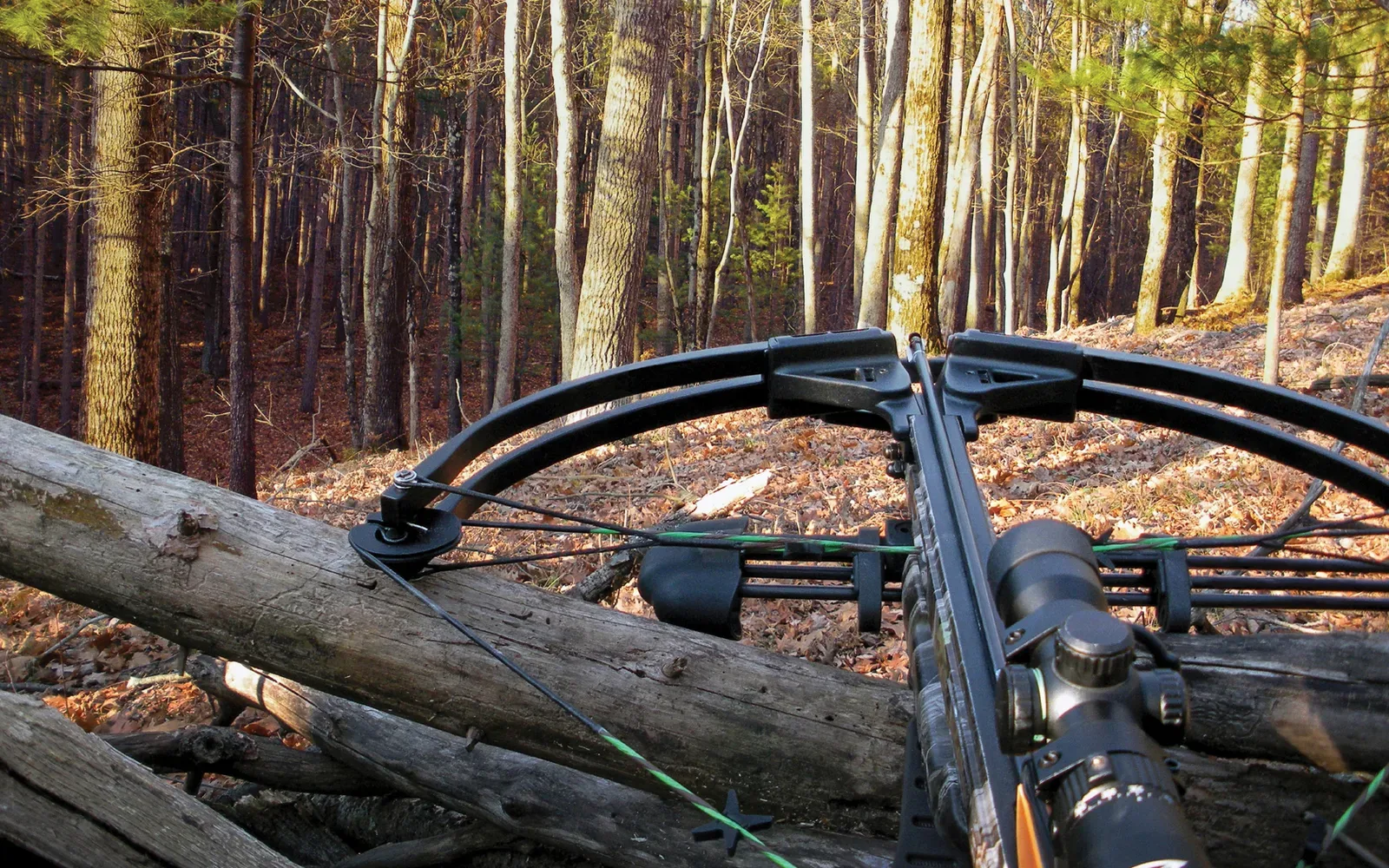
Over time the organization expanded its scope beyond basic firearms safety to include bowhunter education, muzzleloader education, and trapper education -- reflecting both the evolution of hunting methods and the need for discipline-specific instruction that goes beyond general safe-handling principles.
Mission & Purposeedit
IHEA-USA's stated mission is to serve hunting and shooting sports educators worldwide by developing and implementing standards and resources grounded in research -- with the goal of promoting safe, responsible, and ethical practices while keeping communication open among partner organizations.
The practical translation of that mission is straightforward: IHEA doesn't teach hunters directly. It supports the people who do.
IHEA doesn't teach hunters directly. It supports the people who do.
The organization develops curriculum frameworks, instructor training resources, and research-backed standards that state agencies can adopt and adapt. Think of it less as a school and more as the accreditation body and faculty development office behind the schools.
IHEA-USA's role in the hunter education ecosystem
This distinction matters because it shapes everything about how IHEA operates -- its membership model, its programming, its partnerships, and why the average new hunter might complete an IHEA-aligned course without ever knowing the organization exists.
Programs & Competitionsedit
IHEA-USA doesn't run competitions in the conventional shooting sports sense -- no matches, no national championships, no rankings. Its programming is education-focused, built around supporting instructors and filling gaps in the pathway from course completion to active hunter.
Consumer-Facing Programs
Hunters Connect is the most visible consumer-facing initiative. It addresses a real and well-documented problem: a significant number of people complete their hunter education course, buy a license, and then never actually go hunting.
The gap between finishing a class and having a successful first hunt is wide enough that many new hunters fall through it entirely. Hunters Connect produces video content and educational resources aimed at bridging that gap -- covering practical hunting skills, techniques, and confidence-building content for people who have the credential but not yet the experience.
The post-course dropout problem that Hunters Connect addresses
| Program | Target Audience | Purpose | Delivery Method |
|---|---|---|---|
| General Hunter Education | New hunters (all states) | Mandatory safety certification | State agencies using IHEA standards |
| Bowhunter Education | Archery hunters | Specialized equipment safety | Curriculum resources to states |
| Muzzleloader Education | Traditional firearms hunters | Black powder safety protocols | Instructor training materials |
| Trapper Education | Fur trappers | Humane trapping methods | State-adapted curriculum |
| Hunters Connect | Licensed non-participants | Bridge education-to-field gap | Video content and resources |
Instructor Support Resources
On the instructor side, IHEA develops and maintains curriculum resources for multiple disciplines:
- General hunter education (the mandatory course required in all 50 states for first-time hunters)
- Bowhunter education
- Muzzleloader education
- Trapper education
The organization also runs a course-finder tool at ihea-usa.org that aggregates state-level course listings, giving prospective students a single place to locate required education regardless of which state they're hunting in.
Membership & Benefitsedit
IHEA-USA membership is oriented primarily toward professionals and serious volunteers in the hunter education space -- state agency staff, program coordinators, and instructors who want access to national-level resources, networking, and professional development. It is not structured as a mass consumer membership organization in the way the NRA or NSSF operate.
For instructors specifically, membership provides access to curriculum resources, research publications, and connections to a peer network spanning all 50 states. Given that the instructor corps is overwhelmingly volunteer-based, the professional development angle is genuinely useful -- these are people teaching on their own time who benefit from standardized materials they don't have to build from scratch.
The 2025 strategic partnership with USA Archery added a concrete benefit layer for instructors from both organizations -- cross-access to education pathways, programming, and member discounts. Archery instructors and judges gain exposure to IHEA's resources; IHEA-affiliated instructors connect to USA Archery's target archery community. The practical effect is expanded programming options for the segment of instructors who work across both disciplines.
Notable Achievementsedit
The most significant thing IHEA has accomplished is also the hardest to put a number on: hunter education in the United States is standardized enough that a course completed in Florida is recognized in Montana.
Hunter education in the United States is standardized enough that a course completed in Florida is recognized in Montana. That interstate reciprocity didn't happen by accident.
That interstate reciprocity didn't happen by accident -- it required decades of alignment work across agencies that answer to different state governments and operate under different political constraints.
IHEA's key accomplishments include:
- 45,000+ instructor volunteer network nationwide
- Standardized interstate reciprocity for hunter education
- Research-based curriculum contributing to declining hunting incidents
IHEA's research-based approach to curriculum development has also contributed to measurable declines in hunting-related shooting incidents over the decades since mandatory hunter education became widespread. While multiple factors drive those numbers, the standardization of instruction that IHEA enables is a meaningful piece of the picture.
Structure & Governanceedit
Institutional Alignment
IHEA-USA is affiliated with the Association of Fish and Wildlife Agencies, which positions it institutionally within the network of state wildlife management bodies rather than as an independent advocacy organization. This alignment is intentional -- it keeps IHEA's work tethered to the agencies that actually run hunter education programs and gives those agencies a professional association they can participate in without it being a separate political actor.
The organization operates with professional staff handling business development, partnerships, and operations. Matt Clarey serves as Director of Business Development and Sales, a role that reflects IHEA's need to maintain partnerships and funding relationships outside of state agency budgets.
Funding Architecture
Because hunter education is funded in significant part through Pittman-Robertson Act excise tax revenues -- collected on firearms, ammunition, and archery equipment, then redistributed to states as grants -- IHEA operates within a funding ecosystem that links commercial shooting sports activity directly to conservation and education budgets. This isn't a minor detail: it's the financial architecture that makes free or low-cost hunter education courses viable nationwide.
| Funding Source | Mechanism | Purpose |
|---|---|---|
| Pittman-Robertson Act | Federal excise tax on firearms/ammo | State wildlife agency grants |
| State Agency Partnerships | Direct collaboration | Program development and delivery |
| Industry Partnerships | Corporate relationships | Resource development and outreach |
| Membership Dues | Professional memberships | Operations and administration |
Relationship to Other Organizationsedit
Government Partnerships
IHEA's most direct institutional relationship is with AFWA, through which it maintains its connection to state wildlife agencies. But its working relationships extend considerably further.
IHEA-USA's organizational relationships and partnerships
Industry and Advocacy Relationships
The NRA runs its own hunter education program, and NRA-certified courses are accepted in many states as satisfying mandatory hunter education requirements. This creates an overlap that is generally cooperative at the state level -- agencies care that the education meets standards, not necessarily which organization produced the curriculum -- but it also means IHEA operates in a space where it is not the only credentialed player.
The 2025 USA Archery partnership represents IHEA's push to extend its reach into target archery education, recognizing that the line between hunting and target shooting participation is increasingly porous. Bowhunter education naturally connects to archery participation, and capturing instructors who work in both worlds strengthens both organizations' recruitment and retention pipelines.
Federal Premium has publicly recognized IHEA's role in maintaining a positive public image for hunting -- a nod to the reality that hunter education isn't just safety training, it's also the hunting community's most systematic tool for demonstrating that hunters take responsibility seriously.
The BGC Takeedit
IHEA-USA is one of those organizations that does genuinely important work in a way that keeps it mostly invisible to the people who benefit from it. If you went through a hunter education course -- required in every state before you could buy your first hunting license -- there's a reasonable chance the curriculum you used was developed or influenced by IHEA standards, even if the course was run by your state agency under a completely different banner.
Value Proposition by Audience
For the average hunter, IHEA membership doesn't make obvious sense. You're not going to join IHEA the way you join the NRA or a local sportsmen's club. The organization isn't built for that, and trying to use it that way would be like joining ASTM International because you buy a lot of tools.
For hunter education instructors -- especially volunteers who teach regularly and want access to better materials, peer connections, and professional development -- membership has real value. The curriculum resources alone save significant prep time, and the network of instructors across all 50 states is useful when you're trying to solve problems that your state program hasn't figured out yet.
For state agency staff coordinating hunter education programs, IHEA is essentially mandatory engagement. The standards work, the research, and the interstate coordination all flow through this organization.
The Hunters Connect initiative is worth watching. The post-course dropout problem is real and documented -- plenty of states have noticed the gap between license sales and actual participation -- and video-based mentorship content is a reasonable attempt to address it. Whether it moves the needle meaningfully on hunter recruitment and retention is a question that will take years to answer.
Strengths and Limitations
IHEA-USA matters more than most hunters realize and less than it could if it moved faster.
The criticism you'll hear most often is that IHEA is institutionally cautious and slow-moving for an organization operating in a space that needs to compete with YouTube, social media, and a dozen other sources of outdoor education content for the attention of new hunters. That's a fair knock. The organizational DNA is state agency bureaucracy, which isn't built for speed. The Hunters Connect initiative and the USA Archery partnership suggest some awareness of that problem, but the proof is in whether those programs scale and produce results.
Bottom line: IHEA-USA matters more than most hunters realize and less than it could if it moved faster. If you're an instructor or agency staffer, engage with it. If you're a hunter, just know that the standardized, nationally recognized education system you went through didn't build itself.
Referencesedit
- IHEA-USA Official Website: https://www.ihea-usa.org/
- IHEA-USA About Page: https://www.ihea-usa.org/about-ihea/
- USA Archery: "USA Archery and the IHEA-USA announce strategic partnership to grow youth participation." September 2, 2025. https://www.usarchery.org/article/usa-archery-and-the-ihea-usa-announce-strategic-partnership-to-grow-youth-participation
- IHEA-USA Instagram: https://www.instagram.com/iheausa/
- Federal Premium Education Page: https://www.federalpremium.com/education.html
- IHEA-USA Hunters Experience PDF: https://www.ihea-usa.org/wp-content/uploads/2023/06/Hunters-Experience-23-draft-2-compressed.pdf
Last Updated: February 24, 2026
- Quail Creek Plantation(Okeechobee, FL)
- 2aHawaii(Honolulu, HI)
- Boston Firearms(Everett, MA)
- Safeshoot(Kingston, NY)
Loading comments...