Details
Paul-Marie-Eugène Vieille
| Biography | |
|---|---|
| Born | September 2, 1854, Paris, France |
| Died | January 14, 1934, Paris, France |
| Nationality | France |
| Legacy | |
| Known For | Development of Poudre B, the first practical smokeless gunpowder, and closed-bomb testing methods for ballistics |
| Key Innovation | Gelatinization process using ether and alcohol to transform nitrocellulose into a controllable propellant that burns progressively rather than explosively |
Paul Vieille: The French Chemist Who Made Smokeless Powder Work
Firearms encyclopedia article
From The Boise Gun Club Handbook
Overviewedit
Paul-Marie-Eugène Vieille was born on September 2, 1854, in Paris, France, and died there on January 14, 1934.
In a working life spent largely inside a government laboratory, he solved one of the central technical problems of 19th-century warfare: how to turn nitrocellulose — a violently unstable explosive — into a reliable, controllable propellant that could actually be loaded into a rifle.
The result was Poudre B, completed between 1882 and 1884 at the Laboratoire Central des Poudres et Salpêtres in Paris. It was the first practical smokeless gunpowder. Three times more powerful than black powder by weight, nearly residue-free, and invisible when fired — it changed what infantry combat looked like, what rifles could do, and what every chemist working on propellants had to reckon with for the next hundred years.
| Property | Black Powder | Poudre B | Advantage |
|---|---|---|---|
| Energy Density | Baseline | 3x more powerful by weight | Higher performance per unit weight |
| Smoke Production | Heavy white smoke | Nearly smokeless | Concealment, visibility |
| Residue | Heavy fouling | Minimal residue | Cleaner operation |
| Burn Characteristics | Fast deflagration | Progressive burning | Controlled pressure curve |
Every modern nitrocellulose-based propellant traces a direct line back to what Vieille figured out in that Paris lab.
Early Life & Backgroundedit
Scientific Training
Vieille studied under Marcellin Berthelot, one of the most prominent French chemists of the era. That apprenticeship shaped his approach — Berthelot was deeply interested in thermochemistry and the physics of energetic reactions, and Vieille absorbed that foundation before pivoting toward applied military problems.
The two collaborated on research into the physics of shock waves, with important discoveries emerging from that work in 1881, according to Britannica. That grounding in how pressure waves behave in confined spaces would prove directly relevant to everything Vieille did with propellants afterward.
Military Laboratory Career
He joined the Laboratoire Central des Poudres et Salpêtres in Paris during the late 1870s, according to Grokipedia, arriving at a moment when France was still processing the lessons of the Franco-Prussian War of 1870–1871. That defeat had pushed the French military establishment hard toward modernization — better rifles, better ammunition, better propellants. Vieille walked into an institution with real urgency behind its research agenda.
Key Contributionsedit
The Nitrocellulose Problem
The problem Vieille was handed had a clear shape. Christian Friedrich Schönbein, a German-Swiss chemist, had discovered nitrocellulose — also called guncotton — in 1846 by treating cotton fibers with a nitric and sulfuric acid mixture. Guncotton was enormously energetic. It was also far too fast-burning for direct use in firearms. Load it into a gun and you didn't have a propellant — you had a pipe bomb. For nearly four decades, nobody had cracked how to tame it.
The Gelatinization Solution
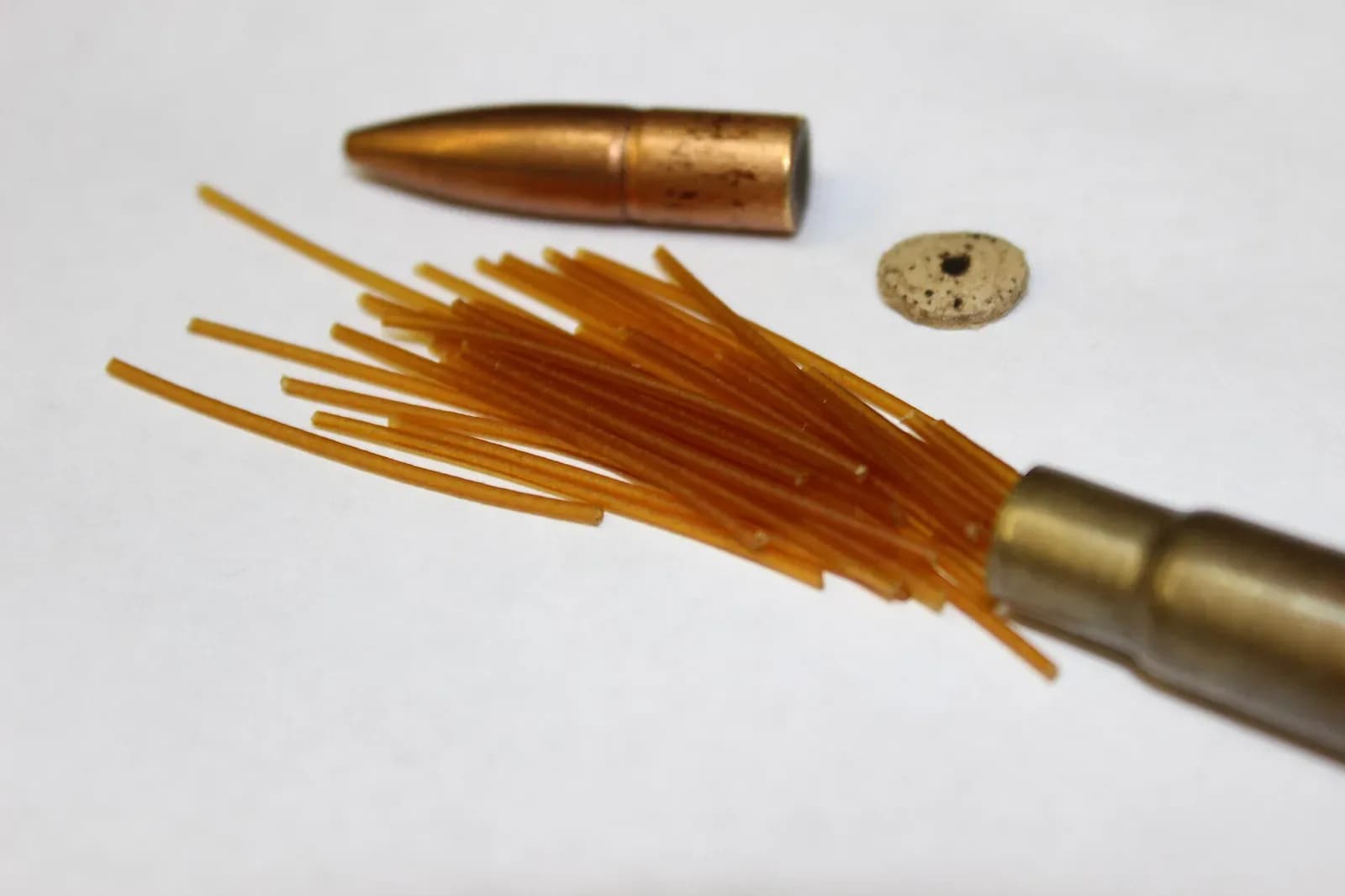
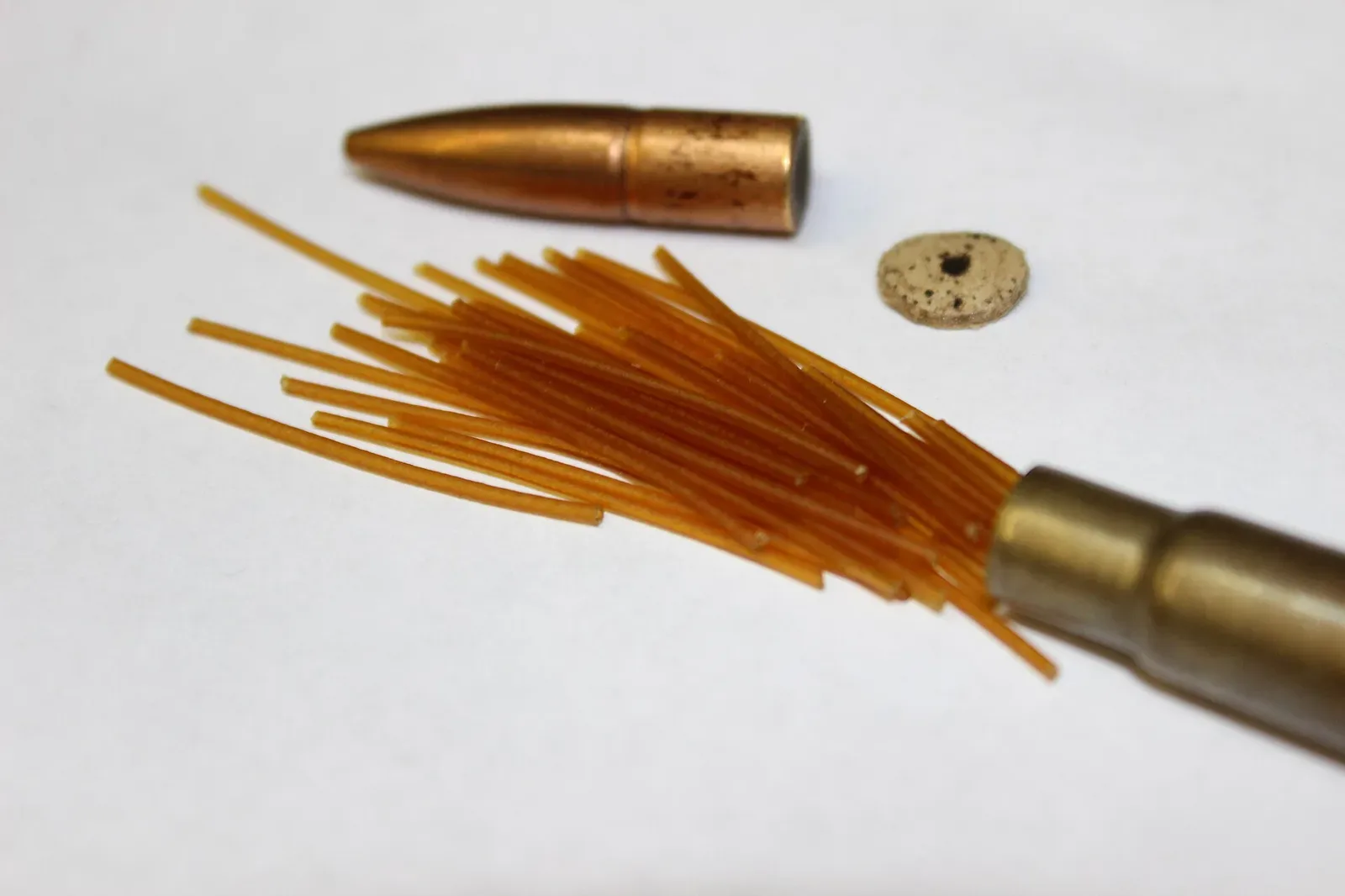
Vieille's insight was gelatinization. By dissolving nitrocellulose in a mixture of ether and alcohol, he transformed the fibrous material into a dough-like colloidal mass. That mass could be pressed through rollers into extremely thin sheets, dried, and cut into small uniform flakes. Those flakes didn't explode — they burned progressively, layer by layer, building pressure in a controlled curve rather than all at once. That's the difference between a propellant and a bomb.
Vieille's insight was gelatinization — transforming fibrous nitrocellulose into a controllable propellant that burned progressively rather than exploding all at once. That's the difference between a propellant and a bomb.
Vieille's gelatinization process for converting unstable nitrocellulose into controllable Poudre B
Development Timeline
According to the Poudre B Wikipedia article, initial trials in October 1884 involved gelatinized celluloid composed of 82% nitrocellulose and 18% camphor. By November 1884, Vieille had the first successful formulation of Poudre B. A publicized test on December 23, 1884, firing the powder through a 65mm cannon, confirmed it worked. The final composition settled at 68.2% insoluble nitrocellulose, 29.8% soluble nitrocellulose gelatinized with ether, and 2% paraffin.
| Development Stage | Date | Composition | Notes |
|---|---|---|---|
| Initial Trials | October 1884 | 82% nitrocellulose, 18% camphor | Gelatinized celluloid formulation |
| First Success | November 1884 | Refined formulation | Basic Poudre B achieved |
| Public Test | December 23, 1884 | 65mm cannon test | Confirmed viability |
| Final Formula | 1884-1886 | 68.2% insoluble nitrocellulose<br>29.8% soluble nitrocellulose<br>2% paraffin | Production standard |
Poudre V — straightforward enough, named after himself — was Vieille's original name for the powder. French authorities renamed it Poudre B, short for poudre blanche (white powder, to distinguish it from black powder). The real reason for the rename, per both the Wikipedia and Kiddle sources, was to throw off German intelligence. It worked well enough that the powder's origins remained obscured for a time.
Scientific Methodology
Beyond the powder itself, Vieille developed closed-bomb testing methods and formulated what became known as Vieille's Law — the mathematical relationship between burn rate and chamber pressure, expressed as r = kP^n. According to Grokipedia, these analytical tools remain integral to modern ballistics for predicting pressure curves and optimizing propellant grain geometry. The powder was one contribution; the methodology for understanding and designing propellants was another.
Impact on Firearms Developmentedit
The Lebel Advantage
The French Army adopted Poudre B in 1886 for the Lebel Model 1886 rifle, chambered in 8×50mmR Lebel — the first military rifle to use a smokeless powder cartridge at scale. The performance gap over black powder was not marginal. According to Grokipedia, the 8mm Lebel cartridge achieved muzzle velocities approaching 2,100 feet per second, roughly 50% faster than the 1,350 feet per second produced by the contemporary 11mm Gras rifle using black powder. Effective range extended to approximately 400 meters for individual targets, with maximum range out to around 1,800 meters.
| Rifle/Cartridge | Country | Year | Muzzle Velocity | Effective Range |
|---|---|---|---|---|
| 11mm Gras (black powder) | France | 1874 | 1,350 fps | ~200m |
| 8×50mmR Lebel | France | 1886 | 2,100 fps | ~400m |
| 7.92×57mm Patrone 88 | Germany | 1888 | ~2,000 fps | ~400m |
| .303 British (Cordite) | Britain | 1889 | ~2,000 fps | ~400m |
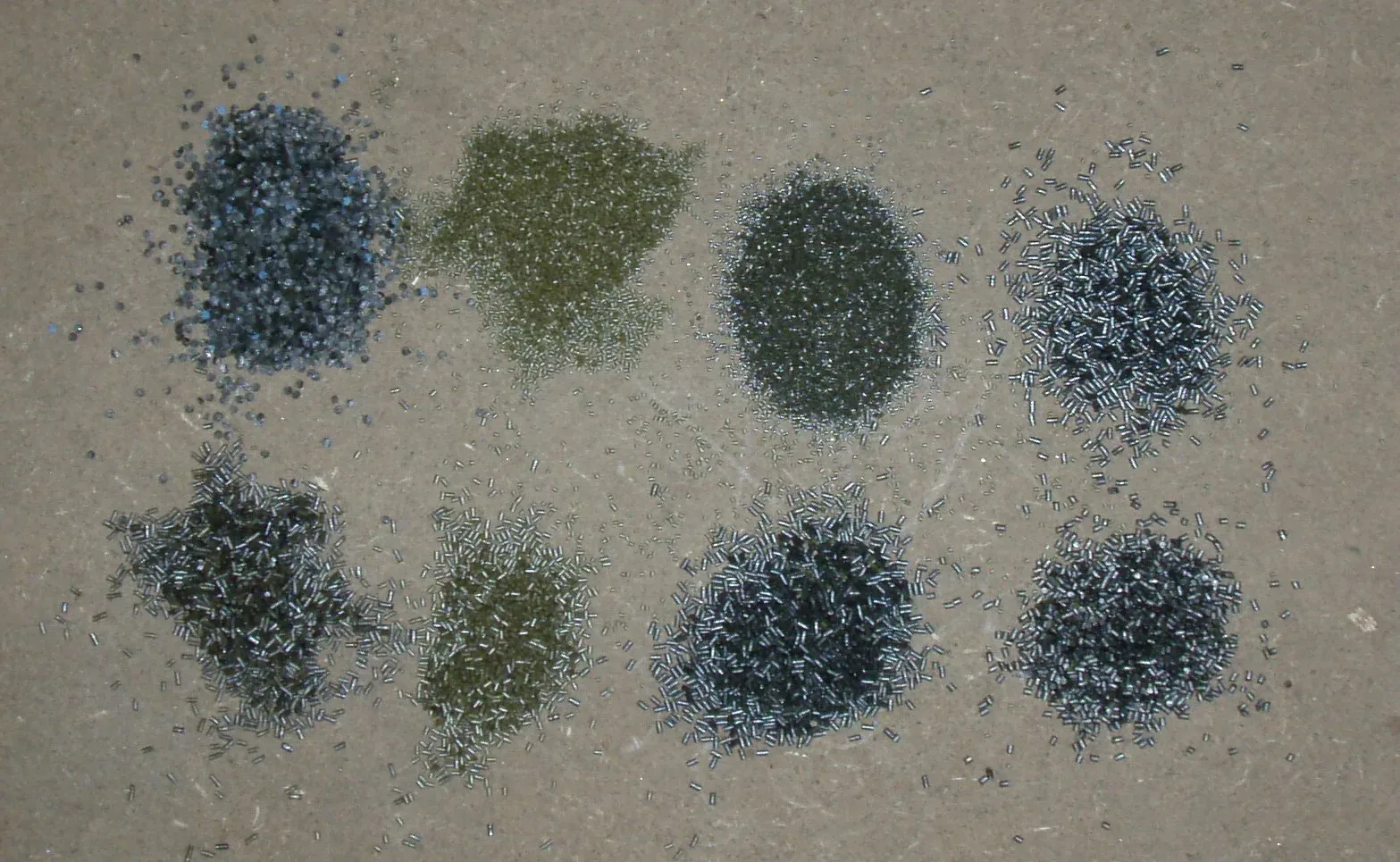
The tactical implications were immediate and obvious. Before smokeless powder, a squad firing volleys would be blind within a few shots — their own position marked by a hanging cloud of white smoke, their targets invisible behind it. With Poudre B, there was almost no smoke. Soldiers could see. They couldn't be seen. Their rifles were accurate farther out, with a flatter trajectory from the higher velocity. And because the powder was three times more energetic by weight, they could carry more ammunition for the same load. The French Army had a significant military advantage, and every neighboring power knew it.
International Arms Race
The international response was fast. According to Grokipedia, Alfred Nobel developed Ballistite in 1887 — a double-base powder combining nitrocellulose and nitroglycerin — as a direct response. British scientists Frederick Abel and James Dewar created Cordite in 1889 after analyzing samples of Poudre B. Germany adapted nitrocellulose formulations for Mauser rifles in the 7.92×57mm Patrone 88 cartridge, introduced in 1888. Within a few years of Vieille's breakthrough, every major military power had abandoned or was abandoning black powder.
The rapid international response to France's smokeless powder advantage
Artillery Applications
Poudre B also powered the Canon de 75 modèle 1897 — the famous French 75mm quick-firing field gun — using bagged charges to achieve effective ranges of 6 to 8 kilometers, with a rate of fire of 15 rounds per minute. According to Grokipedia, the powder's clean burning was a prerequisite for that gun's hydro-pneumatic recoil system to maintain accuracy during rapid fire. The French 75 defined field artillery tactics for a generation, and Poudre B was the propellant underneath it.
Firearm Design Evolution
The ripple effects extended into firearm design itself. The pressures generated by smokeless powder required:
- Stronger actions required for higher chamber pressures
- Smaller calibers became viable due to higher velocity
- Brass cartridge cases suited to increased pressures
- Modern metallic cartridge design requirements established
Almost every structural feature of the modern metallic cartridge and the actions that chamber it traces back, in some direct way, to the demands that Poudre B imposed.
Later Life & Legacyedit
Powder Evolution
Vieille continued working in the fields of shock waves, pressure physics, and nitrocellulose stability after Poudre B's adoption, according to Britannica. The powder itself kept evolving.
| Variant | Year | Key Changes | Service Period |
|---|---|---|---|
| Poudre B | 1884 | Original formulation | 1886-1887 |
| Poudre BF(NT) | 1887 | Improved stability | 1887-1896 |
| Poudre BF(AM) | 1896 | Amyl alcohol stabilizer | 1896-1901 |
| Poudre BN3F | 1901 | Diphenylamine stabilizer | 1901-1918 |
| Poudre BPF1 | Post-WWI | Further refinements | 1920s-1960s |
The original 1884 formulation was almost immediately replaced by improved Poudre BF(NT) in 1887. That was replaced by Poudre BF(AM) in 1896, followed by Poudre BN3F in 1901 — the version stabilized with diphenylamine as an antioxidant instead of amyl alcohol, which became the standard French propellant through World War I. Later variants, including Poudre BPF1, remained in French service until the 1960s.
Stability Challenges
The instability of the early formulations was a genuine problem, not a footnote. The earliest Poudre B tended to degrade as volatile solvents evaporated and residual acids attacked the nitrocellulose. Two French battleships — the Iéna in 1907 and the Liberté in 1911 — exploded in Toulon harbor, with heavy loss of life, with decomposing Poudre B identified as the probable cause in the Iéna's case.
These weren't abstract chemistry problems; they were disasters. The development of diphenylamine as a stabilizer, which neutralized the nitrogen oxide decomposition products that drove the autocatalytic degradation cycle, directly addressed Vieille's original formulation's fatal flaw.
Modern Relevance
Vieille died in Paris on January 14, 1934, at 79. His name largely disappeared from public memory — overshadowed by Nobel, Cordite, and the industrial-scale propellant development that followed in the 20th century. But the IMR series of powders developed by DuPont in the early 20th century, still found in handloading manuals today, retained the single-base nitrocellulose architecture and uniform flake geometry that Vieille established in 1884. The chemistry evolved; the fundamental approach didn't.
According to Grokipedia, a 2023 study reexamined Poudre B's development to explore sustainable, low-toxicity variants of Vieille's original gelatinization process — which suggests the 1884 work still has something to say to modern propellant chemists.
The BGC Takeedit
Vieille is one of those figures who genuinely belongs in the same conversation as the people who invented the cartridge, the percussion cap, and the breech-loading action — and he almost never shows up there. He gets a footnote in articles about the Lebel rifle or a sentence in histories of World War I artillery. That's underselling it badly.
What makes Vieille's contribution unusual is that it wasn't an incremental improvement. Black powder had been the propellant for firearms for roughly 500 years. The transition to smokeless powder didn't take a century — it happened inside of a decade, and Vieille is the reason.
His work in that Paris lab between 1882 and 1884 didn't just produce a better powder; it produced the conceptual and manufacturing framework that everyone else built on. The gelatinization process, the roller-pressed flake geometry, the closed-bomb testing methodology — those things traveled with the chemistry when Britain, Germany, and everyone else started reverse-engineering France's edge.
The instability problems with early Poudre B are worth acknowledging honestly. Two battleships blew up in harbor. That's not a rounding error. But it's also not unusual for genuinely new chemistry — the stabilization solutions came, and they came because Vieille's foundational work gave chemists something concrete to improve on.
If you're standing at the range today, loading a cartridge with any modern smokeless powder, the chain of development runs directly back to what one French chemist solved in 1884. That's a legacy worth knowing.
Referencesedit
- https://en.wikipedia.org/wiki/Poudre_B
- https://www.britannica.com/biography/Paul-Vieille
- https://kirammo.com/ammunition-education/the-emergence-of-smokeless-powder-and-its-transformation-of-contemporary-ammunition/
- https://kids.kiddle.co/Poudre_B
- https://spartacus-educational.com/FWWvieille.htm
- https://www.researchgate.net/publication/366848817_A_new_perspective_on_Poudre_B%27_s_1884_development
Last Updated: February 27, 2026
- Gls Guns(Sumner, IA)
- Bi-mart - Yakima (Fruitvale Ave)(Yakima, WA)
- New Philly Sportsman Specialities(New Philadelphia, OH)
- R&R Sports & Outdoors(Brandon, FL)
Loading comments...