Details
Roger Bacon

Portrait of Roger Bacon, the 13th-century Franciscan friar whose writings first documented gunpowder's military applications in Europe.
| Biography | |
|---|---|
| Born | c. 1219/20, Ilchester, Somerset, England |
| Died | c. 1292, Oxford, England |
| Nationality | English |
| Honorific | Doctor Mirabilis (Wonderful Teacher) |
| Religious Order | Franciscan friar |
| Legacy | |
| Known For | First person in Europe to write down the formula for gunpowder in the Opus Majus (1267); contributions to optics and calendrical reform |
| Key Innovation | Documented the three-ingredient gunpowder formula (saltpetre, sulphur, and willow charcoal) in Western written record |
Roger Bacon: The Friar Who Wrote Down Gunpowder
Firearms encyclopedia article
From The Boise Gun Club Handbook
Overviewedit
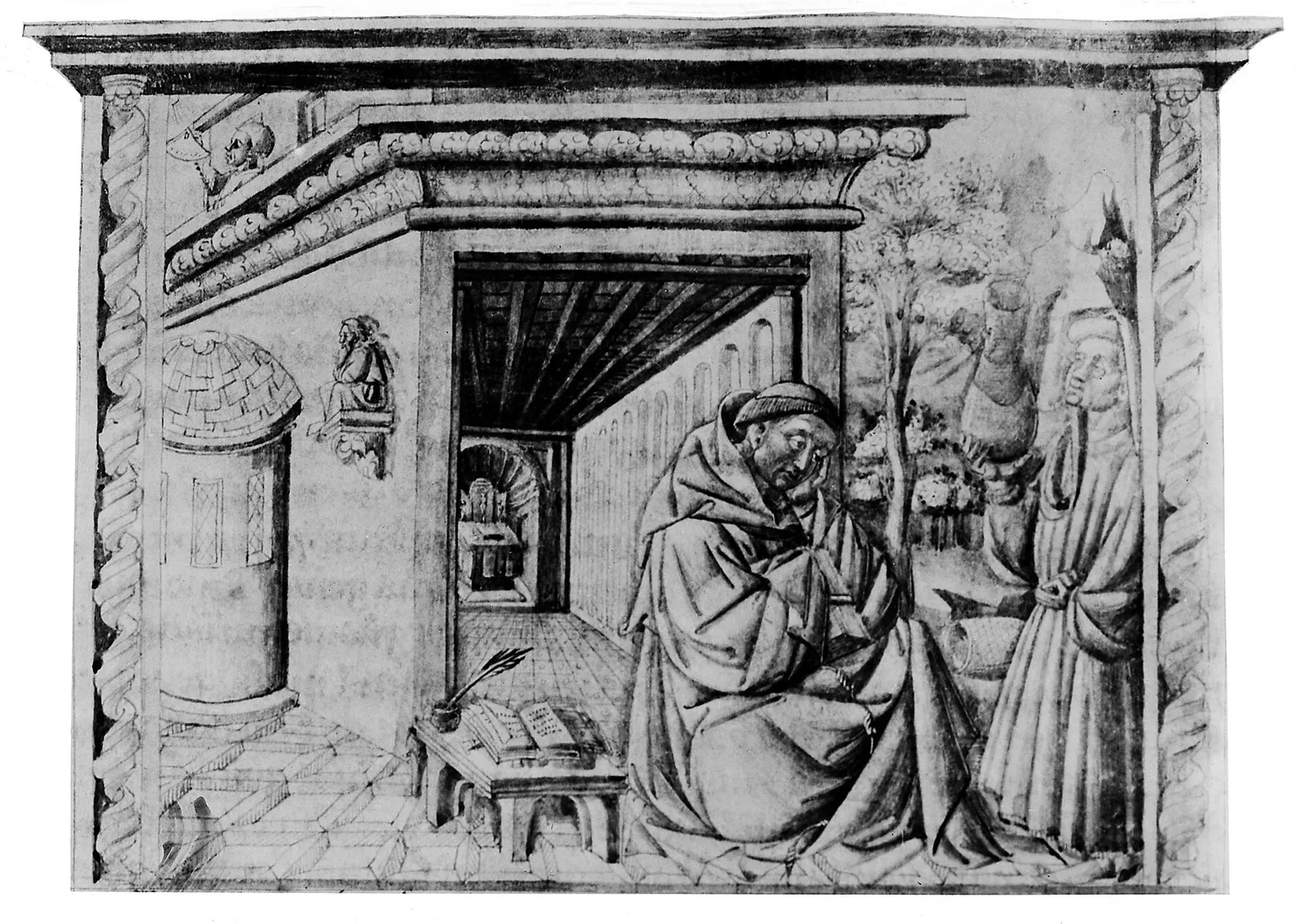
Roger Bacon (c. 1219/20–c. 1292), known by the scholastic honorific Doctor Mirabilis — "Wonderful Teacher" — was a medieval English polymath, philosopher, and Franciscan friar who holds a specific, non-negotiable place in the history of firearms: he was the first person in Europe to write down the formula for gunpowder. That single act, buried inside a sprawling Latin manuscript sent to a pope in 1267, put the knowledge of black powder into the written record of Western civilization.
Everything that followed — cannons, muskets, rifles, and every firearm you've ever handled — traces part of its lineage back through that document.
Gunpowder itself wasn't his invention. It had been developed in China centuries earlier and was already known in the Islamic world before Bacon ever picked up a quill. But Europe didn't know what it was looking at yet, and Bacon wrote it down first. That matters.
Early Life & Backgroundedit
Bacon was born near Ilchester, Somerset, England, in the early 13th century. His exact birth year is uncertain — sources place it anywhere from 1210 to 1220, with c. 1219/20 being the most commonly cited estimate. His family appears to have been well off, which likely made his education possible.
Education at Oxford and Paris
He studied at Oxford, where his intellectual trajectory was shaped by the legacy of Robert Grosseteste, even though Grosseteste had probably already left by the time Bacon arrived. Bacon became a Master at Oxford, lecturing on Aristotle. A record from 1233 places a sharp-tongued cleric named Roger Bacon speaking before the king at Oxford — which fits the personality that would define his entire career.
| Period | Location | Activity/Role |
|---|---|---|
| c. 1219/20 | Ilchester, Somerset | Born to well-off family |
| c. 1230s | Oxford | Master, lectured on Aristotle |
| 1233 | Oxford | Recorded speaking before the king |
| 1237+ | University of Paris | Lectured on grammar, logic, astronomy, music |
| 1247+ | Private scholar | Studied Greek/Arabic optics literature |
| 1248-1251 | Oxford (likely) | Met Adam Marsh |
| 1256/57 | - | Entered Franciscan Order |
In 1237, or sometime in the following decade, Bacon accepted an invitation to teach at the University of Paris. There he lectured on Latin grammar, Aristotelian logic, arithmetic, geometry, and the mathematical aspects of astronomy and music. His faculty colleagues included:
- Robert Kilwardby
- Albertus Magnus
- Peter of Spain (possibly future Pope John XXI)
- Richard Rufus (scholarly opponent)
Private Scholar Period
By 1247, or shortly after, he left Paris and spent roughly a decade as a private scholar — whereabouts uncertain, though he was likely in Oxford between 1248 and 1251, where he met Adam Marsh. During this period he worked through most of the known Greek and Arabic literature on optics, then called perspectiva.
In 1256 or 1257, he entered the Franciscan Order, following the example of scholarly English Franciscans like Grosseteste and Marsh. That decision, however well-intentioned, put him under institutional constraints that would shape — and frustrate — the rest of his productive life.
Key Contributionsedit
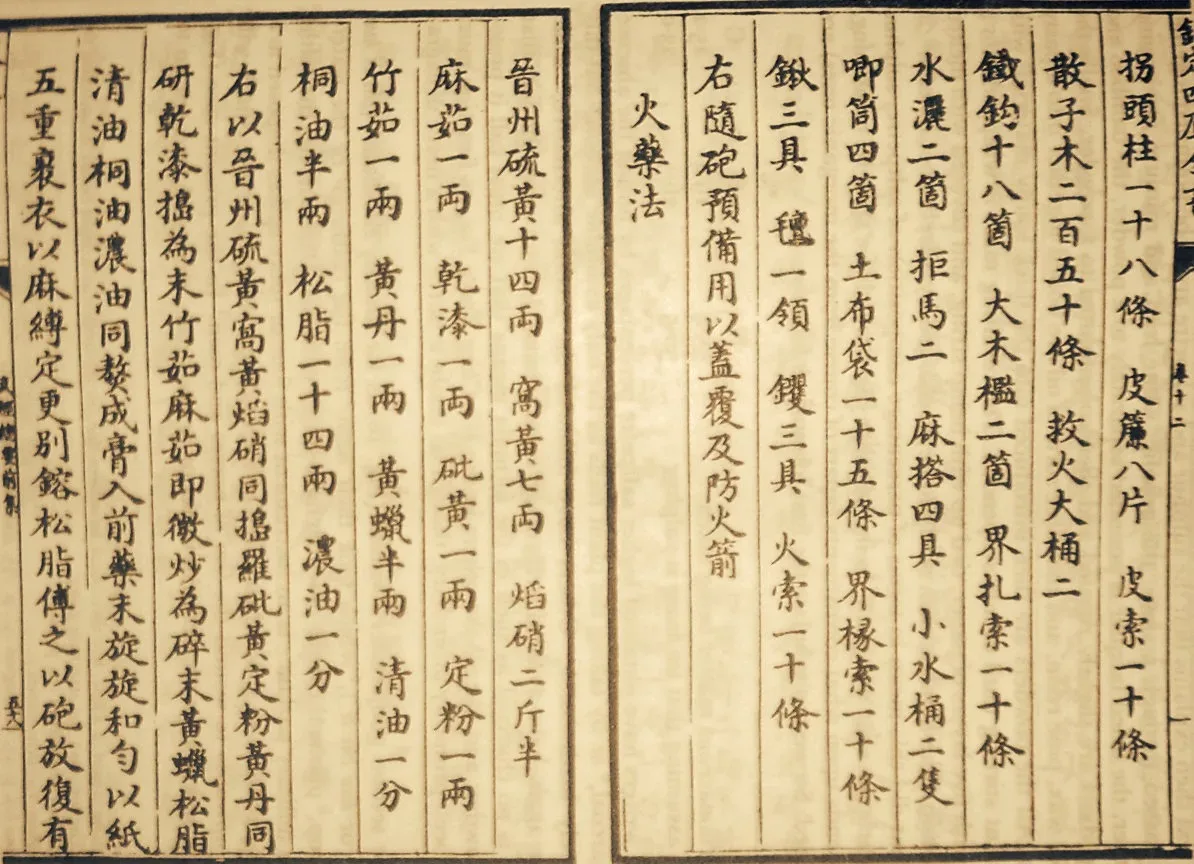
The Opus Majus and Gunpowder Record
The document that matters most to firearms history is the Opus Majus — the "Greater Work" — completed around 1267 and sent to Pope Clement IV in Rome at the Pope's explicit request. According to the Oxford University cabinet commentary, the Opus Majus "is generally regarded as the oldest extant recipe for gunpowder recorded in the West."
The relevant passage describes what Bacon called a children's toy made in many parts of the world:
From the violence of that salt called saltpetre [together with sulphur and willow charcoal, combined into a powder] so horrible a sound is made by the bursting of a thing so small, no more than a bit of parchment [containing it], that we find [the ear assaulted by a noise] exceeding the roar of strong thunder, and a flash brighter than the most brilliant lightning.
| Component | Medieval Name | Modern Name | Purpose |
|---|---|---|---|
| Salt called saltpetre | Saltpetre | Potassium nitrate (KNO₃) | Oxidizer |
| Sulphur | Sulphur | Sulfur (S) | Fuel |
| Willow charcoal | Charcoal | Carbon (C) | Fuel/Reducing agent |
Three ingredients. Saltpetre (potassium nitrate), sulphur, and willow charcoal. That's the recipe. Bacon was describing black powder — the propellant that would drive every projectile fired from a gun for the next six hundred years.
Knowledge transmission pathway: How gunpowder formula reached European documentation
A second relevant passage appears in the Opus Tertium, a companion work sent around the same time. Together, these two texts represent Europe's first written engagement with gunpowder's composition.
Where did Bacon get this knowledge? According to J.R. Partington and other historians, Bacon most likely witnessed at least one demonstration of Chinese firecrackers — probably brought west by Franciscan travelers who visited the Mongol Empire. His friend William of Rubruck was one such traveler. A footnote in the Wikipedia source notes that reports of experiments with gunpowder and rockets appeared at Cologne in 1258, shortly after William of Rubruck's return, and that "a friend of William of Rubruck, Roger Bacon, gave the first account of gunpowder and its use in fireworks to be written in Europe."
Bacon didn't synthesize a new substance in a laboratory. He documented something he had seen or heard about from someone who had seen it. That's still the job — and he did it when nobody else in Europe had.
The Cryptogram Controversy
At the beginning of the 20th century, Henry William Lovett Hime of the Royal Artillery proposed that a separate Bacon text, the Epistola, contained a hidden cryptogram spelling out a precise gunpowder recipe. The theory generated real interest — and was then systematically dismantled. Lynn Thorndike attacked it in a 1915 letter to Science. Joseph Needham, John Maxson Stillman, Robert Steele, and George Sarton all concurred.
| Theory | Proponent | Year | Proposed Ratio | Nitrate % | Status |
|---|---|---|---|---|---|
| Cryptogram | H.W.L. Hime | c. 1900 | 7:5:5 (saltpetre:charcoal:sulphur) | ~41% | Debunked |
| Problem | Multiple scholars | 1915+ | Too low to ignite | <50% minimum | Consensus |
The problem wasn't just scholarly nitpicking: the deciphered proportions — a 7:5:5 ratio of saltpetre, charcoal, and sulphur — produced a mixture with roughly 41% nitrate content, which is too low to have explosive properties. It wouldn't ignite inside a gun barrel. The cryptogram theory is a dead end.
The Complete Opus Majus
Gunpowder is one passage in what was actually a massive, ambitious document. The Opus Majus ran to around half a million words and covered mathematics, optics, alchemy, astronomy, geography, and what Bacon called scientia experimentalis — experimental science. It was not intended as a complete work but as what Bacon called a persuasio praeambula, a "persuasive preamble" — an enormous proposal to reform the medieval university curriculum. Bacon wanted to drag European education into contact with Greek and Arabic knowledge that was just starting to filter north through Spain.
Bacon also sent the Pope the following works:
- Opus Minus (Lesser Work)
- De Multiplicatione Specierum
- De Speculis Comburentibus
- Actual optical lens
Brian Clegg's biography calls this output "one of the most remarkable single efforts of literary productivity" — around a million words composed in roughly a year, copied by hand on parchment.
Optics and Calendar Reform
Beyond gunpowder, Bacon made substantive contributions in two other areas. In optics, his treatment of light, refraction, mirrors, and lenses — drawn heavily from the Arabic scholar Ibn al-Haytham (Alhazen) — helped get perspectiva added to the medieval university curriculum.
In calendrical reform, he proposed changes to the flawed Julian calendar in the Opus Majus, calling the existing system "intolerable, horrible, and laughable." His specific proposal wasn't adopted after Clement IV died in 1268, but the problem he identified was real — and the Gregorian calendar reform of 1582 ultimately addressed it along similar lines.
Impact on Firearms Developmentedit
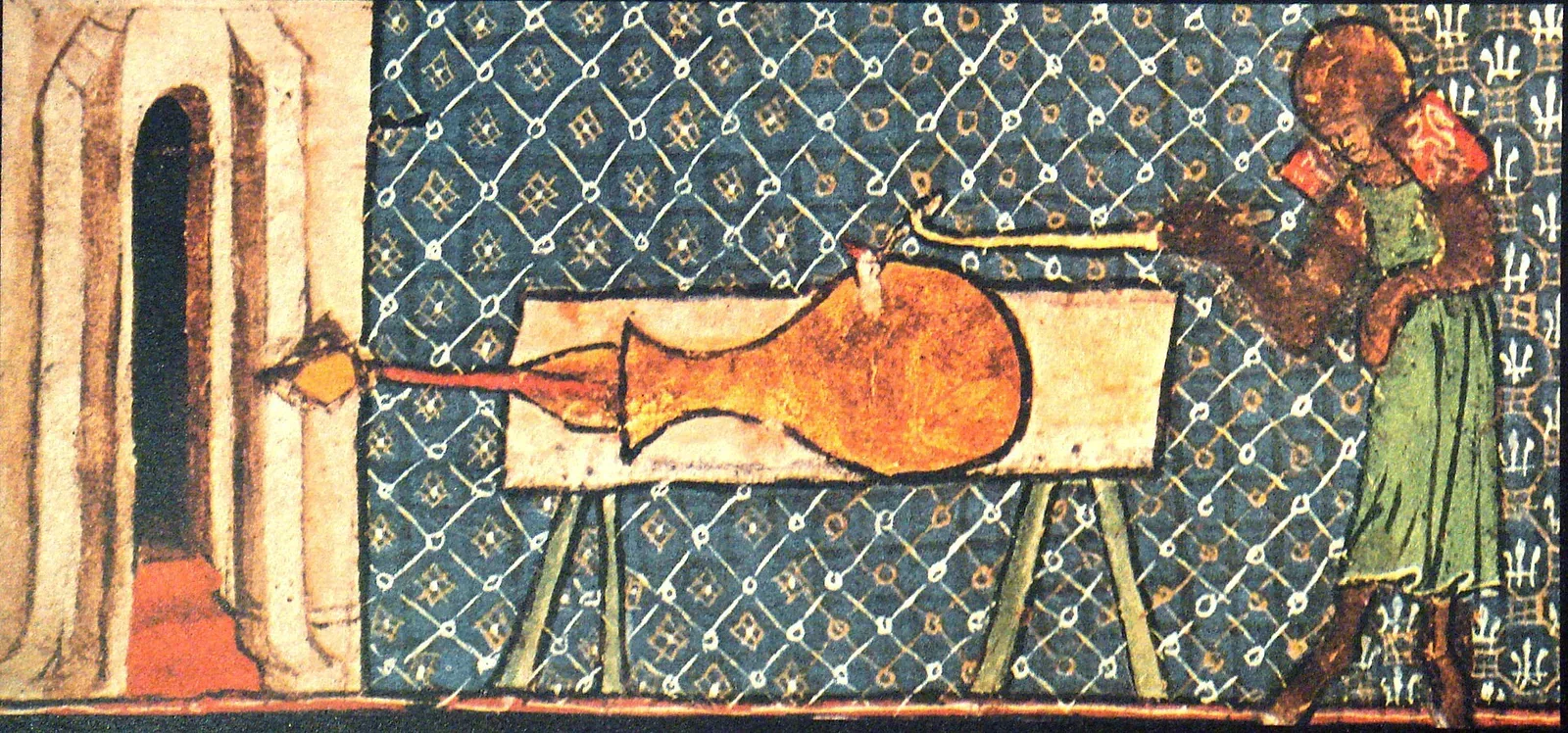
Bacon's direct impact on firearms was indirect but foundational. He didn't build a cannon. He didn't weaponize black powder. What he did was put the three-ingredient formula into a Latin manuscript that entered the written record of European scholarship.
Gunpowder had already been known in China since before AD 900, according to the Wikipedia source. Knowledge had reached the Islamic world, where saltpetre was sometimes called "Chinese snow." But Europe was still in the dark. Bacon's documentation — whatever its original source — gave European thinkers and eventually European military engineers a written starting point.
| Region | Knowledge Status | Timeline |
|---|---|---|
| China | Gunpowder developed | Before AD 900 |
| Islamic World | Known as "Chinese snow" | Pre-1267 |
| Europe (pre-Bacon) | No surviving written records | - |
| Europe (Bacon) | First written formula | 1267 |
| Europe (post-Bacon) | Cannon experiments | Early 14th century |
| Europe (widespread) | Battlefield firearms | Late 14th century |
The timeline matters here. Bacon wrote in 1267. By the early 14th century, European armies were experimenting with cannon. By the late 14th century, firearms were changing battlefield tactics across the continent. The gap between Bacon's manuscript and the first European guns is short enough that the connection is real, even if the chain of transmission isn't fully documented.
What Bacon represented was the beginning of European written engagement with the substance. Before him, there is no surviving European text that describes gunpowder's composition. After him, the knowledge was in the record — and knowledge, once written down, tends to move.
Later Life & Legacyedit
Institutional Constraints
After 1260, Bacon's activities were constrained by a Franciscan statute prohibiting friars from publishing books or pamphlets without prior approval. He was, by his own account, kept at menial tasks and effectively cut off from scholarly work. His escape came through a connection with Guy de Foulques, Bishop of Narbonne and papal legate, who in 1265 was elected Pope Clement IV.
The Opus Majus and its companion works were the product of that brief window of papal patronage.
Timeline of Bacon's constrained later career under Franciscan restrictions
Clement died in 1268, and the window closed. Sometime in the following two years, Bacon was apparently imprisoned or placed under house arrest — though modern scholarship is skeptical. The first reference to his "imprisonment" dates from eighty years after his death, on a charge of unspecified "suspected novelties."
Death and Burial
Sometime after 1278, Bacon returned to the Franciscan House at Oxford, where he continued writing. His last dateable work, the Compendium Studii Theologiae, was completed in 1292. He died shortly afterward and was buried at Oxford.
His contemporaries largely ignored him in favor of Albertus Magnus, Bonaventure, and Thomas Aquinas. By the early modern period, the English had turned him into something else entirely — a Faust-like wizard who possessed forbidden knowledge, had tricked the devil, and built a talking brazen head that could answer any question.
Medieval to Modern Reputation
Around 1589, Robert Greene adapted the legend for the stage in The Honorable Historie of Frier Bacon and Frier Bungay, one of the most successful Elizabethan comedies. The mythologizing says more about what later centuries wanted Bacon to be than what he actually was.
By the 19th century, commentators were calling him a visionary born centuries too early — a 16th- or 17th-century mind dropped accidentally into the 13th century. 20th-century scholarship pushed back on that romantic framing. David Lindberg summarized the modern consensus: Bacon was "a brilliant, combative, and somewhat eccentric schoolman of the thirteenth century, endeavoring to take advantage of the new learning just becoming available while remaining true to traditional notions... of the importance to be attached to philosophical knowledge." He was part of his age, not ahead of it — but he was a significant part of it.
The statue of Bacon at the Oxford University Museum of Natural History and a plaque on the wall of the Westgate shopping centre in Oxford mark his connection to the city. Oxford lore credits him as the namesake of Folly Bridge, near where he supposedly lived under house arrest. The building known as "Friar Bacon's Study" stood on Folly Bridge until 1779, when it was demolished for road widening — a fitting end for a man whose work kept getting in the way of other people's plans.
The BGC Takeedit
Here's the honest assessment: Roger Bacon's gunpowder passage is the kind of historical moment that's easy to overstate and equally easy to dismiss, and both mistakes get made regularly.
The overstatement version makes Bacon the inventor of gunpowder, the father of firearms, the lone genius who handed the West its military future. None of that holds up. Gunpowder was Chinese technology, filtered through the Islamic world before Bacon ever heard a firecracker go off. He documented something he probably witnessed secondhand. That's not diminishment — documentation is real work, and in the 13th century, writing something down in Latin and getting it into a papal archive was how knowledge survived.
The dismissal version says Bacon was just a monk copying what he heard, and the real firearms story starts with the first cannon. That's too clean. The chain from "described in a manuscript" to "loaded into a weapon" runs through literate people who read manuscripts. Bacon put the formula in the record. That has to count for something.
What I find genuinely interesting about Bacon — from a shooter's perspective — is that he understood observation mattered more than authority. His whole beef with his contemporaries was that they kept citing Aristotle and other approved sources instead of testing things themselves.
He ran experiments. He got different results than the books predicted. He concluded the books were wrong. That instinct — that what actually happens downrange matters more than what the manual says — is one we'd recognize at any range in the country.
The fact that he was institutionally throttled for most of his career, forced to write in secret under papal cover, and then watched his patron die before anything could be implemented — that's just the historical version of fighting bureaucracy. That's just the historical version of fighting bureaucracy. Some things don't change.
His gunpowder passage isn't dramatic. It's a paragraph describing a noisy toy. But it's the paragraph that puts black powder into Western written history, and the story of every firearm ever made starts somewhere before the trigger was pulled. For the Western tradition, it starts closer to that paragraph than most people realize.
Referencesedit
- Gls Guns(Sumner, IA)
- Bi-mart - Yakima (Fruitvale Ave)(Yakima, WA)
- New Philly Sportsman Specialities(New Philadelphia, OH)
- R&R Sports & Outdoors(Brandon, FL)
Loading comments...