Details
Roger Bacon

Roger Bacon (c. 1214–1294), the Franciscan friar whose experimental method and writings on gunpowder influenced European science.
| Biography | |
|---|---|
| Born | c. 1219/20, Ilchester, Somerset, England |
| Died | c. 1292, Oxford, England |
| Nationality | English |
| Legacy | |
| Known For | First European written record of gunpowder formula (1267); contributions to optics, calendrical reform, and empirical scientific method |
| Key Innovation | First European documentation of gunpowder ingredients (saltpeter, sulfur, and willow charcoal) in the Opus Majus and Opus Tertium |
Roger Bacon: The Friar Who Gave Europe Its First Gunpowder Recipe
Firearms encyclopedia article
From The Boise Gun Club Handbook
Overviewedit
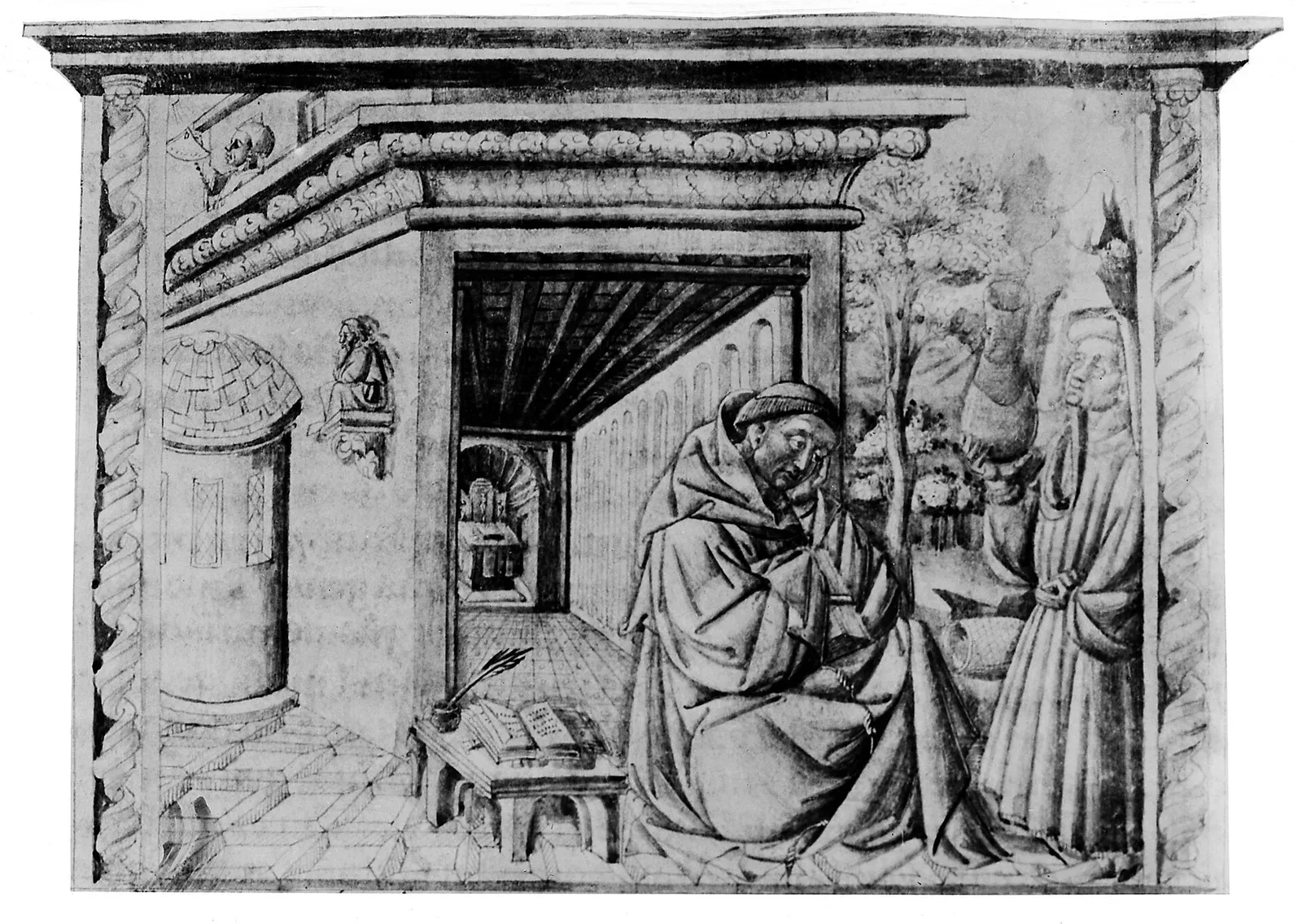
Roger Bacon (c. 1219/20–c. 1292), known by the posthumous scholastic accolade Doctor Mirabilis—"Wonderful Teacher"—was a medieval English polymath, philosopher, and Franciscan friar who holds a specific and non-negotiable place in the story of firearms: he wrote the first European record of a gunpowder formula. That happened in 1267, roughly two centuries before the arquebus showed up on any battlefield.
Bacon didn't build a gun. He didn't even fully understand what he had. But he wrote it down, and that document survived.
Beyond gunpowder, Bacon was one of the 13th century's most restless intellects—a man who lectured at Oxford and the University of Paris, pushed for curriculum reform, proposed a calendar fix that took the Church another 300 years to implement, and spent a significant stretch of his career fighting his own religious order for the right to publish. He also managed to get himself remembered for centuries as a wizard, which is a particular kind of legacy.
This article covers his life, his work, and specifically how his writing on gunpowder connects to the broader 800-year arc of firearms development.
Early Life & Backgroundedit
Bacon was born near Ilchester, Somerset, England. The exact year is disputed—sources have suggested 1210, 1213, 1214, 1215, and 1220, with the most commonly cited range being 1219 or 1220. According to Wikipedia, the main evidence for his birth date comes from a statement in his 1267 Opus Tertium that "forty years have passed since I first learned the Alphabetum," which scholars have interpreted variously depending on what Bacon meant by that term.
| Aspect | Details |
|---|---|
| Birth Year | c. 1219/20 (disputed: sources suggest 1210–1220) |
| Birthplace | Near Ilchester, Somerset, England |
| Family Status | Well-off, royal partisans during Second Barons' War |
| Education | Oxford (Master's degree), University of Paris |
| Religious Order | Franciscan (joined c. 1256–1257) |
| Key Influences | Robert Grosseteste, Adam Marsh |
Family and Social Context
His family appears to have been well off. When Simon de Montfort led the forces that prosecuted the Second Barons' War, the Bacons were considered royal partisans—De Montfort's men seized their property and drove several family members into exile. That conflict would later complicate Bacon's ability to fund his own scholarly work.
Academic Career
He studied at Oxford, where the influence of Robert Grosseteste—even if Grosseteste had already departed by the time Bacon arrived—shaped his approach to natural philosophy and empirical observation. Bacon became a Master at Oxford, lecturing on Aristotle. There is no evidence he was ever awarded a doctorate; Doctor Mirabilis was applied to him after his death.
In 1237, or sometime in the following decade, Bacon accepted an invitation to teach at the University of Paris, where he lectured on Latin grammar, Aristotelian logic, arithmetic, geometry, and the mathematical aspects of astronomy and music. His faculty colleagues there included Robert Kilwardby, Albertus Magnus, and Peter of Spain, who may later have become Pope John XXI. He left Paris in 1247 or shortly after.
For the next decade his whereabouts are uncertain, though he was likely in Oxford between 1248 and 1251, where he met Adam Marsh, and in Paris in 1251. During this period he studied most of the known Greek and Arabic works on optics—then called perspectiva—and began the kind of independent empirical investigation that would define his reputation.
Joining the Franciscans
Around 1256 or 1257, he joined the Franciscan Order, in either Paris or Oxford, following the example of scholarly English Franciscans like Grosseteste and Marsh. That decision, while intellectually motivated, put him directly under a set of institutional constraints that would dog him for the rest of his active career.
Key Contributionsedit
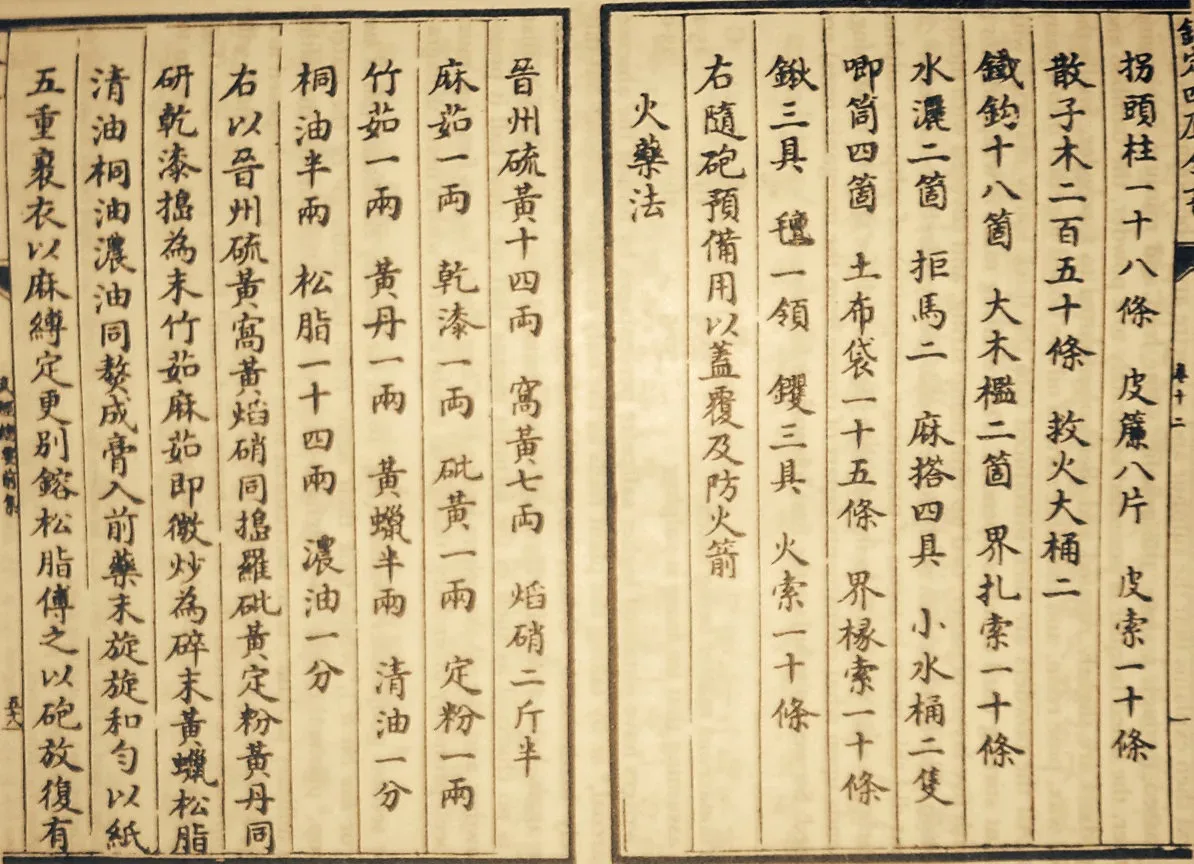
The European Gunpowder Formula
The passage everyone in the firearms world cares about appears in the Opus Majus and the Opus Tertium, both dating to 1267. According to Wikipedia, these are generally regarded as the first European descriptions of a mixture containing the essential ingredients of gunpowder. The Opus Majus is specifically described by the University of Oxford's Cabinet project as "the oldest extant recipe for gunpowder recorded in the West."
Bacon's own words, as quoted in the Wikipedia source:
We have an example of these things in that children's toy which is made in many parts of the world... From the violence of that salt called saltpetre [together with sulphur and willow charcoal] so horrible a sound is made by the bursting of a thing so small... exceeding the roar of strong thunder, and a flash brighter than the most brilliant lightning.
He's describing a firecracker, not a weapon. The three ingredients—saltpeter, sulfur, and willow charcoal—are the core components of black powder, the propellant that would eventually drive every firearm from the hand cannon through the flintlock musket. Bacon didn't present this as a weapons formula. He presented it as a natural phenomenon worth documenting, consistent with his broader empirical project.
| Component | Medieval Name | Modern Role |
|---|---|---|
| Saltpeter | "that salt called saltpetre" | Oxidizer (potassium nitrate) |
| Sulfur | sulphur | Fuel component |
| Willow Charcoal | willow charcoal | Carbon fuel source |
| Result | "horrible sound" and "flash brighter than lightning" | Basic black powder reaction |
How did a Franciscan friar in 13th-century Oxford know about Chinese firecrackers? Historians including J.R. Partington concluded that Bacon most likely witnessed at least one demonstration, probably brought back by Franciscan missionaries who traveled to the Mongol Empire during this period—including Bacon's friend William of Rubruck, who returned from those travels in 1257.
Knowledge transmission path: Chinese gunpowder to European written record via Bacon
According to a footnote in the Wikipedia source, reports of experiments with gunpowder and rockets appeared at Cologne shortly after William's return, and then Bacon provided his written account.
The Cryptogram Controversy
A separate theory has dogged this story for over a century. Around the turn of the 20th century, Henry William Lovett Hime of the Royal Artillery published the claim that Bacon's Epistola contained a cryptogram encoding a more precise gunpowder recipe. That theory was picked apart by Thorndike in a 1915 letter to Science, and subsequently by Muir, Stillman, Steele, Sarton, Needham, and others.
The proportions supposedly decoded—a 7:5:5 ratio of saltpeter to charcoal to sulfur—produce a mixture with roughly 41% nitrate content, which is too low to be explosive, burns slowly, generates heavy smoke, and would fail to ignite inside a gun barrel. The cryptogram theory is not accepted by mainstream scholarship.
The Million-Word Reform Proposal
The Opus Majus—"Greater Work"—was sent to Pope Clement IV in Rome in 1267, along with companion volumes the Opus Minus and Opus Tertium, an optical lens, and works on alchemy and astrology. The entire output represented roughly one million words composed in approximately one year—described by Brian Clegg as "one of the most remarkable single efforts of literary productivity."
| Work | Year | Length | Purpose |
|---|---|---|---|
| Opus Majus | 1267 | ~1 million words total | Primary reform proposal |
| Opus Minus | 1267 | (companion volume) | Supporting documentation |
| Opus Tertium | 1267 | (companion volume) | Additional evidence |
| Optical lens | 1267 | (physical demonstration) | Practical example |
| Alchemical works | 1267 | (various treatises) | Supplementary studies |
The Opus Majus is divided into seven parts covering the causes of human ignorance, the relationship between philosophy and theology, grammar, mathematics, optics, experimental science, and moral philosophy. It was not intended as a finished encyclopedia but as what Bacon called a persuasio praeambula—a persuasive preamble, an enormous proposal for reforming the medieval university curriculum.
He wanted experts assembled to produce definitive texts across subjects including optics, astronomy, mechanics, alchemy, agriculture, medicine, and experimental science. His criticism of contemporaries was pointed. He attacked Alexander of Hales and Albertus Magnus for having acquired their knowledge of Aristotle only at second hand.
Of the situation where Albert was received at Paris as an authority equal to Aristotle, Avicenna, and Averroes, Bacon wrote: "never in the world [had] such monstrosity occurred before." He was not a man who kept his opinions to himself, which contributed materially to his having very few friends.
Scientific Methodology and Optics
Part V of the Opus Majus covers:
- Physiology of eyesight and anatomy of the eye and brain
- Refraction, mirrors, and lenses
- Empirical observations building on Alhazen's (Ibn al-Haytham's) Book of Optics
- Addition of optics (perspectiva) to medieval curriculum
Bacon drew heavily on the Latin translation of Alhazen's (Ibn al-Haytham's) Book of Optics and applied its empirical method to his own observations. He was also partially responsible for the addition of optics (perspectiva) to the medieval university curriculum, according to Wikipedia.
In Part IV of the Opus Majus, Bacon proposed dropping one day every 125 years from the Julian calendar and ceasing the observance of fixed equinoxes and solstices—a reform he argued was necessary because the Julian assumption of a 365¼-day year had caused the computation of Easter to drift forward by nine days since the First Council of Nicaea in 325. He called the Julian calendar "intolerable, horrible, and laughable." His proposal wasn't acted on after Clement IV's death in 1268.
The Gregorian calendar finally introduced in 1582 under Pope Gregory XIII achieved the same correction through a different mechanism—dropping one day from the first three centuries in each set of 400 years.
Fighting for Academic Freedom
After 1260, Bacon's activities were restricted by a Franciscan statute—the General Chapter of Narbonne decree—that prohibited friars from publishing books or pamphlets without prior approval from higher superiors. According to the Catholic Encyclopedia source, this prohibition was originally prompted not by Bacon but by Gerard of Borgo San Donnino, who had published a heretical work without permission in 1254. Bacon got caught under a general rule.
He was kept at menial tasks and effectively cut off from scholarly life. His path back opened through an unlikely chain of events. He had made the acquaintance of Guy de Foulques, a bishop who served as papal legate to England. A garbled message from Bacon's messenger in 1263 or 1264 led Guy to believe Bacon had already completed a major summary of the sciences. He hadn't—and had no money to do so, since the Second Barons' War had stripped his family's resources.
The institutional struggle behind Bacon's greatest work
In 1265, Guy was elected Pope Clement IV. His reply to Bacon, dated June 22, 1266, commissioned writings on current conditions, instructed Bacon to proceed in utmost secrecy without violating his order's standing prohibitions, and effectively gave him cover to work. Bacon had to borrow money from friends, pawn goods, and write in secret from his own superiors. According to the Catholic Encyclopedia source, he told the pope he had promised friends he'd ask for reimbursement of approximately 60 pounds they'd spent supporting his work.
Clement died in 1268 before he could act on any of Bacon's proposals. Bacon lost his protector.
Impact on Firearms Developmentedit
Bacon's role in the firearms story is specific and bounded: he transmitted knowledge of gunpowder's ingredients from the East into the Western written record. He did not invent gunpowder—that happened in China, centuries earlier. He did not weaponize it. He documented it as a scholar cataloging natural phenomena.
But that documentation mattered. The Opus Majus circulated among European scholars, and according to the Oxford Cabinet source, it is generally regarded as the oldest extant Western recipe for the substance. Whether Bacon's specific text directly informed any later weapons developer is difficult to trace, but the broader point is this: by the mid-13th century, knowledge of the three core ingredients of black powder was moving through European scholarly networks. Bacon is one of the documented nodes in that transmission.
Bacon's documentation as foundation for centuries of firearms development
Gunpowder's path from Chinese firecrackers to European hand cannons (which appear in the historical record by the early 14th century) ran through exactly the kind of cross-cultural contacts that Bacon represented—Franciscan missionaries to the Mongol Empire, Arabic scientific texts reaching Europe through Muslim Spain, and scholars like Bacon who read everything they could get their hands on and wrote it down.
The specific formulation matters less than the fact of documentation. Once the ingredients were in the Latin scholarly record, European experimenters could work with them. The transition from firecrackers to propellant-driven projectiles was still a long road, but the written record Bacon contributed to was part of how that knowledge traveled.
Later Life & Legacyedit
Detention and Final Years
After Clement IV's death in 1268, Bacon's situation deteriorated. The Condemnations of 1277 banned the teaching of certain philosophical doctrines, including deterministic astrology. Sometime within the following two years, Bacon was apparently imprisoned or placed under house arrest. The Catholic Encyclopedia source cites the Chronica XXIV Generalium Ordinis Minorum, which states that Jerome of Ascoli—later Pope Nicholas IV—condemned and imprisoned Bacon for "suspect innovations." Modern scholarship is skeptical: Wikipedia notes that the first reference to Bacon's "imprisonment" dates from eighty years after his death, on charges of unspecified "suspected novelties."
Scholars who do accept some form of detention typically attribute it to:
- Deterministic astrology (banned by Condemnations of 1277)
- Attraction to contemporary prophecies
- Sympathies for radical poverty wing of Franciscans
- Generally combative personality toward colleagues
Not to any specific scientific claim he'd made.
From Wizard to Pioneer to Scholar
Sometime after 1278, Bacon returned to the Franciscan House at Oxford. His last dateable writing, the Compendium Studii Theologiae, was completed in 1292. He is presumed to have died shortly afterward and been buried at Oxford.
| Period | Bacon's Reputation | Key Characteristics |
|---|---|---|
| Medieval (13th–15th c.) | Scholastic philosopher | Academic reformer, empirical investigator |
| Early Modern (16th–17th c.) | Folk wizard/legend | Brazen head stories, stage plays, supernatural powers |
| 19th Century | Scientific pioneer | "Man ahead of his time," proto-modern scientist |
| Modern Scholarship | Contextual scholar | "Brilliant, combative schoolman" of his era |
By the early modern period, the English had turned him into something between a folk hero and a bogeyman—a Faust-like wizard who possessed forbidden knowledge, tricked the devil, and still made it to heaven. The legend of his brazen head—a mechanical bronze skull that could answer any question—became one of the most durable stories associated with him. Around 1589, Robert Greene adapted it for the stage as The Honorable Historie of Frier Bacon and Frier Bongay, described by Wikipedia as one of the most successful Elizabethan comedies. As late as the 1640s, Thomas Browne was complaining that "every ear is filled with the story of Frier Bacon."
By the 19th century, intellectual fashion had swung the other way. William Whewell and others began presenting Bacon as a man centuries ahead of his time—a modern experimental scientist stranded in the 13th century. That portrayal was itself a product of its era's assumptions about the Dark Ages and the nature of scientific progress.
Modern Assessment
20th-century scholarship corrected course again. David Lindberg summarized the current consensus: Bacon was "not a modern, out of step with his age, or a harbinger of things to come, but a brilliant, combative, and somewhat eccentric schoolman of the thirteenth century, endeavoring to take advantage of the new learning just becoming available while remaining true to traditional notions... of the importance to be attached to philosophical knowledge."
Theories supplied by reason should be verified by sensory data, aided by instruments, and corroborated by trustworthy witnesses. — One of the first important formulations of the scientific method
His assertions in the Opus Majus regarding verification through sensory data and instruments are still described as one of the first important formulations of the scientific method on record. He is credited as one of the earliest European advocates of the empirical approach—though modern scholarship is careful to note he was working within a tradition, not inventing one from scratch. His debt to Robert Grosseteste, Adam Marsh, and Islamic thinkers like Ibn al-Haytham was substantial and acknowledged by Bacon himself.
A statue of Bacon stands at the Oxford University Museum of Natural History. A plaque is affixed to the wall of the Westgate shopping centre in Oxford. Oxford lore credits him as the namesake of Folly Bridge, where he is said to have been placed under house arrest—though Wikipedia notes this is probably untrue, and the bridge had formerly been known simply as "Friar Bacon's Bridge." By the late 18th century, his reputed study on Folly Bridge had become a place of pilgrimage for scientists, until it was pulled down in 1779 to widen the road.
The BGC Takeedit
Bacon shows up in the firearms story the way a lot of foundational figures do—not as a gunmaker or a soldier, but as a man who wrote something down at the right moment. He didn't know what he was handing to posterity. He was trying to document natural phenomena for a reform proposal aimed at a pope who died before reading it.
What strikes me about Bacon is the institutional friction he worked against his entire career. The man was genuinely prolific and clearly had the intellectual horsepower to do serious work—and he spent decades fighting a religious bureaucracy for the right to publish anything. The Second Barons' War wiped out his family's money. His messenger garbled a critical communication. His papal patron died a year after receiving his life's work.
And he still managed to produce roughly a million words in a year while operating in secret.
That's how knowledge actually spreads sometimes: not through dramatic proclamation but through a footnote in somebody's massive reform proposal.
The gunpowder passage itself is interesting precisely because it's so casual. He's not presenting a weapons formula. He's describing a children's toy—a firecracker—as an example of how saltpeter behaves. The three ingredients are almost parenthetical.
The 19th-century version of Bacon—lone genius, persecuted visionary—was always more myth than history, and current scholarship has largely retired it. That's probably the right call. But it shouldn't obscure what he actually did: he read voraciously across linguistic and cultural lines at a time when most European scholars couldn't be bothered, he wrote with unusual clarity about what he observed, and he committed the essential ingredients of black powder to the Latin scholarly record. Everything that followed—the hand cannon, the matchlock, the flintlock, the percussion cap—required that the formula exist in writing somewhere in Europe. Bacon is one of the places it landed first.
That's enough to earn a place in the story.
Referencesedit
- Wikipedia: Roger Bacon — https://en.wikipedia.org/wiki/Roger_Bacon
- Oxford Cabinet: Gunpowder — https://www.cabinet.ox.ac.uk/3-gunpowder-0
- Secretorum: The Life and Times of Roger Bacon — https://www.secretorum.life/p/the-life-and-times-of-roger-bacon
- Catholic Encyclopedia: Roger Bacon — https://www.newadvent.org/cathen/13111b.htm
- All That's Interesting: Roger Bacon — https://allthatsinteresting.com/roger-bacon
- Goodreads: The Opus Majus of Roger Bacon — https://www.goodreads.com/book/show/553346.The_Opus_Majus_of_Roger_Bacon
Last Updated: February 27, 2026
- Gls Guns(Sumner, IA)
- Bi-mart - Yakima (Fruitvale Ave)(Yakima, WA)
- New Philly Sportsman Specialities(New Philadelphia, OH)
- R&R Sports & Outdoors(Brandon, FL)
Loading comments...