Legal Details
Second Amendment Supreme Court Cases

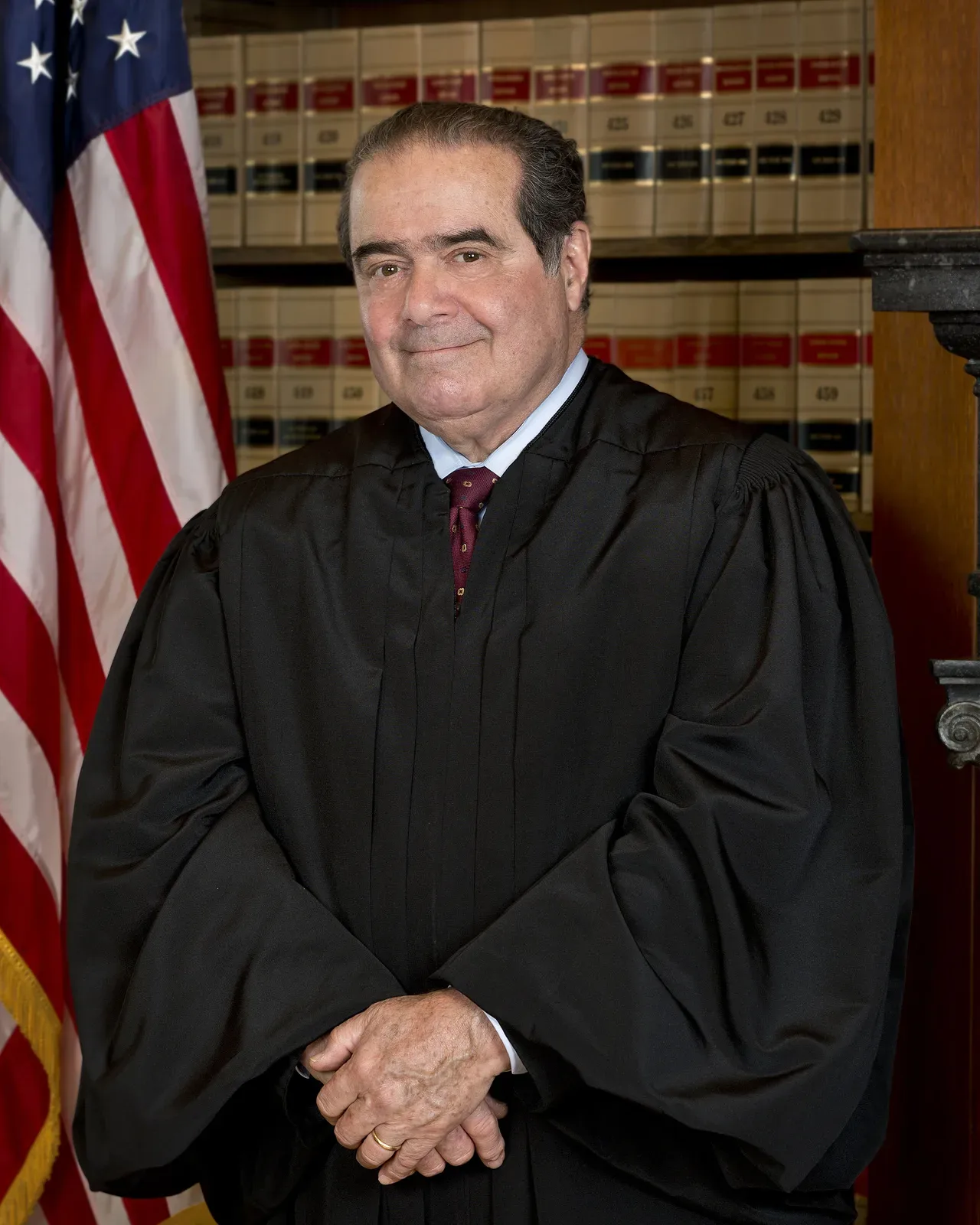
Justice Antonin Scalia authored the majority opinion in Heller, holding that the Second Amendment protects an individual right to possess firearms.
Collection of the Supreme Court of the United States (Public domain)
| Identification | |
|---|---|
| Jurisdiction | |
Territory | United States (Federal) |
Administered By | United States Supreme Court |
| Key Provisions | |
| |
| Applicability | |
| Applies To | All individuals in the United States, with exceptions for prohibited persons such as felons and domestic abusers |
| Exemptions |
|
Related Laws | |
Legislative History | |
2008District of Columbia v. Heller decided, establishing individual right to keep and bear arms 2010McDonald v. Chicago decided, incorporating Second Amendment against states and local governments 2022New York State Rifle & Pistol Association v. Bruen decided, establishing right to carry in public and new 'text, history, and tradition' test | |
Second Amendment Supreme Court Cases
Legal information and analysis
From The Boise Gun Club Handbook
Disclaimer: This information is for educational purposes only and does not constitute legal advice. Consult with a qualified attorney for specific legal questions.
For nearly 70 years, the Supreme Court basically ignored the Second Amendment. Then three cases—Heller (2008), McDonald (2010), and Bruen (2022)—changed everything about how courts look at gun rights.
- Individual right confirmed: You now have a clearly defined individual right to keep and bear arms that applies everywhere in America
- Not unlimited: Courts can still uphold certain restrictions, just not arbitrary ones
- Still evolving: Many existing laws are getting challenged right now as this plays out
I've watched these cases play out over the years, and the practical impact varies wildly depending on where you live. Some states adapted quickly, others are still dragging their feet through endless court challenges.
The Big Three Casesedit
Heller: Individual Right Established
District of Columbia v. Heller (2008) finally put the "individual right" debate to bed. Dick Heller was a D.C. cop who couldn't even keep a working gun in his own home because of the city's handgun ban.
The absurdity wrote itself.
Timeline showing the evolution of Second Amendment jurisprudence through key Supreme Court cases
| Case | Year | Key Holding | Impact |
|---|---|---|---|
| District of Columbia v. Heller | 2008 | Individual right to keep and bear arms | Established personal right, struck down D.C. handgun ban |
| McDonald v. Chicago | 2010 | Second Amendment applies to states/localities | Extended Heller nationwide, struck down Chicago handgun ban |
| New York State Rifle & Pistol Association v. Bruen | 2022 | Right to carry in public, new legal test | Eliminated "may issue" permits, changed how courts evaluate gun laws |
Justice Scalia was smart in the opinion though. He made it clear the right "isn't unlimited" and specifically mentioned that sensitive places, commercial sales regulations, and keeping guns from prohibited persons were still constitutional.
McDonald: Nationwide Application
McDonald v. Chicago (2010) extended Heller to state and local governments. Before this, only federal jurisdictions like D.C. had to worry about the Second Amendment.
Chicago's handgun ban got tossed, and suddenly every city and state had to play by the same constitutional rules.
Bruen: Carry Rights and New Standards
New York State Rifle & Pistol Association v. Bruen (2022) was the big one for carry rights. New York's "may issue" system let bureaucrats deny permits because your reason for wanting to carry wasn't good enough for them. The Court said that's unconstitutional—you have a right to carry in public for self-defense, period.
Bruen changed how courts evaluate gun laws entirely. No more balancing tests where judges weigh your rights against whatever the government claims is important.
Bruen also changed how courts evaluate gun laws entirely. No more "intermediate scrutiny" or "strict scrutiny" tests where judges weigh your rights against whatever the government claims is important. Now they have to show the restriction matches America's historical tradition of gun regulation.
How Courts Look at Gun Laws Nowedit
The Old Balancing Test System
The old system was a joke. Courts would use "intermediate scrutiny" or "strict scrutiny" tests that basically let them uphold whatever they wanted if the government had a decent-sounding excuse.
How courts evaluate gun laws under the Bruen standard
Text, History, and Tradition Standard
The legal reality: Courts now use "text, history, and tradition" to evaluate gun laws. If a law covers conduct protected by the Second Amendment's plain text, the government must prove it's consistent with historical firearm regulations from the founding era.
This has made defending modern gun restrictions much harder. Want to ban something? You better find a colonial-era precedent that's actually similar—not just "well, they regulated gunpowder storage in 1792."
The historical test isn't perfect, but it's way better than the old system where judges just made stuff up based on their personal feelings about guns.
What's Still Legaledit
Longstanding Prohibitions
Don't get too excited—plenty of gun laws survived these decisions and will keep surviving.
| Still Constitutional | Status After Cases |
|---|---|
| Background checks | Explicitly preserved |
| Prohibited persons | Felons, domestic abusers still banned |
| Sensitive places | Schools, courthouses, government buildings |
| Dealer licensing | Commercial sales regulations upheld |
| Carry permits | Required, but "shall issue" not "may issue" |
Sensitive Places and Prohibited Persons
The Court specifically preserved what it called "longstanding prohibitions" on carrying in "sensitive places" and keeping firearms from "dangerous and unusual" weapons—though courts are still figuring out exactly what fits in these categories.
What this means for you: These cases strengthened your rights significantly, but they didn't eliminate gun regulations entirely. You still need to know your local laws.
Common Mistakes People Makeedit
I see these misunderstandings all the time at the range and in gun stores:
- "I can carry anywhere now" - Wrong. States can still designate sensitive places and require permits
- "All gun laws are unconstitutional" - Wrong. Court explicitly preserved many existing regulations
- "Any law without a 1776 equivalent gets tossed" - Wrong. Courts look for historical analogies and principles
The Real-World Impactedit
You have clearer constitutional protection for common firearms like handguns in your home and the right to carry in public. But you still need to follow all applicable laws while they get sorted out in court.
Some states eliminated discretionary permit systems after Bruen. Others added new restrictions they think are historically justified:
- Expanded sensitive place lists
- Enhanced training requirements
- Other regulations they deem historically justified
Don't assume a questionable law is automatically invalid. You could still get arrested and prosecuted while the lawyers figure it out over several years of appeals.
Research your local laws carefully, especially for carry. The legal landscape keeps shifting as more cases work through federal courts. What's allowed in your area might change as district and circuit courts apply these Supreme Court precedents to specific state laws.
These three cases gave gun owners real constitutional protection for the first time in decades. The Second Amendment finally has teeth—but it's not a magic wand that makes all gun laws disappear overnight.
Resourcesedit
- Supreme Court opinion in District of Columbia v. Heller
- Supreme Court opinion in New York State Rifle & Pistol Association v. Bruen
- Constitution Center: Second Amendment Interpretations
- Congressional Research Service: Second Amendment at the Supreme Court
- Your state attorney general's office for state-specific guidance
- Local law enforcement for current carry laws in your jurisdiction
Last Updated: 2026-01-15
See Alsoedit
- Ace Hardware of Sandusky(Sandusky, MI)
- New Philly Sportsman Specialities(New Philadelphia, OH)
- Atwoods Ranch & Home #46(LACY LAKEVIEW, TX)
- G & P Distributors(McConnellsburg, PA)
This is not legal advice
This guide provides general information about federal and state firearms laws based on publicly available statutes. Laws change frequently and vary significantly by state. Always verify current laws in your jurisdiction. Consult a qualified attorney for legal advice on your specific situation. When in doubt, contact local law enforcement or state police.
Loading comments...