State Details
South Carolina

Overview | |
|---|---|
State | South Carolina (SC) |
Capital | Columbia |
Statehood | 1788 |
Population | 5,373,555 |
Gun Ownership | 49.4% |
Active FFLs | 1,065 |
Carry Laws | |
Constitutional Carry | Yes (2024) |
Open Carry | Yes |
CCW Permit Available | Yes |
Permit Reciprocity | 36+ states |
Self-Defense | |
Castle Doctrine | Yes |
Stand Your Ground | Yes |
Duty to Retreat | No |
Regulations | |
State Preemption | Yes |
Red Flag / ERPO | No |
Waiting Period | None |
Universal BGC | No |
NFA Items | Yes |
Assault Weapons Ban | No |
Magazine Limit | None |
Key Legislation | |
| |
Notable Manufacturers | |
| |
South Carolina Firearms History
Reference article
From The Boise Gun Club Handbook
Overviewedit
South Carolina has one of the most consequential firearms histories of any state in the union — not just for what happened within its borders, but for how those events rippled outward and shaped the country. The Civil War started here. Some of the most pivotal Revolutionary War engagements happened here. And some of the earliest racially discriminatory gun laws in American history were written here.
The state's relationship with firearms runs from the flintlock muskets of the colonial militia to the Parrott rifles that traded fire over Charleston Harbor to the modern concealed carry debates in the General Assembly. That thread is unbroken. South Carolina never really had an era where guns were an abstraction — they were tools of survival, instruments of war, symbols of political defiance, and mechanisms of racial control, depending on who held them and when.
Understanding South Carolina's firearms history means understanding that context. The same state that produced some of the fiercest Revolutionary War militia fighters also codified some of the most restrictive gun laws targeting enslaved and free Black people.
That tension — between armed liberty for some and armed suppression of others — runs through the state's history as persistently as the Cooper River runs through Charleston.
Colonial & Frontier Eraedit
Early Settlement & Survival
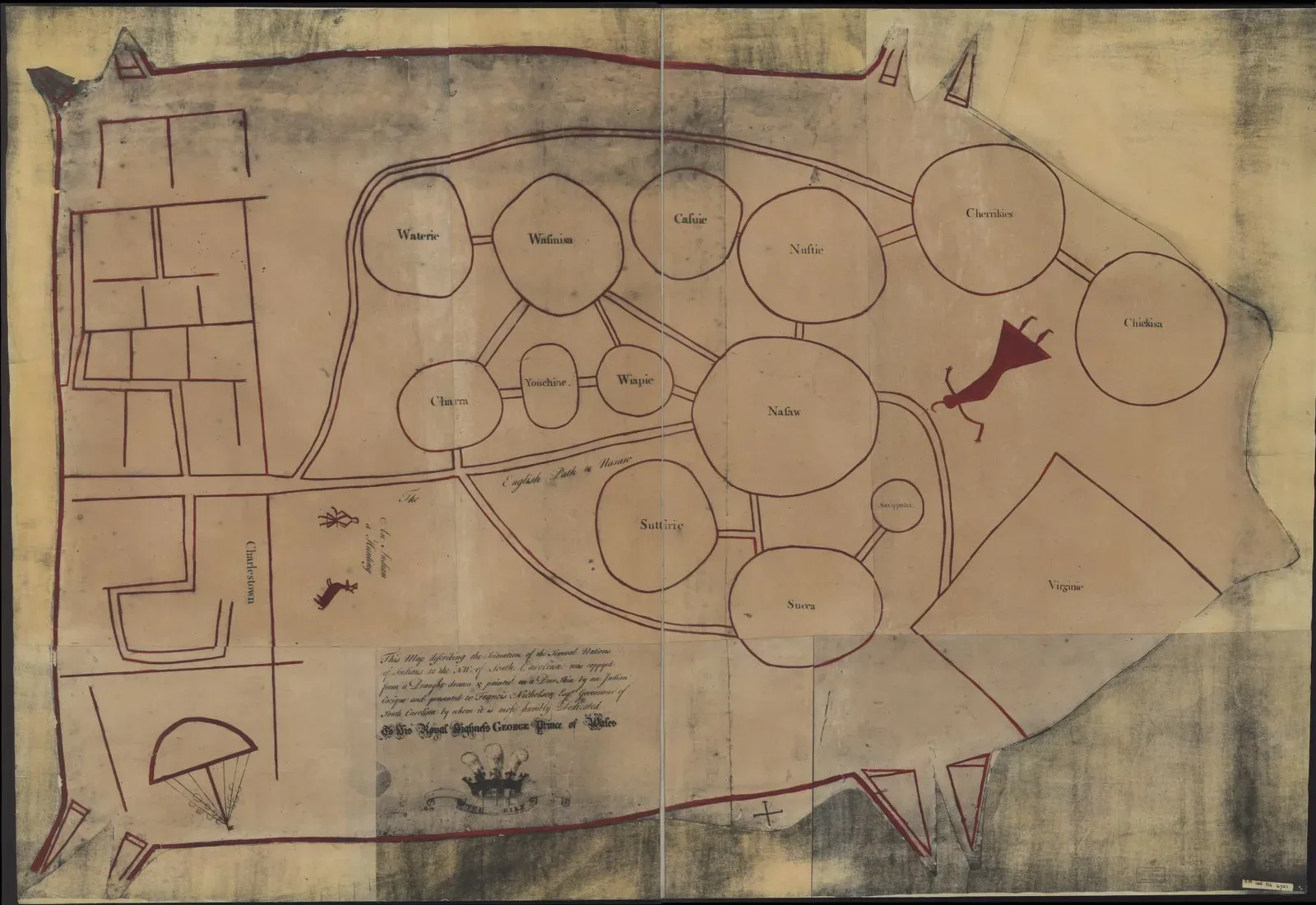
When the Lords Proprietors sent their first settlers to Charles Town in 1670, firearms weren't optional equipment — they were survival gear. The Carolina colony sat at the edge of competing Spanish, French, and Native American territorial claims, and the settlers who came largely from Barbados arrived understanding that their security depended on what they could field, not what a distant Crown could promise to send.
The Yamasee War's Impact
The Yamasee War of 1715–1717 put that reality into sharp focus. A confederation of Native American tribes, including the Yamasee, Creek, and elements of the Cherokee, launched coordinated attacks against Carolina settlements in what became one of the deadliest conflicts per capita in colonial American history. The colonial government scrambled to arm and organize militia, relying heavily on frontier settlers who already kept firearms as a matter of daily life.
The war reshaped how the colony thought about arms — not as a luxury or a privilege, but as a civic obligation. Militia service and firearm ownership became intertwined with the colony's political identity almost from the start.
Timeline showing how external threats and internal fears shaped South Carolina's early firearms laws
| Event | Year | Significance |
|---|---|---|
| Carolina Colony Founded | 1670 | First settlers arrive armed; firearms essential for survival |
| Militia Law Enacted | 1712 | Required white males to arm themselves and muster |
| Yamasee War | 1715-1717 | Deadliest per capita colonial conflict; reshaped arms policy |
| Stono Rebellion | 1739 | Enslaved people seized firearms; marched toward Florida |
| Negro Act | 1740 | Race-based firearms prohibition in response to Stono |
Racial Control Through Arms Laws
The colonial government's 1712 militia law required white male residents to arm themselves and muster for service. This wasn't unusual for the era — most colonies had similar statutes — but South Carolina's version was driven hard by geography and demographics. By 1720, enslaved Africans outnumbered white colonists by a significant margin, and the specter of armed revolt shaped policy as much as external threats.
The Stono Rebellion of 1739 — in which a group of enslaved people seized firearms from a firearms shop near the Stono River south of Charles Town and marched toward Spanish Florida — crystallized the colony's anxiety into law. The Negro Act of 1740, passed in direct response to Stono, prohibited enslaved people from owning or using firearms under virtually all circumstances. That legislation cast a long shadow, establishing a legal precedent for race-based firearms restriction that would persist through the antebellum period and influence post-Civil War policy.
The Scots-Irish settlers who pushed into the Carolina backcountry throughout the mid-18th century brought a different firearms culture — one rooted in subsistence hunting, frontier defense, and deep suspicion of any government that might try to disarm them. These were not plantation men. They were small farmers and hunters in the Piedmont and the Blue Ridge foothills, and they kept their guns the way they kept their tools: close and maintained. That backcountry gun culture would prove decisive when the Revolution came.
Revolutionary Era: The Most Fought-Over Stateedit
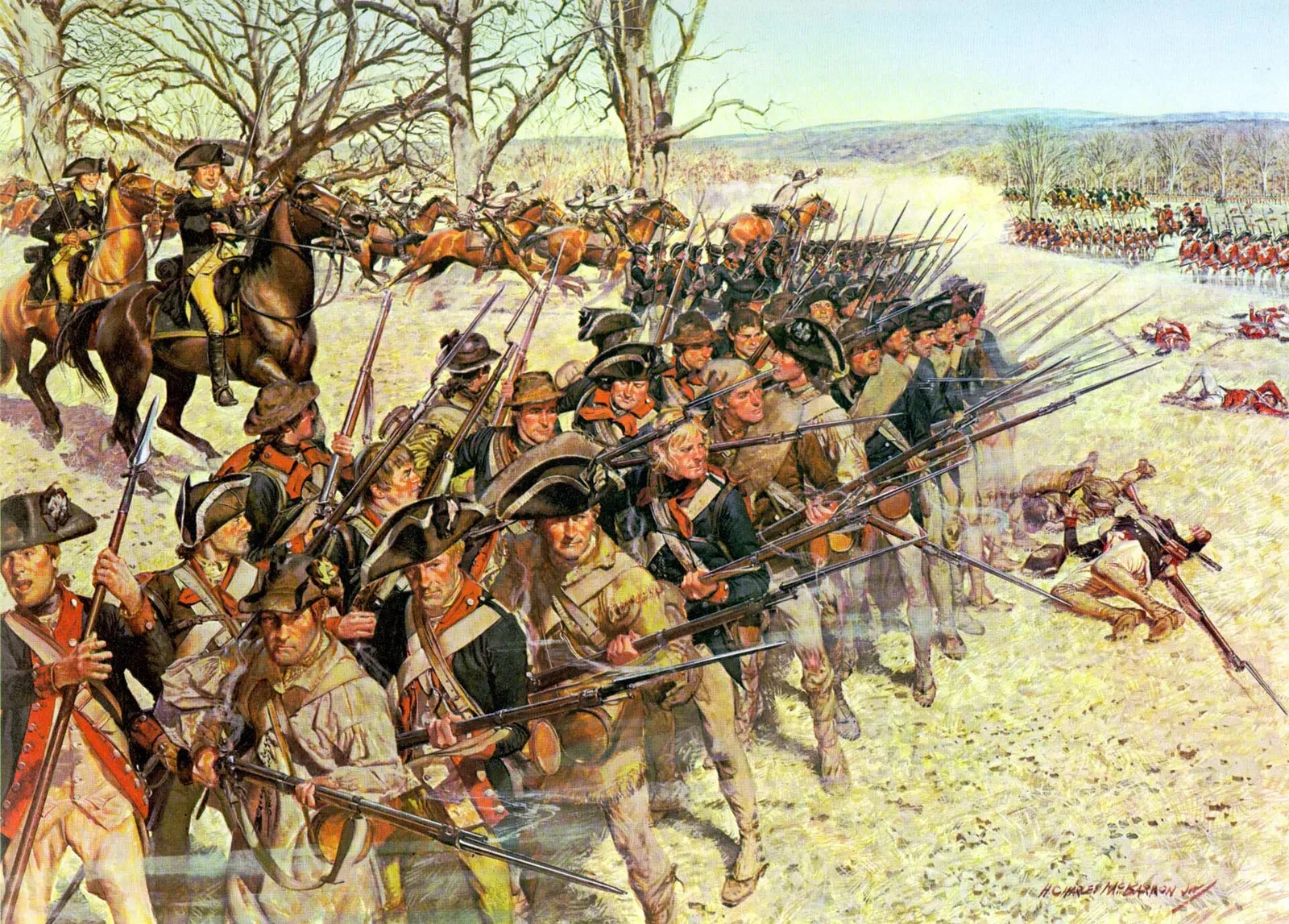
More than 200 battles and skirmishes were fought in South Carolina during the American Revolutionary War — more than in any other colony. That number alone tells you something about how central firearms and militia were to the state's founding experience.
Charleston Harbor & Early Victories
The war's significance for South Carolina started early and stayed brutal. Fort Moultrie, the palmetto-log fortification on Sullivan's Island at the entrance to Charleston Harbor, became the first major Patriot victory in the South on June 28, 1776. British warships under Sir Peter Parker bombarded the unfinished fort for most of the day.
The palmetto logs absorbed the British cannonballs rather than splintering — a quirk of the wood's spongy fiber — while the fort's cannons returned fire with enough accuracy to damage several ships and force the fleet to withdraw. The palmetto became the state's symbol specifically because of that fight, and the cannons that held the line at Moultrie are part of South Carolina's martial foundation.
| Battle | Date | Location | Outcome | Firearms Significance |
|---|---|---|---|---|
| Fort Moultrie | June 28, 1776 | Sullivan's Island | Patriot Victory | First major Southern victory; palmetto logs vs. cannon |
| Kings Mountain | Oct 7, 1780 | NC/SC Border | Patriot Victory | Militia riflemen destroy loyalist force |
| Cowpens | Jan 17, 1781 | Near Gaffney, SC | Patriot Victory | Double envelopment using militia riflemen |
Christopher Gadsden — who had already represented South Carolina at the Stamp Act Congress in 1765 — designed the Gadsden Flag during the Revolution, a rattlesnake on yellow ground with the words "Don't Tread on Me." That flag is still ubiquitous at gun shows and shooting ranges across the state. It wasn't designed as a gun-rights symbol specifically, but it has become one in the modern era for obvious reasons.
Backcountry Militia Warfare
The backcountry Scots-Irish militiamen proved their worth at Kings Mountain on October 7, 1780 — one of the most decisive engagements of the entire war. A force of Patriot militia — mostly from the Carolinas and Virginia, none of them regular Continental soldiers — surrounded and destroyed British Major Patrick Ferguson's loyalist force on a wooded hilltop straddling the North and South Carolina border. Ferguson, the only British regular in the fight, was killed by multiple rifle shots.
The victory shattered British General Cornwallis's plans for a northern push and is credited by most historians with turning the tide in the Southern theater.
These were riflemen and frontiersmen, not trained infantry — and they won with marksmanship and tactical initiative.
The Battle of Cowpens on January 17, 1781 followed three months later, also in the South Carolina Upstate near present-day Gaffney. Brigadier General Daniel Morgan used a deliberate double-envelopment tactic against Lieutenant Colonel Banastre Tarleton's cavalry and infantry, incorporating militia riflemen in a planned feigned retreat that drew Tarleton's troops into a killing zone.
How South Carolina militia victories created the strategic conditions for British defeat
Cowpens is still taught at military academies as a near-perfect tactical engagement. Morgan lost 12 killed and 60 wounded. Tarleton lost over 800 killed, wounded, or captured. The rifles and muskets of South Carolina's militia made it happen.
Constitutional Framework
Four South Carolinians — John Rutledge, Charles Pinckney, Charles Cotesworth Pinckney, and Pierce Butler — attended the Constitutional Convention in Philadelphia in 1787. Butler is often credited with contributing to what became the Second Amendment's framework, though the historical record on specific authorship is disputed. South Carolina ratified the U.S. Constitution on May 23, 1788, becoming the eighth state to do so.
19th Century: Slavery, Secession & the First Shots of Civil Waredit
Antebellum Firearms Control
The antebellum period in South Carolina saw the state's firearms laws become explicitly and systematically weaponized as tools of racial control. Following the Stono Rebellion precedent and the additional panic caused by the Denmark Vesey conspiracy of 1822 — a planned but thwarted slave uprising in Charleston — the General Assembly tightened restrictions on Black gun ownership to near-total prohibition.
Free Black residents could not carry firearms without explicit written permission from white authorities. Enslaved people were flatly prohibited. These laws were enforced not by a formal police apparatus but by the slave patrol system — one of the earliest organized paramilitary law enforcement structures in American history — whose members were armed and whose primary job was controlling movement and suppressing armed resistance.
The progression of race-based firearms control from antebellum through Reconstruction
John C. Calhoun, South Carolina's dominant political figure through the 1820s–1840s, framed states' rights arguments that would eventually justify secession, and those arguments explicitly included the right of states to protect the institution of slavery from federal interference. Calhoun's nullification doctrine — the idea that a state could void federal law within its borders — prefigured the secession crisis and kept South Carolina in a perpetual state of political tension with Washington.
Secession & Fort Sumter
By December 20, 1860, South Carolina had had enough. It became the first state to secede from the Union, four days after Abraham Lincoln's election. Within weeks, Confederate forces under General P.G.T. Beauregard surrounded Fort Sumter in Charleston Harbor, where a small U.S. Army garrison under Major Robert Anderson held out.
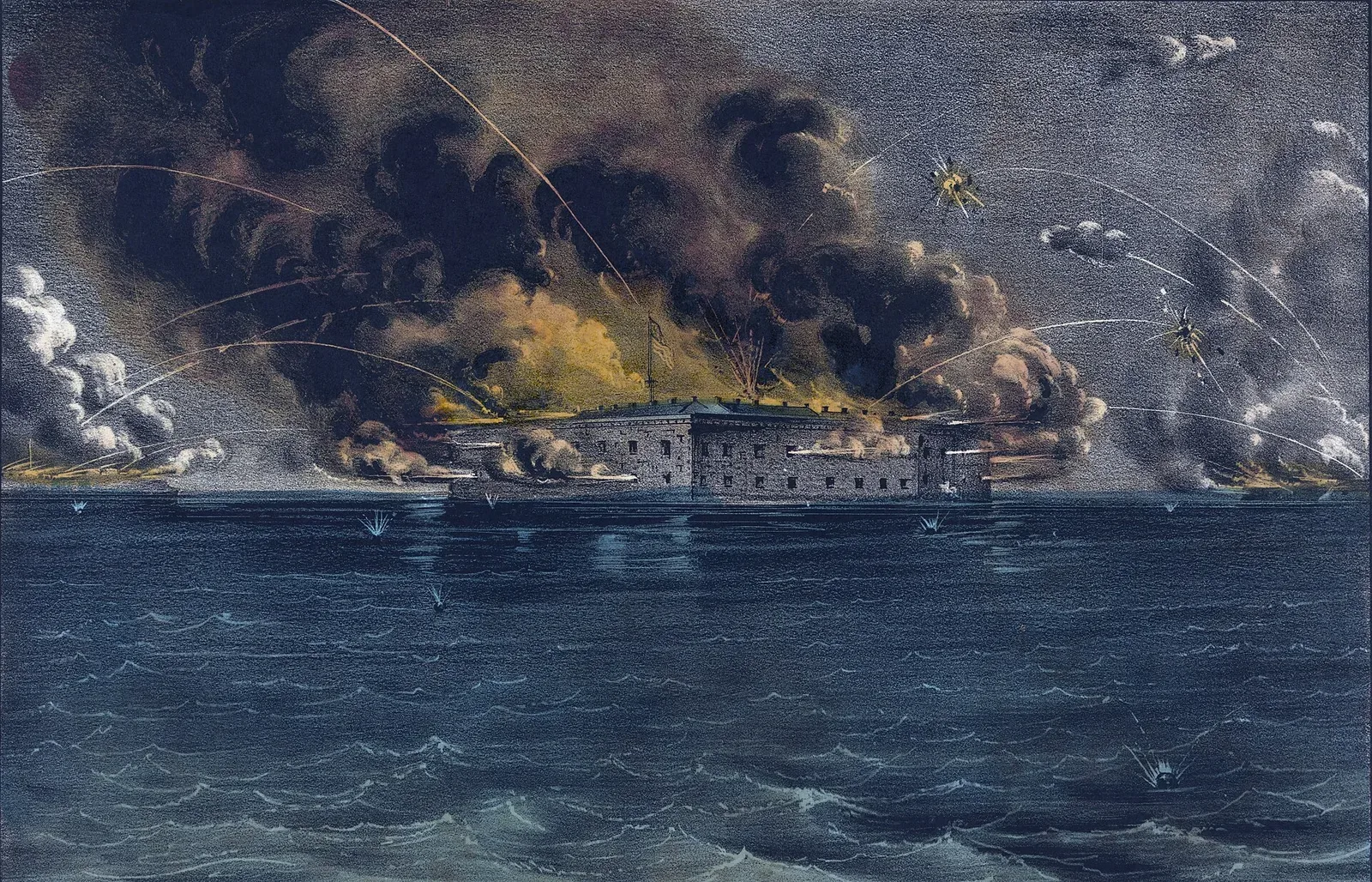
At 4:30 a.m. on April 12, 1861, Confederate artillery opened fire on Fort Sumter. The first shot is generally credited to a signal gun fired from Fort Johnson. The bombardment continued for 34 hours. Anderson surrendered on April 13. No U.S. soldiers were killed in the bombardment itself, though two died in an accidental explosion during the evacuation. The Civil War had begun — and it began in South Carolina, with South Carolina guns.
The artillery pieces used in that engagement included a mix of smoothbore and rifled cannon. The Parrott rifle — a cast-iron rifled cannon developed by Robert Parker Parrott — would become one of the defining weapons of the entire war, used by both Union and Confederate forces. Union forces used Parrott rifles extensively during the prolonged siege of Charleston from 1863–1865, attempting to reduce Confederate fortifications including Fort Sumter itself. The fort absorbed enormous punishment and remained in Confederate hands until the city fell in February 1865.
| Artillery Type | Description | Role at Fort Sumter |
|---|---|---|
| Signal Gun | Smoothbore cannon | Fired first shot from Fort Johnson |
| Parrott Rifle | Cast-iron rifled cannon | Used extensively in Charleston siege |
| Smoothbore Cannon | Traditional artillery | Mixed with rifled pieces in bombardment |
Reconstruction Violence
The Citadel, founded in Charleston in 1842 as the South Carolina Military Academy, supplied officers to the Confederate cause and its cadets fired some of the earliest shots of the conflict when they turned back a Union supply ship, the Star of the West, attempting to resupply Fort Sumter in January 1861 — weeks before the formal bombardment. Those shots, fired from a Morris Island battery manned by Citadel cadets, may technically be the first hostile fire of the Civil War.
During Reconstruction, the federal government briefly armed Black militia units in South Carolina, which white Democrats viewed as an existential threat. The Hamburg Massacre of July 1876 — in which white paramilitary groups known as Red Shirts attacked a Black militia company in Hamburg, South Carolina, killing five Black militiamen — was one of the bloodiest instances of Reconstruction-era political violence in the South. The Red Shirts used firearms to intimidate Black voters and suppress Republican political organization throughout the 1876 election cycle, which effectively ended Reconstruction in the state and returned Democrats to power.
20th Century: Wars, Industry & Regulationedit
Military Infrastructure
South Carolina's 20th-century firearms history is dominated by two threads: the state's massive contribution to American military manpower and the ongoing legal contortions around civilian gun ownership.
Camp Jackson — renamed Fort Jackson in 1917 — was established in Columbia during World War I as one of the Army's largest training installations. It remains the Army's primary basic combat training post today, processing a significant share of all Army enlisted personnel. Parris Island, the Marine Corps Recruit Depot on the Sea Islands, has been training Marines since 1915 and is where most East Coast Marine recruits go through boot camp. Shaw Air Force Base near Sumter dates to 1941 and became a major tactical air command installation. Charleston Naval Base — now Joint Base Charleston — was a critical facility for Atlantic operations through both World Wars and the Cold War.
| Installation | Established | Branch | Current Role |
|---|---|---|---|
| Fort Jackson | 1917 | Army | Primary basic combat training |
| Parris Island | 1915 | Marine Corps | East Coast recruit training |
| Shaw AFB | 1941 | Air Force | Tactical air command |
| Charleston Naval Base | WWI era | Navy/Joint | Joint Base Charleston |
That military presence created a state where firearm familiarity was genuinely generational. Families who had a son go through Parris Island, a daughter who trained at Fort Jackson, a grandfather who shipped out through Charleston — that's a large fraction of the state's population across three generations. The cultural familiarity with firearms that you see in South Carolina today isn't just hunting tradition. It's also a military pipeline that runs right through the middle of the state.
Federal Compliance Era
On the legislative side, South Carolina enacted the South Carolina Pistol Act of 1975 (codified at S.C. Code § 23-31-140), which established a licensing scheme for carrying pistols and set baseline requirements for handgun purchase. The state also maintained a "Sawed-Off Shotgun" Act and various provisions restricting certain weapons configurations in line with federal law following the National Firearms Act of 1934 and the Gun Control Act of 1968.
The 1968 federal Gun Control Act hit South Carolina the same way it hit every other state — creating the federal dealer licensing system, the prohibited persons framework, and the NICS predecessor requirements. The state largely fell into compliance without significant political drama, though the rural Upstate remained a place where informal transfers between neighbors were simply part of life and federal paperwork was viewed as an abstraction.
Civil Rights & Armed Self-Defense
The Briggs v. Elliott litigation — the South Carolina precursor to Brown v. Board of Education — wasn't about guns, but the civil rights movement that followed had direct firearms implications. Black residents in South Carolina faced ongoing informal and formal pressure regarding firearm ownership through the Jim Crow era. Medgar Evers had already demonstrated in Mississippi that civil rights workers needed to be armed to survive; South Carolina activists faced the same calculus.
The Deacons for Defense and Justice, though based primarily in Louisiana and Mississippi, had connections to South Carolina activists who understood that armed self-defense was part of the civil rights toolkit whether the national organizations wanted to acknowledge it publicly or not.
Modern Era (2000–Present)edit
The CWP System Era
South Carolina's modern firearms landscape is shaped by a Republican supermajority in the General Assembly that has moved the state's gun laws consistently toward fewer restrictions since the early 2000s.
The state enacted a concealed weapons permit (CWP) system under S.C. Code § 23-31-210 et seq., which allowed law-abiding residents to carry concealed handguns after completing training and passing a background check. For roughly two decades, that system was the operational framework. The CWP required an 8-hour training course, a background check through SLED (the South Carolina Law Enforcement Division), and a fee.
Constitutional Carry Transition
In March 2023, Governor Henry McMaster signed H. 3594 into law, making South Carolina a constitutional carry state. The law, effective March 7, 2023, eliminated the permit requirement to carry a concealed handgun for those who are otherwise legally eligible to possess a firearm. South Carolina became the 29th state to enact some form of permitless carry.
The CWP system remains in place for those who want reciprocity recognition in other states — a practical consideration for residents who travel. The debate over that bill was contentious within the state. Law enforcement leadership — including several sheriffs and the South Carolina Sheriffs' Association — expressed concern that permitless carry would remove the training requirement and make it harder to distinguish lawful carriers from criminal actors during traffic stops and other encounters.
Supporters argued that training should be encouraged but not mandated as a condition of exercising a constitutional right. The bill passed largely along party lines.
Ongoing Cultural Factors
The 2015 Emanuel AME Church shooting in Charleston — in which nine people were killed by a gunman during a Bible study — had significant political impact on the national gun debate but less immediate legislative impact in South Carolina itself. The shooter had obtained a firearm through a background check loophole caused by an incomplete criminal record submission — a failure at the federal level, not the state level. The tragedy did accelerate the removal of the Confederate battle flag from the State House grounds, but the General Assembly did not enact new firearms restrictions in its aftermath.
South Carolina does not have a red flag law (Extreme Risk Protection Order statute) as of early 2026. Multiple attempts to introduce such legislation have failed in committee. The state also does not have a waiting period for handgun purchases beyond the federal background check processing time.
Hunting remains a major part of the state's firearms culture. South Carolina's Department of Natural Resources (SCDNR) manages one of the larger white-tailed deer populations in the Southeast, and the state's hunting license revenues fund significant conservation work. The Lowcountry and Pee Dee regions in particular have deep waterfowl and turkey hunting traditions. Firearms retailers in Columbia, Greenville, Spartanburg, and the Myrtle Beach area report consistent year-over-year sales driven by both rural hunting demand and suburban self-defense purchases.
Notable Figures & Manufacturersedit
Christopher Gadsden (1724–1805) designed the Gadsden Flag during the Revolution and served as a Continental Army brigadier general. His symbol remains one of the most recognized in American gun-rights iconography, though its original context was revolutionary resistance rather than Second Amendment advocacy specifically.
Andrew Pickens (1739–1817) was one of the most effective militia commanders of the Revolutionary War in the South, leading forces at Cowpens and directing frontier operations against Cherokee allies of the British. Pickens County in the Upstate is named for him.
Wade Hampton III (1818–1902) commanded Confederate cavalry during the Civil War and later served as Governor and U.S. Senator from South Carolina. His Red Shirt paramilitary campaign in 1876 used organized armed intimidation to end Reconstruction. His legacy is contested — he's both a Confederate Lost Cause figure and the architect of violent voter suppression.
The Citadel in Charleston has been producing military officers since 1842 and remains one of the country's six senior military colleges. Its cadets fired what may be the first shots of the Civil War at the Star of the West in January 1861. The institution's culture is inseparable from South Carolina's martial identity.
On the manufacturing side, South Carolina is not historically a major firearms manufacturing state — it never had the industrial infrastructure of Connecticut's gun valley or the Springfield Armory tradition. However, the state hosts defense contractors and military-adjacent manufacturers tied to its installation network. General Dynamics Ordnance and Tactical Systems has maintained operations connected to the Charleston area. The Florence and Sumter areas have seen light industrial development, though no major firearms manufacturer has established primary production in the state.
Palmetto State Armory (PSA), headquartered in Columbia, South Carolina, deserves direct mention as the state's most significant modern firearms manufacturer and retailer. Founded in 2008, PSA grew into one of the highest-volume AR-15 component and complete rifle manufacturers in the country, known primarily for making AR-pattern rifles and parts accessible at price points well below the traditional market. PSA's online and retail presence made it a major player nationally, and its Columbia headquarters and retail locations are genuine economic and cultural fixtures in the state's gun community. PSA has expanded into pistol manufacturing, AK-pattern rifles, and various other product lines. Whether you agree with their quality tier or not, they moved a lot of guns into a lot of hands, and they did it out of South Carolina.
Current Legal Landscapeedit
South Carolina's current firearms laws reflect a state that has moved toward fewer restrictions over the past two decades, while retaining a patchwork of older statutes that create some complexity for everyday gun owners.
Possession: No state permit required to purchase or possess rifles, shotguns, or handguns. Standard federal prohibitions apply (felons, domestic violence misdemeanor convictions, adjudicated mental defectives, etc.). South Carolina does not add state-level categorical prohibitions beyond federal law for most common firearms.
Carry Laws
Carry: Constitutional carry is in effect as of March 2023. Open carry is also permitted. The CWP system remains available for those seeking reciprocity in other states. South Carolina has reciprocity agreements with numerous other states for CWP holders.
Prohibited Locations
Even under constitutional carry, firearms are prohibited in certain locations:
- Law enforcement offices and detention facilities
- Courthouses and courtrooms
- Polling places on election days
- School buildings and grounds (S.C. Code § 16-23-430)
- Places of worship, unless the governing body permits carry
- Hospitals
- Any business posting a compliant "No Concealable Weapons" sign
The church carry provision is worth noting specifically. Under S.C. Code § 23-31-232, churches and other religious establishments can authorize concealed carry on their premises. This became a subject of renewed discussion after the 2015 Emanuel AME shooting, with some congregations explicitly training and arming security volunteers.
| Location Type | Carry Status | Legal Authority |
|---|---|---|
| Public Streets | ✅ Permitted | Constitutional carry |
| Churches | ⚖️ With Permission | S.C. Code § 23-31-232 |
| Schools | ❌ Prohibited | S.C. Code § 16-23-430 |
| Courthouses | ❌ Prohibited | State law |
| Posted Businesses | ❌ Prohibited | Compliant signage |
NFA & Preemption
NFA items: South Carolina is a shall-issue state for NFA purposes — meaning residents can own suppressors, short-barreled rifles, short-barreled shotguns, and machine guns (pre-1986 transferable) in compliance with federal NFA procedures. No additional state permit or registration is required beyond the federal process. Suppressor ownership has grown steadily in the state, driven partly by hunting applications (South Carolina allows suppressor use for hunting) and partly by general market trends.
State preemption: South Carolina has statewide preemption under S.C. Code § 23-31-510, which prohibits local governments from enacting firearms ordinances more restrictive than state law. Charleston and Columbia cannot create their own gun regulations. This is a hard preemption statute — local governments that violate it can face legal consequences.
SLED (South Carolina Law Enforcement Division) administers the CWP program for those who choose to obtain a permit. SLED also handles the state's criminal background check infrastructure and serves as the point of contact for NICS in South Carolina.
One persistent complexity is S.C. Code § 16-23-20, which lists specific locations and circumstances where carrying a concealable weapon remains prohibited. The 2023 constitutional carry bill modified but did not eliminate this framework, and some legal ambiguity around the interaction of the new permitless carry provisions with older statutory language has created questions that will likely take court decisions to fully resolve.
The BGC Takeedit
South Carolina is a gun state, and it's been a gun state since before it was a state.
The Revolutionary War militia tradition, the Civil War's defining role in the state's identity, the military installation network running through Fort Jackson and Parris Island — all of that creates a baseline where firearm familiarity is genuinely generational rather than a recent political affectation.
The 2023 constitutional carry bill was years in the making and reflects where the Republican supermajority was always heading. The law enforcement opposition was real and not entirely without merit — the training requirement argument has some practical weight — but in a state where the backcountry tradition of keeping a gun without asking anyone's permission stretches back to Scots-Irish settlement, the political outcome was predictable.
Palmetto State Armory is worth thinking about as a cultural marker. PSA built a business making AR-platform rifles affordable to people who couldn't spend $1,200 on a quality build. You can argue about where they land on the quality spectrum, but the effect was to put more ARs in more hands across a broad economic range — in South Carolina and nationally. That's consistent with the state's general disposition toward access over restriction.
The elephant in the room is the racial history. South Carolina wrote some of the most explicitly race-based firearms laws in American history. The Stono Rebellion response, the Negro Act of 1740, the antebellum prohibition on Black gun ownership, the Red Shirt paramilitary terror of 1876 — all of it used legal and extralegal firearms policy as a tool of racial control. That history is real, it's documented, and it's directly relevant to modern Second Amendment debates about who gets to exercise the right and under what conditions. South Carolina doesn't engage with that history much in its current political discourse, but it's there.
For someone moving to South Carolina or visiting: the gun culture is friendly, the ranges are well-kept, and hunting access is genuine. The Lowcountry and the Upstate have different flavors — coastal South Carolina skews wealthier and more politically mixed, while the Upstate is about as solidly gun-positive as anywhere in the country. The laws are permissive by national standards. If you're a gun owner, South Carolina is a state that will mostly leave you alone.
Referencesedit
- South Carolina Code of Laws, Title 16, Chapter 23 (Offenses Involving Weapons)
- South Carolina Code of Laws, Title 23, Chapter 31 (Firearms)
- History of South Carolina, Wikipedia, multiple contributors
- NRA-ILA, "South Carolina State Gun Laws and Regulations Explained," https://www.nraila.org/gun-laws/state-gun-laws/south-carolina/
- National Park Service, "The Historic Guns for Forts Sumter and Moultrie," NPS History Series, https://npshistory.com/publications/fosu/guns.pdf
- PBS, "Guns of Revolution: Fort Moultrie and Fort Sumter" (1988), Season 2
- South Carolina State Library, "South Carolina History: History and Culture," https://guides.statelibrary.sc.gov/sc-information/history-culture
- The Trace, "A Timeline of American Gun History," https://www.thetrace.org/2025/06/gun-history-america-timeline-supreme-court/
- Charleston County Public Library, "Civil War Material in the South Carolina Room"
- South Carolina Law Enforcement Division (SLED), CWP Program Documentation
- South Carolina H. 3594, "Constitutional Carry Act" (2023)
- Howe, George, Mount Hope: A New England Chronicle (background on colonial Carolina militia)
- Edgar, Walter, South Carolina: A History (University of South Carolina Press, 1998)
- Bass, Robert D. and Chesney, Charles, The Green Dragoon: The Lives of Banastre Tarleton and Mary Robinson
- Buchanan, John, The Road to Guilford Courthouse: The American Revolution in the Carolinas (Wiley, 1997)
Last Updated: February 24, 2026
- Quail Creek Plantation(Okeechobee, FL)
- 2aHawaii(Honolulu, HI)
- Boston Firearms(Everett, MA)
- Safeshoot(Kingston, NY)
Loading comments...