State Details
Maine

Overview | |
|---|---|
State | Maine (ME) |
Capital | Augusta |
Statehood | 1820 |
Population | 1,395,722 |
Gun Ownership | 46.8% |
Active FFLs | 335 |
Carry Laws | |
Constitutional Carry | Yes (2015) |
Open Carry | Yes |
CCW Permit Available | Yes |
Permit Reciprocity | 30+ states |
Self-Defense | |
Castle Doctrine | Yes |
Stand Your Ground | No |
Duty to Retreat | Yes |
Regulations | |
State Preemption | Yes |
Red Flag / ERPO | No |
Waiting Period | None |
Universal BGC | No |
NFA Items | Yes |
Assault Weapons Ban | No |
Magazine Limit | None |
Key Legislation | |
| |
Notable Manufacturers | |
| |
Maine Firearms History: From Muskets on the Frontier to Constitutional Carry
Reference article
From The Boise Gun Club Handbook
Overviewedit
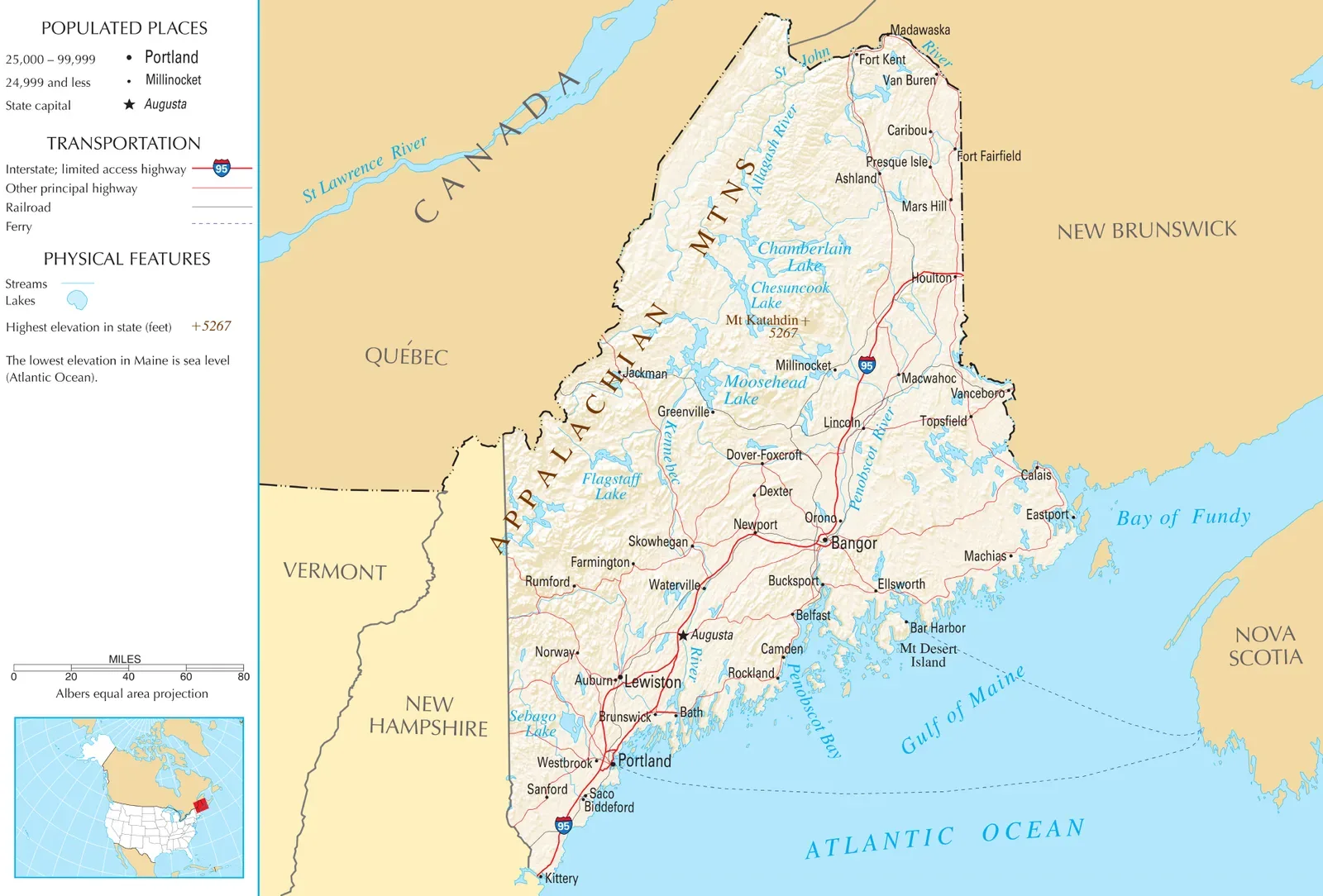
Maine is a state where firearms have been woven into everyday life since the first European settlements in the early 1600s. The relationship between Mainers and their guns is not primarily political — it is practical, rooted in a rural landscape where hunting feeds families, where the nearest law enforcement might be thirty miles away, and where self-reliance is simply how things work.
The relationship between Mainers and their guns is not primarily political — it is practical, rooted in a rural landscape where hunting feeds families and self-reliance is simply how things work.
The woods are thick, the winters are long, and the tradition of putting meat in the freezer with a rifle runs across every demographic line the state has.
That culture produces some politically distinctive outcomes. Maine has a constitution that protects the right to bear arms with some of the strongest language in the country. The state adopted constitutional carry in 2015. And yet it is not a red state in the conventional sense.
- Article I, Section 16: "Every citizen has a right to keep and bear arms and this right shall never be questioned."
- Constitutional carry adopted in 2015
- History of moderate Republicans and centrist Democrats
- Cross-party reluctance to restrict gun laws
Maine has sent moderate Republicans and centrist Democrats to Augusta for generations, and many of those legislators — whatever their party — have historically been reluctant to touch gun laws.
Then came October 25, 2023, and Lewiston. The deadliest mass shooting in Maine's history killed 18 people at Sparetime Recreation bowling alley and Schemengees Bar & Grille. The political calculus shifted, at least partially. The 2024 legislative session produced the most significant gun law changes Maine had seen in decades. The debate that followed — about background checks, waiting periods, and Maine's unusual yellow flag law — exposed exactly how complicated the state's relationship with firearms really is.
This is not a state with a simple story. It is a state where a lifelong hunter and a gun control advocate might both be registered Democrats, where constitutional carry passed with broad support, and where the aftermath of a mass shooting produced reforms that even some gun rights advocates acknowledged were reasonable while gun control groups said did not go far enough.
Colonial & Frontier Eraedit
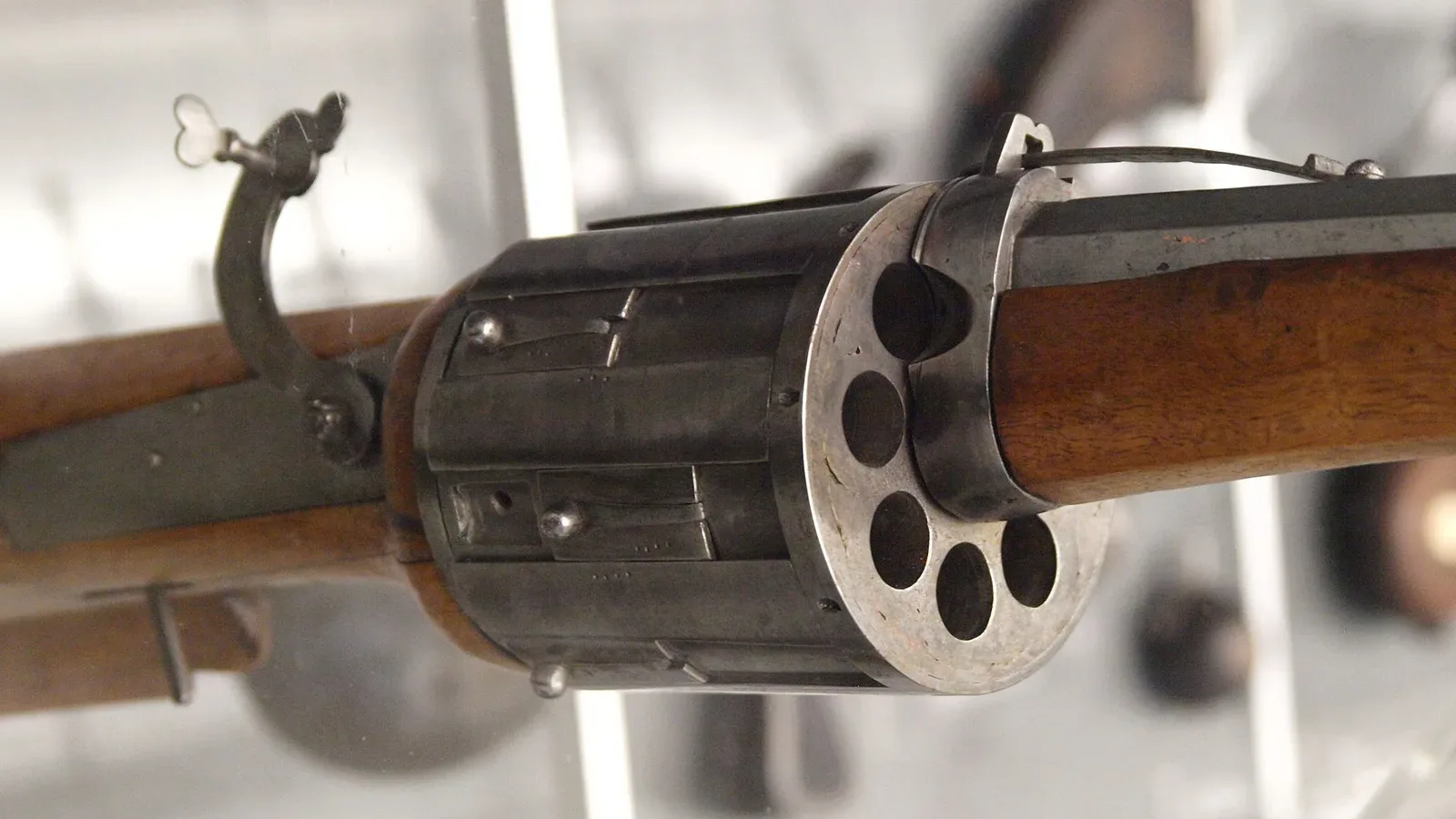
The land that would become Maine was contested ground from the moment Europeans arrived, and firearms were central to every phase of that contest. English settlements along the coast began in earnest in the early 1600s — the Popham Colony was established at the mouth of the Kennebec River in 1607, the same year as Jamestown, though it lasted only about fourteen months before the settlers returned to England.
What those settlers brought with them, among other things, were matchlock and early flintlock firearms that were as much a survival tool as a weapon of war.
Timeline of major conflicts that shaped Maine's firearms culture during the colonial period
Early Settlement Conflicts
The region's early colonial history was defined by a series of conflicts with the Wabanaki Confederacy, the alliance of Abenaki-speaking peoples who had inhabited the area for thousands of years. The Wabanaki — including the:
- Penobscot Nation
- Passamaquoddy Nation
- Maliseet Nation
- Abenaki Nation
— were skilled fighters who adapted quickly to European firearms. By the mid-1600s, the fur trade had introduced guns into Wabanaki material culture, and indigenous warriors were using them effectively in the same wars they had long fought with bows and hatchets.
King Philip's War (1675–1678) hit Maine settlements particularly hard. Communities at Falmouth (present-day Portland), York, Scarborough, and Wells were attacked, burned, and in some cases abandoned. The settlements that survived did so largely because residents were armed and could mount at least a defensive response. Garrison houses — fortified structures where settlers would gather during raids — became a feature of colonial Maine life, and maintaining firearms and powder was not a legal nicety but a condition of survival.
| Conflict | Years | Impact on Maine Settlements | Firearms Technology |
|---|---|---|---|
| King Philip's War | 1675-1678 | Falmouth, York, Scarborough attacked/burned | Matchlocks, early flintlocks |
| Dummer's War | 1722-1725 | Ranger companies formed, scalp hunting | Long rifles, fowling pieces |
| French & Indian War | 1754-1763 | Maine frontiersmen in campaigns | Improved flintlocks, military muskets |
The Dummer's War (1722–1725), sometimes called Father Rale's War after the French Jesuit missionary Sébastien Rale who ministered to Abenaki communities, continued the pattern of raids and reprisals across the Maine frontier. English colonists and Massachusetts Bay authorities responded partly by organizing ranger companies — small, mobile units that operated in the woods with the kind of firearms and tactics that the terrain demanded. Lovewell's Fight in May 1725, near present-day Fryeburg, was one of the most famous engagements of this era: Captain John Lovewell and his company of scalp hunters were ambushed by Pigwacket Abenaki warriors led by Paugus, and both sides took heavy casualties in a daylong firefight.
By the time of the French and Indian War (1754–1763), Maine's frontier had been hardened by a century of intermittent conflict. Maine men fought in the campaigns that pushed French influence out of North America, and the skills they brought home — woodcraft, marksmanship with long rifles and fowling pieces, the ability to operate independently in difficult terrain — became part of the regional character. The District of Maine was at this point still part of Massachusetts, but its inhabitants were already developing a distinct identity shaped in no small part by the firearms culture those decades of frontier conflict had produced.
Revolutionary War Era
During the American Revolution, Maine contributed soldiers to the Continental cause and saw action on its own coast. The Battle of Machias in June 1775 was one of the first naval engagements of the Revolution — a group of armed Maine colonists captured the British armed schooner HMS Margaretta using small arms, a boarding party, and considerable audacity. Jeremiah O'Brien, who led the attack, became one of Maine's early heroes. The British retaliated by burning Falmouth (Portland) to the ground in October 1775 under Captain Henry Mowat — an act that hardened sentiment in the region against the Crown.
19th Century: Statehood & Expansionedit
Statehood and Constitutional Foundation
Maine achieved statehood on March 15, 1820, as part of the Missouri Compromise — Missouri came in as a slave state, Maine as a free state. The Constitution of Maine, ratified that year, included Article I, Section 16, which guaranteed the right to keep and bear arms in terms that were, and remain, among the broadest of any state constitution.
Unlike the Second Amendment's preamble about a 'well regulated Militia,' Maine's formulation is direct: the right shall never be questioned. No militia language, no qualifications.
The new state's economy depended heavily on activities that required firearms. Deer, moose, and bear hunting fed families across the vast interior. The lumber industry, which drove Maine's 19th-century economy, put workers deep into the woods for months at a time, and those workers carried rifles and shotguns for both protection and subsistence. The fishing industry along the coast was less firearms-dependent, but even there, guns were household fixtures.
Civil War Service
The Civil War drew Maine deeply in. Maine raised 32 regiments of infantry, along with cavalry, artillery, and sharpshooter units, contributing roughly 70,000 men to the Union cause — a remarkable number for a state with fewer than 630,000 residents. The state's casualties were proportionally severe: approximately 7,300 Mainers died in the war from combat, disease, and other causes.
Joshua Lawrence Chamberlain, a professor at Bowdoin College in Brunswick who became one of the most celebrated officers of the war, commanded the 20th Maine Infantry Regiment at Little Round Top during the Battle of Gettysburg on July 2, 1863. When his regiment ran low on ammunition on the extreme left flank of the Union line, Chamberlain ordered a bayonet charge rather than retreat — a decision that held the flank and has been described as one of the pivotal moments of the battle. He survived the war, served four terms as Governor of Maine, and later became president of Bowdoin. His story is inseparable from the state's identity.
The 1st Maine Heavy Artillery suffered the highest casualties of any Union regiment in a single engagement when it was decimated at the Battle of Petersburg on June 18, 1864, losing 632 men killed, wounded, or missing in about thirty minutes of fighting. That loss — more than any other regiment on either side in any single engagement of the war — left a mark on communities across the state that had sent those men.
| Unit | Type | Notable Action | Casualties |
|---|---|---|---|
| 20th Maine Infantry | Infantry | Little Round Top, Gettysburg | Moderate |
| 1st Maine Heavy Artillery | Artillery | Battle of Petersburg | 632 in single engagement |
| Maine Sharpshooters | Elite marksmen | Berdan's U.S. Sharpshooters | Various campaigns |
| Total Maine Forces | All units | Various Civil War theaters | ~7,300 total deaths |
Maine Sharpshooters served in Berdan's United States Sharpshooters, one of the elite marksmanship units of the Union Army. Recruitment for Berdan's required demonstrating accuracy at distances that most soldiers of the era could not match — evidence that Maine's tradition of practical marksmanship had produced men who could genuinely shoot.
Post-war, the state's firearms culture continued along the lines it had established — hunting, subsistence, rural self-reliance. The late 19th century saw the rise of rod-and-gun clubs across Maine, precursors to the sporting and conservation organizations that would become central to the state's outdoor identity in the 20th century.
20th Century: Wars, Industry & Regulationedit
World Wars and Military Service
Maine sent men to both World Wars in numbers that hit rural communities hard. The 26th Division, known as the Yankee Division, included Maine National Guard units in World War I. In World War II, Maine's industrial capacity contributed to the war effort in ways beyond just manpower: the Bath Iron Works in Bath built destroyers for the U.S. Navy throughout the war and has continued building warships ever since. While Bath Iron Works is a shipyard rather than a firearms manufacturer, it represents the broader industrial and defense tradition that runs through Maine's economy.
Brunswick Naval Air Station and other military installations meant that a significant portion of Maine's population through the mid-20th century had direct military experience — and came home with familiarity with military firearms and an unsentimental view of guns as tools.
Hunting Culture Formalized
On the hunting side, the 20th century saw Maine formalize the systems that had existed informally for generations. The Maine Department of Inland Fisheries and Wildlife developed licensing requirements, seasons, and bag limits that shaped how Mainers hunted. The moose hunt — now one of the most coveted lottery tags in the Northeast — did not exist legally until the 1980s; the moose population had been recovering from near-elimination in the late 19th century. When the Maine Moose Lottery was established, it became an institution, with tens of thousands of applicants for a limited number of tags each year.
The deer season remained the central annual event for hundreds of thousands of Mainers. At peak participation in the mid-20th century, Maine's licensed hunter population represented one of the highest per-capita rates in the nation. The first day of deer season was — and in much of the state still is — treated with a seriousness that rivals any other annual occasion.
Federal gun legislation of the 20th century — the National Firearms Act of 1934, the Gun Control Act of 1968, the Firearm Owners Protection Act of 1986, the Brady Handgun Violence Prevention Act of 1993 — applied to Maine as to every other state, but Maine's own legislative response was minimal. The state enacted few restrictions beyond what federal law required. Concealed carry permits were available and required training, but the process was not burdensome, and Maine's permit rates reflected a population that wanted to carry and generally could.
The 1990s saw a national wave of state-level firearms legislation, but Maine largely sat it out. The political culture in Augusta — shaped by rural legislators from both parties who answered to constituencies where hunting and gun ownership were simply facts of life — was not receptive to restrictions. Maine Democrats from the 2nd Congressional District (basically everything that isn't the Portland metro area) were often more conservative on gun issues than Democrats from New England's urban centers.
Modern Era (2000–Present)edit
Constitutional Carry Era
The most consequential shift in Maine's modern firearms law came in 2015, when Governor Paul LePage signed LD 652 into law, making Maine a constitutional carry state effective October 12, 2015. Under the new law, any person legally allowed to possess a firearm who is 21 or older (or 18-20 and a military member or veteran) can carry a concealed handgun without a permit. Maine joined a small group of states — at the time — that had adopted this approach; the list has grown substantially since.
Concealed carry permits did not disappear — they remain available and are still useful for Mainers who travel to states with reciprocity agreements. But carrying without one in Maine became legal. The bill passed with support from rural Democrats as well as Republicans, which tells you something about where the political center of gravity sits in the state on this issue.
The yellow flag law — unique to Maine — deserves particular attention. Maine does not have a red flag law (Extreme Risk Protection Order) in the conventional sense. Instead, it has a system in which a law enforcement officer who believes a person poses a danger to themselves or others can take them into protective custody and have them evaluated by a medical professional. If the medical professional concurs, the case goes to a judge, who can order the person to surrender their firearms. The key difference from a standard red flag law is that law enforcement, not family members or others, initiates the process, and a medical professional's assessment is part of the chain before court involvement. This structure was a deliberate political compromise in a state where the concept of a judge stripping someone's firearms without a criminal conviction or medical finding was a non-starter for a large portion of the legislature.
Maine's unique Yellow Flag law process, distinct from red flag laws in other states
The Lewiston Shooting
Then came October 25, 2023.
Robert Card, a U.S. Army Reserve sergeant who had reportedly exhibited concerning behavior earlier in 2023 — including an incident at a military training facility in New York where colleagues had documented his threats and erratic behavior — opened fire at Sparetime Recreation bowling alley and then at Schemengees Bar & Grille in Lewiston. Eighteen people were killed and thirteen wounded. Card was found dead the following day from a self-inflicted gunshot wound after a massive multi-day manhunt.
The Lewiston shooting was the deadliest mass shooting in Maine history and the deadliest in the United States in 2023. It exposed what critics called a specific failure of Maine's yellow flag system: the Army had contacted Maine State Police about Card's behavior months before the shooting, but the process for acting on that information had not resulted in any intervention. A review by a Special Commission on the Lewiston Mass Casualty Shooting produced a detailed report examining those failures.
2024 Legislative Response
The 2024 legislative session in Augusta produced the most significant package of firearms legislation Maine had seen in decades:
- Expanded background checks: Maine now requires background checks for firearms sales at gun shows and for guns advertised for sale, covering transactions that had previously proceeded without checks
- 72-hour waiting period: A waiting period for gun purchases was enacted — the first in Maine's history
- Yellow flag law reforms: The legislature strengthened the procedures for acting on law enforcement reports about potentially dangerous individuals, attempting to close the gaps the Lewiston shooting had revealed
- Lost and stolen reporting: Gun owners are now required to report lost or stolen firearms to law enforcement
What did not pass in 2024 tells the story just as much as what did:
- Full universal background checks (all private sales)
- Conventional red flag law
- Assault weapons restrictions
- High-capacity magazine limits
The political coalition that exists in Maine will tolerate reforms that address specific failures — the Lewiston investigation identified real procedural gaps — but it draws back from measures that feel like a categorical restriction on gun ownership.
| 2024 Reform | Description | Scope | Previous Status |
|---|---|---|---|
| Background Check Expansion | Required for gun shows & advertised sales | Partial coverage | Only licensed dealers |
| 72-Hour Waiting Period | First in Maine history | All purchases | No waiting period |
| Yellow Flag Improvements | Strengthened procedures | Law enforcement initiated | Existing system enhanced |
| Lost/Stolen Reporting | Required reporting to police | All gun owners | No requirement |
The debate over what Maine's gun laws should look like is ongoing and genuinely contested. It is not a simple red-state/blue-state argument. It is a state-specific negotiation between a rural gun culture that crosses party lines and an increasingly urbanized southern Maine that returned more politically familiar results in recent election cycles.
Notable Figures & Manufacturersedit
Joshua Lawrence Chamberlain remains the defining figure in Maine's military firearms history. His conduct at Little Round Top in July 1863 — holding the left flank of the Union Army with a regiment that was nearly out of ammunition — is one of the best-documented examples of small-unit tactics under fire in American military history. Chamberlain received the Medal of Honor for his actions, and he was chosen by Ulysses S. Grant to formally receive the surrender of Confederate infantry at Appomattox in April 1865.
Hiram Maxim was born in Sangerville, Maine, in 1840. He is one of the most consequential figures in the history of automatic weapons — his Maxim Gun, developed in 1884, was the first fully automatic machine gun and changed the nature of warfare. Maxim emigrated to England, was knighted by Queen Victoria, and became a British subject, so he is not always claimed as a Maine figure. But he came from Maine, learned mechanics in Maine and New England workshops, and his early inventive work — he held hundreds of patents in fields ranging from weapons to lighting to steam-powered equipment — grew from that background. His son Hiram Percy Maxim founded the American Suppressor Association (originally the Arms and Ammunition Manufacturers' Institute) and invented the Maxim Silencer, patented in 1909, which is the direct ancestor of every firearm suppressor in use today.
Maine has not historically been a center of firearms manufacturing in the way that Connecticut's Hartford and New Haven corridors or Massachusetts's Springfield Armory have been. The state's industrial economy was built around lumber, paper, textiles, and shipbuilding rather than precision metalworking. However, Bath Iron Works has been a continuous presence in the defense industrial base since 1884, building naval vessels that have required and incorporated weapons systems across every major American military conflict since the Spanish-American War.
Several smaller gunsmithing operations and custom rifle makers have operated in Maine, particularly serving the hunting and custom bolt-gun market, but none has achieved the scale of manufacturers in neighboring New England states.
Hannibal Hamlin, the first Vice President from Maine (under Abraham Lincoln), was not a firearms figure per se, but his biography runs through the Civil War era that defined Maine's relationship with military arms. He was from Paris Hill, Maine, and represented the antislavery Republican tradition that sent Maine men to war in such numbers.
In the modern era, Senator Olympia Snowe and Senator Susan Collins — Maine's long-serving moderate Republican senators — have both navigated the gun issue in ways that reflect the state's political complexity. Collins, still serving as of 2026, has occasionally broken with her party on specific gun measures while maintaining a generally pro-gun-rights voting record. Maine's congressional delegation has historically been among the most difficult to categorize on the gun issue of any New England state.
Current Legal Landscapeedit
Maine's current firearms laws reflect the layered history above — a strong constitutional foundation, a light regulatory touch refined over decades, and a recent set of post-Lewiston reforms that represent a genuine shift without a wholesale change in direction.
Constitutional Basis: Article I, Section 16 of the Maine Constitution guarantees the right to keep and bear arms in absolute terms.
Carry Laws
Permitless Carry: Since October 12, 2015, Maine residents 21 and older (or military/veterans 18+) may carry a concealed firearm without a permit. Permits remain available and are issued on a shall-issue basis by local police or state police within 30 days for long-term residents, 60 days for others. Permits are valid for four years.
Open Carry: Legal without a permit statewide, with restrictions in establishments licensed to serve alcohol on premises when a "no firearms" sign is posted, and in federal buildings.
| Carry Type | Age Requirement | Permit Needed | Training Required |
|---|---|---|---|
| Concealed Carry | 21+ (18+ military/veteran) | No | No |
| Open Carry | 21+ | No | No |
| Permit (Optional) | 18+ | Yes | Yes |
| Out-of-State Travel | Varies | Recommended | Depends on destination |
Background Checks and Waiting Periods
Background Checks: After the 2024 reforms, background checks are required for:
- All sales by licensed dealers (as required by federal law)
- Sales at gun shows
- Sales resulting from advertisements
Private sales not at gun shows and not advertised remain exempt from the background check requirement.
Waiting Period: Maine enacted a 72-hour waiting period for gun purchases in 2024 — the first in the state's history.
Current background check requirements in Maine after 2024 reforms
Yellow Flag Law: Maine's mental health-based firearms intervention system routes through law enforcement and requires a medical professional's finding before a court can order firearm surrender. This is distinct from the ERPO (red flag) systems in neighboring states.
Secure Storage: Maine requires firearms to be stored locked, unloaded, and separate from ammunition in certain circumstances — specifically, the requirement is triggered after a child under 16 gains access to an unsecured firearm.
State Preemption: Maine has statewide preemption — municipalities cannot enact their own firearms ordinances, except for regulating the discharge of firearms. Several municipalities and counties have passed Second Amendment sanctuary resolutions, though these have no binding legal effect on state or federal law.
Hunting Regulations: Semi-automatic firearms used for hunting are limited to six rounds (five in the magazine plus one in the chamber). Maine allows suppressors for hunting, which sets it apart from some neighboring states. The moose lottery, deer season, and black bear hunting remain central institutions of Maine's outdoors culture.
Recent Changes
LD 2238: Background check expansion covering gun show sales and advertised sales
LD 2224: 72-hour waiting period
LD 2283: Yellow flag law improvements addressing procedural failures identified in the Lewiston investigation
Lost and stolen reporting requirements enacted
The BGC Takeedit
If you are a gun owner looking at Maine from the outside, here is the honest read: this is one of the more gun-friendly states in the Northeast, and possibly in the country, when you combine the constitutional language, permitless carry, suppressor hunting, and the general cultural attitude toward firearms ownership.
The thing that surprises people is that Maine is not a red state in the way that phrase usually gets used. Portland trends liberal. The legislature has gone back and forth. Maine has split its Electoral College votes.
The gun culture here is not partisan in the way it is in, say, suburban Texas or coastal California. That cross-demographic gun culture is what has kept Maine's laws relatively permissive even as its politics have trended purple.
But the gun culture here is not partisan in the way it is in, say, suburban Texas or coastal California. A logger from Aroostook County and a lobsterman from Hancock County and a retiree in the Portland suburbs might vote very differently, but all three might have a shotgun in the closet and consider deer season a legitimate reason to take time off work. That cross-demographic gun culture is what has kept Maine's laws relatively permissive even as its politics have trended purple.
The Lewiston shooting changed some of that calculation — it had to. Eighteen people died in a state where mass shootings just were not supposed to happen. The political response was real, and the 2024 reforms are genuine changes, not theater. But the shape of those reforms tells you how the negotiation actually plays out here. The legislature could get background checks for advertised sales and gun shows. It could not get universal background checks for all private sales. It could get a waiting period. It could not get a red flag law in the conventional sense — only improvements to the existing yellow flag system. The political center of gravity in Maine will not go further than that without a sustained, multi-election shift in who represents rural districts, and right now that shift is not visible.
For practical purposes: carrying in Maine is about as unencumbered as it gets. The permit system exists and is functional for people who travel to other states. The yellow flag system is imperfect but has been reinforced. The new background check requirements close some gaps but leave others. If you hunt — and a lot of Mainers do — the state's regulations are sensible and the suppressor hunting provision is a genuine quality-of-life improvement.
The honest tension is this: Maine's gun death rate is real, and it is predominantly suicide. Roughly 86% of the state's gun deaths are self-inflicted. That is a public health problem that gun regulations alone will not solve, but it is one that storage requirements, waiting periods, and crisis intervention systems can plausibly affect at the margins.
| Gun Death Category | Percentage | Maine Context | Policy Response |
|---|---|---|---|
| Suicide | ~86% | Primary concern | Waiting period, storage laws |
| Homicide | ~10% | Relatively low | Background checks |
| Accidents | ~3% | Hunting/rural context | Hunter safety programs |
| Mass Shootings | <1% | Lewiston was anomaly | Yellow flag reforms |
The 2024 waiting period was partly motivated by this data. Whether it moves the needle meaningfully is a question that will take years to answer.
Maine is not trying to be Vermont (which never really had gun laws to weaken) or Massachusetts (which has some of the strictest laws in the country). It is trying to be Maine — which means figuring out its own approach to a problem that does not map cleanly onto anyone else's political categories.
Referencesedit
- Maine Constitution, Article I, Section 16 (1820)
- 25 M.R.S. § 2001-A, 2003, 2011, 2013, 2014 (Maine Revised Statutes — Firearms)
- 17-A M.R.S. § 108 (Use of Force in Defense)
- 34-B M.R.S. § 3862-A (Yellow Flag / Mental Health Protective Custody)
- LD 652 (2015) — Constitutional/Permitless Carry, effective October 12, 2015
- LD 2238 (2024) — Background Check Expansion
- LD 2224 (2024) — 72-Hour Waiting Period
- LD 2283 (2024) — Yellow Flag Law Reforms
- Maine Special Commission on the Lewiston Mass Casualty Shooting — Final Report (2024)
- Everytown Research & Policy, Maine State Gun Law Profile (2025)
- Giffords Law Center, Maine Gun Laws: A Complete Guide (2025)
- Wikipedia, Gun Laws in Maine (accessed 2026)
- Maine Public Radio, How Maine's Novel 'Yellow Flag' Law Endured After the Lewiston Mass Shooting (October 30, 2024)
- New York Times, Maine, a Rare Democratic-Controlled State With Loose Gun Laws (October 25, 2023)
- Pullen, John J., The Twentieth Maine: A Volunteer Regiment in the Civil War (1957)
- Desjardin, Thomas A., Stand Firm Ye Boys from Maine: The 20th Maine and the Gettysburg Campaign (1995)
- Maine Department of Inland Fisheries and Wildlife, Hunting Laws & Rules (2025)
- NRA-ILA, Maine State Gun Laws (2025)
Last Updated: February 24, 2026
- Quail Creek Plantation(Okeechobee, FL)
- 2aHawaii(Honolulu, HI)
- Boston Firearms(Everett, MA)
- Safeshoot(Kingston, NY)
Loading comments...