State Details
Maryland

Overview | |
|---|---|
State | Maryland (MD) |
Capital | Annapolis |
Statehood | 1788 |
Population | 6,180,253 |
Gun Ownership | 30.2% |
Active FFLs | 498 |
Carry Laws | |
Constitutional Carry | No |
Open Carry | No |
CCW Permit Available | Yes |
Permit Reciprocity | limited |
Self-Defense | |
Castle Doctrine | Yes |
Stand Your Ground | No |
Duty to Retreat | Yes |
Regulations | |
State Preemption | No |
Red Flag / ERPO | Yes |
Waiting Period | 7 days |
Universal BGC | Yes |
NFA Items | Partial |
Assault Weapons Ban | Yes |
Magazine Limit | 10 rounds |
Key Legislation | |
| |
Notable Manufacturers | |
| |
Maryland Firearms History
Reference article
From The Boise Gun Club Handbook
Overviewedit
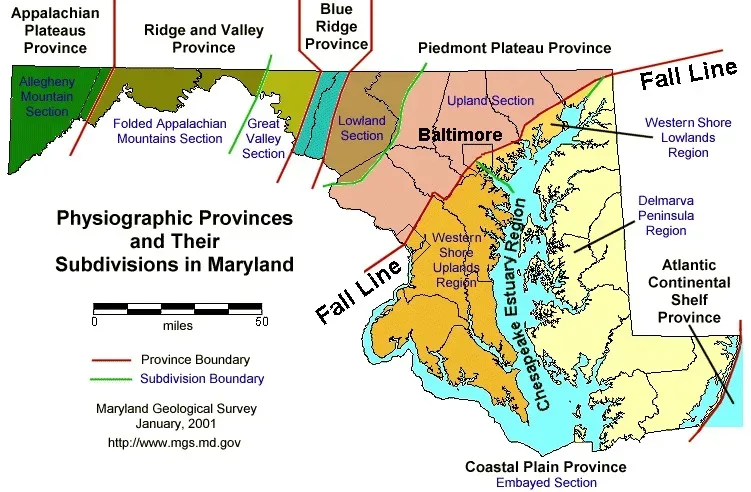
Maryland sits in a peculiar position in American firearms history -- a state with deep colonial and revolutionary roots, a significant military manufacturing presence, and one of the most restrictive gun law frameworks in the country. That tension isn't accidental. It reflects the state's geography as much as its politics: Baltimore's urban violence statistics have driven legislation that affects rural Western Maryland and the Eastern Shore just as hard.
The state has been ahead of federal law on gun regulation more than once -- sometimes by decades. It banned machine guns in 1933, a year before the federal National Firearms Act. It required waiting periods and State Police background checks in 1966, twenty-eight years before the Brady Act. And it housed one of the world's most storied firearms manufacturers -- Beretta U.S.A. -- in Accokeek for roughly four decades before its own legislation pushed that manufacturer to Tennessee.
Maryland has no state constitutional right to keep and bear arms. That absence shapes everything that follows.
Colonial & Frontier Eraedit
Early Settlement & Militia Systems
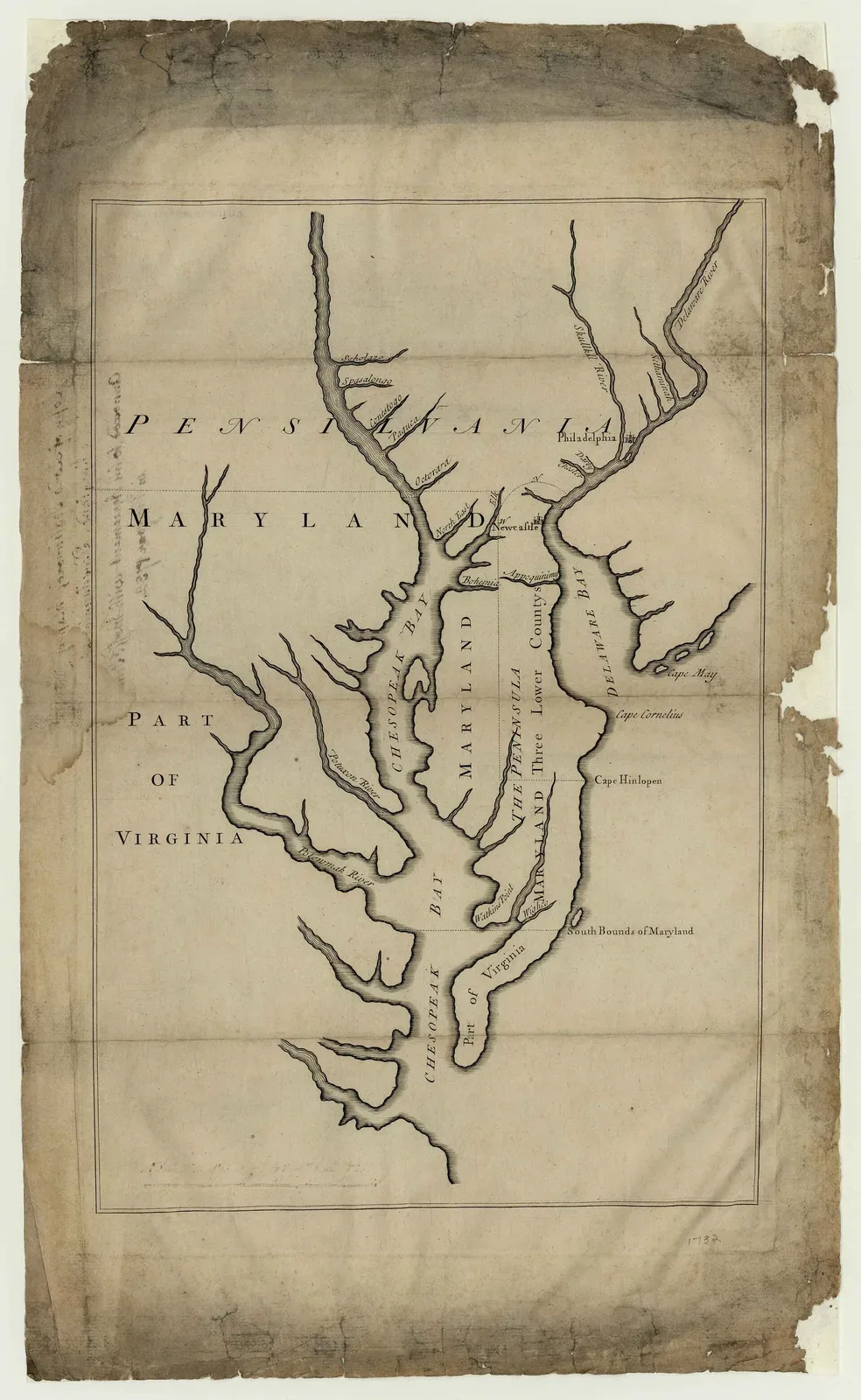
Maryland was among the original thirteen colonies, founded in 1632 under a charter granted to Cecilius Calvert, the second Baron Baltimore. From the outset, firearms were woven into the colony's survival. The Chesapeake tidewater was contested ground -- first between English settlers and the Piscataway and Nanticoke peoples, and later between Maryland and Virginia over territorial boundaries.
The colony maintained a militia system from its earliest decades. Maryland's 1638 militia law required free male inhabitants to arm themselves and muster for defense. Firearms in this era were primarily matchlock and flintlock muskets, traded, imported from England, or produced by local gunsmiths operating out of small shops along the Chesapeake.
| Period | Key Conflicts | Firearms Technology | Notable Events |
|---|---|---|---|
| 1632-1650 | Piscataway/Nanticoke conflicts | Matchlock muskets | Colony established, militia law 1638 |
| 1650-1675 | Territorial disputes with Virginia | Flintlock muskets emerging | Trade firearms to Native tribes |
| 1675-1700 | Susquehannock War | Mixed matchlock/flintlock | Widespread Native American firearm adoption |
| 1754-1763 | French and Indian War | Flintlock standard | Fort Cumberland established |
Native American Conflicts
The Chesapeake Bay region's Native American tribes -- including the Susquehannock to the north -- had acquired firearms through trade with both English and Dutch merchants by the mid-1600s. The resulting conflicts, particularly the 1675 Susquehannock War, demonstrated how quickly firearms technology had spread beyond European settlers and reshaped warfare throughout the region.
French & Indian War Period
By the time of the French and Indian War (1754–1763), Maryland militiamen were mobilized under the broader British colonial effort. Maryland soldiers served in Braddock's 1755 campaign along the Potomac corridor -- the same territory that would later become contested ground during the Civil War. Maryland's western frontier, particularly around Fort Cumberland (present-day Cumberland, MD), was an active theater requiring both civilian and military firepower.
Local gunsmithing in colonial Maryland was concentrated around Annapolis and the upper Chesapeake. No large-scale armory existed in the colony, but individual craftsmen produced and repaired firearms for militia use throughout the 1700s. German immigrant gunsmiths settling in Frederick County during the mid-1700s brought Pennsylvania rifle-making traditions southward, influencing the long rifles used by Maryland frontier settlers.
The Revolutionary Era & Early Statehoodedit
Maryland Line & Continental Service
Maryland's role in the American Revolution was substantial. The Maryland Line -- the Continental Army's Maryland regiment -- earned a reputation for holding the line at critical engagements. At the Battle of Long Island in 1776, roughly 400 Maryland soldiers staged a rearguard action against British forces that allowed Washington's army to escape, at the cost of most of those Marylanders' lives. General William Smallwood commanded these troops, and the Maryland Line's discipline became one of the Continental Army's distinguishing features.
Key events in Maryland's Revolutionary War period and early statehood
Arms Procurement Challenges
Arming those troops was a persistent problem. Maryland established the Council of Safety in 1775 to manage war supplies, including firearms procurement. The Council commissioned local gunsmiths and contracted with Pennsylvania rifle makers to supply weapons, since Maryland had no central armory capable of volume production. Gunpowder mills operated along Maryland's fall-line rivers -- the Patapsco and Gunpowder rivers -- specifically to supply the Continental effort.
Constitutional Framework
Maryland ratified the U.S. Constitution in 1788, becoming the seventh state. Critically, Maryland's own 1776 state constitution contained no right to bear arms provision, a pattern that has persisted through every subsequent revision. When other states were codifying individual arms rights into their foundational documents, Maryland was not among them.
After the Revolution, the federal arsenal at Harpers Ferry -- just across the Potomac in what was then Virginia -- became the dominant military manufacturing presence in the region. While Harpers Ferry is today in West Virginia, it served as the primary federal armory supplying Maryland militia and federal forces stationed in the Chesapeake region through the early 19th century.
19th Century: Statehood & Expansionedit
War of 1812
Maryland entered the 19th century as a commercially vital state, with Baltimore growing into one of the young nation's major port cities. The War of 1812 brought the conflict directly to Maryland's shores -- most famously with the British bombardment of Fort McHenry in September 1814, which inspired Francis Scott Key to write what became the national anthem. Maryland militia and U.S. Army regulars defended the fort with artillery, and the battle demonstrated the defensive importance of fortifications along the Chesapeake.
Antebellum Manufacturing
Baltimore's manufacturing base expanded throughout the antebellum period. The city's iron foundries and machine shops were capable of producing firearms components, though Maryland never developed a major arms manufacturing center comparable to Springfield, Massachusetts, or the Connecticut River Valley. Maryland gunsmiths were nonetheless active throughout the state -- particularly in Baltimore, Frederick, and Hagerstown -- producing hunting rifles, fowling pieces, and pistols for the civilian market.
Civil War Era
The Civil War fractured Maryland in a way that few states experienced. Maryland was a slave state that remained in the Union, held in place partly through federal military pressure, including the suspension of habeas corpus and the arrest of pro-secessionist members of the state legislature in 1861. The state's population was genuinely divided -- thousands of Marylanders fought for the Confederacy, including notable units raised in Baltimore, while others served in Union forces.
Maryland was a major theater of the war. The Battle of Antietam on September 17, 1862 -- fought near Sharpsburg, Maryland -- remains the bloodiest single day in American military history, with approximately 23,000 casualties. The Battle of South Mountain preceded it by three days, fought across the mountain passes of Washington County. Confederate General Jubal Early's 1864 raid reached the outskirts of Washington through Maryland, culminating in skirmishing at Fort Stevens and the Battle of Monocacy near Frederick.
| Battle | Date | Location | Significance |
|---|---|---|---|
| South Mountain | Sept 14, 1862 | Washington County passes | Preceded Antietam |
| Antietam | Sept 17, 1862 | Sharpsburg | Bloodiest single day (23,000 casualties) |
| Monocacy | July 9, 1864 | Near Frederick | Slowed Early's advance on Washington |
| Fort Stevens | July 11-12, 1864 | DC outskirts | Final Confederate threat to capital |
This wartime history left Maryland with a complicated relationship to firearms and military culture -- one that has never fully resolved itself. Western Maryland and the Eastern Shore remained culturally Southern and deeply attached to firearms traditions, while Baltimore developed in the direction of a Northern industrial city with the attendant urban politics.
First Firearms Regulations
The 1886 carry restriction -- the first significant state-level gun regulation -- emerged from this postwar urban context. The Maryland legislature that year passed a law stating that the only legal way to carry a firearm, concealed or openly, was if the person was a public official who required one in an official capacity. It was a sweeping restriction for its time, and it established a regulatory posture that Maryland would return to repeatedly over the next 140 years.
20th Century: Wars, Industry & Regulationedit
Military Installations
Maryland's 20th-century firearms story moves on two parallel tracks: the state as a host for military industry and federal installations, and the state as a progressive laboratory for gun regulation.
On the military side, Aberdeen Proving Ground -- established in 1917 in Harford County -- became one of the Army's primary weapons testing and development facilities. Aberdeen tested virtually every major U.S. military small arm and crew-served weapon system through both World Wars and the Cold War. The Army Ordnance Museum at Aberdeen housed one of the most significant collections of military firearms in the country before its relocation to Fort Lee, Virginia in 2010. Aberdeen's presence shaped Harford County's economy and culture for over a century, creating a community with deep ties to military firearms that exists in some tension with the state's regulatory direction.
Fort Meade, established in 1917 in Anne Arundel County, added another major military presence. Andrews Air Force Base (now Joint Base Andrews) in Prince George's County followed. The concentration of federal military installations in Maryland's central corridor meant that the state had a substantial population with professional firearms training and ownership -- a demographic that has consistently pushed back against restrictive state legislation.
| Installation | Established | Location | Role |
|---|---|---|---|
| Aberdeen Proving Ground | 1917 | Harford County | Weapons testing & development |
| Fort Meade | 1917 | Anne Arundel County | Military operations |
| Andrews AFB | Later 1900s | Prince George's County | Air Force operations |
Early Regulatory Framework
On the regulatory track, Maryland moved early and often. In 1933, the state passed the Uniform Machine Gun Act, banning possession and use of machine guns except for military, scientific, or keepsake purposes, with mandatory registration for existing owners. The federal National Firearms Act of 1934 followed -- Maryland was ahead of it.
The 1966 Handgun Permit Law established a seven-day waiting period for handgun purchases and required background checks conducted by the Maryland State Police. No equivalent federal law existed until 1994. The 1966 law reflected Baltimore's growing concern with urban gun violence, particularly as crime rates climbed through the 1960s.
In 1972, Maryland added a "good and substantial reason" requirement for concealed carry permits, effectively converting the state to a may-issue system that gave the Maryland State Police broad discretion to deny carry permits. Getting a permit in Maryland after 1972 meant demonstrating a specific, articulable threat -- not just a general desire for self-defense. In practice, civilian carry permits became rare outside of professional security and certain business owners.
The 1980s crack cocaine epidemic drove crime rates in Baltimore to historic highs. The legislature responded to the proliferation of cheap, low-quality handguns -- nicknamed "Saturday Night Specials" -- by banning them in 1988 and creating the Handgun Roster Board to determine which firearms could legally be sold in Maryland. The Roster Board still operates today, maintaining a list of approved handguns that can be sold in the state.
| Year | Maryland Law | Federal Equivalent | Maryland First? |
|---|---|---|---|
| 1933 | Uniform Machine Gun Act | 1934 National Firearms Act | ✓ Yes (1 year ahead) |
| 1966 | 7-day wait, State Police checks | 1994 Brady Act | ✓ Yes (28 years ahead) |
| 1972 | "Good and substantial reason" carry | None | N/A |
| 1988 | Saturday Night Special ban | None | N/A |
Beretta Manufacturing Era
Beretta U.S.A. established manufacturing operations in Accokeek, Prince George's County in the late 1970s. The facility made finished pistols from raw materials for military, law enforcement, and civilian markets. Beretta's M9 9mm pistol -- the standard U.S. military sidearm from 1985 onward -- was manufactured in Maryland. For decades, one of the most significant military firearms contracts in the country was being fulfilled just outside Washington, D.C.
1990s Legislative Wave
The 1990s brought a wave of legislation. In 1992, Maryland required that firearms be secured against access by children under 16. In 1993, the General Assembly extended background check requirements to gun show purchases -- a policy that remained federal debate fodder for decades. In 1994, Governor William Donald Schaefer signed legislation banning detachable magazines over 20 rounds and certain assault pistols, with a grandfather clause for registered pre-ban owners.
The Maryland Gun Violence Act of 1996 criminalized straw purchases, limited regulated firearms purchases to one per month, and created mechanisms for firearms seizure in domestic violence situations. Governor Parris Glendening's Responsible Gun Safety Act of 2000 then required handguns to include integrated safety devices, mandated a safety course for handgun purchases, and established ballistic fingerprinting requirements for regulated firearms purchases.
Through this entire period, Maryland's rural counties watched legislation crafted largely in response to Baltimore's crime statistics apply uniformly statewide. A farmer in Garrett County buying a hunting rifle faced the same bureaucratic process as a Baltimore resident. That friction has defined Maryland gun politics ever since.
Modern Era (2000–Present)edit
2013 Firearms Safety Act
The 2012 Sandy Hook shooting provided the political catalyst for Maryland's most comprehensive gun legislation. Governor Martin O'Malley pushed aggressively for a sweeping package, and the Maryland Firearms Safety Act of 2013 passed the General Assembly and was signed into law in May 2013.
The 2013 Act did several things at once:
- Banned 45 specifically named assault weapons and their copies
- Capped detachable magazines at 10 rounds
- Created the Handgun Qualification License (HQL) -- a new requirement that handgun purchasers complete a firearms safety course, submit fingerprints to the State Police, and pass a background check before they could purchase any handgun, from any source
- Required firearms safety course, fingerprints, and background check for handgun purchases
The HQL was a significant expansion beyond the federal background check system.
| Maryland Firearms Safety Act 2013 | Details |
|---|---|
| Assault weapons ban | 45 specifically named firearms + copies |
| Magazine capacity | 10-round maximum |
| Handgun Qualification License | Safety course + fingerprints + background check |
| Economic impact | Beretta relocated 300 jobs to Tennessee |
Beretta Departure
The political and economic consequences arrived quickly. Beretta U.S.A. announced in early 2015 that it was relocating all manufacturing from Accokeek to a new $45 million facility in Gallatin, Tennessee. Beretta's general manager Jeff Cooper stated that provisions in the 2013 law -- some of which had been modified during the legislative process, but could theoretically be reinstated -- made Maryland too uncertain an environment for firearms manufacturing.
The company retained administrative and executive functions in Accokeek but moved production entirely. Approximately 300 jobs moved to Tennessee.
O'Malley's office issued a statement expressing disappointment but defending the law. The departure of Beretta became a recurring reference point in debates over whether strict gun legislation imposes real economic costs.
Bruen Impact & Permit Reform
In 2012, a federal district court had already struck down Maryland's "good and substantial reason" carry requirement in Woollard v. Sheridan, finding the standard unconstitutionally broad. The case moved through appeals, and the Fourth Circuit ultimately reversed the district court, reinstating the may-issue standard. Maryland's restrictive carry regime survived that particular challenge.
The **U.S. Supreme Court's 2022 decision in New York State Rifle & Pistol Association v. Bruen changed the calculus entirely. Bruen struck down New York's "proper cause" standard for carry permits -- language substantively identical to Maryland's "good and substantial reason" requirement. Maryland's legislature responded in 2023 by passing the Maryland Handgun Permit Reform Act, converting the state to a shall-issue system -- meaning the State Police must issue a carry permit to any qualified applicant who meets objective criteria, without discretionary denial.
Maryland gun owners obtained carry permits in significant numbers following the change.
Modern era legislative and legal developments in Maryland firearms law
However, the 2023 legislation simultaneously expanded the list of "sensitive places" where carry is prohibited to include, among other locations, establishments licensed to sell or dispense alcohol or cannabis for on-site consumption. That prohibition is subject to ongoing litigation as of early 2026.
Recent Developments
The 4th U.S. Circuit Court of Appeals upheld Maryland's 2013 assault weapons ban in August 2024, ruling that semi-automatic rifles with detachable magazines and certain features are not protected by the Second Amendment under the historical tradition analysis required by Bruen. The decision was appealed, and the broader question of whether assault weapons bans survive Bruen remains unsettled at the federal level.
In 2022, the Maryland legislature passed the Ghost Gun Law, requiring that unserialized privately made firearms be serialized and registered, and banning the sale of unfinished frames and receivers that could be assembled into untraceable firearms. The legislation reflected a national trend and was driven in part by law enforcement data showing recovered ghost guns in Baltimore increasing sharply after 2018.
Maryland's firearms culture today reflects its geography. The I-95 corridor from Baltimore to the D.C. suburbs generates the political majority that passes restrictive legislation. Western Maryland -- the panhandle counties of Allegany and Garrett -- along with the Eastern Shore counties remain deeply rural, heavily hunting-oriented, and persistently opposed to Annapolis's direction on gun law. Those rural counties have neither the population to block legislation nor the cultural overlap with Baltimore that would make that legislation feel applicable to their lives.
Notable Figures & Manufacturersedit
Beretta U.S.A. is the most significant firearms manufacturer in Maryland's modern history. Operating in Accokeek from the late 1970s until 2015, the facility produced the M9 pistol under contract for the U.S. military -- one of the largest and most consequential small arms contracts of the late 20th century. Even after manufacturing relocated to Tennessee, Beretta's U.S. corporate headquarters remained in Maryland.
Aberdeen Proving Ground deserves separate recognition as an institution rather than a manufacturer. The Proving Ground has been the Army's primary testing facility for small arms, crew-served weapons, and ammunition since 1917. Virtually every American military firearm used in World Wars I and II, Korea, Vietnam, and subsequent conflicts was tested at Aberdeen. Colonel René Studler, the Army's chief small arms designer from the 1940s through the early 1950s, worked closely with Aberdeen during the development and testing of what became the M14 rifle. Aberdeen's influence on American firearms development over the 20th century is difficult to overstate.
Governor William Donald Schaefer and Governor Martin O'Malley are central figures in Maryland's modern gun regulation history -- Schaefer for the 1988 Saturday Night Special ban and the Roster Board, and O'Malley for the 2013 Firearms Safety Act. Senate President Thomas V. Mike Miller Jr., who led the Maryland Senate for decades, consistently supported expanded gun regulation and attributed much of the legislative push to Baltimore's urbanization and rising crime.
Senator Jamie Raskin -- later a U.S. Congressman from Montgomery County -- was an early advocate for gun regulation in the Maryland Senate, articulating the view that major legislation is reactive and typically follows tragedy.
On the opposition side, Maryland State Rifle and Pistol Association and 2A Maryland have been the primary organized voices opposing expanded regulation in the General Assembly, though their influence in a legislature dominated by Democratic majorities has been limited.
Francis Scott Key deserves mention in a different context -- as a Maryland attorney and witness to the 1814 bombardment of Fort McHenry, Key documented a moment when the defense of a Maryland fortification with artillery became the symbolic anchor of American national identity.
Current Legal Landscapeedit
Purchase Requirements
Maryland's firearms laws as of early 2026 are among the most restrictive in the country. The Handgun Qualification License (HQL) is required to purchase any handgun in Maryland. To obtain one, you must complete a firearms safety course (including a live-fire component), submit fingerprints to the Maryland State Police, pass a background check, and pay associated fees. The process typically takes weeks.
| Requirement | Details | Timeline |
|---|---|---|
| HQL Process | Safety course + live fire + fingerprints + background check | Weeks |
| Carry Permit | Training + fingerprinting + background + application | Shall-issue (2023) |
| Assault Weapons | Banned (specific list + features) | Grandfathered if pre-ban |
| Magazines | 10-round maximum | Possession grandfathered |
Prohibited Items
Assault weapons are banned under Maryland law, defined to include a specific list of named firearms and their copies. The ban covers "assault long guns," "assault pistols," and "copycat weapons" -- firearms with certain feature combinations. Grandfather clauses exist for firearms legally possessed before the prohibition dates (1994 for assault pistols, 2013 for assault long guns), but those firearms cannot be transferred within the state.
Magazines with a capacity exceeding 10 rounds cannot be manufactured, sold, purchased, or transferred in Maryland. Possession of existing magazines is grandfathered.
Carry Laws
Concealed carry is now shall-issue following the 2023 reforms, but the permit process requires a training course, fingerprinting, background check, and application to the Maryland State Police. Maryland recognizes no other state's carry permits, and no other states currently recognize Maryland's permit -- meaning Maryland permit holders carry only in Maryland.
Sensitive places where carry is prohibited include:
- Schools and government buildings
- Locations licensed to sell alcohol or cannabis for on-site consumption
- Additional locations expanded in 2023 legislation
- Private property where prohibited by owner
That expansion is under active litigation.
Open carry is legal in Maryland for permit holders but uncommon and socially unusual, particularly in the Baltimore-Washington corridor.
The Handgun Roster remains in effect. Handguns must be approved by the Handgun Roster Board before they can be sold in Maryland. Numerous models legal in other states are not on the Roster and cannot be sold by Maryland dealers, though possession of previously owned off-Roster handguns is generally legal.
Ghost guns require serialization. Unfinished frames and receivers are banned from sale.
Rapid fire activators -- including bump stocks, binary triggers, trigger cranks, and switches -- are prohibited.
Constitutional Framework
Maryland has no state constitutional right to bear arms, which means state courts apply only federal Second Amendment analysis. The 4th Circuit's 2024 ruling upholding the assault weapons ban is controlling precedent for now, though the broader federal circuit split on assault weapons bans makes eventual Supreme Court review likely.
The BGC Takeedit
Maryland is a genuinely difficult state to be a gun owner, and it's worth being honest about why -- and about the legitimate reasons people on both sides of that feel the way they do.
If you're a hunter in Garrett County or a competitive shooter on the Eastern Shore, Maryland's laws are largely designed for a problem you don't have and applied to a context that doesn't fit you. The Saturday Night Special ban, the assault weapons ban, the magazine cap, the HQL -- all of it grew out of Baltimore's crack epidemic, Baltimore's gang violence, Baltimore's crime statistics. But the laws apply uniformly statewide, which means rural Marylanders carry the bureaucratic weight of urban policy choices they had no political power to stop.
That's a real grievance, and it's worth naming.
At the same time, Baltimore's violence is also real. The city has consistently ranked among the most dangerous large cities in the country by murder rate, and the legislative impulse to do something about that is not cynical or manufactured.
Maryland legislators and governors who pushed for tighter laws generally believed those laws would reduce harm. Whether they did is an empirical question with a complicated answer -- but the intent wasn't abstract.
When your gun laws are written in a way that pushes a major military contractor -- one fulfilling U.S. Army contracts for the standard military sidearm -- to pack up and move to Tennessee, you've created a real economic and symbolic problem.
The O'Malley administration's response was essentially "we stand by the policy." That's a legitimate position. It's also a position that costs jobs and signals to the firearms industry that Maryland is hostile territory.
The Bruen transition is where things get interesting going forward. Maryland's shift to shall-issue carry was not voluntary -- it was compelled by the Supreme Court. The legislature's response was to issue permits while simultaneously expanding sensitive places to the point where carrying anywhere useful becomes legally complicated. That's a predictable pattern from jurisdictions that lose constitutional challenges: comply with the specific holding while minimizing the practical effect. Litigation over the sensitive places list will continue.
For a gun owner moving to or living in Maryland: the HQL process is annoying but manageable. The Roster limits your handgun options. The assault weapons ban means your AR is a paperweight in the state unless you bought it before October 2013. Carrying is now legally possible for the first time in decades, but you need to study the sensitive places list carefully before you leave the house with a gun on your hip.
Western Maryland is gun country that happens to be governed from Annapolis. The Eastern Shore runs hunting culture deep. And Baltimore is a city with genuine violence problems that the legislature keeps trying to legislate away with tools that mostly affect people who weren't the problem in the first place. That tension isn't going anywhere.
Referencesedit
- Etzler, Allen. "History of Gun Legislation in Maryland." CNS Maryland, February 22, 2013.
- "Maryland State Gun Laws and Regulations Explained." NRA-ILA, updated December 11, 2025.
- "Beretta: Gun Law Forcing Move Out of Maryland." CBS Baltimore / Associated Press, 2015.
- "Beretta Moves All Manufacturing Out of Md. After State Passes New Gun Bill." NBC Washington, 2015.
- "Maryland Gun Laws 1988–2024." 2A Maryland Legislative Database, 2024.
- "Federal Appeals Court Upholds 2013 Maryland Assault Weapons Ban." Maryland Matters, August 6, 2024.
- MD Code, Criminal Law, § 4-301 through § 4-305.1 (Assault Weapons, Magazine Restrictions, Rapid Fire Activators).
- MD Code, Public Safety, § 5-117.1 (Handgun Qualification License).
- MD Code, Criminal Law, § 111 (Sensitive Places).
- New York State Rifle & Pistol Association, Inc. v. Bruen, 597 U.S. 1 (2022).
- Woollard v. Sheridan, U.S. District Court for the District of Maryland (2012).
- Maryland Firearms Safety Act of 2013, Chapter 427, Acts of 2013.
- Maryland Handgun Permit Reform Act, 2023.
- U.S. Army, Aberdeen Proving Ground History Office, historical records.
Last Updated: February 24, 2026
- Quail Creek Plantation(Okeechobee, FL)
- 2aHawaii(Honolulu, HI)
- Boston Firearms(Everett, MA)
- Safeshoot(Kingston, NY)
Loading comments...