State Details
Missouri

Overview | |
|---|---|
State | Missouri (MO) |
Capital | Jefferson City |
Statehood | 1821 |
Population | 6,196,156 |
Gun Ownership | 48.8% |
Active FFLs | 1,685 |
Carry Laws | |
Constitutional Carry | Yes (2017) |
Open Carry | Yes |
CCW Permit Available | Yes |
Permit Reciprocity | 36+ states |
Self-Defense | |
Castle Doctrine | Yes |
Stand Your Ground | Yes |
Duty to Retreat | No |
Regulations | |
State Preemption | Yes |
Red Flag / ERPO | No |
Waiting Period | None |
Universal BGC | No |
NFA Items | Yes |
Assault Weapons Ban | No |
Magazine Limit | None |
Key Legislation | |
| |
Notable Manufacturers | |
| |
Missouri Firearms History: From the Frontier to Constitutional Carry
Reference article
From The Boise Gun Club Handbook
Overviewedit
Missouri sits at the geographic and cultural crossroads of American firearms history. It was the jumping-off point for westward expansion, a battleground for some of the Civil War's most brutal guerrilla conflict, and the site of armed religious persecution that helped shape early American debates about the right to bear arms. The state's legal relationship with firearms has swung dramatically -- from frontier permissiveness, to a 130-year concealed carry ban, to one of the most firearms-permissive regulatory environments in the country today.
Understanding Missouri's gun laws and culture means understanding that the state has never been politically or geographically simple. It borders eight states, straddles the Mason-Dixon line in cultural terms, and contains both deeply rural gun-owning communities and major urban centers -- St. Louis and Kansas City -- where gun violence has driven calls for stricter regulation. That tension has defined Missouri's firearms debates for two centuries and shows no sign of resolving.
Colonial & Frontier Era: The Gateway to Everything Westedit
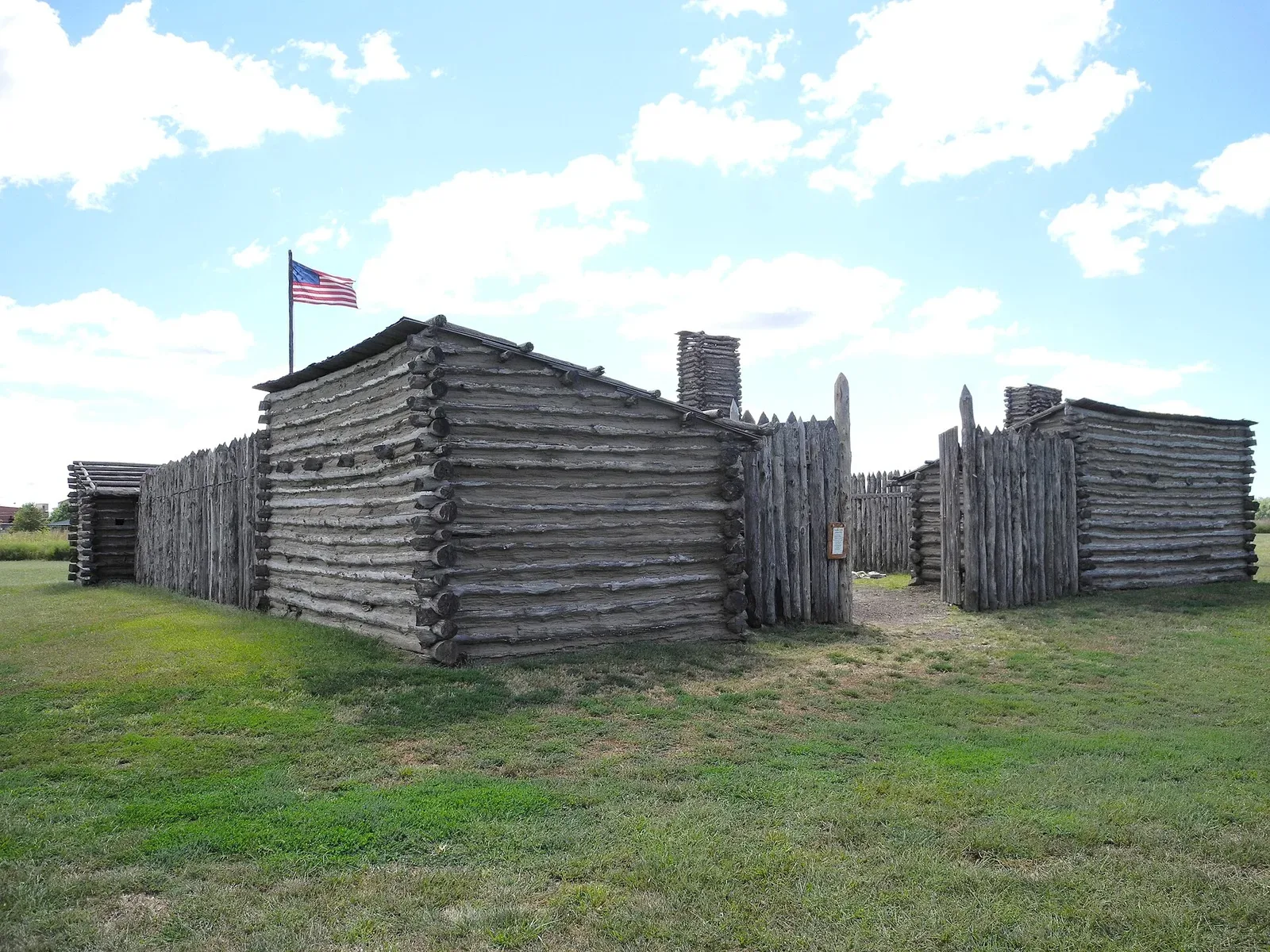
Native Nations and Early Arms Trade
Missouri's pre-statehood firearms story begins not with European settlers but with the Native nations who inhabited the region. The Osage, Missouri, Otoe, and Kickapoo peoples, among others, were the original inhabitants:
- Osage
- Missouri
- Otoe
- Kickapoo peoples
The Osage were among the most militarily sophisticated nations in the interior, and French traders operating out of New Orleans and St. Louis were supplying them with firearms by the mid-1700s. The French colonial administration, which controlled the territory as part of La Louisiane, actively managed the arms trade as a tool of alliance and control. By the time Spain took administrative control in 1762, the firearms economy was already embedded in the region's political structure.
| Year | Event | Significance |
|---|---|---|
| 1762 | Spanish administrative control begins | Inherited existing French firearms trade networks |
| 1764 | St. Louis founded by Laclède & Chouteau | Established as fur trading post with guns central to economy |
| 1803 | Louisiana Purchase | U.S. inherits firearms trade infrastructure |
| 1804 | Lewis & Clark Expedition departs | Organized through St. Louis; carried Harper's Ferry rifles, muskets |
| 1812 | Missouri Territory established | Genuine frontier danger necessitated personal armament |
St. Louis as Trading Hub
St. Louis was founded in 1764 by Pierre Laclède and Auguste Chouteau as a fur trading post, and guns were central to that economy from day one. Beaver pelts moved east; firearms, powder, and shot moved west and south. The Chouteau family became the dominant trading dynasty in the region for decades, and their ledgers read like firearms distribution records as much as fur inventories.
Post-Louisiana Purchase Expansion
After the Louisiana Purchase of 1803, the United States inherited this infrastructure. Meriwether Lewis and William Clark departed from Camp Dubois, just across the river in present-day Illinois, in May 1804, but their expedition was organized and provisioned largely through St. Louis. The firearms they carried were diverse and purpose-built:
- Harper's Ferry Model 1803 rifles
- Model 1795 muskets
- Lewis's demonstration air rifle
- Keelboat-mounted swivel gun
These weapons were either purchased in or staged through the Missouri territory. St. Louis became the literal and logistical gateway for every subsequent westward expedition, and the firearms trade followed every one of them.
Missouri Territory (established 1812) was genuinely dangerous frontier. Sauk and Fox raids, lingering tensions from the War of 1812, and the general lawlessness of a cash-and-trade economy made personal armament a practical necessity. The territorial government had neither the manpower nor the infrastructure to provide security beyond the largest settlements. You armed yourself or you didn't survive long.
19th Century: Statehood, the Mormon Wars, and Bleeding Kansasedit
Statehood and Trail Outfitting
Missouri achieved statehood in 1821 under the Missouri Compromise, entering as a slave state paired with Maine. The compromise delayed but didn't resolve the tensions that would define the state's violent mid-century history. In the meantime, Missouri's role as the departure point for the Santa Fe Trail (established 1821), the Oregon Trail, and later the California Trail made Independence and Westport (now part of Kansas City) the primary markets for trail-ready firearms.
Hawken rifles, built in St. Louis by Jacob and Samuel Hawken, became the definitive weapon of the mountain man era -- heavy, large-bore, capable of dropping bison and grizzlies. The Hawken shop operated on Laurel Street in St. Louis from roughly 1822 onward, and their rifles were carried by Kit Carson, Jim Bridger, and Jedediah Smith, among many others.
Religious Conflict and the Mormon Wars
The Mormon Wars of Missouri represent one of the most disturbing episodes in American religious history, and firearms were at the center of it. Starting in the early 1830s, Latter-day Saint settlers moved into Jackson County and surrounding areas, creating immediate friction with existing settlers over land, politics, and religion. Violence escalated through the decade.
The Battle of Crooked River in October 1838 was a pitched firefight between Missouri state militia and Mormon defenders. Days later, Governor Lilburn Boggs issued Executive Order 44 -- the infamous Extermination Order -- directing that Mormons be "exterminated or driven from the State."
"The Mormons must be treated as enemies, and must be exterminated or driven from the State if necessary for the public peace." — Governor Lilburn Boggs, Executive Order 44, October 1838
The Haun's Mill Massacre followed on October 30, 1838, when a mob of approximately 240 men attacked a small Mormon settlement, killing 17 people including children. The survivors were disarmed before the attack. Missouri's Extermination Order wasn't formally rescinded until 1976.
Border Wars and Bleeding Kansas
| Conflict | Years | Key Events | Firearms Role |
|---|---|---|---|
| Mormon Wars | 1830s-1838 | Battle of Crooked River, Haun's Mill Massacre | Mormon defenders disarmed before attack |
| Bleeding Kansas | 1850s | Border Ruffians vs. Free-Staters | Armed pro-slavery Missourians crossed into Kansas |
| Civil War | 1861-1865 | Quantrill's Raiders, Lawrence Massacre | Guerrilla warfare training ground for future outlaws |
| Post-war Outlaws | 1865-1882 | James-Younger Gang activities | Ex-guerrillas turned to bank/train robbery |
The 1850s brought Bleeding Kansas to Missouri's western border. The question of whether Kansas would enter the Union as a slave or free state turned the Kansas-Missouri border into a war zone years before Fort Sumter. Missouri Border Ruffians -- armed pro-slavery Missourians -- crossed into Kansas to vote illegally, intimidate settlers, and engage in open combat with Free-Staters. The violence was reciprocal and brutal. John Brown operated on both sides of that border, and the armed conflicts of the 1850s in this region were a direct rehearsal for the Civil War.
Civil War Guerrilla Warfare
The Civil War in Missouri was unlike the war fought in Virginia or Tennessee. Missouri never formally seceded -- it had a pro-Union governor and a pro-Confederate state government simultaneously, each claiming legitimacy. The result was years of vicious guerrilla warfare.
William Quantrill's Raiders and later Bloody Bill Anderson's band operated throughout central and western Missouri, conducting raids that combined military objectives with outright terror. The Lawrence, Kansas Massacre of August 1863, planned and executed largely by Missourians, killed approximately 150 civilians. General Order No. 11, issued by Union General Thomas Ewing Jr. in retaliation, forcibly depopulated four Missouri counties along the Kansas border.
Evolution from Civil War guerrillas to legendary outlaws in Missouri
Post-War Outlaws and First Gun Laws
Out of this guerrilla tradition came some of history's most famous outlaw-gunfighters. Jesse James and his brother Frank James rode with Quantrill and Anderson before transitioning to bank and train robbery after the war. Cole Younger and his brothers followed a similar path. These men were products of Missouri's wartime gun culture -- trained in irregular warfare, deeply hostile to federal authority, and celebrated in significant parts of Missouri society as folk heroes. Jesse James was killed in St. Joseph, Missouri in April 1882 by Robert Ford.
The postwar period produced Missouri's first major firearms restriction. In 1874, the state legislature banned the carrying of concealed weapons -- a direct response to the violence of Reconstruction-era Missouri, where ex-guerrillas, political vigilantes, and criminal gangs made public safety a genuine crisis. That prohibition would remain in effect, in various forms, for nearly 130 years.
20th Century: Wars, Industry & Regulationedit
Early Firearms Restrictions
The 1927 Missouri legislature enacted a permit-to-purchase requirement for handgun acquisitions. Under this law, buyers had to obtain a permit through the county sheriff before purchasing a handgun -- a process that included a background check of sorts, though administered locally rather than through any centralized system. This made Missouri one of the earlier states to impose a pre-purchase screening mechanism, and the law stayed on the books for eight decades.
| Year | Law/Event | Description | Impact |
|---|---|---|---|
| 1874 | Concealed carry ban | Response to post-Civil War violence | Prohibited for 130 years |
| 1927 | Permit-to-purchase law | County sheriff permit required for handguns | Local background check system |
| 1941 | Lake City Plant established | Remington-built ammunition facility | Billions of rounds for military |
| 1968 | Gun Control Act compliance | Federal framework adoption | State law adjustments |
| 1999 | CCW referendum fails | 51% to 49% defeat | Setback for concealed carry movement |
World War Era Manufacturing
Missouri contributed significantly to both World Wars. The Lake City Army Ammunition Plant in Independence, Missouri, established in 1941, became one of the most important small arms ammunition manufacturing facilities in the United States. Built by Remington Arms under a federal contract and operated by various contractors over the decades (including Remington, Olin/Winchester, and Alliant Techsystems), Lake City produced billions of rounds of military ammunition -- 5.56mm, 7.62mm, .30 caliber, and more -- for American forces through World War II, Korea, Vietnam, and every subsequent conflict. It remains operational today as a government-owned, contractor-operated facility and is one of the largest ammunition plants in the world by volume. When you hear debates about military surplus 5.56 or M855 ball, Lake City is directly involved in that conversation.
Fort Leonard Wood, established in Pulaski County in 1941, trained hundreds of thousands of soldiers in basic combat skills including marksmanship. Named for General Leonard Wood, the post became a major Army training installation that continues to operate today as the home of the Army Maneuver Support Center of Excellence, training military police, chemical corps, and engineer soldiers.
World War II also touched Missouri's manufacturing sector more broadly. Curtiss-Wright operated a massive aircraft plant in Columbus, Ohio, but Missouri's industrial base -- particularly in St. Louis -- shifted substantially toward war production. McDonnell Aircraft Corporation, founded in St. Louis in 1939 by James S. McDonnell, became a dominant defense contractor, though its primary products were aircraft rather than firearms. The broader point is that Missouri's industrial infrastructure was deeply integrated into the defense establishment by mid-century.
Federal Compliance and Concealed Carry Debates
The 1960s brought Missouri's concealed carry law under renewed scrutiny. The Gun Control Act of 1968 -- federal legislation passed after the assassinations of Martin Luther King Jr. and Robert F. Kennedy -- established the modern federal framework for firearms regulation, including the Federal Firearms License system and prohibitions on sales to felons and other prohibited persons. Missouri's state law adjusted accordingly, but the basic framework of a concealed carry ban plus permit-to-purchase for handguns remained intact.
The 1990s saw the national concealed carry movement gain momentum. States like Florida (1987), Texas (1995), and many others adopted shall-issue concealed carry permit systems. Missouri lagged. A statewide referendum on concealed carry was placed on the April 1999 ballot and was narrowly defeated -- 51% to 49% -- in what was at the time a significant setback for concealed carry proponents in the state. The defeat was attributed in part to heavy opposition from the Kansas City and St. Louis metropolitan areas.
Modern Era (2000–Present)edit
Missouri's modern firearms legal history moves fast, and the direction has been consistently toward fewer restrictions.
Breaking the Concealed Carry Barrier
The concealed carry referendum failure in 1999 didn't end the effort -- it redirected it. Missouri's legislature passed a shall-issue concealed carry permit law in 2003 over Governor Bob Holden's veto, making Missouri the 46th state to adopt some form of legal concealed carry. The law required applicants to be 21 or older, complete a firearms safety course, and pass a background check. County sheriffs became the issuing authority.
In 2007, the legislature took a more significant step: it repealed the 1927 permit-to-purchase law. This eliminated the requirement for a sheriff-issued permit before buying a handgun, replacing the local background check system with the federal NICS (National Instant Criminal Background Check System) check conducted at the point of sale by licensed dealers. Critics -- including the Jackson County Prosecutor's office and later researchers who studied the change -- argued that the repeal was followed by measurable increases in firearm homicide rates in Missouri. Proponents argued the federal NICS system was the appropriate and sufficient mechanism. The debate over that 2007 repeal continues in Missouri policy circles.
Constitutional Strengthening
The 2014 general election brought a constitutional amendment. Missouri voters approved Amendment 5, which significantly strengthened Article I, Section 23 of the Missouri Constitution. The revised provision declares the right to keep and bear arms -- including "ammunition, and accessories typical to the normal function of such arms" -- to be "unalienable" and mandates that "any restriction on these rights shall be subject to strict scrutiny." This was a direct response to years of legal challenges to firearms laws and was intended to make Missouri's constitutional protection explicitly stronger than the federal Second Amendment standard as interpreted at the time. The amendment passed with approximately 61% of the vote.
"The right to keep and bear arms, ammunition, and accessories typical to the normal function of such arms, is an unalienable right, and any restriction on these rights shall be subject to strict scrutiny." — Missouri Constitution Article I, Section 23 (amended 2014)
In 2016, Governor Jay Nixon allowed Senate Bill 656 to become law without his signature -- he declined to veto it despite personal opposition. SB 656 established constitutional carry (also called permitless carry) in Missouri, effective January 1, 2017. Under this framework, any Missouri resident 19 or older (or 18 and a member or honorably discharged veteran of the U.S. Armed Forces) who is not otherwise prohibited from possessing firearms may carry a concealed firearm in public without a permit. The existing concealed carry permit system was preserved for residents who want a permit for reciprocity purposes when traveling to other states.
| Year | Legislation | Description | Result |
|---|---|---|---|
| 2003 | Shall-issue CCW law | Passed over Governor veto | 46th state for legal concealed carry |
| 2007 | Permit-to-purchase repeal | Eliminated sheriff permit requirement | Federal NICS only for purchases |
| 2014 | Constitutional Amendment 5 | Strengthened Article I, Section 23 | Strict scrutiny standard required |
| 2016 | Constitutional carry (SB 656) | Permitless carry for 19+ residents | Effective January 1, 2017 |
| 2021 | SAPA (HB 85) | Attempted federal law nullification | Struck down by federal courts 2023 |
Missouri also enacted a Castle Doctrine law and a Stand Your Ground provision, eliminating any duty to retreat before using force in self-defense when a person is in a place they have the legal right to be. The state has no red flag law (extreme risk protection order), no assault weapons ban, no magazine capacity limits, and no requirement to register firearms with any state agency. Mo. Rev. Stat. § 571.500 actually prohibits state agencies from maintaining databases of firearm ownership.
SAPA and Federal Nullification Attempts
In 2021, Missouri passed the Second Amendment Preservation Act (SAPA), HB 85, which declared a broad range of federal firearms laws to be "infringements" on the Missouri constitutional right to keep and bear arms and purported to nullify their enforcement within the state. The law included civil penalties for law enforcement agencies that "knowingly" enforced the specified federal laws.
The legislation drew immediate legal challenges. In 2023, the U.S. District Court for the Western District of Missouri struck down the law's penalty provisions as unconstitutional under the Supremacy Clause. The Eighth Circuit Court of Appeals upheld that ruling. SAPA remains on the books in amended form, but its enforcement teeth were removed by the courts.
Timeline showing Missouri's rapid transition from restrictive to permissive gun laws
Ferguson and Contemporary Debates
The Ferguson unrest of 2014 following the shooting of Michael Brown by Ferguson Police Officer Darren Wilson triggered significant debates in Missouri about both policing and civilian firearms ownership. Gun sales in the St. Louis metropolitan area spiked sharply in the weeks following the unrest. The episode illustrated the degree to which gun ownership and public safety perceptions are linked in ways that cut across ideological lines -- both gun rights advocates and some community members in Ferguson cited the need for self-defense capability in the context of civil disorder.
Notable Figures & Manufacturersedit
Jacob and Samuel Hawken built what may be the most historically significant rifles ever produced in Missouri. Operating their shop in St. Louis from the 1820s forward, the Hawken brothers produced large-bore, half-stock rifles designed for the demands of the Rocky Mountain fur trade and Plains hunting. Their design -- heavier than the Pennsylvania long rifle, shorter, with a thick octagonal barrel in .50 caliber or larger -- became the definitive firearm of the mountain man era. Original Hawken rifles are highly collectible today, and the "Hawken-style" remains a standard design in the muzzleloader market.
The Hawken rifle's influence from frontier era to modern collecting
Jesse James is unavoidable in any honest account of Missouri firearms culture. His exploits -- and the mythology built around them -- shaped how Missouri and the rest of the country thought about armed resistance to authority, the romanticization of outlaw gun culture, and the complicated legacy of Civil War guerrilla warfare. The Jesse James Farm and Museum in Kearney, Missouri, and the site of his death in St. Joseph both remain active historical tourism destinations.
Lake City Army Ammunition Plant in Independence deserves recognition as a manufacturer in its own right, even as a government facility. The plant has been operated by defense contractors -- including Winchester/Olin, Alliant Techsystems (ATK), and Northrop Grumman -- under government contracts. Lake City produces the majority of small arms ammunition used by the U.S. military and has also supplied commercial ammunition markets during periods of surplus. Shooters who have ever bought commercial Lake City brass or LC-headstamped surplus ammo have a direct connection to this facility.
Bob Campbell, a Springfield, Missouri-based writer and firearms instructor, has been one of the more prolific practical firearms commentators of the past two decades, contributing to publications including American Handgunner and Guns & Ammo. He represents the practical shooting instruction culture that has deep roots in the Ozarks region of southern Missouri.
Mossberg has no Missouri manufacturing presence, but Savage Arms and other major manufacturers have used Missouri-based distributors as central logistics hubs given the state's geography. Missouri's position at the center of the national highway and rail network makes it a natural distribution point for the firearms industry -- which is why several major distributors, including Sports South and RSR Group operations, have maintained regional warehouse operations in the state.
Current Legal Landscapeedit
Missouri's current firearms legal framework is among the least restrictive in the United States by any objective measure.
Constitutional Carry Framework
Constitutional carry has been in effect since January 1, 2017. No permit, no training requirement, no background check beyond the federal NICS check at the point of sale from a licensed dealer. Private party transfers between non-licensed individuals are not required to go through NICS under Missouri law, though federal law still applies to prohibited persons.
The state constitutional provision -- Article I, Section 23 as amended in 2014 -- requires strict scrutiny for any firearms restriction. This is a higher standard than the federal intermediate scrutiny that courts applied to many gun laws before the U.S. Supreme Court's New York State Rifle & Pistol Association v. Bruen (2022) decision established a new historical tradition test. Missouri courts have used the strict scrutiny standard in evaluating challenges to state firearms restrictions.
| Legal Aspect | Missouri Status | Details |
|---|---|---|
| Constitutional Carry | ✓ Legal | 19+ residents (18+ military/veteran) |
| Purchase Permits | Not required | Federal NICS only |
| Registration | Prohibited | State agencies cannot maintain databases |
| Assault Weapons | No ban | State preemption prevents local bans |
| Magazine Limits | None | No capacity restrictions |
| Red Flag Laws | None | No ERPO provisions |
| NFA Items | Legal | Consistent with federal law |
| Reciprocity | 30+ states | With Missouri CCW permit |
Permit System and Reciprocity
The permit system remains available for voluntary use. A Missouri Concealed Carry Permit is still issued by county sheriffs to qualified applicants who complete an approved firearms safety course and pass a background check. The permit costs and requirements vary slightly by county. Holding a Missouri permit allows reciprocal carry in states that recognize Missouri permits -- as of late 2025, the majority of states with shall-issue or constitutional carry systems recognize Missouri's permit.
Key provisions of current Missouri law:
- No permit required to purchase rifles, shotguns, or handguns
- No firearms registration
- No assault weapons ban or magazine capacity limits
- Constitutional carry for residents 19+ (or 18+ active/veteran military)
- Castle Doctrine and Stand Your Ground
- No red flag/ERPO law
- State agencies prohibited from maintaining firearms ownership databases
- NFA items legal to possess consistent with federal law
- Suppressors, short-barreled rifles, and short-barreled shotguns legal with proper federal registration
What Missouri does restrict: machine guns (consistent with federal law), explosive/detonating projectiles, and metal-penetrating bullets used during the commission of a crime. Convicted violent felons and those adjudicated as a danger to self or others due to mental disorder are specifically called out in the constitutional provision as subject to legislative restriction.
Preemption and Urban-Rural Tensions
The preemption law -- Mo. Rev. Stat. § 21.750 -- prohibits counties and municipalities from enacting firearms regulations more restrictive than state law. This has been the subject of ongoing litigation, particularly involving Kansas City and St. Louis, both of which have at various points attempted to enact local ordinances on issues like guns near schools or firearms dealers. The preemption provision has generally prevailed in court.
St. Louis and Kansas City continue to push for stricter state-level regulations, citing homicide rates that rank among the highest in the country for cities of their size. Gun violence prevention advocates point specifically to the 2007 repeal of the permit-to-purchase law as a turning point, citing academic research -- particularly a Johns Hopkins Bloomberg School of Public Health study published in 2014 -- that linked the repeal to a roughly 25% increase in Missouri's firearm homicide rate. Gun rights advocates contest that methodology and point to other variables including socioeconomic factors and enforcement gaps.
That debate -- between Missouri's rural gun culture and its urban gun violence crisis -- is the central unresolved tension in the state's current firearms politics, and it's not going anywhere.
The BGC Takeedit
Missouri is as honest a representation of America's internal argument about guns as any state in the country. You've got Lake City making ammunition for the Army. You've got Jesse James museums. You've got deer hunters in the Ozarks who've been shooting since before they could drive.
And you've got Kansas City and St. Louis posting homicide numbers that would make national news if they happened in a more photogenic city.
The constitutional carry law and the 2014 amendment put Missouri firmly in the pro-gun camp by any legal measure. The SAPA fight -- trying to nullify federal gun laws -- was always more political theater than practical effect, and the courts handled it accordingly. But the effort tells you where the state's political center of gravity sits outside the urban cores.
For a gun owner moving to or traveling through Missouri, the practical picture is clean: you can carry without a permit, you can buy without extra state hoops, and the state constitution has teeth. Get the voluntary permit anyway if you travel, because reciprocity matters when you cross the state line into Kansas or Oklahoma or wherever you're headed.
The honest complication is the urban violence data. You can argue about causation all day -- and people do -- but the gun homicide numbers in St. Louis and Kansas City are real, and they land disproportionately on communities that don't have a lot of political power in Jefferson City. The state's approach has been to not engage that tension directly through firearms law, which has its own logic: law enforcement and prosecution gaps aren't fixed by adding another permit requirement. But it also means the conversation never really closes.
Constitutional carry wasn't passed because of abstract principle alone — it passed because a significant portion of Missouri genuinely believes that self-defense capability shouldn't depend on bureaucratic permission.
Missouri gun culture is old, practical, and deeply rooted. The Hawken rifle wasn't built for target shooting. Constitutional carry wasn't passed because of abstract principle alone -- it passed because a significant portion of Missouri genuinely believes that self-defense capability shouldn't depend on bureaucratic permission. Whether you agree with that or not, it's a coherent position with a 200-year pedigree in this state.
Referencesedit
- Missouri Secretary of State. Missouri Constitution, Article I, Section 23. As amended November 2014.
- Missouri Revised Statutes, Chapter 571 (Weapons Offenses).
- MOST Policy Initiative. History of Firearms in MO. mostpolicyinitiative.org.
- Joyce, Jennifer. The Evolution of Missouri Gun Laws. Jackson County Prosecutor's Office.
- Everytown for Gun Safety. Missouri State Rankings. everytownresearch.org.
- Giffords Law Center. Missouri Gun Laws. giffords.org.
- NRA-ILA. Missouri State Gun Laws. nraila.org. Last updated December 1, 2025.
- Wikipedia contributors. Gun laws in Missouri. en.wikipedia.org.
- The Trace. From Armed Rebellions to Permitless Carry: A Brief History of Guns in Missouri. 2017.
- Vox Magazine (Columbia). Timeline: Missouri's History with Guns.
- St. Louis Public Radio. At a Glance: Missouri and Illinois Gun Laws. stlpr.org. 2016.
- Webster, D.W., et al. Effects of Missouri's Repeal of Its Handgun Purchaser Licensing Law on Homicides. Johns Hopkins Bloomberg School of Public Health. 2014.
- Missouri General Assembly. Senate Bill 656 (2016). Effective January 1, 2017.
- Missouri General Assembly. House Bill 85 (2021) -- Second Amendment Preservation Act.
- United States District Court, Western District of Missouri. United States v. Missouri. SAPA challenge ruling, 2023.
- Lake City Army Ammunition Plant historical records, Independence, Missouri.
- Hanson, Charles. The Hawken Rifle: Its Place in History. The Fur Press, 1979.
Last Updated: February 24, 2026
- Quail Creek Plantation(Okeechobee, FL)
- 2aHawaii(Honolulu, HI)
- Boston Firearms(Everett, MA)
- Safeshoot(Kingston, NY)
Loading comments...