Specifications
FGC-9

FGC-9 component breakdown — the design's modular architecture enabled assembly from printed polymers and common hardware store materials.
JStark1809 / Deterrence Dispensed (CC BY 4.0)
| Manufacturer | |
|---|---|
| Made By | Deterrence Dispensed |
| Designer | Jacob Duygu (JStark1809) |
| Origin | Germany |
| Specifications | |
| Caliber | 9×19mm Parabellum |
| Action | semi automatic |
| Weight | 2.1 kg |
| Production | |
| Designed | 2018 |
| Variants | |
| |
| Service Use | |
Myanmar People's Defense ForceMyanmar anti-junta rebel forcesMon State Revolutionary Force | |
FGC-9: The 3D-Printed Carbine That Rewrote the Rules on Gun Control
Firearms encyclopedia article
From The Boise Gun Club Handbook
Overviewedit
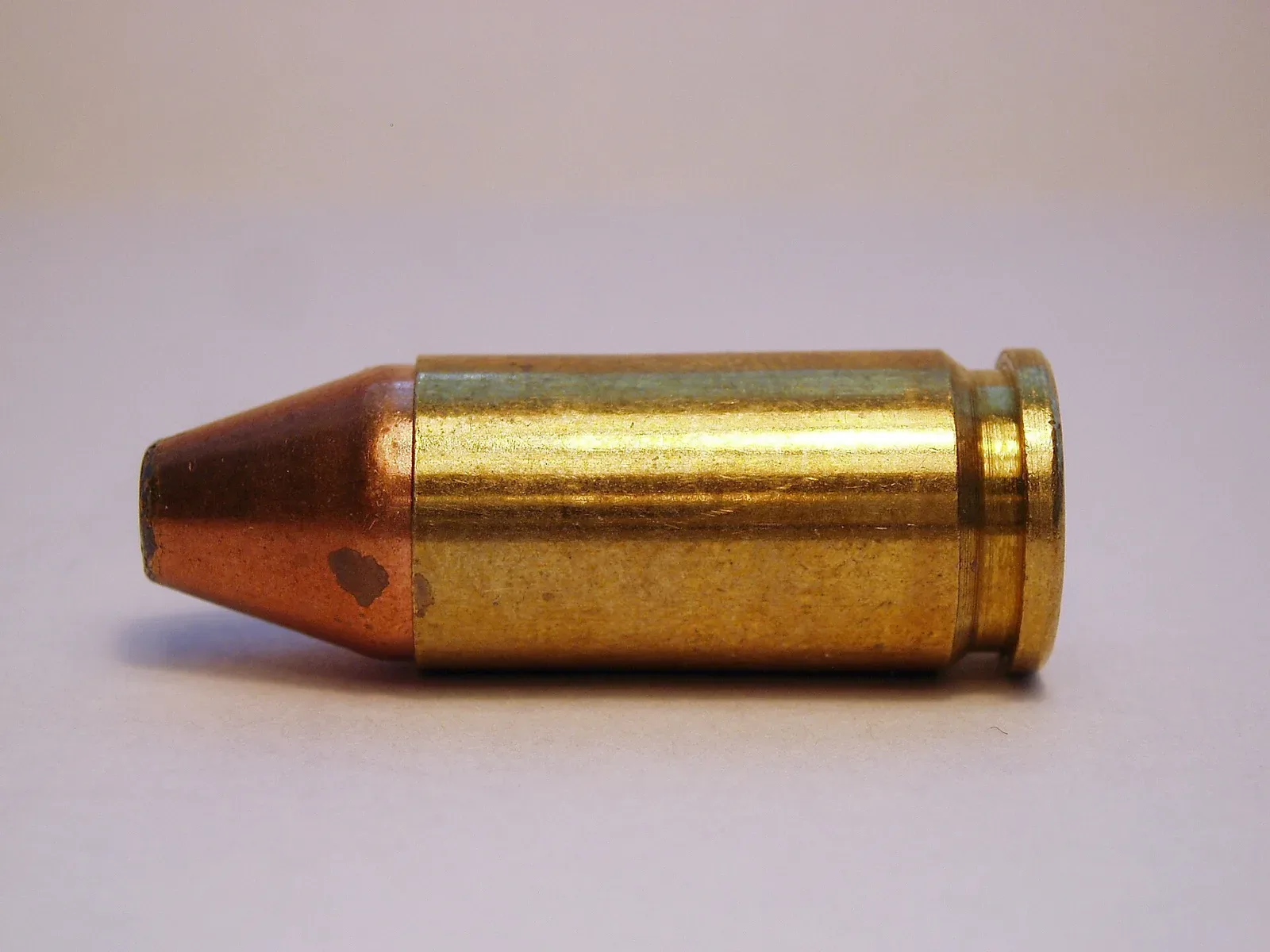
The FGC-9 is a semiautomatic, closed-bolt, blowback-operated pistol caliber carbine chambered in 9×19mm Parabellum. It weighs 2.1 kg unloaded, measures 520 mm overall with a 114 mm barrel, feeds from Glock-pattern magazines (including custom extended variants printed from the same file package), and mounts accessories via a Picatinny rail. On paper, those specs describe a compact, unremarkable carbine.
Technical Specifications
| Specification | Value |
|---|---|
| Caliber | 9×19mm Parabellum |
| Weight | 2.1 kg (unloaded) |
| Overall Length | 520 mm |
| Barrel Length | 114 mm |
| Magazine | Glock-pattern magazines |
| Rail System | Picatinny rail |
| Action | Blowback-operated, closed-bolt |
| Build Time | 1.5-2 weeks (novice) |
| Estimated Cost | Under $500 |
Historical Significance
What makes the FGC-9 historically significant has nothing to do with its ballistics. The name is an initialism for "Fuck Gun Control," and that is not a throwaway provocation — it is an engineering requirement baked into every design decision.
The gun was built from the ground up to require no commercially manufactured or legally regulated firearm components under European Union law. Every pressure-bearing metal part can be sourced from a hardware store or fabricated in a kitchen. The barrel is rifled through electrochemical machining using salt water and electricity. The upper receiver, lower receiver, pistol grip, stock, and even the magazine can all be printed on a consumer-grade 3D printer costing roughly $200.
According to the designer's own estimates, a novice builder with a printer already in hand could complete the gun in one and a half to two weeks at a total parts cost of under $500.
The FGC-9 arrived at a moment when 3D-printed gun development had produced proofs of concept but not yet a practical, reliable, globally reproducible firearm. It filled that gap.
Released publicly on March 27, 2020 by the design collective Deterrence Dispensed, the FGC-9 filled that gap — and the consequences have been felt in European criminal courts, Finnish neo-Nazi prosecutions, and Burmese jungle ambushes alike.
Design Historyedit
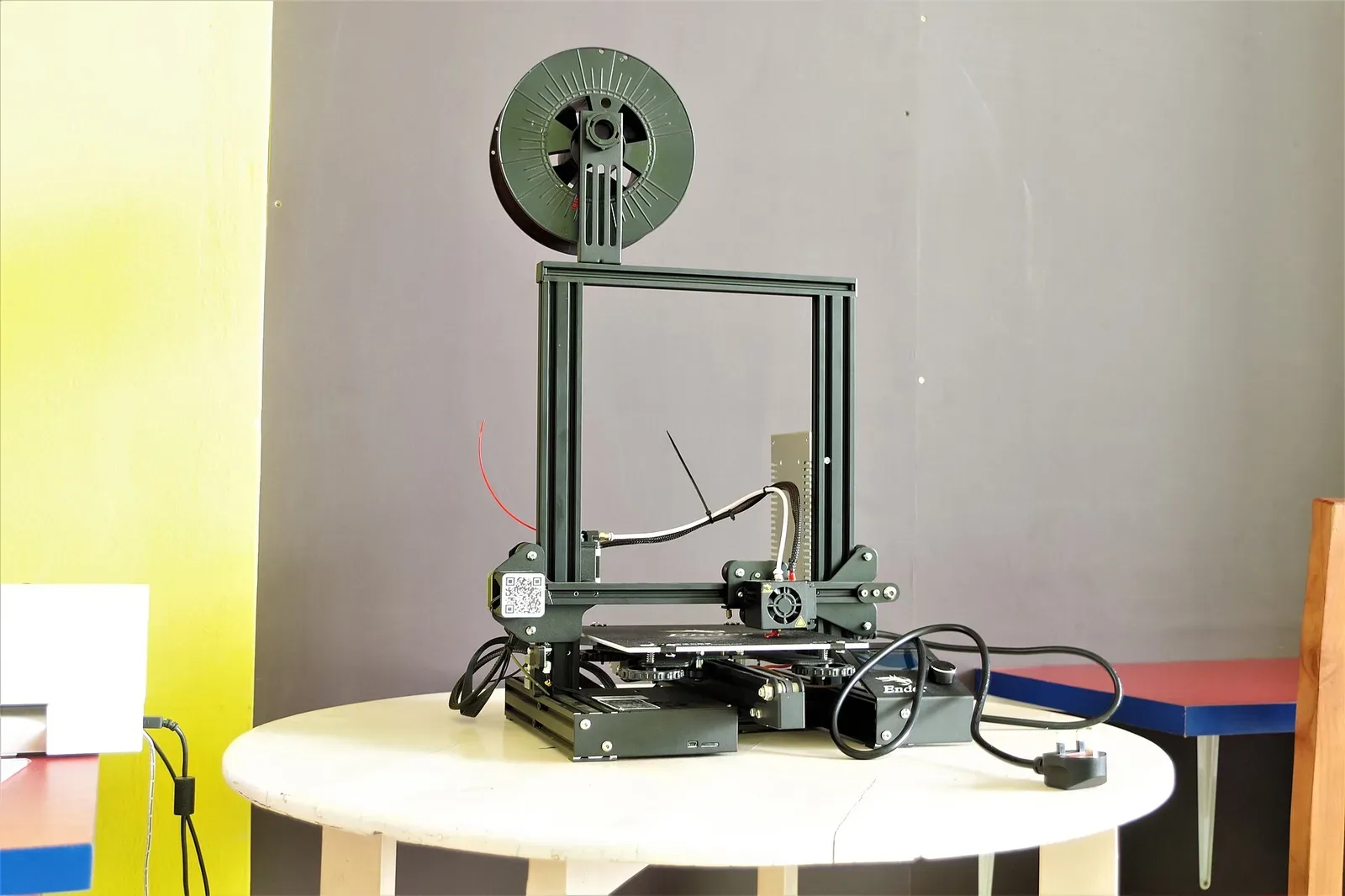
Precursor Designs
The story of the FGC-9 starts with two earlier projects it was built to surpass. The first is the Liberator, the single-shot, largely plastic handgun released in May 2013 by Cody Wilson of Defense Distributed. Wilson, a University of Texas law student and libertarian activist, let the BBC film him firing it before releasing the open-source design. The Liberator generated enormous press coverage — including a front-page photograph in the New York Post — but it was functionally marginal. It fired one round before requiring a full reload and was prone to structural failure under firing pressure. The technology had proven the concept; it had not yet delivered a weapon.
The second precursor is the Shuty AP-9, a 3D-printable pistol designed by a maker known as Derwood. The Shuty moved the design space forward but retained a critical dependency: it required factory-made or extensively machined components, particularly the barrel, to function. In jurisdictions that regulate those components — most of Europe — the Shuty was only theoretically accessible. It also drew on the design philosophy of Philip Luty, whose homemade submachine gun blueprints had circulated in British improvised-weapons circles for decades.
Timeline showing the progression from proof-of-concept to practical 3D-printed firearms
Jacob Duygu and JStark1809
The man who solved these problems was Jacob Duygu, a German national born to Kurdish refugees who had arrived from southeastern Turkey in the 1990s. Online, he operated under the pseudonym JStark1809 — a reference to American Revolutionary War general John Stark and his 1809 motto, "Live free or die." Duygu had served as a junior non-commissioned officer in the Bundeswehr, where he trained on the G36 assault rifle, a weapon he was legally prohibited from owning as a private citizen under Germany's strict licensing framework.
According to the International Centre for the Study of Radicalisation (ICSR) at King's College London, Duygu created the FGC-9 as a direct challenge to those German gun laws and what he described as the frustration of being granted only limited licenses by the state. Duygu had no formal engineering background. In a November 2020 interview with journalist Jake Hanrahan of Popular Front, he stated that he taught himself everything he needed through widely available internet resources.
He founded Deterrence Dispensed — a deliberate play on Wilson's Defense Distributed — as a collective for 3D-printed gun designers, and began adapting the Shuty AP-9 into something that could be built anywhere, by anyone, without touching a single regulated part.
Development Process
Work on the FGC-9 ran from 2018 to 2020, with the first release on March 27, 2020. The release package included not just the print files but thorough, step-by-step construction documentation described by one source as comparable to an IKEA assembly booklet. That documentation has since been translated into multiple languages. The design was released under an open-source license on DEFCAD and subsequently distributed across numerous platforms by Deterrence Dispensed.
| Release | Date | Key Features | Designer(s) |
|---|---|---|---|
| FGC-9 MkI | March 27, 2020 | Original design, factory trigger required | JStark1809 |
| ECMv2.0 | 2020 | Improved barrel process | JStark1809 |
| Menendez Mag v2.0 | 2020 | Enhanced magazine design | JStark1809 |
| Common Sense FCG | 2021 | Fully printable trigger group | Ivan the Troll |
| FGC-9 MkII | April 16, 2021 | MP5-style charging handle, no factory parts | JStark1809, 3socksandcrocs, Ivan the Troll |
MkII Evolution
The FGC-9 MkII was announced on October 23, 2020 by En Bloc Press and released on April 16, 2021 on DEFCAD and Odysee. Duygu produced it with contributions from designers known as "3socksandcrocs" and "Ivan the Troll." The MkII package was the culmination of several smaller staged releases: an improved electrochemical machining barrel process (ECMv2.0), the Menendez Mag v2.0, and the Common Sense Fire Control Group — a fully 3D-printable AR-15-style trigger designed by Ivan the Troll that eliminated the MkI's dependency on factory-made fire control parts.
The MkII also introduced an H&K MP5-style charging handle and additional ergonomic refinements. It was the final major design package Duygu would release before his death.
Technical Characteristicsedit
Core Architecture
The FGC-9's core architecture is a closed-bolt, blowback-operated carbine — a mechanically straightforward action well-suited to pistol-caliber ammunition and to construction by non-machinists. Blowback operation means the bolt is held closed only by spring pressure and its own mass, with no mechanical locking. This simplifies the bolt and barrel junction considerably compared to a locked-breech design.
Manufacturing process showing how the FGC-9 avoids regulated components
The upper and lower receivers are fully 3D-printed, as are the pistol grip and stock. Key components include:
- Upper and lower receivers are fully 3D-printed
- Pistol grip and stock are 3D-printed
- Magazine may be printed (Glock pattern)
- MkI required factory AR-15 trigger or modified airsoft trigger
- MkII eliminated dependency with printable trigger group
Barrel Manufacturing Innovation
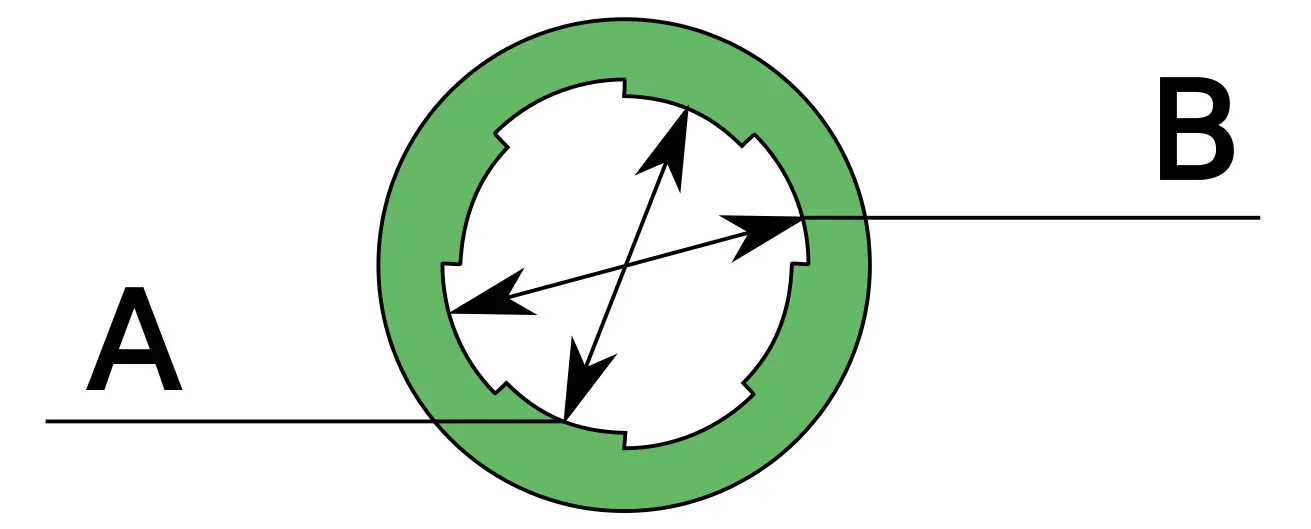
The barrel is the part that most distinguishes the FGC-9 from everything that came before it. Rather than requiring a machined commercial barrel — the component most likely to be regulated or tracked — the FGC-9's barrel is produced through electrochemical machining (ECM). The process passes electrical current between a steel tube (the anode) and a shaped tool (the cathode) submerged in an electrolytic solution — in the original tutorial from TheFirearmBlog, literally salt water. The current erodes the steel in a controlled pattern, cutting rifling grooves without any mechanical contact.
The tooling for the ECM process runs approximately $100, and the method requires no machining workshop. According to JStark's own estimates, and per the sourced build documentation, the entire gun including printer and ECM equipment comes in under $500.
The bolt in the MkI design required welding of metal components — a skill and tool barrier that the MkII partially addressed and that subsequent variants like the Nutty-9 eliminated entirely by substituting standard mechanical hardware bolts, removing the welding requirement in both metric and imperial configurations.
The Picatinny rail on the upper receiver allows for optics mounting. A version of the top rail was specifically developed for use in Myanmar by QueerArmorer to accommodate rebels operating with limited optics access, though a Deterrence Dispensed team subsequently developed printable iron sights that provided more flexibility across different configurations.
Platform Variants
Subsequent variants expanded the platform in several directions:
| Variant | Release Date | Key Modifications | Designer |
|---|---|---|---|
| FGC-9 MkII Stingray | June 2022 | 16-inch barrel carbine | hotsauce |
| Partisan-9 | September 2022 | Ported barrel, integral suppression, folding stock | Deterrence Dispensed |
| FGC-9 MkII Bufferless | Various | Forward bolt placement | Various |
| FMGC-01 | Various | Select-fire, Sten magazines | Various |
| Nutty-9 | Various | Hardware bolt construction, no welding | DetDisp/The Gatalog |
| FGC-6 | Various | 1:1 scale airsoft replica | Various |
For U.S. builders, common modifications include replacing the buttstock with an ATF-approved pistol brace and substituting a 16-inch barrel with extended handguard to comply with federal minimum barrel length requirements.
Combat & Field Useedit
Myanmar Conflict
The most operationally significant deployment of the FGC-9 has been in Myanmar, where it entered active combat use following the military coup of February 2021. Anti-junta rebel forces — including units affiliated with the People's Defense Force and regional resistance organizations — began manufacturing the MkII and MkII Stingray in small workshops and forward bases close to frontlines.
According to reporting by France24 and documentation by journalist Jake Hanrahan, fighters used the FGC-9 in hit-and-run ambushes on government forces, with the explicit tactical goal of capturing conventionally manufactured, higher-powered weapons from Tatmadaw soldiers. Video of Mi Tala Nyan, the commander of the Mon State Revolutionary Force, firing an FGC-9 circulated online and became emblematic of the weapon's role in the conflict.
The Myanmar case represents the first documented large-scale combat use of a 3D-printed firearm by an insurgent force. It is exactly the use case the weapon's designer said he envisioned — placing functional arms in the hands of people whose governments have disarmed them.
Law Enforcement Seizures
Beyond Myanmar, law enforcement agencies worldwide have recovered FGC-9 components and completed builds across a striking geographic spread. According to Wikipedia's sourced documentation, complete and incomplete models have been seized in the European Union, United Kingdom, Australia, New Zealand, Canada, the United States, Taiwan, and Iceland.
| Country | Year | Context | Outcome |
|---|---|---|---|
| Myanmar | 2021-ongoing | Anti-junta resistance | Active combat use |
| United Kingdom | 2022 | Criminal supply network | 37 years combined sentences |
| Finland | 2022 | Neo-Nazi group | Terrorism convictions |
| Finland | 2021 | Commercial production | 1 year 4 months sentence |
| Northern Ireland | 2022 | Paramilitary display | Public appearance |
| United Kingdom | 2023-2024 | Lone actor extremist | 13 years sentence |
Criminal and Extremist Use
In the United Kingdom, a 2022 case in Bradford resulted in the first convictions in British legal history for attempting to supply criminal groups with 3D-printed firearms. Three men received a combined 37 years in prison after police discovered FGC-9 components in a vehicle stop and subsequent search.
In Finland, police arrested a group of neo-Nazi accelerationists in 2022 who had been printing and assembling FGC-9s and who posted video of using a gun to shoot at an immigrant family's letterbox. Three men were convicted of crimes with terrorist intent and sentenced to prison. A separate Finnish case resulted in a one-year-four-month sentence for a man who manufactured at least eight firearms. In 2021, Finnish police also raided a production facility in Tampere that was equipped with manufacturing equipment, partially completed firearms, and a testing range — a scale of operation that Armament Research Services estimated could produce 12 FGC-9s in two weeks from a roughly $1,500 total investment, with each gun reportedly selling for approximately 2,500 EUR on Telegram.
In Easter 2022, members of the dissident Irish republican paramilitary Óglaigh na hÉireann appeared publicly at a commemoration carrying a .22 caliber modification of the FGC-9 — the first time paramilitary members in Northern Ireland had been seen with 3D-printed firearms.
In the UK, a teenager inspired by the Unabomber was arrested in May 2023 after printing FGC-9 components, found guilty in 2024, and jailed for 13 years.
According to researcher Rajan Basra, the FGC-9 is particularly popular among far-right groups due to the circulation of its build instructions in extremist online forums. That said, the sourced record shows the weapon's actual use cuts across a broad and ideologically incoherent range of actors: pro-democracy insurgents, organized criminals, nationalist paramilitaries, and lone-actor extremists have all been documented using it.
Legacy & Influenceedit
Historical Inflection Point
The FGC-9 is the inflection point at which 3D-printed firearms crossed from novelty to operational weapon.
The historical position of the FGC-9 is straightforward to state and genuinely difficult to overstate. It is the inflection point at which 3D-printed firearms crossed from novelty to operational weapon. Cody Wilson's Liberator in 2013 proved that a 3D printer could produce something that fired. The Shuty AP-9 showed that a more practical design was possible.
The FGC-9 — by stripping out every regulated component and replacing it with hardware store materials and kitchen-table fabrication — proved that a functional, semiautomatic, magazine-fed carbine could be produced entirely outside any regulated supply chain, anywhere in the world, by a motivated person with no engineering background. That is a genuinely new thing in the 800-year history of firearms.
Jacob Duygu's Death and Aftermath
The open-source model Duygu chose for distribution accelerated that impact. Because the files were released under an open-source license and mirrored across decentralized platforms, they proved essentially impossible to suppress. Law enforcement agencies in multiple countries have confirmed this.
When Der Spiegel reported in October 2021 that British financial intelligence had helped German Federal Criminal Police identify Duygu and raid his apartment in Völklingen in June 2021, the raid turned up a 3D printer, phones, and hard drives — but no weapons, and no grounds for arrest. Two days later, Duygu was found dead in a car parked outside his parents' home in Hannover. The coroner's conclusion was heart attack; foul play was ruled out. Duygu was 28 years old.
Design Evolution and Community
His death did not slow the movement he had built. Deterrence Dispensed continued operating, eventually rebranding as The Gatalog to reduce confusion with Wilson's Defense Distributed. Ivan the Troll — later identified by The New York Times as John Elik of Illinois — continued producing derivative designs and improvements.
The community fractured somewhat along lines of open-source versus proprietary development, American PKC-focused design versus globally accessible hybrid design, and experimental versus functional priorities. But the FGC-9 remained the reference point.
Design lineage showing how the FGC-9 influenced subsequent 3D-printed firearms
The weapon's influence is visible in every major 3D-printed firearm design that followed it. The Partisan-9, the Urutau (released August 2024 by a Brazilian designer known as "ZC"), and the Nutty-9 all trace their lineage directly to design problems the FGC-9 identified and partially solved. The Urutau's 105-page build guide opens with a photograph of JStark1809. The "New Second Amendment" manifesto included with the Urutau's file package explicitly cites the FGC-9, the Partisan-9, and the Urutau as the three closest existing attempts to meet a triple design constraint: practical to manufacture, impossible for governments to prohibit, and competitive with commercially produced weapons.
Regulatory Response
The FGC-9 also reshaped the regulatory conversation in ways that are still playing out. Multiple jurisdictions have moved to criminalize not just the possession of 3D-printed firearms but the possession or distribution of the build files themselves. The operational security guidance bundled with successor designs like the Urutau exists in direct response to those legal developments — and to the doxing of community figures like Duygu and Elik by researchers and journalists.
The Contradiction Problem
The contradiction at the center of the FGC-9's legacy is the contradiction at the center of Jacob Duygu himself. In his public JStark1809 persona, he articulated a universalist human-rights argument for armed self-defense, citing the Holocaust and the persecution of Uyghurs as evidence that populations need access to weapons independent of state permission.
Researcher Rajan Basra's 2023 ICSR report — using forensic linguistic analysis and image hash tracking across 719 comments in 89 threads on 4chan's /pol/ board — identified Duygu as the author of posts containing xenophobic, racist, antisemitic, and misogynistic content, including explicit incel rhetoric and what Basra characterized as endorsements of anti-state violence. Members of the 3D-printed gun community contested the report's methodology and conclusions.
The gun itself does not resolve that contradiction. It is used by anti-junta rebels in Myanmar and by Finnish neo-Nazis shooting at an immigrant family's door. The design makes no distinction. What is undisputed is the technical fact: as of 2020, the threshold skill and cost required to produce a functional, magazine-fed, rifled semiautomatic carbine dropped to roughly $500 and two weeks of a motivated amateur's time. That threshold has only continued to fall.
The BGC Takeedit
I've been around long enough to remember when the Glock was going to let terrorists walk through metal detectors and when .50 BMG rifles were going to be used to shoot down airliners. The sky-is-falling version of every new firearms development tends to outrun the reality by a considerable margin. So I try to stay calibrated.
The FGC-9 is different. Not because of the specific gun — a 9mm blowback carbine is not going to change the character of most violence — but because of what the design methodology proved.
The question of whether governments can effectively regulate firearm production got a hard answer in 2020, and the answer was "not entirely, and probably not increasingly."
That's a genuine shift, not hype. At the same time, the actual documented harm from the FGC-9 in most Western countries has been concentrated in specific categories: organized crime (the UK black market case), far-right extremism (Finland, the UK teenager), and paramilitary demonstration (Northern Ireland). The Myanmar use — where people with no access to conventional arms are manufacturing the one tool available to them to resist a military junta — is the case that scrambles any simple political framing of the weapon. I'm not telling you how to feel about that. I'm telling you it's real and that it matters to how you think about what the FGC-9 actually is in the world.
Duygu himself is a genuinely hard case. The ICSR report's methodology has been criticized, and the 4chan inference chain is not the same as direct evidence. But even setting aside the anonymously posted content, the man publicly and on camera said he wanted to make weapons available to everyone everywhere regardless of what their government said. He achieved that. The downstream consequences, including the Finnish neo-Nazis and the Irish paramilitaries, are part of that achievement whether he intended them or not.
What I keep coming back to is the engineering. Duygu had no formal background, taught himself, and produced something that demonstrably works — well enough that rebel forces in an active civil war adopted it as a primary weapon. That's a remarkable technical accomplishment by any measure, made stranger by the fact that the person who pulled it off died at 28 in a car outside his parents' house in Hannover, and nobody who knew him agrees on who he actually was.
The FGC-9 is not the last word on this. The Urutau is already simpler to build. Whatever comes after the Urutau will be simpler still. The trajectory is clear and it is not reversing. The more useful question for anyone in the firearms community — hobbyist, retailer, policy person, or just a shooter trying to understand the world — is what that trajectory means for how we think about access, accountability, and the relationship between individuals and the state. The FGC-9 did not settle those questions. It made them impossible to defer.
Referencesedit
- https://en.wikipedia.org/wiki/FGC-9
- https://www.wired.com/story/3d-printing-guns-fgc9-creator-jacob-dugyu-jstark1809/
- https://gnet-research.org/2025/01/08/beyond-the-fgc-9-how-the-urutau-redefines-the-global-3d-printed-firearm-movement/
- https://3dprint.com/304936/jstark1809-the-german-soldier-behind-the-3d-printed-gun-revolution/
Last Updated: February 27, 2026
- Gls Guns(Sumner, IA)
- Bi-mart - Yakima (Fruitvale Ave)(Yakima, WA)
- New Philly Sportsman Specialities(New Philadelphia, OH)
- R&R Sports & Outdoors(Brandon, FL)
Loading comments...