State Details
Mississippi

Overview | |
|---|---|
State | Mississippi (MS) |
Capital | Jackson |
Statehood | 1817 |
Population | 2,939,690 |
Gun Ownership | 55.8% |
Active FFLs | 737 |
Carry Laws | |
Constitutional Carry | Yes (2016) |
Open Carry | Yes |
CCW Permit Available | Yes |
Permit Reciprocity | 36+ states |
Self-Defense | |
Castle Doctrine | Yes |
Stand Your Ground | Yes |
Duty to Retreat | No |
Regulations | |
State Preemption | Yes |
Red Flag / ERPO | No |
Waiting Period | None |
Universal BGC | No |
NFA Items | Yes |
Assault Weapons Ban | No |
Magazine Limit | None |
Key Legislation | |
| |
Notable Manufacturers | |
| |
Mississippi Firearms History
Reference article
From The Boise Gun Club Handbook
Overviewedit
Mississippi sits at a crossroads of American firearms history that most states can't match — not because it produced famous gunmakers or hosted proving grounds, but because the forces that shaped guns in America played out here in raw form. Frontier violence, plantation slavery, Civil War sieges, racial disarmament, and a deep hunting culture running from the Delta bottoms to the pine hills have all left marks on how Mississippians relate to firearms.
The state entered the Union on December 10, 1817, already shaped by decades of French and Spanish colonial trade, Native American armed resistance, and a settler population that treated the long rifle as a daily tool. Today Mississippi ranks among the states with the fewest restrictions on firearms ownership and carry — a position that reflects a specific cultural and political trajectory, not just a default setting.
Understanding Mississippi's firearms history means following that full arc: from trade muskets moving through Choctaw villages to the ironclad guns on the Yazoo River, from Reconstruction-era disarmament laws aimed at freed slaves to a 2016 permitless carry statute. It's a complicated story, and it doesn't flatten into a simple narrative either direction.
Colonial & Frontier Eraedit
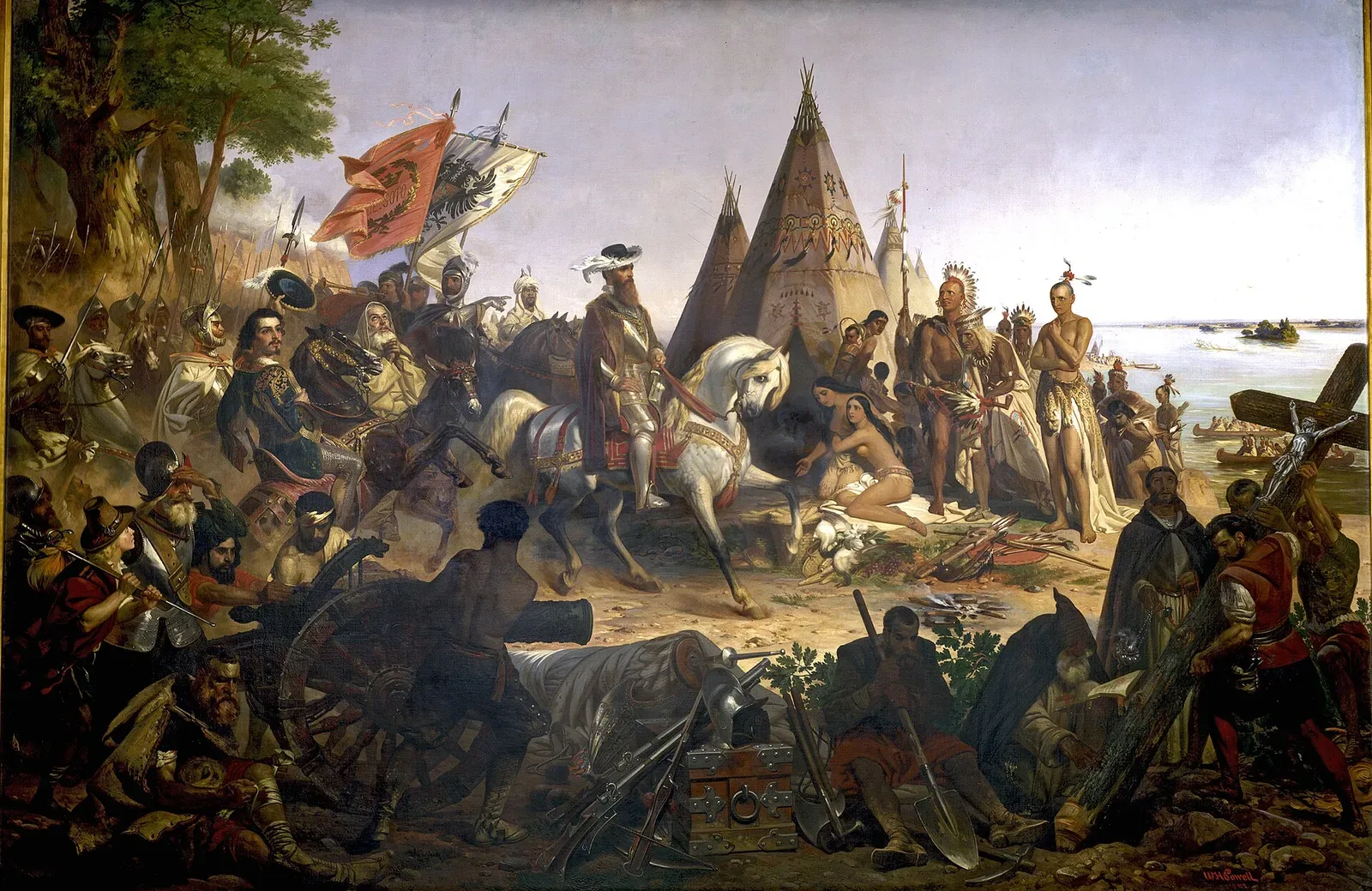
The first Europeans to bring firearms into what is now Mississippi arrived with Hernando de Soto's Spanish expedition in the early 1540s. De Soto's men carried matchlock arquebuses and crossbows — neither weapon had decisive tactical superiority over the massed archery of the Chickasaw, who inflicted enough punishment on the expedition near present-day northeastern Mississippi that de Soto altered his route. That early friction between European firearms and indigenous resistance set a tone that would repeat itself for the next three centuries.
French colonization began in earnest when Pierre Le Moyne d'Iberville established Fort Maurepas near present-day Ocean Springs in 1699. French colonial policy in the lower Mississippi Valley involved aggressive firearms trading with Native tribes — the Choctaw, Natchez, Chickasaw, and Yazoo all acquired French trade guns, flintlock fusils of middling quality that were cheap enough to move in volume. These weren't gifts. France used firearms access as a lever to maintain alliances, extract furs, and keep British influence out of the territory.
European Colonial Competition
| Colonial Power | Period | Firearms Trading Policy | Primary Native Allies |
|---|---|---|---|
| Spanish | 1540s | Limited matchlock trade | Various (temporary) |
| French | 1699-1763 | Aggressive trade gun distribution | Choctaw, Natchez (until 1729) |
| British | 1763-1783 | Strategic alliance-based supply | Chickasaw |
| American | 1783+ | Market-based trade | Treaty-dependent |
The Natchez Uprising of 1729 demonstrated how quickly that dynamic could invert. The Natchez people, angered by French demands for their village land at Fort Rosalie on the Mississippi River, killed approximately 250 French colonists in a coordinated attack — using French-supplied weapons alongside traditional arms. The French retaliated with a campaign that effectively destroyed the Natchez as a political entity, scattering survivors into neighboring tribes. The episode left the French deeply wary of arming their Native allies beyond a carefully managed threshold.
British control arrived after the Seven Years' War (1756–1763), and with it came a different approach — British traders from the Carolinas had long supplied the Chickasaw with firearms and maintained a tighter alliance than France ever managed with that nation. The Chickasaw, armed with British trade guns and motivated by their own political interests, had functioned as a buffer against French expansion for decades and resisted French military expeditions in the 1730s with enough effectiveness to permanently blunt French expansion northward.
The Natchez Trace Era
After American independence, the Natchez Trace emerged as the primary overland route connecting Nashville to Natchez — and it earned a reputation as one of the most dangerous roads in North America. Boatmen floating goods downriver to New Orleans would sell their flatboats for lumber and walk the Trace home. Bandits, some operating in organized gangs like those associated with Samuel Mason and later "Little" Harpe, preyed on travelers throughout the late 1700s and early 1800s.
A well-armed traveler on the Natchez Trace wasn't making a political statement — he was making a survival calculation.
This environment embedded practical firearms competence into the culture of early Mississippi in a way that never fully unwound.
19th Century: Statehood, Expansion & Disarmamentedit
Early Statehood and Constitutional Development
Mississippi's 1817 constitution contained no explicit right to arms provision — that came later. The Mississippi Constitution of 1817 focused on organizing a state government for a population of roughly 75,000, about 40 percent of whom were enslaved. From the beginning, firearms law in Mississippi had a racial dimension that the formal legal record often understates.
| Mississippi Constitution | Year | Arms Rights Provision | Context |
|---|---|---|---|
| First Constitution | 1817 | None explicit | Territorial organization |
| Second Constitution | 1832 | "Every citizen has equal right to keep and bear arms" | Jacksonian democracy |
| Third Constitution | 1890 | Added legislative authority over concealed carry | Post-Reconstruction disfranchisement |
The Indian Removal Act of 1830 accelerated the forced displacement of the Choctaw and Chickasaw from Mississippi. The Treaty of Dancing Rabbit Creek (1830) removed most Choctaw west of the Mississippi River, and the Treaty of Pontotoc Creek (1832) did the same for the Chickasaw. Both treaties were negotiated under pressure that included the implicit and explicit threat of armed force. The removal cleared millions of acres in northern and central Mississippi for cotton agriculture — lands that would be worked by enslaved people whose legal access to firearms was tightly controlled.
Mississippi's antebellum slave codes prohibited enslaved people from owning or carrying firearms without a written pass from their owner. Free Black residents faced similar restrictions under Mississippi's 1822 and later statutes — a legal architecture designed to maintain the plantation order through a monopoly on armed force held by white men. This wasn't unique to Mississippi, but the state's demographics — majority-Black in many Delta counties by the mid-19th century — made the enforcement of these laws particularly aggressive.
The Mississippi Constitution of 1832 introduced the first explicit state constitutional protection for firearms, declaring that "every citizen has an equal right to keep and bear arms." The 1817 document had been silent on the question. This provision reflected both the Jacksonian-era politics of expanding white male rights and the practical reality that firearms were essential tools on an agricultural frontier.
Dueling culture was deeply embedded in antebellum Mississippi's planter class. The code duello governed disputes among the elite, and the pistol — particularly matched sets of flintlock and later percussion dueling pistols — carried enormous social weight. Natchez served as a center of this culture, with wealthy planters settling grievances on Vidalia Sandbar across the river in Louisiana's jurisdiction. The most famous duel in the region's history, the Sandbar Fight of 1827, involved Jim Bowie and ended with multiple casualties and Bowie's introduction of the large fighting knife that bears his name — but the confrontation began as a pistol duel between other principals.
The Civil War in Mississippi
Mississippi left the Union on January 9, 1861 — the second state to secede after South Carolina. The firearms implications were immediate. The state moved to seize federal arsenals and armories within its borders and worked to arm the volunteer companies forming across the state. Mississippi had no significant domestic arms manufacturing infrastructure. The state's military was dependent on imports from Northern manufacturers (cut off by secession), European suppliers reached through blockade-running, Confederate arsenals in Georgia and Virginia, and whatever weapons individual soldiers brought from home.
The Vicksburg Campaign (October 1862 – July 4, 1863) is the defining military event of Mississippi's Civil War experience. Ulysses S. Grant's army besieged the Confederate stronghold at Vicksburg for 47 days after failed frontal assaults demonstrated that the city's artillery positions and rifle pits were too strong to carry by direct attack. The Confederate garrison under Lieutenant General John C. Pemberton surrendered on July 4, 1863, giving the Union control of the Mississippi River and effectively splitting the Confederacy. The artillery duels during the siege involved some of the most sustained cannon fire seen in the Western Theater, with both sides employing rifled artillery that significantly outranged the smoothbores of earlier decades.
The Battle of Corinth (October 3–4, 1862) saw Confederate forces under Earl Van Dorn attempt to retake the rail junction town from Union defenders. The fighting was intense street-by-street combat through prepared defensive works, and Van Dorn's assault failed with heavy Confederate casualties. The Union defense relied heavily on the Springfield rifle-musket, which by 1862 was being issued in sufficient numbers to give Union infantry a range advantage over Confederate troops still carrying smoothbore muskets.
Mississippi was also home to significant guerrilla activity throughout the war. The 1st Mississippi Partisan Rangers and various irregular units operated across the state, conducting raids and ambushes that required Union forces to maintain garrison strength far larger than the conventional battlefield situation alone would have demanded. This irregular warfare tradition — small-unit, independent action with personal firearms — reinforced existing cultural attitudes about armed self-reliance.
Key Civil War firearms-related events in Mississippi
Reconstruction and Targeted Disarmament
The end of the Civil War and the formal abolition of slavery created an immediate political crisis around firearms in Mississippi. Freedmen — formerly prohibited by law from owning guns — began acquiring firearms as symbols and instruments of their new legal status. The white planter class and their political allies moved quickly to reverse this.
Mississippi's Black Codes of 1865, passed by the all-white state legislature almost immediately after the war, included explicit firearms prohibitions targeting freed Black Mississippians. The codes made it illegal for freedmen to carry firearms without a license issued by a local board — a licensing authority composed entirely of white Democrats with every incentive to deny applications. Congress responded by including provisions in the Civil Rights Act of 1866 and the Fourteenth Amendment (1868) that were partly aimed at restoring civil rights including arms rights to freed people.
During Reconstruction (1865–1877), Black militia companies formed in Mississippi under the protection of federal troops and Republican state government. These units were armed with state-issued weapons and represented a direct challenge to the old racial order. The Meridian Riot of 1871 and the Hamburg Massacre of 1876 (across the border in South Carolina, but with direct Mississippi political implications) illustrated how firearms-backed white supremacist violence was being used systematically to suppress Black political participation.
The Mississippi Plan of 1875 — a coordinated campaign of political violence and intimidation — restored Democratic control of the state legislature. Armed groups, sometimes euphemistically called "rifle clubs," rode through Black communities before elections to suppress turnout. The Mississippi Constitution of 1890, which formally disfranchised Black voters through poll taxes, literacy tests, and grandfather clauses, was the legislative capstone of a process that had been enforced at gunpoint throughout the 1870s and 1880s.
The same state that enshrined the right to keep and bear arms in its 1832 constitution spent decades systematically using law and extralegal violence to deny that right to a majority of its population.
20th Century: Wars, Industry & Regulationedit
Military Training and Industrial Base
Mississippi contributed heavily to both World Wars in terms of manpower, but the state's industrial base was not configured for arms manufacturing. There was no Mississippi equivalent of Springfield, Colt's Hartford factory, or Winchester's New Haven plant. Mississippi soldiers trained at Camp Shelby near Hattiesburg, which has served as a mobilization and training installation since World War I and remains one of the largest National Guard training centers in the country.
Camp Shelby's history with firearms training spans over a century. During World War I, the 38th Division trained there. During World War II, it processed hundreds of thousands of soldiers. The installation used Mississippi's pine forests and open terrain for marksmanship training, infiltration courses, and weapons familiarization — contributing to the state's deep military-firearms culture in a practical, ground-level way.
The Civilian Conservation Corps and other New Deal programs of the 1930s brought federal presence into Mississippi's forests and were often staffed by young men from rural backgrounds for whom firearms were everyday tools. Hunting — deer, turkey, squirrel, and waterfowl — was not a hobby in Depression-era Mississippi. For much of the rural population, it was a meaningful supplement to subsistence agriculture.
The Civil Rights Era and Firearms
The 1950s and 1960s civil rights movement in Mississippi produced some of the most documented instances of firearms being used both to threaten and to protect. The White Citizens' Councils that formed after Brown v. Board of Education (1954) applied economic pressure rather than direct violence, but the Ku Klux Klan and affiliated groups did not make that distinction. Night-rider attacks on civil rights workers' homes were a regular occurrence.
Robert F. Williams, a North Carolina NAACP leader whose approach influenced Mississippi activists, openly advocated armed self-defense for Black communities against Klan violence — a position that put him in direct conflict with the national NAACP's nonviolence stance but resonated with Mississippi activists who were being shot at.
Medgar Evers, the NAACP's Mississippi field secretary and a World War II veteran, kept firearms in his home in Jackson. He understood that his work made him a target. On June 12, 1963, Byron De La Beckwith shot and killed Evers in his own driveway with a 1917 Enfield rifle fitted with a scope. Beckwith was tried twice in the 1960s; all-white juries deadlocked both times. He was finally convicted in 1994 — thirty-one years after the murder. The Evers assassination remains the most prominent political firearms killing in Mississippi history.
Civil rights workers and local activists who chose to arm themselves for protection were not making an ideological statement divorced from the legal text — they were exercising a right that the Constitution guaranteed but that Mississippi's political structure had spent a century denying to Black residents specifically. The tension between the state's formal constitutional protection of arms rights and its actual enforcement history is something anyone doing an honest assessment of Mississippi's firearms culture has to sit with.
Fannie Lou Hamer, a sharecropper and voting rights activist from Sunflower County, kept a shotgun in her home after her home was shot into following her attempts to register to vote. In interviews, she was matter-of-fact about it. Self-defense with firearms wasn't a political abstraction for the people living through that period in the Mississippi Delta.
Mid-Century Legislation
The Federal Firearms Act of 1938 and later the Gun Control Act of 1968 reshaped the national regulatory framework around firearms dealers and transfers. Mississippi's state-level response to the GCA was minimal — the state had no state-level licensing or registration requirements and did not add any. The political will for additional regulation simply wasn't there, and the rural hunting culture made any significant restriction politically toxic.
The Omnibus Crime Control and Safe Streets Act of 1968 restricted certain classes of purchasers nationally, and Mississippi implemented the minimum federal compliance without adding state-level elaboration. This pattern — adopt the federal floor and nothing above it — has characterized Mississippi's approach to firearms regulation consistently from the 1960s forward.
| Federal Legislation | Year | Mississippi Response | Impact Level |
|---|---|---|---|
| Federal Firearms Act | 1938 | Minimal compliance | Low |
| Gun Control Act | 1968 | Federal floor only | Low |
| Omnibus Crime Control Act | 1968 | No state elaboration | Low |
| Brady Act | 1993 | Federal compliance only | Moderate |
Modern Era (2000–Present)edit
Mississippi entered the 21st century as one of the most permissive firearms states in the country, and it has moved further in that direction over the past two decades. The political alignment of the state — heavily Republican since the 1990s realignment following the civil rights era — ensured that firearms legislation would trend toward fewer restrictions rather than more.
Constitutional Developments
The Mississippi Constitution of 1890's Article 3, Section 12 had long read: "The right of every citizen to keep and bear arms in defense of his home, person, or property, or in aid of the civil power when thereto legally summoned, shall not be called in question, but the legislature may regulate or forbid carrying concealed weapons." In 2009, Mississippi voters approved an amendment strengthening the language and adding that the right "shall not be called in question" — a direct response to post-Heller debates about the scope of Second Amendment protections.
District of Columbia v. Heller (2008) and McDonald v. City of Chicago (2010) both affected Mississippi primarily in the sense that they validated what the state was already doing — minimal restriction, broad access, and a political climate hostile to new gun laws. Neither ruling required Mississippi to change much of anything.
Constitutional Carry
Mississippi had allowed open carry without a permit since the early 2000s through statutory interpretation, but the path to permitless concealed carry had more friction. The state's concealed carry permit system, administered by the Mississippi Department of Public Safety, issued permits on a shall-issue basis — meet the criteria and you get the permit. The fees and training requirements, while not onerous, were still barriers.
In 2016, the Mississippi Legislature passed House Bill 786, which took effect July 1, 2016, creating a permitless carry framework for concealed handguns. A person 21 or older who can legally possess a firearm can carry a concealed handgun without a permit. The optional enhanced permit system — which requires firearms training and allows carry in some additional locations — was preserved for those who want it, primarily for reciprocity purposes when traveling to states that require a permit.
This made Mississippi one of the earlier states in what became a national wave of constitutional carry adoptions. By 2024, over half the states had adopted some form of constitutional carry. Mississippi's 2016 move preceded several larger states' similar legislation.
Hurricane Katrina (August 2005) hit Mississippi's Gulf Coast with devastating force — Biloxi, Gulfport, Pass Christian, and Bay St. Louis took catastrophic damage. The post-Katrina period produced significant discussion about armed self-defense in the absence of functional law enforcement. For weeks in some areas, the state police, National Guard, and local officers were stretched far beyond capacity. Gun sales in the affected areas spiked when stores were back in operation. The experience reinforced, for many Mississippians, a practical argument for personal firearms that had nothing to do with ideology.
Hunting Culture and Wildlife Management
The MDWFP (Mississippi Department of Wildlife, Fisheries and Parks) administers one of the most extensive hunting programs in the South. Mississippi's deer season — which includes archery, primitive weapon, and rifle phases — generates significant economic activity and represents a genuine mass participation sport. The state's bottomland hardwood forests, particularly in the Delta, are among the most productive whitetail habitat in the country, drawing hunters from across the region.
The primitive weapons season designation in Mississippi specifically covers muzzleloaders — percussion and flintlock firearms firing a single projectile — and has sustained a meaningful subculture of black powder shooting in the state. Rules administered under MDWFP Part 203, Chapter 5 define what constitutes a legal primitive firearm for hunting purposes and have been updated periodically to address modern inline muzzleloaders and other edge cases.
The Natchez Trace Parkway, administered by the National Park Service, specifically prohibits hunting and the discharge of firearms within park boundaries — a restriction that has generated periodic friction with Mississippi hunters who regard the corridor as part of their traditional hunting landscape.
Mississippi concealed carry decision flowchart under current law
Notable Figures & Manufacturersedit
Mississippi has not produced firearms manufacturers of national scale, but several figures connected to firearms history have significant Mississippi ties.
Jim Bowie (1796–1836) spent formative years in Louisiana but was deeply connected to the Natchez area. The Bowie knife — the large fighting blade that bears his name — emerged from the Natchez region's violent frontier culture, though the actual origin and who first made the knife remains contested. Knife culture and blade design were closely intertwined with firearms in this period; the knife was the backup weapon when a flintlock misfired or went dry.
John A. Murrell was a notorious outlaw of the Natchez Trace era in the 1820s–1830s whose gang operated across the lower South. Murrell's criminal network — which dealt in stolen horses, slaves, and goods — operated in an environment where firearms were both tools of the trade and symbols of authority. His eventual capture and the subsequent "Murrell Excitement" of 1835 led to vigilante violence across Mississippi and Tennessee that killed numerous people.
Byron De La Beckwith (1920–2001) is documented here not as a figure of admiration but because his use of a rifle in the assassination of Medgar Evers and the subsequent three-decade failure to convict him are central to understanding how firearms and race intersected in 20th-century Mississippi. His 1994 conviction by a racially mixed jury under District Attorney Bobby DeLaughter was a watershed.
Medgar Evers (1925–1963) himself served in the United States Army during World War II and landed at Normandy. He was a combat veteran who returned to Mississippi and fought for civil rights in an environment where that fight was physically dangerous. His firearms were not a contradiction of his civil rights work — they were consistent with the legal rights he was fighting to make real for everyone.
In terms of commercial firearms industry, Jackson has supported a retail gun market for decades with shops like Magnolia Firearms serving the metro area's hunters and sport shooters. The state has several custom gunsmiths operating in the hunting-rifle and shotgun space, particularly serving the waterfowl and deer hunting markets. None have achieved national manufacturer status.
Camp Shelby, near Hattiesburg, deserves mention as a firearms training institution in its own right. The installation has trained Mississippi National Guard units continuously since World War I and has been used by units from multiple states and allied nations. Its small arms ranges and tactical training facilities have contributed to marksmanship culture across the region.
Current Legal Landscapeedit
Mississippi's firearms law as it stands is among the least restrictive in the country. Here's what that looks like in practice.
Constitutional Foundation
Constitutional foundation: Article 3, Section 12 of the Mississippi Constitution protects the right to keep and bear arms in defense of home, person, or property, with a legislative carve-out specifically for concealed carry regulation — a provision that has been in place since 1890 and was reinforced by the 2009 amendment.
Carry Laws and Permits
Permitless carry: Since July 1, 2016, any person 21 or older who can legally possess a firearm may carry a concealed handgun without a permit. The optional enhanced permit — requiring an approved firearms training course — is available through the Mississippi Department of Public Safety at a $100 initial fee, valid for five years. The enhanced permit allows carry in some locations where standard permitless carry does not apply and supports reciprocity with states requiring a valid permit.
| Carry Type | Age Requirement | Permit Required | Training Required | Cost |
|---|---|---|---|---|
| Open Carry | 18+ | No | No | $0 |
| Concealed (Standard) | 21+ | No | No | $0 |
| Enhanced Concealed | 21+ | Yes (optional) | Yes | $100/5 years |
Purchase requirements: Mississippi has no state-level permit-to-purchase requirement, no firearms registration, and no state licensing of owners. Federal background check requirements through FFLs apply normally. Private party transfers are not subject to background check requirements under state law.
Restrictions and Reciprocity
Prohibited locations: Even under permitless carry, Mississippi law prohibits firearms in:
- Courthouses and detention facilities
- Polling places during elections
- Schools and educational grounds
- Government meetings and official proceedings
- Places of worship without explicit permission
- Professional sporting events
- Establishments primarily serving alcohol
Posted "no firearms" signs carry legal weight.
| Prohibited Locations | Standard Carry | Enhanced Permit |
|---|---|---|
| Courthouses | Prohibited | Prohibited |
| Schools | Prohibited | Prohibited |
| Polling Places | Prohibited | Prohibited |
| Places of Worship | Posted permission only | Posted permission only |
| Government Meetings | Prohibited | Some exceptions |
| Alcohol Establishments | Prohibited | Some exceptions |
Castle Doctrine: Mississippi has a codified castle doctrine — you have no duty to retreat from your home, vehicle, or place of business if you reasonably believe deadly force is necessary to prevent death or great bodily harm.
NFA items: Mississippi does not add state-level restrictions to federally regulated National Firearms Act items. Suppressors, short-barreled rifles, short-barreled shotguns, and machine guns manufactured before May 19, 1986, are legal to own by eligible residents subject to the standard federal tax stamp and transfer process.
Preemption: Mississippi has state firearm preemption law, which prohibits local governments from passing ordinances more restrictive than state law on firearms. Jackson and other cities cannot impose registration, bans, or permit requirements beyond what state law allows.
Minors: Transfer of a handgun to a minor (under 18) is prohibited without parental or guardian consent. Mississippi allows minors to use firearms for hunting with appropriate supervision.
Reciprocity: Mississippi issues concealed carry permits and recognizes permits from a large number of other states. The enhanced permit generally has better reciprocity coverage than the standard permit for travel purposes.
The BGC Takeedit
Mississippi is as genuine a gun state as you'll find in America — not because it has the biggest shooting industry or the most famous manufacturers, but because firearms are woven into daily life at a ground level that coastal observers rarely understand correctly.
Hunting is not a hobby here for much of the population. In rural counties — particularly in the Delta and the pine belt — it's a food source, a community ritual, and a multi-generational identity. You shoot with your grandfather. You take your kids deer hunting before school starts. The gun store in a small Mississippi town is a community institution the way a hardware store used to be.
The political environment is deeply hostile to any new firearms restrictions, and that reflects the actual preference of the voting population, not just the NRA's lobbying reach. Mississippi's Republican supermajority in the legislature passes firearms bills with wide margins because their constituents genuinely want it that way. You can debate the policy merits; you can't credibly argue it doesn't reflect the state's political will.
The honest complexity in Mississippi's firearms story is the racial history. The state's current permissive legal environment sits downstream from a century of firearms laws that were explicitly designed to disarm Black residents — laws that were enforced at gunpoint, backed by political violence, and that had real consequences for real people. That history doesn't invalidate the current constitutional carry framework, but anyone serious about Mississippi's firearms culture has to reckon with it.
For a gun owner moving to or visiting Mississippi, the practical reality is comfortable. Permitless carry is straightforward to understand, ranges are available, hunting opportunities are exceptional, and the political environment is stable. Gun stores in the Jackson metro, Hattiesburg, and along the Gulf Coast serve knowledgeable customer bases with competitive selection. The culture is welcoming to serious shooters and hunters — less welcoming to the kind of performative open carry that generates YouTube footage, since actual Mississippians carrying firearms tend to be doing it quietly and for practical reasons rather than making a point.
The enhanced permit is worth getting if you travel to other states at all — the $100 fee and a Saturday training course is cheap insurance for maintaining reciprocity. The training requirement is not onerous; most of it covers legal framework and basic handling, and the instructors in Mississippi generally know what they're talking about.
The one area where Mississippi's permissiveness creates genuine practical friction is urban crime. Jackson has had serious violent crime problems for years, and the state's political response has consistently been more prosecution and less restriction rather than new firearms controls. That debate is live and contested, and it's not resolved by reciting either side's talking points. What's clear is that the political will for supply-side firearms restriction in Mississippi is essentially zero.
Referencesedit
- Mississippi Department of Archives and History. History of Mississippi Statehood. Jackson, MS.
- Rowland, Dunbar. History of Mississippi, The Heart of the South. S.J. Clarke Publishing, 1925.
- McLemore, Richard Aubrey, ed. A History of Mississippi. University and College Press of Mississippi, 1973.
- Mississippi Constitution of 1890, Article 3, Section 12, as amended 2009.
- Mississippi Code Annotated § 45-9-101 (Enhanced Concealed Carry Permit).
- Mississippi House Bill 786 (2016) — Permitless Carry.
- NRA-ILA. Mississippi State Gun Laws. Updated 2020. nraila.org.
- USCCA. Mississippi Concealed Carry Reciprocity Map & Gun Laws. usconcealedcarry.com.
- Meredith, James. Three Years in Mississippi. Indiana University Press, 1966.
- Evers, Myrlie, and William Peters. For Us, the Living. Doubleday, 1967.
- Payne, Charles. I've Got the Light of Freedom: The Organizing Tradition and the Mississippi Freedom Struggle. University of California Press, 1995.
- Williams, Robert F. Negroes with Guns. Marzani & Munsell, 1962.
- Mississippi Department of Wildlife, Fisheries and Parks. General Hunting Rules & Regulations. mdwfp.com.
- National Park Service. History and Culture of the Mississippi Delta Region. nps.gov.
- Wikipedia contributors. History of Mississippi. en.wikipedia.org.
- District of Columbia v. Heller, 554 U.S. 570 (2008).
- McDonald v. City of Chicago, 561 U.S. 742 (2010).
- University of Miami Law Review. Circumscribing the Right to Bear Arms: The Second Amendment in Mississippi Context. repository.law.miami.edu.
Last Updated: February 24, 2026
- Quail Creek Plantation(Okeechobee, FL)
- 2aHawaii(Honolulu, HI)
- Boston Firearms(Everett, MA)
- Safeshoot(Kingston, NY)
Loading comments...