Legal Details
New York Firearms Laws: Complete Guide

| Identification | |
|---|---|
| Jurisdiction | |
Territory | United States (Federal) |
New York Firearms Laws: Complete Guide
Legal information and analysis
From The Boise Gun Club Handbook
This is educational information, not legal advice. Laws change. Consult an attorney for your specific situation.
New York is one of the most restrictive states in the country for gun owners — permits required for handguns, an assault weapons ban with registration requirements, magazine capacity limits, background checks on private sales, and essentially no reciprocity with any other state. If you're moving here, passing through, or just trying to stay legal, you need to understand this landscape before you make a mistake that costs you your rights.
State Constitutional Provisionedit
New York has no Second Amendment equivalent in its state constitution. What it does have is Article 2, Section 4 of the New York Civil Rights Law, which states:
"A well regulated militia being necessary to the security of a free state, the right of the people to keep and bear arms cannot be infringed."
That language provides some protection, but courts have interpreted it narrowly. Don't count on it to shield you from the specific statutory requirements below.
Permit and Licensing Overviewedit
Before getting into specifics, here's the 30,000-foot view of what New York requires:
| Firearm Type | Purchase Permit Required | Possession License Required | Carry Permit Required |
|---|---|---|---|
| Rifle / Shotgun (standard) | No (outside NYC) | No | No (outside NYC) |
| Handgun | Yes — carry/possess license | Yes | Yes — carry license |
| "Assault Weapon" (as defined) | Restricted | Registration required if pre-2013 | N/A |
New York City operates under its own, even stricter rules. Everything in this article applies to the state outside NYC unless noted otherwise.
Rifles and Shotguns — Possession and Purchaseedit
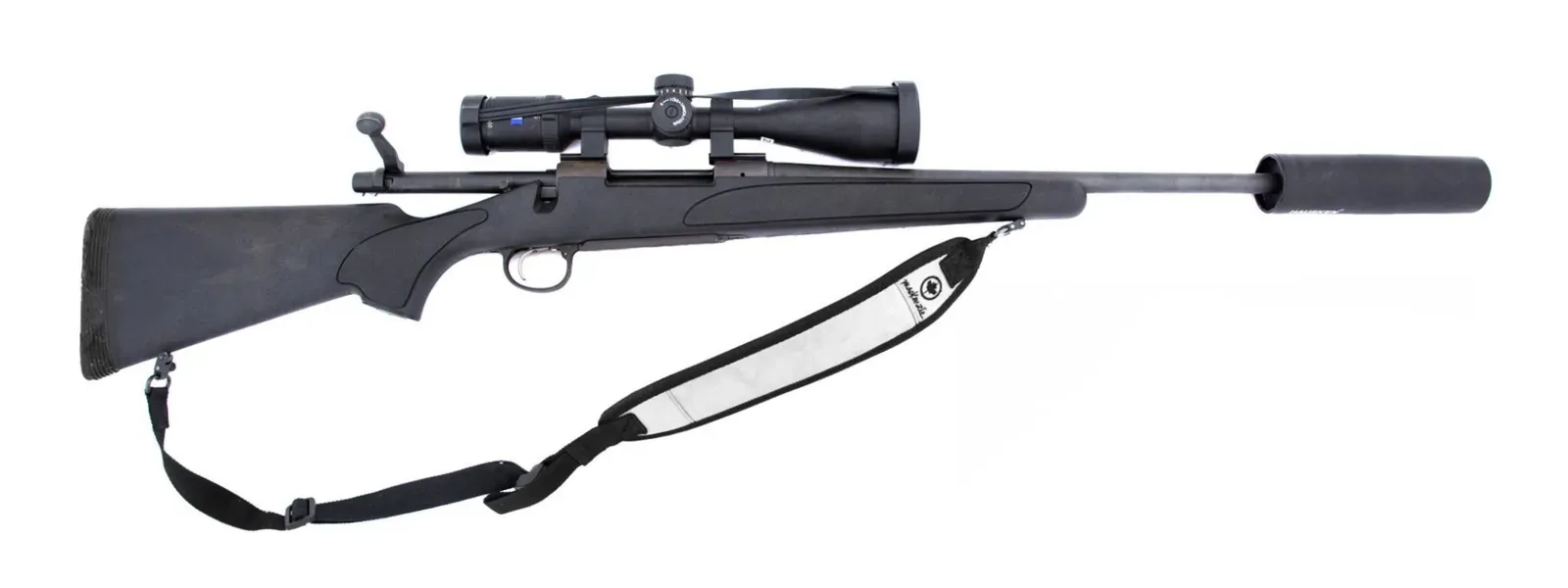
No permit is needed to buy or possess a standard rifle or shotgun in New York — provided the rifle has a barrel of at least 16 inches and the shotgun has a barrel of at least 18 inches. Per NY Penal Law § 265.00, a shotgun with barrel(s) under 18 inches or a rifle with barrel(s) under 16 inches is legally a "firearm" under New York law and triggers the handgun licensing requirements.
New York residents may legally purchase rifles and shotguns in contiguous states and bring them back into New York, as long as they're otherwise eligible to possess them under state law.
Every retail firearm seller — regardless of what they're selling — must provide a gun-locking device and a safe storage label with each sale, and must post signage about safe storage where firearms are displayed. Per NY General Business Law § 396-ee, that sign must state in bold that locking devices are only one aspect of responsible storage and that firearms should be stored unloaded, locked, and separate from ammunition.
Handguns — Licensing, Possession, and Carryedit
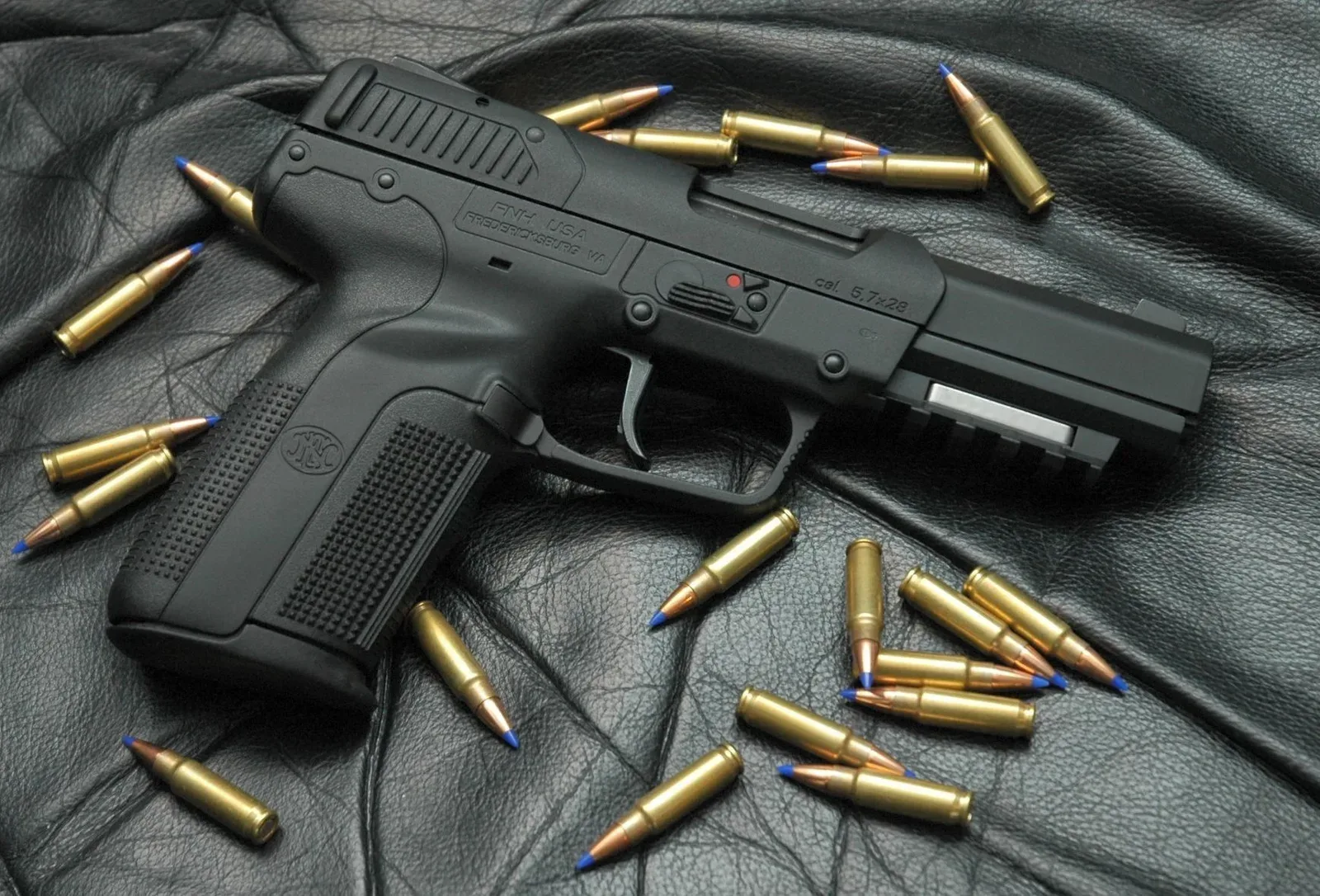
This is where New York gets complicated fast. A license is required both to possess and to carry a handgun. There's no separating the two — you cannot legally own a handgun in your home without going through the licensing process.
Applying for a license is done through the licensing officer of the city or county where you reside, are principally employed, or operate a business. Under NY Penal Law § 400.00(1), a license may be granted to someone who:
- Is over 21 years of age (honorably discharged military are exempt from the age requirement)
- Is of good moral character
- Has not been convicted of a felony or "serious offense"
- Is not an unlawful user of or addicted to controlled substances
- Is not an illegal alien or admitted under a nonimmigrant visa (with limited exceptions)
- Has not been dishonorably discharged from the military
- Has disclosed any mental health treatment history and has not been involuntarily committed
- Has not had a prior license revoked
- Has no other good cause for denial
The licensing officer has complete discretion on whether to issue. Denials must be stated specifically and concisely in writing per NY Penal Law § 400.00(4-a), and can only be overturned in court if shown to be arbitrary and capricious. Westchester County requires a firearms safety course; other counties may also impose this requirement.
Every handgun must be listed on the license by make, model, caliber, and serial number. NY Penal Law § 400.00(7). You apply to amend your license each time you add or remove a firearm.
Recertification is required every five years starting from January 2014, per the NY SAFE Act amendment to NY Penal Law § 400.00(10)(b). Fail to recertify and your license is automatically revoked.
Key Point: If you become ineligible at any point after receiving your license, it is deemed revoked under NY Penal Law § 400.00(11)(c) and you are required to surrender both your license and all your firearms — not just the licensed ones. Non-compliance means law enforcement is authorized to remove and declare them a nuisance.
License Types and Carry
New York issues different license types under NY Penal Law § 400.00(2) — including premises-only licenses and carry licenses. An "on premises only" license means exactly what it says: the handgun stays at the address written on the license. It doesn't even technically authorize transport from the gun store to your home.
A full carry license is effective throughout the state — except New York City, where you need a separate special permit from the NYPD commissioner. NY Penal Law § 400.00(6).
Licensees must carry their license at all times when carrying the handgun. Failure to produce it when asked by law enforcement is presumptive evidence that you're not licensed. NY Penal Law § 400.00(8).
Privacy note: License application information is generally public record. The SAFE Act added an opt-out process — you can request an exception by submitting a form that specifies a reason (e.g., safety concern, risk of harassment). The licensing officer must grant the exception unless the request is based on knowingly false information. NY Penal Law § 400.00(5).
Concealed Carry Improvement Act (CCIA)edit
The Concealed Carry Improvement Act changed the carry landscape significantly after the Supreme Court's 2022 Bruen decision. Per the source material, under the CCIA, civilian licensees may carry only one concealed firearm at a time. The training requirements for a carry permit now include 16 hours of classroom instruction and 2 hours of live-fire training under DCJS-approved standards, covering legal use of force under Penal Law Article 35, safe handling and storage, situational awareness, and timed marksmanship qualification.
If you have a carry license and change your address to a different licensing jurisdiction within the state, you must notify in writing within ten days of the change. NY Penal Law § 400.00.
The SAFE Act — Assault Weaponsedit
The NY SAFE Act (Secure Ammunition and Firearms Enforcement Act), passed in 2013, redefined "assault weapon" under NY Penal Law § 265.00(22) and banned possession of newly defined assault weapons. Here's what qualifies:
Semiautomatic Rifles
A semiautomatic rifle with the ability to accept a detachable magazine AND at least one of:
- Folding or telescoping stock
- Pistol grip that protrudes conspicuously beneath the action
- Thumbhole stock
- Second handgrip or protruding grip for the non-trigger hand
- Bayonet mount
- Flash suppressor
- Muzzle brake or muzzle compensator
- Threaded barrel designed to accept the above
- Grenade launcher
Semiautomatic Shotguns
A semiautomatic shotgun with at least one of:
- Folding or telescoping stock
- Thumbhole stock
- Second handgrip or protruding grip for the non-trigger hand
- Fixed magazine capacity in excess of seven rounds
- Ability to accept a detachable magazine
Semiautomatic Pistols
A semiautomatic pistol with the ability to accept a detachable magazine AND at least one of:
- Folding or telescoping stock
- Thumbhole stock
- Second handgrip or protruding grip for the non-trigger hand
- Magazine that attaches outside the pistol grip
- Threaded barrel capable of accepting a barrel extender, flash suppressor, forward handgrip, or silencer
- Barrel shroud that permits holding with the non-trigger hand
- Manufactured weight of 50 ounces or more when unloaded
- Semiautomatic version of an automatic rifle, shotgun, or firearm
Also banned: revolving cylinder shotguns.
What is NOT an assault weapon: Manually operated bolt, pump, lever, or slide action firearms; firearms rendered permanently inoperable; antique firearms as defined in 18 U.S.C. 921(a)(16); semiautomatic rifles that cannot accept a detachable magazine holding more than five rounds; semiautomatic shotguns that cannot hold more than five rounds; firearms manufactured at least 50 years ago (excluding registered replicas); and certain firearms specifically exempted from the federal assault weapons ban list as of October 1, 1993.
The Registration Deadline
Residents who lawfully owned a SAFE Act-defined assault weapon prior to January 15, 2013 were required to either sell it or register it with the State Police before April 15, 2014. NY Penal Law § 400.00(16-a).
Registration captures name, date of birth, gender, race, residential address, social security number, and a description of each registered weapon. Each registration is valid for five years and must be recertified. Failure to recertify results in revocation.
If you missed that window knowingly, it's a class A misdemeanor. If the failure was unknowing, you receive a warning and 30 days to register or surrender. NY Penal Law § 400.00(16-c).
Transfers of registered assault weapons are tightly restricted. You can transfer out of state, to a licensed dealer, or to a law enforcement agency — but there is no provision allowing transfer to an immediate family member within New York. Transfers must be reported within 72 hours.
Key Point: If you're unsure whether a specific rifle, shotgun, or pistol qualifies as an assault weapon under New York law, consult an attorney. The feature list is specific enough that small configuration differences can change the answer.
Magazine Capacityedit
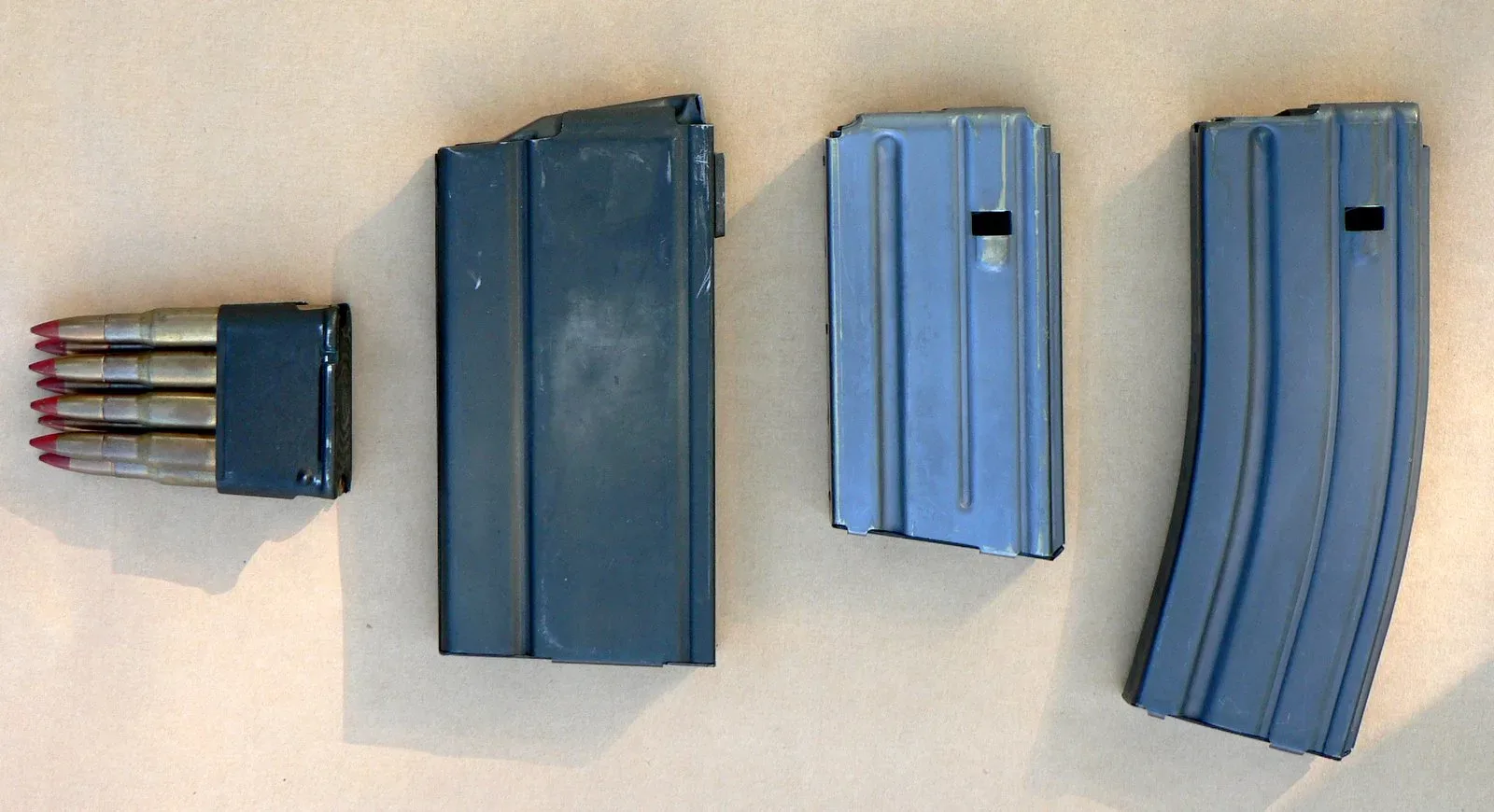
New York prohibits possession of any "large capacity ammunition feeding device" — defined under NY Penal Law § 265.00(23) as any magazine, belt, drum, feed strip, or similar device manufactured after September 13, 1994, that has a capacity of, or can be readily restored or converted to accept, more than 10 rounds.
The SAFE Act eliminated the pre-1994 manufacture exemption that previously existed. Possession of a large capacity feeding device is criminal possession of a weapon in the third degree under NY Penal Law § 265.02(8).
The SAFE Act also created NY Penal Law § 265.37, which made it an offense to knowingly possess any magazine loaded with more than seven rounds. However, that seven-round load limit was struck down as unconstitutional — both at the district level in New York State Rifle and Pistol Ass'n, Inc. v. Cuomo, 990 F.Supp.2d 349 (W.D.N.Y. 2013), and on appeal, 804 F.3d 242 (2d Cir. 2015), where the court found New York failed to provide evidence that a seven-round load limit would best protect public safety.
The result: Magazines over 10 rounds remain banned. Magazines of 10 rounds or fewer are legal. The seven-round load restriction is not enforceable.
At shooting ranges and in competition, an exemption applies but capacity still cannot exceed ten rounds. NY Penal Law § 265.20(7-f).
A large capacity feeding device that was legally possessed prior to the SAFE Act may only be sold to someone authorized to possess such a device, or disposed of to an individual or entity outside the state. There are reporting requirements for those transfers.
One more thing to know: The presence of a large capacity magazine in a vehicle is presumptive evidence of possession by all occupants, unless found on one specific occupant's person or the vehicle is a licensed for-hire vehicle — in which case the presumption doesn't apply to the driver. NY Penal Law § 265.15.
Background Checks and Private Salesedit
New York has closed the so-called "gun show loophole" and gone further. Under the SAFE Act, all private sales, exchanges, or disposals of firearms — except those between "immediate family" members — require a NICS background check conducted by a licensed dealer. The dealer must also complete a form approved by the Superintendent of the State Police confirming the check was performed. NY General Business Law § 898.
"Immediate family" for this purpose means only: spouses, domestic partners, children, and stepchildren. That's it. Not siblings, not parents, not cousins.
A dealer may charge no more than $10 to conduct the background check on a private transfer.
Gun shows have separate requirements under NY General Business Law §§ 895, 896, 897. A NICS check is required for all firearm sales at a gun show, and operators must post signs at all entrances and at least four additional locations within the venue stating that a background check must be completed prior to all firearm sales or transfers. Note that the definition of "gun show" was partially struck down as overbroad in Scope, Inc. v. Pataki, 386 F. Supp. 2d 184 (W.D.N.Y. 2005), for essentially treating any gathering of gun owners as a gun show.
Ammunition Sales and Background Checksedit
As of January 15, 2014, all sellers of ammunition must register with the State Police. Licensed dealers in firearms and FFLs are automatically registered and don't need to take additional action.
The SAFE Act also required that all commercial ammunition transfers occur in person, with a licensed dealer or registered seller acting as an intermediary. No direct-ship sales from out-of-state retailers to New York addresses — at least not without going through that system.
The SAFE Act further mandated a background check prior to every ammunition transfer to non-dealers, along with record-keeping of every transaction (date, buyer name, age, occupation, residence, caliber, manufacturer, quantity, and serial/identifying marks). NY Penal Law § 400.00.
What changed: Per the NRA-ILA source, in July 2015 a memorandum of understanding was signed that suspended the ammunition background check provisions, based on "the lack of adequate technology" and a finding that the database "cannot be established and/or function in the manner originally intended at this time." As of the source's last update, that background check system had not been operationally certified.
According to nysafeinc.com, when the ammunition background check system does operate, each civilian transaction carries a $2.50 state fee. Law enforcement is explicitly exempt from the ammunition background check requirements under Penal Law § 265.20.
It is unlawful for any dealer to sell ammunition designed exclusively for use in a pistol or revolver to any person who is not authorized to possess a pistol or revolver. NY Penal Law § 270.00.
Machine Gunsedit
New York defines a machine gun as any weapon from which multiple shots may be rapidly or automatically discharged from a magazine with one continuous pull of the trigger, including submachine guns.
It is a felony to manufacture, transport, or dispose of a machine gun. It is also a felony to buy, receive, dispose of, or conceal a machine gun that has been defaced for concealment purposes.
The presence of a machine gun in any room, dwelling, structure, or vehicle is presumptive evidence of unlawful possession by all persons occupying that space.
For practical purposes: NFA-registered machine guns are not a path available to New York civilians. The state law prohibition on manufacture, transport, and disposal makes civilian ownership of transferable machine guns effectively impossible as a legal matter.
Suppressors and NFA Itemsedit
The sources do not explicitly address suppressor ownership under New York state law as a standalone topic. What the sources do state is that N.Y. Environmental Conservation Law § 11-0931 prohibits any person — except a law enforcement officer in the performance of official duties — from using a silencer in hunting or possessing one in the fields, forests, or waters of the state for any purpose.
Given New York's machine gun prohibition and the scope of its assault weapons law, anyone considering NFA items in New York should consult an attorney before proceeding. The law is specific enough that the answer will depend on the exact item and its features.
Prohibited Personsedit
Under New York law, the following persons are prohibited from possessing firearms:
- Anyone convicted of a felony or "serious offense" as defined in NY Penal Law § 265.00(17)
- Anyone certified as mentally incompetent or unsuitable to possess a rifle or shotgun as defined in NY Penal Law § 265.00(16)
- Subjects of certain domestic violence protection orders — N.Y. Crim. Proc. Law §§ 530.11, 530.12, 530.14; N.Y. Fam. Ct. Act §§ 812, 822, 828(3), 842-a
- Unlawful users of or persons addicted to controlled substances
- Illegal aliens and most nonimmigrant visa holders
- Persons dishonorably discharged from the military
- Persons who have had a license revoked or are under a suspension order
Straw purchases are a felony under NY Penal Law § 265.17 — buying a firearm knowing you're prohibited, or buying one on behalf of someone you know is prohibited.
Criminal sale of a firearm to a person under 19 years of age is a separate offense under NY Penal Law § 265.16.
Age Requirementsedit
| Transaction | Minimum Age | Notes |
|---|---|---|
| Handgun license / possession | 21 | Military honorably discharged exempt from age requirement |
| Rifle / shotgun purchase | 18 (implied by federal floor) | No state permit required outside NYC |
| Possessing rifle or shotgun | 16 minimum; 12–15 under supervision | Ages 12–15 may possess at supervised ranges per NY Penal Law § 265.20 |
| Possessing / using a handgun at a range | 14–21 | Under immediate supervision per NY Penal Law § 265.20(7-e) |
| Paint pellet gun sale | Seller cannot sell to under 16 | NY Gen. Bus. Law § 399-r |
Prohibited Placesedit
New York law restricts carry and possession in numerous locations:
- Mental health facilities: No person may bring a firearm into any facility of the NY Department of Mental Hygiene or any residential facility with an operating certificate from that department, except with the director's permission. N.Y. Comp. Codes R & Regs. tit. 14 § 45.1
- Office of Mental Health facilities: No person may bring or possess a firearm at any facility operated or licensed by the Office of Mental Health unless within the exceptions at N.Y. Comp. Codes R. & Regs. tit. 14, § 542.5(a)
- Residential child care facilities: Employees, volunteers, and consultants of a child care agency are prohibited from possessing firearms on the grounds of residential child care facilities. N.Y. Comp. Codes R. & Regs. tit. 18, § 441.19(f)
- Hunting restrictions: No hunting with a dangerous weapon in any county wholly within the limits of a city. NY Penal Law § 265.35(1)
- Within 500 feet of occupied structures: Discharging a firearm within 500 feet of a dwelling house, farm building, school building, school playground, public structure, or occupied factory or church is prohibited. N.Y. Environmental Conservation Law § 11-0931
- Public discharge: Willfully discharging any firearm in a public place or any place where a person may be endangered is unlawful. NY Penal Law § 265.35(3)
Loaded rifles and shotguns in vehicles are generally illegal. N.Y. Environmental Conservation Law § 11-0931(2) does allow a permit for non-ambulatory persons to possess a loaded firearm in a motor vehicle for hunting purposes.
Safe Storage Requirementsedit
Under NY Penal Law § 265.45, added by the SAFE Act, if you own or have custody of a firearm and you reside with someone you know or have reason to know is prohibited from possessing a firearm under federal law (18 U.S.C. § 922(g)(1), (4), (8), (9)), you are required to safely store that firearm.
"Safe storage" under this provision means either:
- Using an appropriate safe storage depository (a locked container that cannot be opened without a key, combination, or other unlocking mechanism and prevents unauthorized access), or
- Rendering the firearm incapable of being fired using an appropriate gun-locking device
Failure to comply is a class A misdemeanor.
Lost or Stolen Firearmsedit
If your firearm is lost or stolen, you must report the facts and circumstances to a police department or sheriff's office within 24 hours of discovering the loss or theft. NY Penal Law § 400.10(1)(a). This is not optional.
Ballistic Identification (CoBIS)edit
New York requires manufacturers who ship a handgun into the state to include a sealed container with a shell casing fired from that handgun. When a dealer sells that new handgun at retail, they must forward that ballistic sample to the Division of State Police within 10 days — either the sample itself or a certificate of compliance from the State Police. The State Police then enter the data into the Combined Ballistic Identification System (CoBIS). See 9 NYCRR 472.
Antique Firearmsedit
New York's definition of "firearm" explicitly excludes antique firearms. An antique firearm is defined under NY Penal Law § 265.00(14) as any unloaded muzzle-loading pistol or revolver with a matchlock, flintlock, percussion cap, or similar ignition system, or a pistol or revolver using fixed cartridges no longer available in ordinary commercial trade.
A license is not required to possess, collect, or carry an unloaded antique firearm. However, a license IS required for "antique pistols" — a separate category defined as single-shot, muzzle-loading pistols manufactured in or before 1898 not designed for rimfire or conventional centerfire fixed ammunition, plus qualifying replicas. If an antique pistol doesn't also qualify as an antique firearm, you need a license.
Antique handguns must be unloaded and possessed without the materials required for loading to fall within the exemption. Persons who shoot muzzle-loading handguns must be properly licensed.
Non-Residents and Interstate Transportedit
New York does not recognize any other state's concealed carry permit. None. If you have a carry permit from any other state, it is worthless in New York.
It is unlawful for any person to carry, possess, or transport a handgun in or through New York without a valid New York license.
Federal FOPA safe passage (18 U.S.C. § 926A) provides a defense for persons traveling from a place where they may lawfully possess and transport a firearm to another such place, provided the firearm is unloaded and in the trunk, or in a locked container other than the glove compartment or console in vehicles without a trunk. This is a federal defense to state charges — not a guarantee — and New York has aggressively prosecuted travelers who relied on it. If you're passing through New York with a firearm, the firearm must be completely inaccessible, unloaded, and properly stored.
Narrow exceptions exist for competition shooters:
- Members or coaches of accredited college or university pistol teams may transport a handgun into or through New York for collegiate, Olympic, or target pistol competition — unloaded, in a locked case, with ammunition in a separate locked container.
- Nonresidents competing in NRA-organized or IHMSA-sanctioned matches may enter or pass through New York within 48 hours of the event, provided they hold a pistol license or firearms registration from their home state, have no prior felony conviction, and transport the pistols unloaded in a locked opaque container along with match documentation.
- Nonresidents attending NRA-approved conventions or exhibitions may possess firearms for that purpose within 48 hours of the event, under the same unloaded/locked container and documentation requirements. This provision does not apply in New York cities not wholly contained within a single county.
A non-immigrant alien may possess a rifle or shotgun for hunting with a valid New York hunting license and an approved BATFE gun import form.
Reciprocityedit
This is simple: New York honors no other state's carry permit, and no other state honors New York's permit — with one exception noted in the NRA-ILA source.
| Direction | Status |
|---|---|
| States that recognize New York permits | None |
| States whose permits New York recognizes | None |
| Michigan | Recognizes New York resident permits only (per NRA-ILA reciprocity note) |
If you're a New York licensee traveling to another state, verify that state's laws independently. Your New York license carries no weight outside the state.
Self-Defense and Castle Doctrineedit
New York has no Castle Doctrine statute and no Stand Your Ground law. Per the NRA-ILA source, it is listed explicitly as "No Law" under Castle Doctrine. New York's self-defense law is governed by Penal Law Article 35, which permits the use of force in certain circumstances but imposes a general duty to retreat when you can do so safely — except within your own dwelling.
Use of deadly physical force in self-defense is a legally complex area in New York. The training requirement for carry permits includes legal use of force under Penal Law Article 35, but for any specific situation, you need an attorney, not a reference article.
Preemptionedit
New York has no meaningful statewide preemption of local firearms ordinances. New York City, for example, operates under a substantially more restrictive firearms regime than the rest of the state. A license valid elsewhere in New York is not automatically valid in New York City — you need a separate special permit from the NYPD commissioner for a carry license to be valid within the city. NY Penal Law § 400.00(6).
Counties also have latitude to impose additional requirements — Westchester County, for example, requires a firearms safety course for license applicants.
Miscellaneous Provisionsedit
Defaced firearms are taken seriously. It is a crime to remove, deface, or alter the serial number or any identifying mark on any handgun, rifle, or shotgun; to knowingly buy, receive, or dispose of a defaced firearm; or to possess a firearm that has been defaced for the purpose of concealment. NY Penal Law §§ 265.10(6), 265.10(3), 265.02(3). Possession of a defaced firearm creates a legal presumption that you committed the offense. NY Penal Law § 265.15(5).
Vehicle presumption: The presence of a firearm in a vehicle is presumptive evidence of possession by all occupants — unless the firearm is found on one specific occupant, the vehicle is a licensed for-hire vehicle (driver excepted), or the firearm is a handgun and one occupant has a valid carry license for it. NY Penal Law § 265.15(3).
Prohibited ammunition: Possessing bullets containing explosive substances designed to detonate on impact, or possessing armor-piercing ammunition with intent to use it unlawfully against another person, are offenses under NY Penal Law §§ 265.01(7) and (8). "Armor-piercing ammunition" is defined as handgun ammunition with a projectile or core constructed entirely of tungsten alloys, steel, iron, brass, bronze, beryllium copper, or uranium.
Disguised firearms: Knowingly possessing any weapon designed to appear to be something other than a gun is an offense under NY Penal Law § 265.02(6).
Range protection: Shooting range owners have an affirmative defense against noise-based lawsuits if the range is in compliance with applicable noise control laws, or if the A-weighted sound level of small arms fire does not exceed 90 dB(A) for one hour out of a day, or 85 dB(A) for eight hours out of a day, measured at 100 feet outside the range boundary. No range may operate between 10:00 PM and 7:00 AM unless a local ordinance specifically authorizes it. NY General Business Law § 150.
Recent Legislative Activityedit
According to NRA-ILA's news coverage, New York's 2026 legislative session opened in January with continued anti-gun momentum:
- A waiting period bill was on the Senate Codes Committee agenda as of February 2026.
- Majority Democrats have been pursuing legislation to impose taxes tied to Second Amendment rights, described as an attempt to work around the Supreme Court's 2022 Bruen decision.
- The 2025 legislative session closed without a major new gun control bill passing, per NRA-ILA's June 2025 reporting.
- The Governor has pushed proposals related to banning 3D-printed firearm blueprints.
Anyone tracking New York gun law should treat it as a live situation. The legislature is active, and the legal landscape has shifted multiple times since the SAFE Act passed in 2013.
What changed: The NRA-ILA source notes the SAFE Act's seven-round load limit provision was held unconstitutional on appeal. The ammunition background check database suspension from 2015 means that portion of the law remains on the books but not operationally enforced. The CCIA added the training requirement and single-firearm carry limit for civilians.
The Bottom Lineedit
New York is not a state where you figure out the rules as you go. The licensing system is complex, the assault weapons definition is detailed enough that specific configurations matter, private sales require dealer-processed background checks, magazine limits are real and enforced, and no other state's carry permit does you any good here. If you're moving to New York with firearms, sort out the licensing before you arrive. If you're driving through with a handgun, make sure you understand FOPA's requirements — and its limitations.
Resourcesedit
- Oliver Firearms(Spartanburg, SC)
- Gls Guns(Sumner, IA)
- G & P Distributors(McConnellsburg, PA)
- New Philly Sportsman Specialities(New Philadelphia, OH)
This is not legal advice
This guide provides general information about federal and state firearms laws based on publicly available statutes. Laws change frequently and vary significantly by state. Always verify current laws in your jurisdiction. Consult a qualified attorney for legal advice on your specific situation. When in doubt, contact local law enforcement or state police.
Loading comments...