State Details
Virginia

Overview | |
|---|---|
State | Virginia (VA) |
Capital | Richmond |
Statehood | 1788 |
Population | 8,683,619 |
Gun Ownership | 36.6% |
Active FFLs | 1,408 |
Carry Laws | |
Constitutional Carry | No |
Open Carry | Yes |
CCW Permit Available | Yes |
Permit Reciprocity | 25+ states |
Self-Defense | |
Castle Doctrine | Yes |
Stand Your Ground | Case law |
Duty to Retreat | No |
Regulations | |
State Preemption | Partial |
Red Flag / ERPO | Yes |
Waiting Period | None |
Universal BGC | Yes |
NFA Items | Yes |
Assault Weapons Ban | No |
Magazine Limit | None |
Key Legislation | |
| |
Notable Manufacturers | |
| |
Virginia Firearms History: From the First Colony to Constitutional Carry
Reference article
From The Boise Gun Club Handbook
Overviewedit
Virginia is the oldest English-speaking colony in North America, and its relationship with firearms is as old as the colony itself. Before there was a United States, there were Virginians carrying muskets to church on the governor's orders. The legal and cultural DNA of American firearms rights runs straight through Virginia—the Virginia Declaration of Rights of 1776 gave James Madison the template for what became the Second Amendment, and Virginia's colonial statutes are now being cited in federal courts to settle modern gun law disputes under the Bruen standard.
That history cuts both ways. Virginia also produced some of the earliest firearms regulations in American history, mandatory carry laws for survival, race-based arms prohibitions from the colonial era, and—more recently—a rapid legislative overhaul between 2019 and 2021 that swung the state from relatively permissive to one of the more regulated in the South and then back again inside of two years.
If you want to understand how American gun law got to where it is today, you spend a lot of time in Virginia.
Colonial & Frontier Eraedit
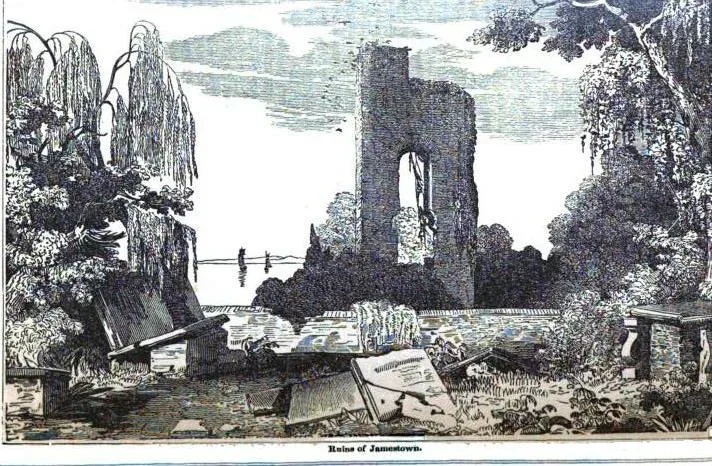
The first English settlers landed at Jamestown in 1607 and almost immediately learned that survival depended on being armed. The Powhatan Confederacy controlled the surrounding territory, and the colonists' early relationship with the native population oscillated between trade and open violence. After the Powhatan massacre of March 22, 1622—which killed roughly 347 colonists, about a third of the English population in Virginia—the General Assembly stopped treating firearms as a personal preference and made them a legal requirement.
ALL men that are fittinge to beare arms, shall bringe their peices to the church. — Virginia General Assembly, 1631-2
Survival Mandates (1607-1640)
The earliest surviving act of Virginia's General Assembly, dated March 1623-4, mandated that no man leave a settlement without armed escort, that workers carry arms into the fields, and that every plantation maintain adequate powder and ammunition. This wasn't philosophy—it was triage.
| Year | Virginia Colonial Firearms Law | Purpose |
|---|---|---|
| 1623-4 | No man leaves settlement without armed escort | Survival after Powhatan massacre |
| 1631-2 | All fit men bring arms to church | Mandatory public carry |
| 1639-40 | All persons except enslaved required arms | Racial exclusion codified |
| 1738 | County militia chief orders church attendance armed | Institutionalized armed presence |
The 1631-2 assembly went further, requiring that workers carry arms to the fields and that every plantation maintain adequate powder and ammunition. Masters who didn't enforce this faced fines; servants who ignored the command faced twenty lashes.
Evolution from survival necessity to constitutional principle
Racial Exclusions and Militia System
An act of 1639-40 specified: "All persons except negroes to be provided with arms and amunition or be fined at pleasure of the Governor and Council." This is where Virginia's colonial firearms history gets complicated. The same legislative tradition that compelled arms-bearing for white settlers systematically denied it to Black Virginians and Native Americans. A series of statutes explicitly prohibited enslaved people and free Black colonists from possessing arms, and other statutes controlled and at times prohibited arms trade with native peoples. These laws were constitutional atrocities by any modern standard, but they're part of the historical record—and courts examining Virginia's historical firearms regulations under post-Bruen analysis have to reckon with all of it.
Path to the Second Amendment
By the 1738 militia act, the county militia chief could order all listed members to attend church armed. This was standard practice rather than exception. Militia laws consistently required members to furnish their own firearms, and a series of statutes protected those privately owned arms from creditors—early legal recognition that a man's gun was essential property, not luxury.
The Virginia Declaration of Rights, drafted primarily by George Mason and adopted on June 12, 1776—three weeks before the Declaration of Independence—stated in Section 13 that "a well-regulated militia, composed of the body of the people, trained to arms, is the proper, natural and safe defence of a free state." It didn't use the phrase "right to keep and bear arms" explicitly, but given that all free male persons between sixteen and fifty were militia members required to furnish their own weapons, the right was implied structurally. James Madison used Mason's language as the scaffolding for the Second Amendment thirteen years later.
19th Century: Statehood, Arsenals & Civil Waredit
Virginia entered the 19th century as the most populous and politically dominant state in the young republic. It was also becoming central to American arms production in a way that would define the coming century.
Federal Arsenal System
Harper's Ferry Armory, established by the federal government in 1799 at the confluence of the Shenandoah and Potomac Rivers in what was then Virginia (now West Virginia), became one of the two primary federal arsenals alongside Springfield Armory in Massachusetts. By the 1840s and 1850s, Harper's Ferry was producing the U.S. Model 1841 rifle (the "Mississippi Rifle"), the Model 1855 rifle-musket, and various pistols and cavalry arms at a pace of roughly ten thousand weapons per year.
The armory employed hundreds of workers and developed interchangeable parts manufacturing techniques that influenced American industry broadly.
| Facility | Location | Production Peak | Notable Arms |
|---|---|---|---|
| Harper's Ferry Armory | Harper's Ferry, VA | ~10,000/year (1850s) | Model 1841 "Mississippi" Rifle, Model 1855 rifle-musket |
| Richmond Armory | Richmond, VA | Confederate era | Richmond Rifle Muskets (Model 1855 copies) |
| Tredegar Iron Works | Richmond, VA | 1,000+ cannon (Civil War) | Confederate artillery, CSS Virginia armor |
| Virginia Manufactory | Richmond, VA | 1798-1821 | State militia flintlock muskets |
John Brown's Raid and Political Crisis
Harper's Ferry is also where John Brown brought the antebellum firearms debate to a violent head. On the night of October 16, 1859, the abolitionist John Brown led a force of twenty-one men in a raid on the federal armory, intending to seize weapons to arm a slave rebellion throughout the South. Brown's force captured the armory and several local hostages but was surrounded by local militia and citizens within hours.
On October 18, a company of U.S. Marines under the command of Colonel Robert E. Lee and Lieutenant J.E.B. Stuart stormed the engine house where Brown had barricaded himself, killing two of his men and capturing Brown himself. Brown was tried in Charles Town, Virginia (also now West Virginia), convicted of treason against the Commonwealth of Virginia, murder, and conspiring with slaves to rebel, and was hanged on December 2, 1859.
Harper's Ferry to Confederate arms production pipeline
The raid's effect on Virginia politics was immediate and severe. The state legislature authorized a significant expansion of the Virginia militia, appropriated funds for arms and equipment, and the event hardened the position of Virginia's political class against any federal interference with Southern institutions.
When Abraham Lincoln won the presidency in November 1860, the memory of Brown's raid—and the arsenal he'd tried to seize—was still raw. Virginia voted against secession twice before Fort Sumter. After Lincoln's April 15, 1861 call for 75,000 militia to suppress the rebellion, the state convention voted 88-55 to secede on April 17, 1861. Governor John Letcher immediately ordered Virginia militia to seize Harper's Ferry Armory. Federal troops burned much of the facility before evacuating, but the Confederates recovered significant machinery, which was relocated to Richmond and Fayetteville, North Carolina, where it continued producing arms for the Confederate Army.
Confederate Arms Production
Richmond became the capital of the Confederacy and the center of Confederate arms production. The Richmond Arsenal produced Richmond Rifle Muskets—essentially copies of the U.S. Model 1855 made on recovered Harper's Ferry machinery. The Richmond Arsenal served as the primary Confederate ordnance depot east of the Mississippi. The Tredegar Iron Works in Richmond, already the South's largest iron foundry, pivoted to war production under Joseph Reid Anderson and became the primary manufacturer of Confederate artillery, producing over 1,000 cannon during the war. Tredegar also produced armor plate for Confederate ironclads including the CSS Virginia (rebuilt from the captured USS Merrimack).
Smaller Virginia manufacturers also contributed. S.C. Robinson produced Robinson-pattern carbines in Richmond. The Virginia Manufactory, an earlier state-owned arms factory established in Richmond in 1798, had already produced thousands of flintlock muskets for the state militia in the early 19th century before closing in 1821—its patterns and institutional knowledge fed into later Confederate production.
Reconstruction and Legal Changes
The war ended Virginia's status as an arms manufacturing center. Richmond fell to Union forces on April 3, 1865, and much of the city—including Confederate warehouses and ordnance facilities—burned in the evacuation fire. Harper's Ferry Armory was never rebuilt. Virginia entered Reconstruction disarmed and economically devastated.
On the legal side, Virginia's post-war Reconstruction government and its subsequent Code of 1873—the first recodification after ratification of the Fourteenth Amendment and Virginia's readmission to the Union—reflect the contested terrain of firearms rights in a defeated Confederate state. The 1873 code maintained restrictions on carrying concealed weapons that had been present in earlier iterations, a pattern consistent with Reconstruction-era Southern legislatures navigating federal oversight while attempting to maintain social control.
20th Century: Wars, Industry & Regulationedit
Virginia's role as a military geography continued well into the 20th century, even as its arms manufacturing sector never recovered the prominence of the antebellum period.
Military Geography Continues
Fort Myer, adjacent to Arlington Cemetery, served as a cavalry post and later as the home of the 3rd U.S. Infantry Regiment (The Old Guard). Quantico Marine Corps Base, established in 1917 during World War I on the Potomac River in Prince William County, became and remains the home of the FBI Academy, the Marine Corps University, and various federal law enforcement training facilities—making it one of the most significant firearms training installations in the country. The FBI Firearms Training Unit at Quantico developed standards and curricula that influenced law enforcement training nationally.
Fort A.P. Hill in Caroline County served as a training installation during World War II and later hosted National Rifle Association competitive shooting programs, including portions of the National Matches that had previously been held at Camp Perry, Ohio.
NRA Headquarters and Cultural Shift
The National Rifle Association's connection to Virginia deepened significantly when the organization relocated its headquarters from Washington, D.C. to Fairfax, Virginia in 1994, where it remains—a geographic statement about its political alignment as much as a real estate decision.
The Colonial Williamsburg restoration project, funded by John D. Rockefeller Jr. beginning in the late 1920s, preserved significant colonial-era firearms and created one of the most important collections of 18th-century American arms in the country. The DeWitt Wallace Decorative Arts Museum in Williamsburg holds an extensive collection of colonial-period firearms that remain significant to historical research.
Early Gun Control Measures
On the regulatory side, Virginia largely tracked national trends through the mid-20th century without leading them. The state maintained concealed carry permit requirements and had various restrictions on who could possess firearms, but wasn't a particular outlier among Southern states. The Uniform Machine Gun Act and related 20th-century federal legislation shaped Virginia practice, but the state's own legislative record through most of the century was relatively quiet compared to its colonial and Civil War legacy.
The 1980s and 1990s brought Virginia into the national gun policy debate more directly. Virginia Beach and the Northern Virginia suburbs of Washington, D.C. experienced population growth and demographic shifts that would eventually reshape the state's political landscape. In 1988, Virginia became the first state in the nation to pass a law specifically restricting the sale of plastic firearms (the so-called "Glock panic" legislation that several states pursued based on the mistaken belief that polymer-framed pistols were invisible to metal detectors).
The Virginia Beach massacre of May 31, 2019—in which a city employee used a .45-caliber pistol with a suppressor to kill twelve people at a municipal building—became the immediate catalyst for a wave of gun legislation the following year.
Modern Era (2000–Present)edit
The modern Virginia firearms debate breaks cleanly into two periods: before November 2019, and after. In the early 2000s, Virginia was a relatively gun-friendly state. In November 2019, that changed completely.
The Gun-Friendly Era (2000-2019)
For most of the early 2000s, Virginia was a relatively gun-friendly state. It had a shall-issue concealed handgun permit system, preemption law that prevented localities from enacting their own firearms regulations, and a General Assembly reliably dominated by Republicans and rural Democrats who blocked most restrictive legislation. The state allowed private sales without background checks at gun shows—the so-called "gun show loophole"—despite being the site of the 2007 Virginia Tech shooting, in which a student with a documented history of mental illness legally purchased firearms and killed 32 people on April 16, 2007, in the deadliest mass shooting at an educational institution in U.S. history at that time.
Virginia Tech prompted some action. Governor Tim Kaine issued an executive order requiring state agencies to report mental health adjudications to the National Instant Criminal Background Check System (NICS), and the General Assembly eventually codified related reporting requirements. Congress passed the NICS Improvement Amendments Act of 2007 partly in response to the Virginia Tech gaps. But sweeping legislative change did not follow in Richmond.
Democratic Takeover and 2020 Legislation
The political landscape shifted decisively in November 2019, when Democrats gained control of both chambers of the Virginia General Assembly for the first time since 1993. Governor Ralph Northam, a Democrat who had campaigned on gun control following the Virginia Beach shooting, now had a legislative majority willing to move. The 2020 legislative session produced a wave of new firearms laws:
- Universal background check requirement for all firearm sales (SB 70/HB 2)
- Red flag law (Extreme Risk Protective Orders) allowing courts to temporarily remove firearms from individuals deemed a danger (HB 674/SB 240)
- One handgun per month purchase limit reinstated (Virginia had this law from 1993 to 2012, when Republicans repealed it)
- Mandatory reporting of lost or stolen firearms within 24 hours
- Local governments granted authority to ban firearms at permitted events and in government buildings (partially restoring local authority that preemption had removed)
Second Amendment Sanctuary Movement
The response in rural Virginia was immediate and theatrical. By early 2020, more than 100 Virginia counties had passed Second Amendment Sanctuary resolutions declaring they would not enforce laws they deemed unconstitutional. The movement attracted national attention—and generated more heat than legal effect, since county sheriffs don't have the authority to nullify state law. But it signaled the cultural fracture between suburban and rural Virginia that would define the state's politics for years.
The January 20, 2020 Lobby Day rally at the Virginia Capitol drew an estimated 22,000 armed demonstrators—one of the largest armed political demonstrations in American history. Governor Northam declared a temporary state of emergency and banned weapons from Capitol Square, which was immediately challenged and ultimately upheld for the event period. The crowd was peaceful.
Constitutional Carry Reversal
Then came the reversal. In 2021, the General Assembly—still under Democratic control—passed HB 1839, eliminating the requirement for a permit to carry a concealed handgun in Virginia. Governor Northam signed it into law, effective July 1, 2021. The same governor who had championed the 2020 gun control package signed constitutional carry into law. The permit system remains available for reciprocity purposes, but is no longer required to carry in Virginia.
Rapid legislative reversals in modern era
The 2021 elections returned Republicans to the Governor's mansion with Glenn Youngkin's victory over Terry McAuliffe. Youngkin had campaigned with a more moderate-sounding approach to gun policy than the national Republican mainstream, but the legislative balance remained close enough that neither a further rollback of the 2020 laws nor significant new restrictions passed in his first term.
Virginia continues to sit at the intersection of two Americas. Northern Virginia—Fairfax, Arlington, Prince William, Loudoun counties—is demographically urban, politically aligned with D.C., and culturally more receptive to firearms restrictions. The rest of the state, from the Shenandoah Valley to Southside Virginia to the Southwest Virginia coalfields, is deeply rural, culturally tied to hunting and self-reliance, and politically resistant to what it sees as Northern Virginia importing D.C. politics into state law. That tension isn't resolving—it's the permanent condition of Virginia politics.
Notable Figures & Manufacturersedit
George Mason (1725–1792) drafted the Virginia Declaration of Rights in 1776, including the militia clause that Madison used as the template for the Second Amendment. Mason was also a gun owner and planter who understood armed self-reliance as foundational to liberty. He refused to sign the Constitution partly because it lacked a Bill of Rights.
James Madison (1751–1836), though born in Port Conway, Virginia, and a lifelong Virginian, synthesized Mason's work and the constitutional conventions' debates into the Second Amendment. The intellectual lineage from Virginia's colonial arms laws through Mason through Madison to the Bill of Rights is direct.
Meriwether Lewis (1774–1809), a native of Albemarle County, Virginia, led the Corps of Discovery with William Clark beginning in 1804. The expedition's firearms—including a Girandoni air rifle that Lewis used to impress and occasionally intimidate native peoples encountered along the route—are a specific footnote in American arms history with Virginia roots.
Robert E. Lee (1807–1870) commanded the Marines who captured John Brown at Harper's Ferry and later commanded the Army of Northern Virginia. His complicated legacy aside, Lee was present at two of the most consequential firearms-related events in 19th-century Virginia history.
Joseph Reid Anderson (1813–1892) ran Tredegar Iron Works in Richmond and turned it into the Confederate war machine's primary industrial backbone. Without Tredegar's cannon production, the Confederate Army's artillery capacity would have collapsed in the first year of the war.
Bushmaster Firearms has no Virginia connection, but Knight's Armament Company, while Florida-based, has extensive contracts and institutional connections to Quantico and the broader Virginia defense corridor.
Heckler & Koch USA established its American headquarters in Ashburn, Virginia (Loudoun County), positioning itself near the federal government contracting community that defines so much of Northern Virginia's economy. H&K's American operational hub being in Virginia is less cultural coincidence than strategic proximity to Pentagon and federal law enforcement contracts.
Lewis Machine & Tool (LMT) and various other defense contractors have Virginia-area presences driven by the same Pentagon proximity logic, though their manufacturing operations are elsewhere.
On the retail and training side, Clark Brothers Gun Shop in Warrenton, Virginia has operated since 1946 and is one of the longest-running independent firearms dealers in the state—a multi-generational family operation that survived the consolidation of the retail firearms industry. Bob's Gun Shop in Norfolk has similarly deep roots in the Hampton Roads market.
Current Legal Landscapeedit
Virginia as of early 2026 sits in a legally complex position—constitutional carry state with a significant package of restrictions passed in 2020 still on the books.
Constitutional Carry Framework
| Current Virginia Firearms Laws | Status | Details |
|---|---|---|
| Constitutional Carry | Legal (July 2021) | No permit required for concealed carry |
| Universal Background Checks | Required | All transfers via Virginia State Police VFTP |
| One Handgun Per Month | Active | Handguns only, long guns exempt |
| Red Flag Orders | Available | Law enforcement/Commonwealth's attorney petition only |
| Suppressors | Legal | NFA compliance required |
| Machine Guns | Legal | NFA compliance required |
| Assault Weapons Ban | None | No state-level prohibition |
Constitutional carry has been in effect since July 1, 2021. No permit is required to carry a concealed handgun if you are legally eligible to possess a firearm. The Concealed Handgun Permit (CHP) remains available for those who want Virginia reciprocity recognition in other states, and the state offers a lifetime CHP option.
Background Check System
Universal background checks apply to all firearm transfers in Virginia, including private sales. This is enforced through the Virginia State Police, which operates the Virginia Firearms Transaction Program (VFTP)—Virginia has run its own background check system rather than relying solely on federal NICS since 1989, making it one of the earliest state-run systems in the country.
The one handgun per month purchase limit applies to handguns only. Long guns are not subject to the restriction.
Red flag / Extreme Risk Protective Orders: Virginia courts can issue emergency and preliminary orders to temporarily remove firearms from individuals when a petition demonstrates they pose a significant danger to themselves or others. Law enforcement or the Commonwealth's attorney must petition; private citizens cannot file directly.
Preemption: Virginia maintains state preemption of local firearms ordinances with the exception of the authority granted in 2020 for localities to regulate firearms at permitted events, in government buildings, in parks, and in recreation and community centers. The preemption carve-outs have generated ongoing litigation at the local level.
NFA Items and Reciprocity
Suppressors: Legal to own with proper NFA compliance. Virginia has no state-level restriction beyond federal requirements.
Short-Barreled Rifles/Shotguns: Legal with NFA compliance.
Machine guns: Legal to own with NFA compliance; no state-level prohibition beyond federal law.
Assault weapons: No Virginia state ban. Multiple attempts to pass one in the 2020 and subsequent sessions failed to advance.
Background check for concealed carry permits: The CHP process requires a background check, a safety course (classroom or online), and application through the circuit court in the applicant's locality. Processing time is 45 days by statute.
Reciprocity: Virginia recognizes concealed carry permits from all other states that recognize Virginia's permit, subject to the applicant meeting Virginia's legal eligibility requirements. The Attorney General reviews and updates the reciprocity list.
Relevant case law: The Bruen decision (2022) specifically opened Virginia's entire colonial and antebellum legislative record to scrutiny as a source of "historical analogues" for modern regulations. Virginia's exceptionally detailed colonial-era statutes—preserved in Hening's Statutes at Large—make it one of the most historically litigated states in post-Bruen Second Amendment jurisprudence. Federal cases in the Fourth Circuit (which covers Virginia) have been active terrain for Second Amendment litigation post-Bruen.
The BGC Takeedit
Virginia is a state at war with itself on guns, and has been for at least fifteen years.
The honest picture for a gun owner thinking about living there or moving through it:
The laws are workable. Constitutional carry means you're not jumping through permit hoops to carry in most circumstances. The universal background check requirement is real friction on private sales, but it's enforced through a state system that generally runs faster than the federal NICS. The one-handgun-per-month limit is an inconvenience for collectors and dealers more than for typical buyers. The red flag law exists and has been used—if you're in a domestic dispute or a mental health crisis, someone can petition against you.
The culture split is genuine and it matters where you are in the state. Drive forty-five minutes west from the D.C. suburbs and you're in a completely different world—gun stores on main street, hunting culture embedded in local identity, sheriffs who ran on Second Amendment platforms. That cultural geography is real, and it's not resolving. Northern Virginia is functionally a D.C. suburb that happens to be in Virginia, and it votes accordingly.
The historical weight of Virginia gun law is both a resource and a complication. The colonial statutes are being cited in federal court cases right now, which is strange to think about—judges parsing a 1631 Virginia Assembly act to decide the constitutionality of a 2024 regulation. Virginia's colonial record is dense enough and varied enough that both sides can find something to quote. That's not a bug in the post-Bruen analysis framework—it's what happens when you set 1791 as your constitutional baseline and Virginia has records going back to 1619.
Constitutional carry passed under a Democratic governor, which tells you something about how even progressive Virginia politicians read the political landscape outside the D.C. corridor.
For gun owners, Virginia is livable and in some respects improved from where it was headed in 2020. The 2020 wave of legislation was the high-water mark of the gun control push in the state, and subsequent sessions didn't produce further restrictions.
Watch the Fourth Circuit. That's where Virginia gun law is going to get settled or unsettled over the next decade, and the outcomes there will matter well beyond state lines.
Referencesedit
- Hening's Statutes at Large, Volumes 1–13. Various Virginia General Assembly acts 1619–1792.
- Martin, Everett A. Jr. and Dudley, Nicholas W. "A History of Firearms Regulation in Virginia Until 1873." Virginia Lawyer, December 2022.
- New York State Rifle & Pistol Association v. Bruen, 597 U.S. ___ (2022).
- Virginia Code of 1819, 1833, 1849, 1860, 1873 supplements.
- Smith, Merritt Roe. Harpers Ferry Armory and the New Technology. Cornell University Press, 1977.
- Villard, Oswald Garrison. John Brown: A Biography Fifty Years After. Houghton Mifflin, 1910.
- Bruce, Kathleen. Virginia Iron Manufacture in the Slave Era. Century Co., 1931.
- Virginia State Police. Virginia Firearms Transaction Program annual reports.
- Virginia General Assembly. HB 1839 (2021) — Concealed Carry Permit.
- Virginia General Assembly. SB 70, HB 674 (2020) — Universal Background Checks, ERPO.
- National Park Service. Harpers Ferry National Historical Park historical records.
- FBI. After Action Report: Virginia Tech. 2007.
Last Updated: February 24, 2026
- Quail Creek Plantation(Okeechobee, FL)
- 2aHawaii(Honolulu, HI)
- Boston Firearms(Everett, MA)
- Safeshoot(Kingston, NY)
Loading comments...