State Details
Washington

Overview | |
|---|---|
State | Washington (WA) |
Capital | Olympia |
Statehood | 1889 |
Population | 7,812,880 |
Gun Ownership | 36.7% |
Active FFLs | 921 |
Carry Laws | |
Constitutional Carry | No |
Open Carry | Yes |
CCW Permit Available | Yes |
Permit Reciprocity | limited |
Self-Defense | |
Castle Doctrine | Yes |
Stand Your Ground | No |
Duty to Retreat | Partial |
Regulations | |
State Preemption | Partial |
Red Flag / ERPO | Yes |
Waiting Period | 10 days |
Universal BGC | Yes |
NFA Items | Partial |
Assault Weapons Ban | Yes |
Magazine Limit | 10 rounds |
Key Legislation | |
| |
Notable Manufacturers | |
| |
Washington Firearms History: From Territorial Trails to Initiative Battles
Reference article
From The Boise Gun Club Handbook
Overviewedit
Washington State sits in an unusual position in American firearms history. The same state that produced some of the most consequential gun control ballot initiatives in the country is also home to the Second Amendment Foundation, one of the most active firearms civil rights litigation organizations in the United States. That tension isn't a contradiction — it's the actual character of Washington, a state split hard between a dense, liberal western corridor and a vast, rural eastern half where hunting culture, ranching, and a deep skepticism of Seattle-driven politics define daily life.
Washington's firearms story doesn't start with colonial settlement — it starts with fur trade forts, Hudson's Bay Company factors distributing trade guns to Native nations, and the slow, often violent process of the United States consolidating control over disputed territory.
Washington's firearms story doesn't start with colonial settlement. There were no English or Spanish colonial militias establishing beachheads here. It starts with fur trade forts, Hudson's Bay Company factors distributing trade guns to Native nations, and the slow, often violent process of the United States consolidating control over territory that Britain also claimed well into the 1840s. From there it runs through Indian wars, frontier vigilantism, two World Wars that placed major military infrastructure in the state, and eventually into the modern legislative battles that have made Washington a focal point for both gun control advocates and Second Amendment defenders.
The state has been a proving ground for ballot initiative firearms policy in a way no other state quite matches. What voters here have done — and fought over — has echoed across legislatures in Sacramento, Olympia, and beyond.
Territorial & Fur Trade Eraedit
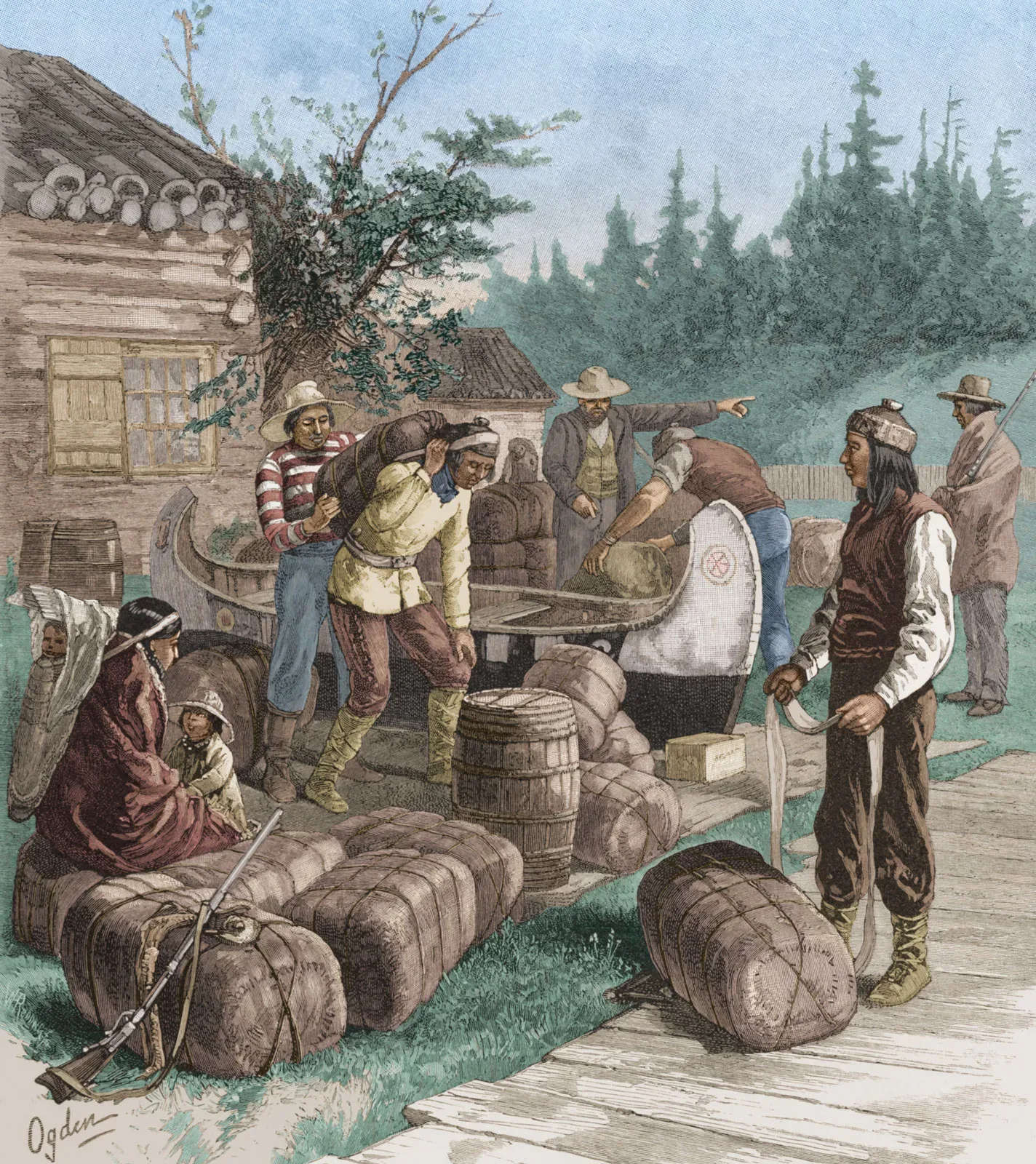
The firearms history of present-day Washington begins not with American settlers but with the North West Company and later the Hudson's Bay Company (HBC), which established Fort Vancouver on the north bank of the Columbia River in 1825.
Key events in Washington's transition from fur trade territory to organized government
Hudson's Bay Company Operations
Fort Vancouver — now a National Historic Site in modern Vancouver, Washington — served as the administrative and supply headquarters for the entire HBC operation in the Pacific Northwest. Firearms were central to that operation: trade guns moved in volume to Native nations as exchange for beaver pelts, and the fort maintained its own armory and smithing capacity to keep those transactions flowing.
The HBC's trade guns of this era were typically smooth-bore flintlock fusils — inexpensive, durable, and deliberately kept at a quality level that maintained Native dependence on HBC for parts and repairs. This was deliberate commercial policy. The Chinook, Cayuse, Nez Perce, and other nations of the Columbia Plateau and Coast became adept with these weapons quickly, and by the 1830s firearms were thoroughly integrated into the regional economy and intertribal politics west of the Rockies.
| Event | Year | Significance |
|---|---|---|
| Fort Vancouver established | 1825 | HBC administrative headquarters for Pacific Northwest |
| Oregon Trail becomes practical route | 1830s-1840s | Increases American settler presence |
| Whitman Massacre | November 1847 | Triggers Cayuse War, accelerates territorial organization |
| Oregon Territory established | 1848 | Includes present-day Washington |
| Oregon Donation Land Claim Act | 1850 | Brings settlers in large numbers |
| Washington Territory carved out | 1853 | Isaac Stevens becomes first territorial governor |
American Settlement & Rising Tensions
American presence in the region grew through the 1830s and 1840s as missionaries and then settlers pushed the Oregon Trail into practical use. The Whitman Mission near present-day Walla Walla became a waystation on that route, and Marcus and Narcissa Whitman were killed there in November 1847 in what became known as the Whitman Massacre — a Cayuse attack triggered by a measles epidemic and long-simmering tensions over settler encroachment.
The killings set off the Cayuse War (1848–1850) and directly accelerated Congress's establishment of Oregon Territory in 1848, which at that time included present-day Washington.
The Oregon Donation Land Claim Act of 1850 brought settlers to the region in large numbers, and with them came the pressure that made armed conflict nearly inevitable. Washington Territory was carved out separately from Oregon Territory in 1853, with Isaac Stevens arriving as the first territorial governor. Stevens moved immediately and aggressively to negotiate treaties with the territory's Native nations — the Point Elliott Treaty (1855), the Point No Point Treaty (1855), and the Walla Walla Council (1855) among them — and the pace and terms of those negotiations produced predictable results: war.
19th Century: Indian Wars, Statehood & the Armed Frontieredit
The Indian Wars Era
The Yakima War (1855–1858) began almost immediately after the Walla Walla Council, when Yakama leaders concluded that the treaty terms were being violated before the ink was dry. Kamiakin, the principal Yakama war leader, organized a coalition resistance that drew in the Palouse, Umatilla, and other plateau peoples. U.S. Army regulars — initially routed at the Battle of Toppenish Creek in October 1855 — eventually brought enough force to bear that the confederacy fractured. The Battle of Four Lakes and Battle of Spokane Plains in September 1858 effectively ended organized armed resistance in eastern Washington, with Colonel George Wright conducting what can only be described as a punitive campaign afterward, including the execution of prisoners and the slaughter of approximately 800 horses belonging to the Palouse band.
Through this period, the territorial militia was chronically under-equipped and under-organized. Settlers in the Puget Sound region dealt with the Puget Sound War (1855–1856) simultaneously — Leschi of the Nisqually led attacks on settlements, and the Battle of Seattle in January 1856 saw the USS Decatur providing fire support to the town. Leschi was subsequently tried and hanged in 1858, a judicial proceeding that remained controversial enough that the Washington State Legislature symbolically exonerated him in 2004.
| Conflict | Years | Key Battles | Outcome |
|---|---|---|---|
| Yakima War | 1855-1858 | Battle of Toppenish Creek, Four Lakes, Spokane Plains | Coalition resistance broken |
| Puget Sound War | 1855-1856 | Battle of Seattle | Leschi executed 1858 |
| Statehood achieved | November 11, 1889 | — | Constitution includes individual RKBA |
Statehood & Constitutional Rights
Washington achieved statehood on November 11, 1889, along with Montana, North and South Dakota. The Washington State Constitution, adopted that year, includes Article I, Section 24: "The right of the individual citizen to bear arms in defense of himself, or the state, shall not be impaired."
- Washington statehood achieved November 11, 1889 (with Montana, North and South Dakota)
- State Constitution Article I, Section 24 establishes individual right to bear arms
- Language notably individualist: "defense of himself" predates Heller by century
- Provision cited repeatedly in Washington state court decisions
Frontier Culture & Railroad Development
The late 19th century brought the full range of frontier firearms culture to Washington. The cattle ranges of the Palouse and the wheat country of the Columbia Basin were armed territory. Mining rushes — particularly in the Okanogan Highlands and across the northern border into British Columbia — created the rough boomtown conditions familiar from other western states. The Northern Pacific Railroad, completed through Washington to Tacoma in 1883, accelerated all of it. By the time of statehood, Colt revolvers and Winchester lever-actions were as common across eastern Washington as they were in Wyoming or Montana.
20th Century: Wars, Industry & Regulationedit
Military Infrastructure Development
Washington's military geography changed permanently in the 20th century. The federal government's investment in Puget Sound naval infrastructure began in earnest with the establishment of Puget Sound Naval Shipyard at Bremerton in 1891, and by World War I the Sound had become one of the primary naval staging areas on the Pacific. Fort Lewis, established in 1917 south of Tacoma, became one of the largest Army installations on the West Coast — it would eventually merge with McChord Air Force Base to form Joint Base Lewis-McChord (JBLM), which remains one of the most significant military installations in the country.
Camp Lewis processed and trained enormous numbers of draftees for World War I, and the machine of American military production touched Washington through Boeing, which had been founded in Seattle in 1916 by William Boeing. While Boeing's contribution to the firearms industry specifically is indirect — the company built aircraft, not small arms — its role in militarizing Washington's industrial economy is inseparable from the state's 20th-century identity.
World War II & Militarization
During World War II, Washington's role expanded dramatically. The Hanford Site in eastern Washington became part of the Manhattan Project in 1943, producing plutonium for the Fat Man bomb dropped on Nagasaki. JBLM shipped out divisions to both theaters. The Japanese internment of Washington's substantial Japanese-American population — roughly 14,000 people from the state — included forced disarmament, as federal authorities confiscated firearms owned by Japanese-Americans in the early months of the war.
Postwar Regulatory Framework
The postwar period saw Washington's gun culture settle into a fairly relaxed pattern by national standards. The state's Concealed Pistol License (CPL) system developed through successive legislative adjustments over the mid-20th century. Washington operated as a shall-issue state for concealed carry — meaning the sheriff had to issue a license if you met the legal criteria, with no subjective "good cause" requirement of the sort that California and New York imposed. That shall-issue framework remained durable and relatively uncontroversial until the initiative era began in earnest in the 2010s.
The Gun Control Act of 1968 applied federally across Washington as everywhere else, and the state legislature generally tracked federal law without adding substantial layers on top of it through the 1970s and 1980s. Washington's hunting culture — elk, deer, and upland birds across the Cascades and eastern half of the state — kept firearms a normal part of life for a substantial portion of the population, and the political class largely left well enough alone.
The Brady Handgun Violence Prevention Act of 1993 imposed the federal background check framework that Washington dealers had already been operating under for handguns at the state level. The state's pre-existing enhanced background check requirement for pistol purchases — which routed through the local sheriff or police chief rather than solely through the federal NICS system — meant Washington actually had a layered system before Brady codified the federal baseline.
Modern Era (2000–Present)edit
The modern period of Washington firearms history is defined by the ballot initiative — a direct democracy mechanism that has proven to be an extraordinarily effective tool for gun control advocates in a state where the western urban population can outvote the rural eastern counties on statewide measures.
The Initiative Era Begins
Initiative 594 made Washington the first state in the nation to expand background check requirements to private sales through voter initiative — a model that would influence policy debates across the country.
Initiative 591, which appeared on the same 2014 ballot as I-594, would have prohibited Washington from imposing background check requirements stricter than the federal standard. It failed, receiving roughly 45% of the vote. Initiative 594 passed with approximately 59% support — making Washington the first state in the nation to expand background check requirements to private sales through voter initiative. The measure required all firearms transfers, including private sales and gun show transactions, to route through a federally licensed dealer for a background check. Exemptions existed for immediate family transfers and certain temporary transfers, but the scope was broader than anything the legislature had previously managed to pass.
The legal challenge came quickly. In December 2014, a coalition of plaintiffs including the Second Amendment Foundation, Firearms Academy of Seattle, and others filed suit in the U.S. District Court for the Western District of Washington, arguing I-594 criminalized non-criminal firearms transfers in violation of the Second and Fourteenth Amendments.
Judge Benjamin Settle dismissed the case in May 2015 on standing grounds. The Ninth Circuit Court of Appeals upheld that dismissal in late 2017, finding the remaining plaintiffs hadn't demonstrated sufficient risk of prosecution to establish standing.
| Initiative | Year | Vote % | Key Provisions |
|---|---|---|---|
| I-591 (failed) | 2014 | ~45% | Would have prohibited background checks stricter than federal |
| I-594 (passed) | 2014 | ~59% | Universal background checks for private sales |
| I-1639 (passed) | 2018 | ~60% | Age 21 for semi-auto rifles, waiting period, training requirement |
Initiative 1639 arrived in November 2018 and passed with roughly 60% of the vote. It was more ambitious than I-594. I-1639 raised the minimum purchase age for semiautomatic rifles to 21, imposed a 10-business-day enhanced waiting period for those purchases (routed through the local sheriff or police chief for an enhanced background check that includes mental health records from the Washington State Health Care Authority), required purchasers to demonstrate completion of a firearms safety training course, and created criminal liability for unsafe firearm storage under specified conditions.
I-1639 enhanced background check process for semi-automatic rifles
Implementation Challenges
The storage liability provision was a notable departure from anything Washington had done before. If a firearm not in secure storage is accessed by a prohibited person who then injures or kills someone, the owner can face a felony charge. If the prohibited person discharges the weapon in a threatening manner or during a crime, the owner faces a gross misdemeanor. The law explicitly does not require storage in any particular manner — it creates liability for outcomes, not methods.
Implementation of I-1639's annual background check provision — designed to flag owners who subsequently become prohibited persons — stalled almost immediately. A Cascade PBS investigation in 2022 found that four years after passage, the state had yet to implement that annual re-check system and had no concrete timeline for doing so. The logistical and legal complexity of re-running checks on existing owners, rather than point-of-sale buyers, had simply not been solved.
A quirk of I-1639's administrative rollout surfaced in 2023 when OPB reported that the enhanced background check requirement had been triggered by the purchase of an $8 antique rifle — a transaction that highlighted ambiguities in how the law defined "semiautomatic assault rifle." The legislature subsequently adjusted statutory language to address the definitional problem, one of those unglamorous legislative fixes that happen when a broadly written initiative meets real-world edge cases.
Legislative Expansion & Eastern Response
Washington has also enacted a high-capacity magazine ban and restrictions on untraceable firearms (ghost guns) in recent years, as the legislature and governor have continued to push the regulatory envelope beyond what the initiatives established. Governor Jay Inslee signed multiple firearms bills during his tenure, and his successor has continued in that direction. The 2023 legislative session produced SB 5078, which banned the manufacture, importation, distribution, or sale of magazines capable of accepting more than ten rounds — though possession of previously owned magazines was not criminalized.
Eastern Washington's response to all of this has been pointed. Multiple eastern counties — including Spokane, Stevens, Ferry, and others — have passed Second Amendment sanctuary resolutions, declaring they will not expend local resources to enforce state firearms laws they consider unconstitutional. These resolutions are largely symbolic under Washington state law, which preempts local firearms ordinances, but they represent a genuine cultural and political statement from communities that feel the Seattle metropolitan area is legislating their way of life without their consent.
Notable Figures & Manufacturersedit
Second Amendment Foundation Leadership
Alan Gottlieb is the most nationally significant firearms figure to emerge from Washington. The founder of the Second Amendment Foundation (SAF), headquartered in Bellevue, Gottlieb built SAF into one of the most active firearms civil rights litigation organizations in the country. SAF was involved in the District of Columbia v. Heller (2008) and McDonald v. City of Chicago (2010) cases and has filed dozens of suits challenging state and local firearms regulations. The organization publishes Gun Week and runs the Citizens Committee for the Right to Keep and Bear Arms (CCRKBA), also based in Bellevue. Whatever your position on firearms policy, Gottlieb's operation has had more influence on Second Amendment litigation strategy over the past four decades than almost any other non-NRA entity in the country.
Joe Waldron, a retired Marine who served as executive director of the Washington Arms Collectors and later worked with various firearms rights organizations in the state, was a named plaintiff in the I-594 challenge and has been a persistent voice for gun owners' rights in Olympia for decades.
Manufacturing & Industry Presence
On the manufacturing side, Washington isn't a state you associate with major firearms production the way Connecticut, New Hampshire, or Missouri might be. There's no Winchester plant or Colt factory here. But the state has a significant presence in accessories, suppressors, and specialty manufacturing.
SilencerCo, though headquartered in West Valley City, Utah, has had significant distribution and retail presence in the Pacific Northwest, and Washington's suppressor market — legal for civilians with the federal NFA tax stamp — has been active. Several smaller custom rifle builders operate in the state, particularly in eastern Washington, serving the hunting and precision shooting communities.
Rainier Arms in Auburn, Washington has grown into one of the more respected AR-platform parts suppliers and custom builders in the country, serving both the consumer market and law enforcement. They've been a significant part of the Pacific Northwest shooting community's infrastructure for the better part of two decades.
FLIR Systems (now part of Teledyne FLIR), with significant operations in Wilsonville, Oregon and the broader Pacific Northwest, has been a major supplier of thermal and night vision systems to the U.S. military — not a traditional firearms manufacturer, but deeply embedded in the military-optical industry that intersects with Washington's defense economy.
The Firearms Academy of Seattle — despite its name, located in Onalaska, Washington — has been one of the most respected civilian firearms training academies in the Pacific Northwest for decades, producing instructors and training programs that have influenced the regional shooting community well beyond Washington's borders. It was a named plaintiff in the I-594 legal challenge.
Current Legal Landscapeedit
Washington's current firearms law is among the more restrictive in the western United States, though it still differs meaningfully from California's framework in several respects.
Carry Laws & Licensing
Concealed carry requires a Concealed Pistol License (CPL), issued on a shall-issue basis by the county sheriff or municipal police chief. Washington has no constitutional carry provision — unlicensed concealed carry is a crime. Open carry of a loaded firearm is generally legal without a license under state law, though local governments retain some authority to restrict it in certain contexts, and carrying in state-defined sensitive locations (courthouses, certain government buildings) is prohibited.
Purchase Requirements by Category
Purchase requirements break down roughly as follows:
| Firearm Type | Background Check | Waiting Period | Min Age | Training Required |
|---|---|---|---|---|
| Handguns | Enhanced via LEO | None specified | 21 | No |
| Semi-auto rifles | Enhanced via LEO | 10 business days | 21 | Yes |
| Other long guns | Standard FFL | None | 18 | No |
| Private sales | Via FFL (I-594) | Varies by type | Varies | Varies |
Restrictions & Special Categories
Assault weapon definitions and restrictions have been the subject of ongoing legislative debate. The legislature has moved incrementally toward broader restrictions, with 2023 legislation (HB 1240) banning the sale, manufacture, importation, and distribution of "assault weapons" as defined by the statute — a broad category that includes AR and AK-platform rifles, among others. Legal challenges to HB 1240 were filed immediately, and litigation is ongoing under the post-Bruen (2022) framework that requires regulations to be grounded in historical tradition.
Preemption: Washington state law preempts local firearms ordinances, meaning cities and counties cannot enact regulations stricter than state law on most firearms matters — though Seattle has historically pushed the edges of this in creative ways, including a Seattle gun tax enacted in 2015 that survived legal challenge.
Red flag law: Washington enacted an Extreme Risk Protection Order (ERPO) law in 2016 — one of the earlier such laws in the country — allowing courts to temporarily remove firearms from individuals deemed a risk to themselves or others based on petitions from law enforcement or family members.
- Suppressors, short-barreled rifles, and machine guns (pre-1986) legal with federal registration
- Washington has no additional state-level NFA restrictions
- Federal tax stamp and ATF approval process applies normally
Post-Bruen Litigation Environment
The New York State Rifle & Pistol Association v. Bruen (2022) Supreme Court decision — which struck down New York's subjective "proper cause" standard for carry permits and established the historical tradition test for firearms regulations — has been cited in multiple pending Washington cases. The HB 1240 assault weapons ban challenge and other pending litigation will test how Washington's recent enactments hold up under Bruen's framework, and the outcomes will matter well beyond state lines.
The BGC Takeedit
Honestly? Washington is one of the most interesting states to watch right now if you care about how firearms policy actually develops in the United States. It's not interesting because the politics are close — in statewide elections, they're not. The western corridor reliably delivers majorities for whatever the initiative says. What makes it interesting is that Washington has been a policy laboratory for the ballot initiative approach to gun control, and the results have been... complicated.
I-594 passed in 2014 and survived legal challenge. I-1639 passed in 2018 and the annual re-check provision still hasn't been implemented in 2026. HB 1240's assault weapons ban is tied up in litigation under a Supreme Court framework that didn't exist when the initiative era began. The gap between what gets passed and what gets implemented — and what survives courts — is real.
For gun owners living in Washington, the experience depends entirely on where you live. If you're east of the Cascades, you're in a place where neighbors hunt, trucks have gun racks, and the local gun store is a community institution. You vote against every one of these initiatives, watch them pass anyway, and feel increasingly like a population being governed by people who've never set foot in the Palouse. The sanctuary county resolutions aren't legally meaningful, but they're culturally honest.
The SAF being headquartered in Bellevue is its own kind of Washington irony — one of the most aggressive Second Amendment litigation shops in the country operates out of one of the most politically progressive suburbs, filing suits against laws that Bellevue's own voters helped pass.
If you're in the Seattle metro, you voted for I-1639, you think the magazine ban is reasonable, and you'd like to see the assault weapons ban survive the courts. The gun you own — if you own one — is probably a handgun for home defense, and you got your CPL and moved on.
The SAF being headquartered in Bellevue is its own kind of Washington irony. One of the most aggressive Second Amendment litigation shops in the country operates out of one of the wealthiest, most politically progressive suburbs in the Pacific Northwest, filing suits against laws that Bellevue's own voters helped pass. That's Washington's firearms story in a single sentence.
The Bruen litigation pipeline is going to determine whether this decade's legislative output survives. If HB 1240 falls in the Ninth Circuit or at the Supreme Court, it'll be a significant setback for the ballot initiative approach to firearms regulation that Washington pioneered. If it survives, other states will follow. Either way, Washington stays at the center of the argument.
Referencesedit
- Washington State Office of the Attorney General. Initiative 1639: Frequently Asked Questions. atg.wa.gov.
- Washington Secretary of State. Official Results: Initiative 594 (2014). sos.wa.gov.
- Washington Secretary of State. Official Results: Initiative 1639 (2018). sos.wa.gov.
- Ballotpedia. Washington Universal Background Checks for Gun Purchases, Initiative 594 (2014). ballotpedia.org.
- Cascade PBS. Four years later, voter-approved WA gun law hasn't been implemented. September 2022. cascadepbs.org.
- OPB. An $8 rifle spurred a change to Washington's background check law. September 10, 2023. opb.org.
- Giffords Law Center. Universal Background Check Laws in Washington. giffords.org.
- Washington State Legislature. Revised Code of Washington, Chapter 9.41 RCW — Firearms and Dangerous Weapons. leg.wa.gov.
- Washington State Legislature. SB 5078 (2022) — Concerning large capacity magazines. leg.wa.gov.
- Washington State Legislature. HB 1240 (2023) — Concerning semiautomatic assault rifles. leg.wa.gov.
- Northwest School of Safety v. Ferguson, U.S. District Court for the Western District of Washington, dismissed May 7, 2015.
- New York State Rifle & Pistol Association v. Bruen, 597 U.S. 1 (2022).
- National Park Service. Fort Vancouver National Historic Site. nps.gov.
- Washington State Legislature. Washington State Constitution, Article I, Section 24. leg.wa.gov.
- Washington State Legislature. ERPO — Extreme Risk Protection Order Law (2016). leg.wa.gov.
- Second Amendment Foundation. Organization History and Litigation Overview. saf.org.
- Ficken, Robert E. Washington Territory. WSU Press, 2002.
- Peltier, Jerome. Warpath: The Story of the Oregon Trail and the Indian Wars. Caxton Press, 1966.
Last Updated: February 24, 2026
- Quail Creek Plantation(Okeechobee, FL)
- 2aHawaii(Honolulu, HI)
- Boston Firearms(Everett, MA)
- Safeshoot(Kingston, NY)
Loading comments...