Details
.44-40 Winchester

| Origins | |
|---|---|
| Invented | 1873 |
| Inventor | Winchester Repeating Arms Company |
| Country | United States |
| Timeline | |
| Era | Frontier era, 1870s-1890s |
| Replaced By | .30-30 Winchester and modern smokeless cartridges |
| Impact | |
| Significance | The first centerfire cartridge Winchester manufactured, purpose-built for the Model 1873 rifle and later adopted by Colt for the Single Action Army revolver, making rifle and handgun ammunition interchangeable on the frontier. |
.44-40 Winchester: The Cartridge That Armed the Frontier
Firearms encyclopedia article
From The Boise Gun Club Handbook
Overviewedit
The .44-40 Winchester — formally designated .44 WCF (.44 Winchester Center Fire) and sometimes called .44 Winchester or .44 Largo in Spanish-speaking markets — is a .44-caliber centerfire metallic cartridge introduced in 1873 by the Winchester Repeating Arms Company. It was the first centerfire cartridge Winchester ever manufactured, and it was purpose-built for the new Winchester Model 1873 lever-action rifle.
What made it historically significant wasn't raw power. The .44-40 pushed a 200-grain lead bullet at roughly 1,245 fps — respectable for its era, but not an earth-shaker compared to the .45-70 Government the U.S. Army was adopting that same year.
What the cartridge did that no other round had managed so cleanly was collapse the difference between rifle and handgun ammunition.
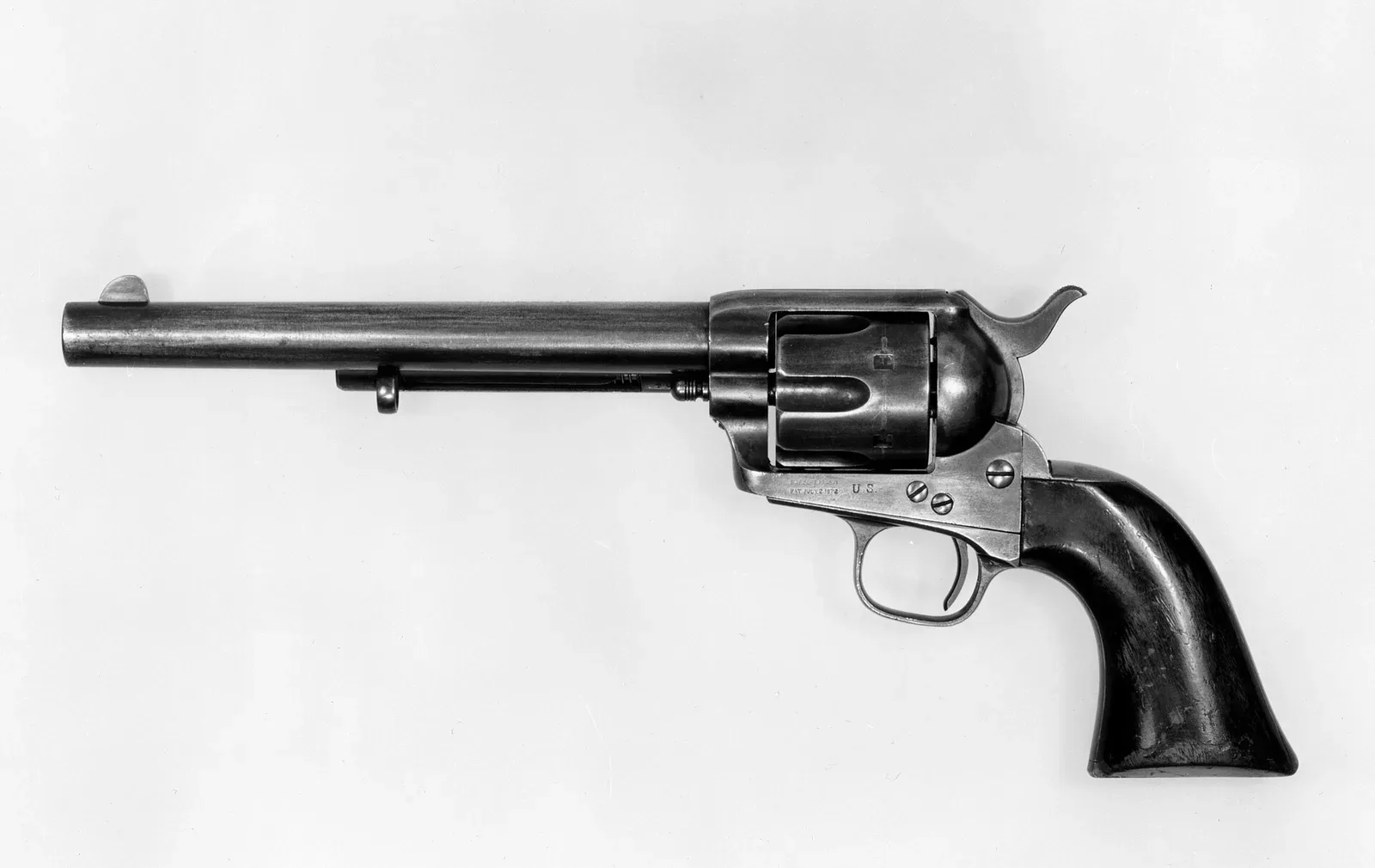
When Colt chambered its Single Action Army revolver in .44-40, a man on the frontier could carry one cartridge and feed both guns from the same belt. That single practical advantage drove the .44-40 to become, according to multiple sources, the most popular cartridge in the United States during its peak years.
| Specification | Value |
|---|---|
| Designation | .44-40 Winchester (.44 WCF) |
| Introduced | 1873 |
| Case Type | Rimmed, bottlenecked centerfire |
| Bullet Diameter | .427 inches |
| Case Length | 1.305 inches |
| Overall Length | 1.592 inches |
| Maximum Pressure | 11,000 psi (SAAMI) |
| Original Load | 200-grain lead bullet, 1,245 fps |
Its case is rimmed with a subtle bottleneck, measuring .427 inches at the bullet diameter, with a case length of 1.305 inches and an overall loaded length of 1.592 inches. Maximum pressure is rated at 11,000 psi — modest by modern standards, a deliberate reflection of the relatively light actions it was designed to work in.
Development Historyedit
From Henry to Winchester
To understand why the .44-40 mattered, you have to go back a few steps. The Henry rifle of 1860 — the Model 1873's direct ancestor — fired a .44-caliber rimfire cartridge that pushed a 216-grain lead bullet at around 1,125 fps from a 24-inch barrel.
The Henry was a serious weapon for its time, and its capabilities were significant:
- Henry rifle (1860): .44-caliber rimfire, 216-grain bullet at 1,125 fps
- 15-shot tubular magazine provided serious firepower
- Brass frame was structurally limited
- Rimfire cases couldn't be reliably reloaded in the field
The Centerfire Advantage
Winchester's Model 1866 addressed some of those issues while keeping the brass frame and the rimfire chambering. Then came the Model 1873 — built on an iron receiver (later upgraded to steel), fitted with a sliding dust cover over the top of the action, and chambered for an entirely new centerfire cartridge.
The switch to centerfire was more than a technical footnote. Centerfire primers are more reliable than rimfire, and centerfire cases can be reloaded. Winchester sold reloading kits alongside the rifle — a meaningful selling point in the 1870s, when ammunition resupply on the frontier was genuinely uncertain.
The original load was straightforward: 40 grains of black powder behind a 200-grain round-nose, flat-point lead bullet. The flat point wasn't accidental. A sharp-nosed bullet sitting in a tubular magazine, with its tip resting against the primer of the cartridge in front of it, is a primer strike waiting to happen under recoil. The flat nose solved that problem and, as a side benefit, also fed more smoothly through revolver cylinders.
| Cartridge Evolution | Year | Powder Charge | Bullet Weight | Velocity |
|---|---|---|---|---|
| Original .44-40 | 1873 | 40gr black powder | 200gr lead | 1,245 fps |
| Heavy Load | 1886 | 40gr black powder | 217gr lead | 1,190 fps |
| Smokeless Transition | 1895 | 17gr DuPont No. 2 | 200gr lead | ~1,235 fps |
| High Velocity (WHV) | 1903 | Smokeless | 200gr jacketed | 1,540 fps |
| Modern Standard | Post-WWII | Smokeless | 200gr JSP | 1,100-1,200 fps |
Market Expansion
Winchester initially sold the round as the .44 Winchester or .44 W.C.F., and original ammunition carried no headstamp at all. It wouldn't be until 1886 that Winchester began stamping "W.R.A. CO. .44 W.C.F." on the case head. When Union Metallic Cartridge Co. (UMC) started loading the same round, they refused to put a competitor's name on their product. They labeled it .44 C.F., then later .44-40 — shorthand for .44 caliber and the 40-grain powder charge. Marlin pushed for the designation specifically to avoid advertising Winchester. The name stuck, spread to other manufacturers, and Winchester itself eventually adopted ".44-40" as the standard designation after World War II, though current Winchester packaging reads "44-40 Winchester."
The round's social spread was rapid. Colt chambered the Single Action Army in .44-40 in 1878 under the Colt Frontier Six-Shooter name. Smith & Wesson chambered its New Model 3 revolver in .44-40 in 1877. Marlin built rifles for it. Remington built rifles for it. By the mid-1870s:
The .44-40 had become the dominant chambering on the American frontier — not because it was the most powerful option available, but because it was the most useful one.
The U.S. military, meanwhile, passed on the Winchester Model 1873 entirely. The Army adopted the Springfield Trapdoor in .45-70 Government the same year. The .44-40 was considered underpowered relative to military requirements, and repeating rifles were viewed with institutional suspicion — the thinking being that soldiers with high-capacity magazines would waste ammunition. That policy backfired in the field. According to Terminal Ballistics Research, Native American warriors armed with Model 1873s used the rifle to considerable effect against U.S. soldiers, and many soldiers quietly acquired the Winchester privately regardless of official policy.
How It Worksedit
Case Design Philosophy
The .44-40 is a rimmed, bottlenecked cartridge — an unusual combination that reflects its dual-purpose nature. The rim provides positive headspacing in both rifle chambers and revolver cylinders, while the slight bottleneck gives the case better structural integrity than a straight-walled pistol round and improves the powder-to-bullet seal at ignition.
Ballistic Performance
At its original black powder loading, a 200-grain lead bullet left a 20- to 24-inch rifle barrel at approximately 1,245 fps, generating around 688 ft-lbs of energy. From a handgun barrel, velocity dropped to roughly 900–950 fps. Winchester's catalog claimed 1,300 fps by 1875, though that figure was measured from a 24-inch barrel under favorable conditions.
In 1886, UMC introduced a heavier 217-grain loading at 1,190 fps, still with 40 grains of black powder. Winchester followed suit. UMC discontinued the heavier load in 1905.
Smokeless Powder Transition
The transition to smokeless powder came in 1895, when Winchester introduced a load using 17 grains of DuPont No. 2 smokeless powder — a "bulk powder" that could be substituted volume-for-volume with the black powder charge. UMC followed in 1896 with a 217-grain smokeless loading at 1,235 fps. Both companies soon began offering jacketed and "metal patched" bullets to address barrel leading caused by higher velocities.
The pressure ceiling for the .44-40 has always been low — 13,000 CUP (Copper Units of Pressure) per SAAMI — because the cartridge was designed to operate in the toggle-link action of the Model 1873, a mechanism that is inherently less rigid than the locking-block actions that came later. This matters because Winchester tried to push past that ceiling in 1903 with the Winchester High Velocity (WHV) load, rated at 1,540 fps with a 200-grain copper-jacketed bullet from a 24-inch barrel.
The load was developed for the stronger Winchester Model 1892 and Marlin 1894 actions, and Winchester's packaging explicitly warned against using it in the Model 1873 or in revolvers. Predictably, some people ignored that warning, with results described by American Rifleman as "often unpleasant." The high-velocity loadings were eventually discontinued after World War II as the industry standardized at lower pressures to protect both older guns and their owners.
Barrel Specifications
The Winchester Model 1873 was originally rifled at a 1:36 twist rate, a specification still used in current reproduction rifles. Marlin has historically used a 1:38 twist for .44-40 barrels, while Rossi uses 1:30 and Henry uses 1:36 — all suited to bullets in the 200-grain range.
| Manufacturer | Rifle Model | Twist Rate | Notes |
|---|---|---|---|
| Winchester | Model 1873 | 1:36" | Original specification |
| Winchester | Current production | 1:36" | Maintains original spec |
| Marlin | Model 1894 | 1:38" | Slightly different twist |
| Rossi | Modern rifles | 1:30" | Faster twist rate |
| Henry | Current production | 1:36" | Matches Winchester |
Impact on Warfare & Societyedit
Logistical Revolution
The .44-40's historical footprint is disproportionate to its ballistic spec sheet. That's the point.
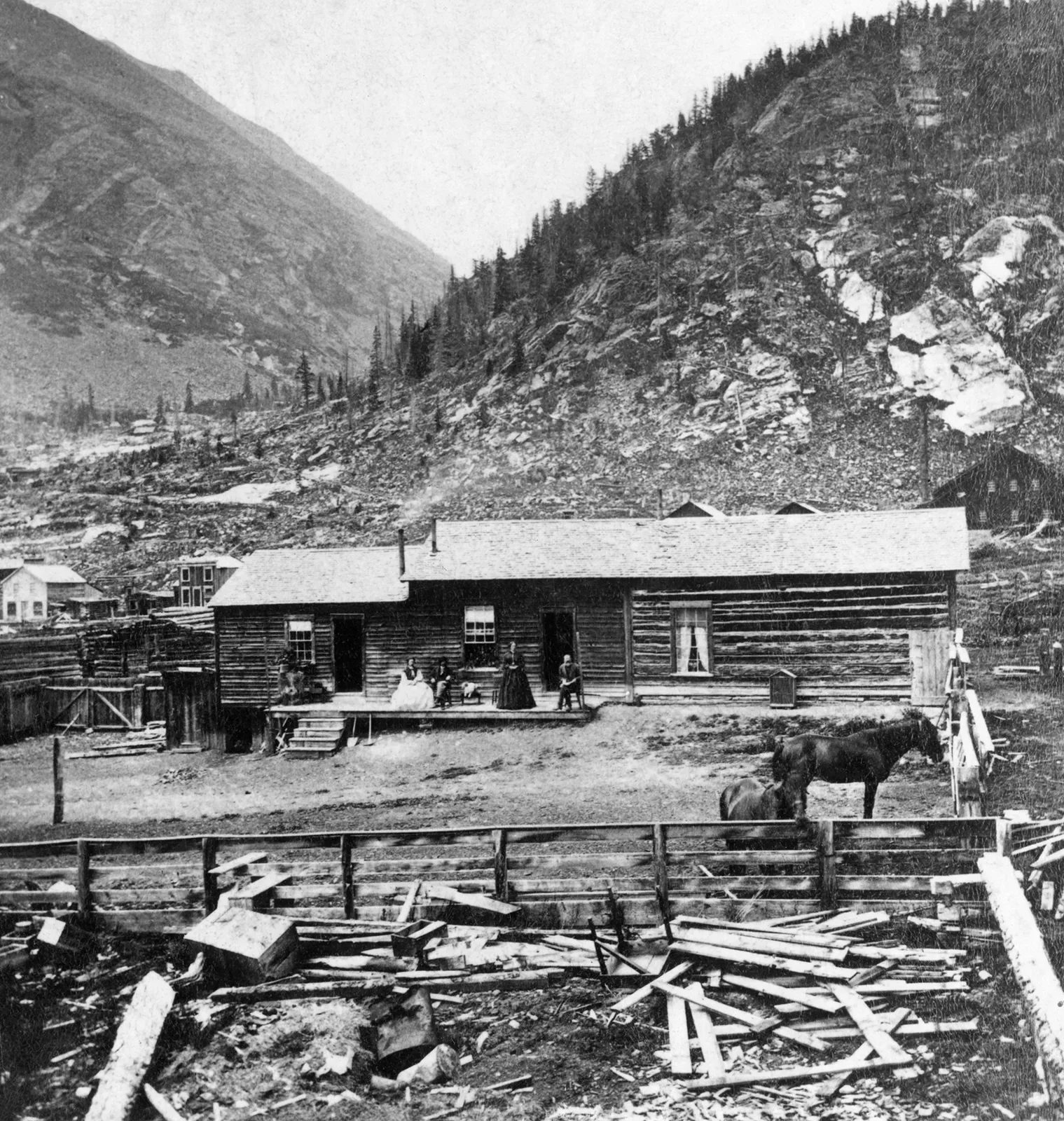
By making rifle and handgun ammunition interchangeable, it changed the economics and logistics of life on the frontier. A settler, lawman, or cowboy carrying a Winchester Model 1873 and a Colt Frontier Six-Shooter needed exactly one type of ammunition. That's a real logistical advantage when your nearest resupply is a hard day's ride away. Winchester even sold field reloading kits, acknowledging that for many users, making your own ammunition from recovered brass was a practical necessity.
Law Enforcement Legacy
The legal and law enforcement record of the cartridge is woven into American history in ways that are almost impossible to overstate. According to HistoryNet, figures including:
- Billy the Kid - carried Winchester Model 1873 and Colt Frontier
- Bill Tilghman - lawman who relied on .44-40 platforms
- Frank Hamer - Texas Ranger famous for the .44-40
- Pearl Hart - outlaw who used the cartridge
- Buffalo Bill Cody - celebrity endorser for Winchester
All carried the Winchester Model 1873 and Colt Peacemaker — often simultaneously, and often chambered in .44-40. The .44-40 Colt Single Action Army that Pat Garrett used to kill Billy the Kid on July 14, 1881, sold at a 2021 Bonhams auction for more than $6 million.
Buffalo Bill Cody carried a Model 1873 and matching Colts when scouting for the Army in 1876, and Winchester leveraged his celebrity endorsement in their 1875 catalog.
Forensic evidence from the Battle of the Little Bighorn identified at least 8 Winchester Model 1873s among Native American weapons at the scene.
Winchester's One of One Thousand program, launched in 1875, deserves a mention as one of the earliest examples of firearms marketing built around verified performance. Barrels that produced unusually tight groups during test-firing were set aside, fitted with set triggers and special finishes, marked "One of One Thousand," and sold for $100 — equivalent to roughly $2,613 today. According to HistoryNet, only 136 were ever confirmed to have been made. The program was eventually discontinued, ironically because it made buyers skeptical of standard-grade rifles.
The cartridge's hunting legacy is substantial. Multiple sources note that the .44-40 has a reputation for killing more deer than any cartridge except the .30-30 Winchester — a claim that reflects how many millions of rounds were fired in the field over several decades, not just the cartridge's terminal performance per shot.
Military Rejection
The military never embraced it. The .45-70 Government was the Army's choice in 1873, and later the smokeless .30-caliber military cartridges superseded everything the .44-40 could do. The Model 1873's toggle-link action, strong enough for the original black powder loading, was a structural dead end for higher-pressure cartridges. When John Moses Browning designed the Winchester Model 1886 with a vertically sliding locking-block action, the writing was on the wall for the older design. By 1942, the .44-40 had been largely eclipsed by modern cartridges.
The round also found a following outside the United States. According to Terminal Ballistics Research, the .44-40 in the Winchester Model 1892 remained popular in Australia and New Zealand for farm use and hunting pigs over dogs. That following eventually faded when the Model 92 was discontinued and surplus Lee-Enfield rifles flooded those markets after World War II.
Modern Relevanceedit
Competitive Renaissance
The .44-40 didn't die — it just changed jobs.
In the 1950s and 1960s, it got a modest boost when Colt resumed production of the Single Action Army. Then cowboy action shooting and metallic silhouette competition gave the cartridge a genuine second act. The competition community's demand for period-correct ammunition pushed Winchester and others to develop a low-velocity 225-grain gallery load — the heaviest factory bullet ever offered for the .44-40 — running at roughly 750 fps from a 7.5-inch barrel and around 1,000 fps from a 20-inch rifle.
Current Ammunition Options
Reproduction rifles from Uberti, and Model 1873s currently produced by Winchester through Miroku of Japan, keep the chambering commercially alive. Henry Repeating Arms also offers .44-40 chambered rifles. Most .44-40 ammunition today is aimed at cowboy action shooters rather than hunters, and factory options are limited.
| Manufacturer | Load | Bullet Weight | Velocity (Rifle) | Purpose |
|---|---|---|---|---|
| Winchester | Standard JSP | 200gr | 1,100-1,200 fps | General use |
| Hornady | Cowboy | 205gr cast lead | ~1,000 fps | Cowboy action |
| Buffalo Bore | Premium | 185gr SCHP | 1,470 fps | Hunting (modern guns only) |
| Winchester | Gallery Load | 225gr cast | 750-1,000 fps | Competition |
Factory options are primarily the 200-grain jacketed soft point at 1,100–1,200 fps from Winchester and the Hornady 205-grain cast lead "Cowboy" load. Buffalo Bore produces a 185-grain soft cast hollow point at up to 1,470 fps from a rifle that represents the most capable hunting option currently in production, though the company specifies it should only be used in firearms manufactured after 1900.
Reloading Considerations
Reloaders working with older guns face complications the original designers never anticipated. Modern brass cases are solid-head construction, while original "balloon-head" cases had significantly more internal volume. That means a reloader fitting period-specification 40 grains of black powder into modern Starline brass will come up short — American Rifleman notes that modern cases accommodate only about 38 grains of Goex FFFg at maximum fill.
Bore dimensions in surviving older rifles vary considerably, running anywhere from .425 to .431 inches, which makes blanket reloading data unreliable for antique firearms.
In popular culture, the cartridge's connection to the Model 1873 has kept it visible long past its practical prime. The 1950 film Winchester '73, starring James Stewart, made the "One of One Thousand" rifle its central prop and featured the .44-40 WCF cartridge as a recurring plot element. Chuck Connors' The Rifleman television character carried a modified Winchester Model 1892 throughout the show's run in an acknowledged anachronism. The cartridge remains a fixture in Western films and television as the visual and auditory shorthand for the era it defined.
The BGC Takeedit
The .44-40 doesn't get the credit it deserves in the broader firearms conversation, probably because it's been romanticized rather than analyzed.
The .44-40 doesn't get the credit it deserves because it's been romanticized rather than analyzed. People treat it as a prop from a John Ford movie instead of what it actually was: a genuinely clever engineering solution to a genuinely real logistical problem.
Think about what Winchester actually accomplished in 1873. They introduced a centerfire cartridge at a time when centerfire was still new enough to be a selling point, built it to work in both a rifle and a revolver, made the cases reloadable, and sold the reloading kit alongside the gun. For a settler or a lawman in the 1870s, that package — one gun per hand, one cartridge for both, tools to make more from your brass — was about as close to self-sufficient as the era allowed.
The military dismissed the whole thing as wasteful. The frontier adopted it almost universally. History sided with the frontier.
The round's ballistic limitations are real, and you shouldn't pretend otherwise. Even loaded hot, the .44-40 is a 100-yard cartridge from a rifle. From a handgun barrel at period-appropriate velocities, it's a non-expanding lead bullet at around 950 fps — you're relying entirely on mechanical wounding to get the job done.
The .45-70 the Army chose hits harder, the .30-30 that eventually replaced it shoots flatter — the .44-40 was never the most powerful option available, and it didn't need to be. It just needed to be available twice from the same belt.
What keeps it interesting today isn't nostalgia, though there's plenty of that. It's that the fundamental problem the .44-40 solved — one cartridge, multiple platforms, maximum simplicity in the field — is still a real consideration. We just solve it differently now.
For cowboy action shooters, it's a perfect period cartridge with real manufacturing support and a community that takes it seriously. For hunters, it's marginal at standard factory loads and capable with hot handloads in modern actions — but you're doing extra work compared to picking up a .44 Magnum or a .30-30. Anyone who tells you different is selling nostalgia harder than ballistics.
Still — if you're going to carry a cartridge that literally helped win the American West, you could do worse than one that actually worked.
Referencesedit
- https://en.wikipedia.org/wiki/.44-40_Winchester
- https://www.americanrifleman.org/content/the-44-40-winchester-history-and-performance/
- https://www.ballisticstudies.com/Knowledgebase/.44-40+Winchester+Center+Fire+WCF.html
- https://www.wideners.com/blog/winchester-model-1873/
- https://www.historynet.com/the-guns-that-won-the-west/
- https://hi-luxoptics.com/blogs/history/the-gun-that-won-the-west
- https://1895gunner.com/cartridge/44-40.html
Last Updated: February 27, 2026
- Gls Guns(Sumner, IA)
- Bi-mart - Yakima (Fruitvale Ave)(Yakima, WA)
- New Philly Sportsman Specialities(New Philadelphia, OH)
- R&R Sports & Outdoors(Brandon, FL)
Loading comments...