State Details
Delaware

Overview | |
|---|---|
State | Delaware (DE) |
Capital | Dover |
Statehood | 1787 |
Population | 1,031,890 |
Gun Ownership | 34.4% |
Active FFLs | 90 |
Carry Laws | |
Constitutional Carry | No |
Open Carry | Yes |
CCW Permit Available | Yes |
Permit Reciprocity | limited |
Self-Defense | |
Castle Doctrine | Yes |
Stand Your Ground | No |
Duty to Retreat | Yes |
Regulations | |
State Preemption | No |
Red Flag / ERPO | Yes |
Waiting Period | None |
Universal BGC | Yes |
NFA Items | Partial |
Assault Weapons Ban | Yes |
Magazine Limit | 17 rounds |
Key Legislation | |
| |
Notable Manufacturers | |
| |
Delaware Firearms History: The First State's Gun Culture, DuPont, and Modern Law
Reference article
From The Boise Gun Club Handbook
Overviewedit
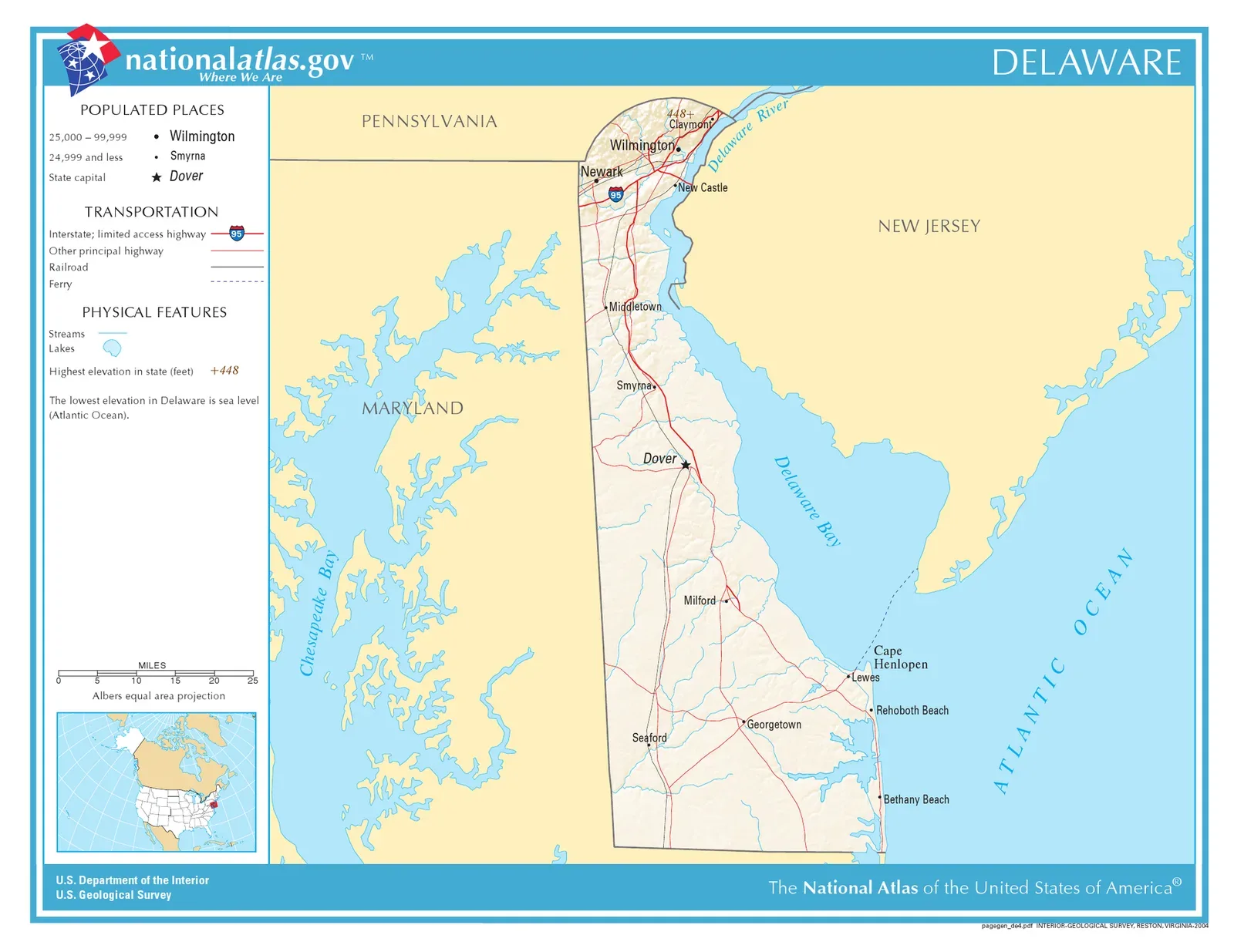
Delaware is easy to overlook in firearms history. It's the second-smallest state, has no major rifle manufacturer, and its modern gun laws put it firmly in the restrictive Northeast camp. But dismissing Delaware means missing one of the most consequential chapters in American arms history — because for the better part of the 19th century, the ground under Wilmington supplied the gunpowder that built, defended, and expanded the United States.
For the better part of the 19th century, the ground under Wilmington supplied the gunpowder that built, defended, and expanded the United States.
The E.I. du Pont de Nemours and Company didn't just sell powder — it armed the Union Army, survived antitrust litigation that restructured the entire American explosives industry, and eventually pivoted into the chemical conglomerate we know today. That story starts in a French refugee's mill and ends with Delaware becoming one of the most regulated gun states in the country.
Delaware was also the first state to ratify the U.S. Constitution on December 7, 1787 — a fact that gives its relationship with the Second Amendment a certain historical irony, given where its laws landed two centuries later.
Colonial & Frontier Eraedit
Early European Settlement
When European settlers first established communities in the Delaware Valley in the 17th century, they arrived as:
- Dutch colonists (New Netherland)
- Swedish colonists (New Sweden Colony, 1638)
- Finnish settlers
- English control (post-1664)
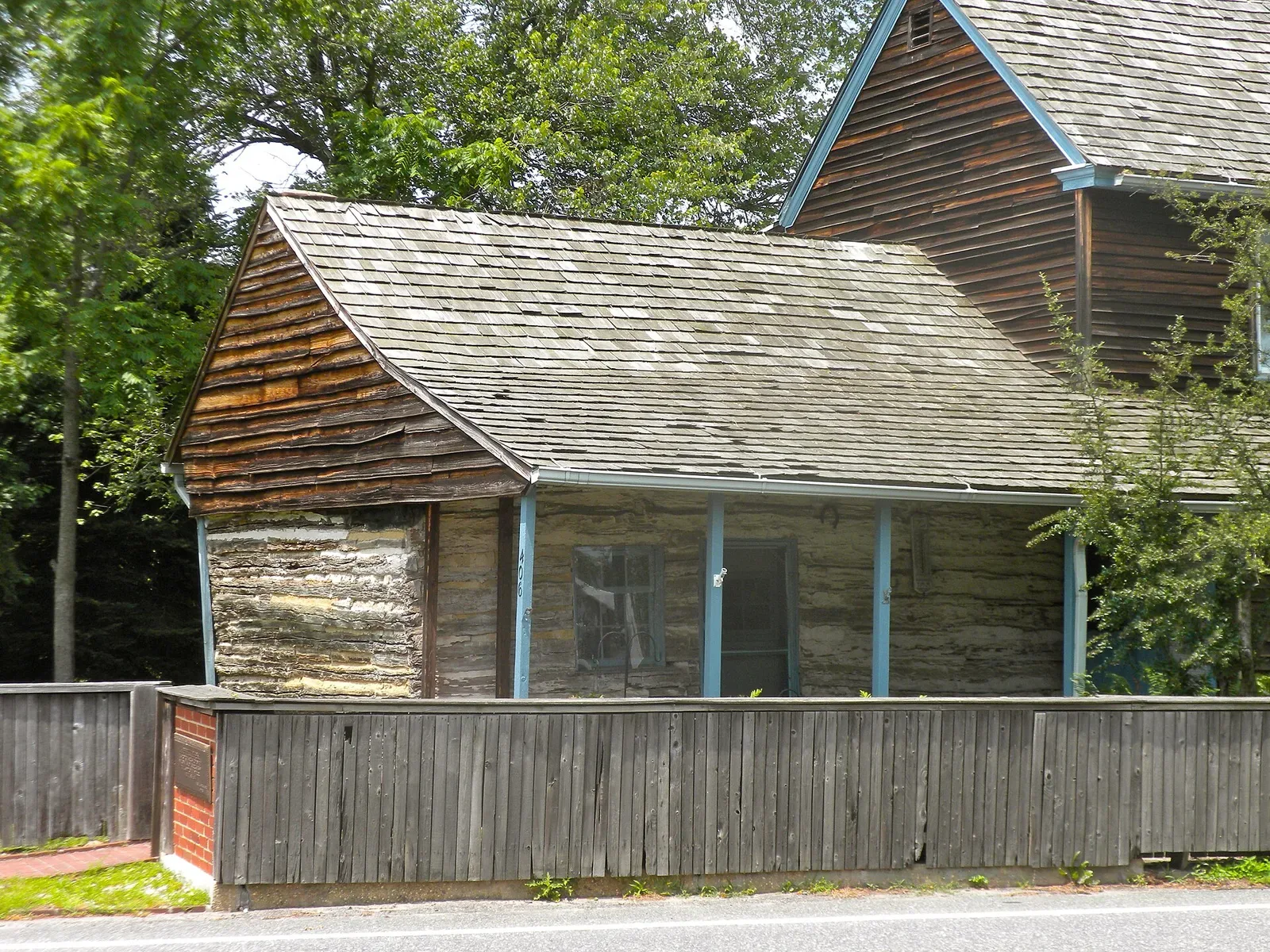
The New Sweden Colony, established in 1638 along the Christina River near present-day Wilmington, depended entirely on imported firearms and powder from Europe. There was no local production capability — every musket ball and horn of powder had to cross the Atlantic.
Lenape Relations and Trade
The Lenape people — also called the Delaware — had been trading with Europeans since the early 1600s and were familiar with firearms well before sustained European settlement. Like Indigenous peoples across the Eastern Seaboard, the Lenape became increasingly dependent on European gunpowder supplies for both hunting and defense, a dependency that shaped their diplomatic and military relationships with Dutch, Swedish, and English traders through the 17th century.
Colonial Militia System
By the time Delaware was firmly under English colonial administration in the early 1700s, the colony maintained a militia structure consistent with the rest of the mid-Atlantic colonies. Delaware's militia laws required able-bodied male colonists to arm themselves and muster regularly, though enforcement was inconsistent and the colony's small geographic footprint meant it leaned heavily on Pennsylvania for defense in practice.
During the French and Indian War (1754–1763), Delaware militiamen served alongside Pennsylvania and Virginia forces. The colony's proximity to Philadelphia made it a transit corridor for troops and supplies rather than a major theater of conflict. Gunpowder remained a chronic shortage throughout the colonial period — American colonists had no domestic manufacturing capability to speak of, and virtually all powder was imported from Britain or captured from enemy forces.
When Lord Dunmore, Royal Governor of Virginia, seized the gunpowder magazine at Williamsburg in April 1775, it wasn't just a symbolic provocation — it was a genuine strategic blow, because everyone understood that powder was the actual bottleneck of armed resistance.
Everyone understood that powder was the actual bottleneck of armed resistance. Delaware's patriots faced the same supply problem as every other colony: rifles and muskets were available, but the powder to fire them was not.
Revolutionary War & Early Republicedit
Delaware's role in the Revolutionary War was disproportionately significant for a colony of its size. The Delaware Regiment — later nicknamed the "Blue Hen's Chickens" — earned a reputation as one of the most reliable Continental Line units of the war. They fought at:
- Long Island (August 1776)
- White Plains
- Trenton
- Princeton
- Brandywine
- Germantown
- Camden
The Battle of Brandywine on September 11, 1777 was fought largely on Pennsylvania soil but drew Delaware militia and regulars directly into the action. The Delaware Regiment suffered serious casualties at Camden, South Carolina in August 1780 — one of the worst American defeats of the war — losing most of its effective strength.
Throughout the war, Delaware's geographic position between Philadelphia and the Chesapeake made it a logistics corridor. Weapons, powder, and supplies moved through the colony constantly. The chronic gunpowder shortage that plagued the Continental Army — roughly 90 percent of American powder during the Revolution was imported from France — made the post-war need for domestic powder manufacturing obvious to anyone paying attention.
Early establishment and growth of the DuPont powder works
Éleuthère Irénée du Pont was paying attention. A French refugee who had trained under chemist Antoine Lavoisier before fleeing the Revolution, E.I. du Pont arrived in the United States in January 1800. On a hunting trip shortly after his arrival, he noticed American gunpowder was both poor quality and expensive. With chemistry training, French capital, and the political support of Thomas Jefferson and Alexander Hamilton — an unusual coalition — E.I. du Pont founded E.I. du Pont de Nemours and Company in 1802 along the Brandywine River in what is now northern Delaware.
The choice of location was deliberate. The Brandywine ran short and steep, generating reliable water power. Saltpeter could be shipped up the Delaware River. Local willow trees provided the charcoal. French water wheels and turbines handled the mechanical work. Within two years, the mill was producing 39,000 pounds of powder annually. By 1805, output had tripled.
The War of 1812 was DuPont's first major government contract. The company supplied approximately one million pounds of black powder to the United States government during that conflict. When the British threatened the Chesapeake region — Delaware Bay being directly in the strategic zone — DuPont employees organized their own militia to defend Wilmington if it came to that. It didn't, but the company's loyalty and reliability had been established.
19th Century: Statehood & Expansionedit
Delaware entered the 19th century as a small, agriculturally dependent border state with one asset that would define its national role for the next hundred years: the Brandywine powder works.
DuPont's Antebellum Growth
DuPont's expansion through the antebellum period tracked American territorial and industrial growth almost exactly. The California Gold Rush required powder for mining. Transcontinental railroad construction blasted through mountains. Canal projects needed explosives at every turn. By the 1850s, DuPont had become the dominant American powder producer, and the Brandywine works had expanded into what was known as the Hagley Yards.
In 1857, Lammot du Pont — grandson of E.I. — developed "B" blasting powder, substituting sodium nitrate for the more expensive potassium nitrate. The formula was cheaper and more powerful for mining applications, and DuPont purchased the Wapwallopen powder factory near Wilkes-Barre, Pennsylvania to manufacture it at scale. Lammot would later develop connections to dynamite production, eventually founding the Repauno Chemical Company in New Jersey in 1880 before dying in an accidental factory explosion in 1884.
Industrial Accidents and Dangers
Danger was built into the business. Over 119 years of black powder production, the Brandywine works recorded serious industrial accidents with mounting casualties.
| Year | Event | Casualties | Impact |
|---|---|---|---|
| 1815 | Pounding mill explosion | 8 killed | First major industrial accident |
| 1818 | Major mill explosion | 36 killed | Alcohol banned from property |
| 1857 | Mill fire | Alexis I. du Pont killed | Family member casualty |
| 1863 | Packing room explosion | 13 killed | Wartime production continued |
| 1863 | Two additional explosions | 40 killed | Peak Civil War casualties |
| Total | 288 explosions (119 years) | 228 deaths | Acceptable by era standards |
The 1818 explosion — attributed to a foreman's drinking — destroyed five mill buildings and killed 36 workers, injuring E.I.'s wife Sophie in the process. Alcohol was banned from the property immediately after. Alexis I. du Pont, another family member, died trying to extinguish a mill fire in 1857. These losses were considered acceptable by the standards of the era.
Civil War Production
Delaware's position as a border state made the Civil War a particularly fraught moment. The state never seceded, but significant pro-Confederate sentiment existed, particularly among the planter class in the southern counties. Henry du Pont, who headed the company during the war, was a staunch Unionist and personally ensured that no DuPont powder was sold to the Confederacy or Confederate sympathizers. Approximately $110,000 worth of black powder was confiscated from DuPont agents who had attempted to circumvent that policy — none was actively sold south.
The Brandywine works produced an estimated 4 million barrels of powder during the Civil War — roughly one-third of all Union gunpowder requirements. On February 26, 1863, the packing room exploded, destroying 10,000 pounds of powder and killing thirteen men. Two more explosions followed that year, killing forty more workers. The mills kept running.
Fort Delaware on Pea Patch Island in the Delaware River was garrisoned and expanded during the war, eventually serving as a Union prisoner-of-war camp that held Confederate officers and enlisted men. At its peak in 1863, it held over 12,500 prisoners — an enormous population for a Delaware facility. The fort's Rodman guns and coastal defense artillery represented the military hardware side of Delaware's war contribution, while the Brandywine mills handled the powder side.
The Delaware state militia was called up repeatedly during the war, though Delaware's regiments were never deployed to the most intense theaters. The state contributed troops to the 1st Delaware Infantry and other units, but its strategic value to the Union was primarily geographic and industrial rather than manpower-based.
Following the war, DuPont continued expanding. By 1902, the company operated forty gunpowder and explosives plants stretching from the mid-Atlantic to the western states. That dominance eventually attracted federal attention.
20th Century: Wars, Industry & Regulationedit
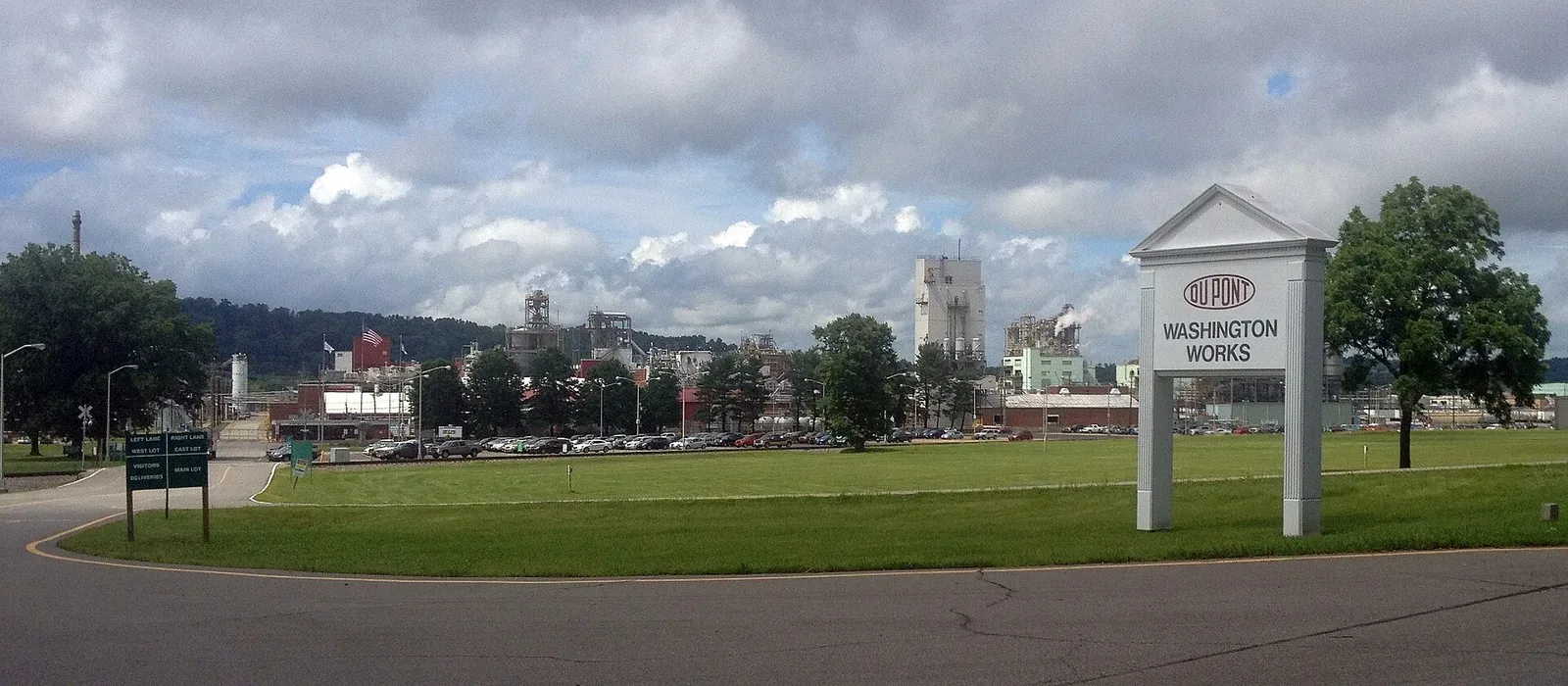
The 20th century opened with DuPont facing an existential legal challenge. In 1906, Robert S. Waddell — a former DuPont employee who had started his own powder company — accused the company of running a monopolistic "DuPont Powder Trust" that was defrauding the U.S. government through inflated military contracts. The Sherman Antitrust Act eventually forced DuPont's hand. In 1913, the court ordered the creation of Hercules Powder Company and Atlas Powder Company, each spun off with the capacity to produce 50 percent of the country's black powder and 42 percent of its dynamite.
The 1913 antitrust breakup that transformed DuPont from explosives to chemicals
The irony was that both Hercules and Atlas were staffed largely by former DuPont executives, and the practical separation was more legal than operational. But the court's decision sent DuPont a clear signal: the explosives business could not be its primary growth engine. The pivot toward broader chemical manufacturing — Freon, neoprene, nylon, Teflon — had its roots in that 1913 antitrust ruling as much as in any entrepreneurial vision.
World War I reversed the pressure temporarily. The U.S. government needed smokeless powder in quantities that only DuPont could supply, and the company obliged at massive scale. DuPont constructed the Old Hickory facility near Nashville, Tennessee — a plant employing roughly 30,000 workers in a purpose-built company town — specifically to meet wartime smokeless powder demand. The facility cost the War Department $83 million to construct. DuPont's Carney's Point plant in New Jersey, originally built in 1892, was expanded to nearly seventy times its prewar capacity.
In 1934, this wartime production came back to haunt the family. The Senate Munitions Investigating Committee — the Nye Committee — called DuPont executives to testify about allegations of war profiteering. The du Ponts denied the charges, but the hearings damaged the family's public reputation and contributed to the broader interwar skepticism about arms manufacturers. The term "merchants of death" entered the public vocabulary during this period, and DuPont was among the firms named.
DuPont closed the Hagley Yards on the Brandywine in 1921, ending over a century of powder production on the site that E.I. du Pont had personally selected. By 1975, the company had stopped producing gunpowder entirely. The Hagley site eventually became the Hagley Museum and Library, which today preserves the mill buildings and interprets the industrial history of the Brandywine powder works.
Delaware had no significant small arms manufacturing industry to compensate for the declining powder business. The state's gun culture through the mid-20th century was primarily shaped by hunting and by the shooting sports tradition common to mid-Atlantic rural communities, particularly:
- Waterfowl hunting in Delaware Bay marshes
- Sussex County rural hunting traditions
- Mid-Atlantic shooting sports culture
The National Firearms Act of 1934 and the Gun Control Act of 1968 applied to Delaware as they did every state. Delaware's own legislative response to federal gun law was minimal through most of the 20th century. The state maintained basic licensing requirements for dealers and had laws against carrying concealed weapons without a permit, but nothing dramatically stricter than federal minimums.
Dover Air Force Base, established in 1941, became Delaware's most significant military installation and remains so today. It's the largest military mortuary in the United States and a major C-5 and C-17 transport hub — strategically important, but not tied to firearms manufacturing or training in any distinctive way.
Modern Era (2000–Present)edit
Delaware's modern firearms law story is largely a story of acceleration. The state was not particularly aggressive on gun legislation through most of the late 20th century, but beginning in the 2010s and accelerating sharply after 2020, Delaware moved toward some of the stricter regulatory frameworks in the Mid-Atlantic.
Early 2000s Background Check Expansion
In 2013, Delaware passed Senate Bill 35, strengthening background check requirements for private firearm sales at gun shows — one of the earlier state-level expansions of background check requirements in the region. The bill moved through a Democrat-controlled legislature without significant drama, reflecting the political alignment of the state at that point.
The 2022 Legislative Package
The 2022 legislative session was the watershed. In the wake of the Uvalde and Buffalo mass shootings, Delaware's General Assembly passed a package of gun legislation:
| Bill | Year | Provision | Status |
|---|---|---|---|
| SB 35 | 2013 | Background checks at gun shows | In effect |
| HB 450 | 2022 | Assault weapons ban | Struck down 2023, under appeal |
| HB 451 | 2022 | Magazine capacity limits (17/7 rounds) | Struck down 2023, under appeal |
| SB 6 | 2022 | 14-day waiting period | In effect |
| SB 302 | 2022 | Strengthened red flag laws | In effect |
| Safe Storage Law | 2023 | Required when minors present | In effect |
| Ghost Gun Regs | 2023 | Serialization requirements | In effect |
- House Bill 450: banning the manufacture, sale, transfer, and possession of assault-style weapons, defined broadly to include semiautomatic rifles with detachable magazines and certain features
- House Bill 451: prohibiting magazines capable of holding more than 17 rounds for handguns and more than 7 rounds for long guns
- Senate Bill 6: establishing a 14-day waiting period for firearm purchases
Governor John Carney signed all three bills in June 2022. Legal challenges followed almost immediately.
Court Challenges and Bruen Impact
The Delaware State Sportsmen's Association (DSSA) and affiliated plaintiffs filed suit in Delaware Court of Chancery, arguing the assault weapons ban and magazine limits violated both the Second Amendment and Delaware's own constitution.
Delaware's constitution contains its own right-to-bear-arms provision under Article I, Section 20, adopted in 1987: "A person has the right to keep and bear arms for the defense of self, family, home and State, and for hunting and recreational use." That clause gave challengers a state constitutional hook alongside the federal Second Amendment argument.
In 2023, Delaware Superior Court Judge Vivian Medinilla struck down both HB 450 (the assault weapons ban) and HB 451 (the magazine limit) as unconstitutional under both the U.S. and Delaware constitutions, applying the Bruen historical test established by the U.S. Supreme Court in New York State Rifle & Pistol Association v. Bruen (2022). The state appealed.
Judge Medinilla's 2023 rulings were notable precisely because she applied Bruen's historical test rigorously and didn't bend it to reach a preferred outcome.
As of early 2026, the litigation is ongoing in the Delaware Supreme Court. The waiting period law survived initial challenge and remains in effect. Delaware also passed Senate Bill 302 in 2022, strengthening red flag — or Extreme Risk Protective Order (ERPO) — provisions that had originally been enacted in 2018.
In 2023, the General Assembly passed additional legislation requiring safe storage of firearms in households with minors and establishing stricter requirements around ghost guns — unserialized privately made firearms. Both laws were signed by Governor Carney.
Concealed Carry Requirements
Delaware does not have constitutional carry. A License to Carry a Concealed Deadly Weapon (CCDW) is required for concealed carry, issued by the Delaware Superior Court in each county — an unusual judicial rather than law enforcement issuance process. The process requires a criminal background check, proof of training, and a published notice in a local newspaper (a requirement that has been criticized as invasive and antiquated). Open carry without a permit is technically legal in Delaware but rarely practiced.
The Delaware State Sportsmen's Association, founded in 1947, remains the primary organized voice for gun owners in the state. The DSSA has been consistently involved in litigation and legislative advocacy, though it operates in a political environment where Democrats have controlled the governorship and both chambers of the General Assembly for most of the past two decades.
Notable Figures & Manufacturersedit
Éleuthère Irénée du Pont (1771–1834) is the central figure in Delaware firearms history by any measure. His decision to site a powder works on the Brandywine in 1802 made Delaware the gunpowder capital of North America for over a century. Without his mill, the Union's ammunition supply in the Civil War looks substantially different.
Henry du Pont (1812–1889) ran the company through the Civil War years and made the unambiguous call to cut off Confederate powder supply — a decision with real financial consequences given that Southern buyers were legitimate prewar customers. His Unionist commitment wasn't just symbolic; it was operationally enforced.
Lammot du Pont (1831–1884) was the company's most technically innovative mid-century figure, developing the sodium nitrate "B" powder formula and bridging DuPont's transition from black powder toward high explosives. His death in the 1884 Repauno factory explosion cut short what would have been a longer legacy.
Pierre S. du Pont (1870–1954), T. Coleman du Pont (1863–1930), and Alfred I. du Pont (1864–1935) reorganized the company in 1902, setting it on the path toward chemical diversification that would eventually take it entirely out of the gunpowder business. T. Coleman du Pont also served as a U.S. Senator from Delaware from 1921 to 1922.
Admiral Samuel Francis du Pont (1803–1865) — a naval officer rather than a powder man — commanded the Union naval forces at the Battle of Port Royal in November 1861, one of the largest amphibious operations of the Civil War. Fort du Pont in Delaware City and Dupont Circle in Washington, D.C. are named for him.
On the manufacturing side, Delaware never developed a significant small arms industry beyond the powder business. No major rifle or pistol manufacturer has been headquartered in Delaware. The state's manufacturing legacy in the firearms world is almost entirely about propellant chemistry, not guns themselves.
The Hagley Museum and Library in Wilmington preserves the original DuPont powder works site and maintains one of the most significant collections of American industrial and business history in the country, including extensive records related to the powder trade, wartime contracts, and the du Pont family's business operations.
Current Legal Landscapeedit
Delaware's current gun law framework places it among the more restrictive states in the continental U.S., though not at the absolute end of the spectrum occupied by states like California, New York, or New Jersey.
Permits and Licensing
- No permitless (constitutional) carry
- CCDW license required for concealed carry, issued by Superior Court
- Open carry is legal without a permit for those legally permitted to possess firearms
- CCDW requires training, background check, and newspaper publication notice
- Delaware does not recognize concealed carry permits from any other state
Purchase and Transfer Laws
| Category | Delaware Law | Restrictiveness Level |
|---|---|---|
| Constitutional Carry | No | Restrictive |
| Concealed Carry | CCDW required, court-issued | Moderate |
| Open Carry | Legal without permit | Permissive |
| Purchase Waiting Period | 14 days | Restrictive |
| Background Checks | Universal (private sales) | Restrictive |
| Assault Weapons | Banned (under litigation) | Very Restrictive |
| Magazine Limits | 17/7 rounds (under litigation) | Restrictive |
| Red Flag Laws | ERPO in effect | Restrictive |
| NFA Items | Legal with federal compliance | Moderate |
- 14-day waiting period on all firearm purchases (Senate Bill 6, 2022)
- Universal background checks required, including private sales
- No permit required to purchase a handgun beyond the NICS check
Restrictions (subject to ongoing litigation):
- Assault weapons ban (HB 450, 2022) — struck down by Superior Court in 2023, on appeal to Delaware Supreme Court
- Magazine capacity limits (HB 451, 2022) — struck down by Superior Court in 2023, on appeal
- Extreme Risk Protective Orders (ERPO/red flag law) in effect since 2018, strengthened 2022
- Safe storage requirements when minors are present (2023)
- Ghost gun regulations requiring serialization and background checks for privately made firearms (2023)
Preemption:
Delaware has partial state preemption of local firearms laws, but it is not comprehensive. The specifics of what municipalities can and cannot regulate independently have been a source of ongoing legal and legislative debate.
Hunting and Recreation
Delaware maintains active hunting seasons managed by the Delaware Division of Fish and Wildlife. Waterfowl, white-tailed deer, and small game hunting are culturally significant in Sussex County and rural Kent County. Sunday hunting on private land was legalized in Delaware in 2013 after decades of prohibition — a change that generated significant debate between hunting advocates and religious communities. Suppressors are legal for hunting in Delaware.
NFA Items:
Delaware residents can legally own NFA-regulated items — suppressors, short-barreled rifles, short-barreled shotguns, and machine guns (pre-1986) — subject to federal transfer requirements. There is no state-level prohibition on these items beyond the assault weapons law currently under litigation.
The BGC Takeedit
Delaware is a weird place to be a gun owner, and I mean that in the most accurate way possible. You've got the state that hosted the single most important firearms propellant manufacturing operation in American history — a facility that literally fueled the Union Army through the Civil War — and it's now one of the tighter gun law states in the Mid-Atlantic.
The du Pont family that armed the United States for over a century is now a chemical and materials company. The Brandywine mills are a museum. And the legislature is passing assault weapons bans. That's not hypocrisy, exactly — it's just a state that changed over two centuries, like every other state did.
But the contrast is sharp enough to notice.
The practical situation for gun owners in Delaware is this: it's manageable, but bureaucratic. The CCDW process is genuinely annoying — the newspaper publication requirement is a relic from an era when transparency meant something different, and it exposes applicants' names and addresses in a way that a lot of people find invasive. A judge issues your carry license, not the sheriff or state police.
That unusual arrangement has its defenders (more review, fewer rubber stamps) and its critics (slower, more variable, more subject to individual judge attitudes). The 2022 legislative push was aggressive by Delaware standards, and the courts pushed back. Delaware's Supreme Court will have the final say, and that ruling — whenever it comes — will matter for how other Bruen challenges play out in similar states.
Downstate Delaware — Sussex County especially — is a different cultural world from Wilmington and New Castle County. It's rural, it hunts, it votes Republican, and it does not share the policy preferences of the legislative majority in Dover. The Sunday hunting legalization in 2013 was a genuine win for that community after decades of advocacy.
The tensions between the two Delawares (the urban north and the rural south) show up in gun debates as clearly as they show up in anything else. For a shooter moving to Delaware from a more permissive state, the adjustment is real but not crushing. You'll need to get your CCDW if you carry, budget two weeks for any purchase, and stay current on the assault weapons litigation if you own or plan to own equipment in that category.
For someone moving from New Jersey or Maryland, Delaware will actually feel a bit more relaxed in some areas — the CCDW process, while cumbersome, does issue licenses to qualifying applicants rather than operating as a de facto ban the way New Jersey's "justifiable need" standard functioned pre-Bruen. The historical legacy is worth knowing because it genuinely matters.
The ground under Wilmington supplied the powder that made American territorial expansion and Union victory possible. That's not a footnote — that's a central thread of American firearms history, and it happened in the second-smallest state in the country, along a river that most people outside Delaware couldn't find on a map.
Referencesedit
- Burdick, Kim. "Gunpowder Industry." Encyclopedia of Greater Philadelphia. Rutgers University, 2015. https://philadelphiaencyclopedia.org/essays/gunpowder-industry/
- Delaware Public Archives. "Du Pont and the American Civil War." May 25, 2018. https://archives.delaware.gov/2018/05/25/du-pont-american-civil-war/
- Hagley Museum and Library. "The du Ponts." https://www.hagley.org/research/digital-exhibits/du-ponts
- McCutchen, Jennifer Monroe. "What a Historical Analysis of Gunpowder Can Teach Us about Gun Culture in the United States." The Panorama, October 2, 2023. https://thepanorama.shear.org/2023/10/02/what-a-historical-analysis-of-gunpowder-can-teach-us-about-gun-culture-in-the-united-states/
- Pfeifer, Hannah Spring. "Du Pont: From French Exiles to the Toast of the Brandywine." Library of Congress Inside Adams Blog, July 2021. https://blogs.loc.gov/inside_adams/2021/07/du-pont/
- American Society of Mechanical Engineers. "Brandywine River Powder Mills." ASME Engineering History Landmarks. https://www.asme.org/about-asme/engineering-history/landmarks/221-brandywine-river-powder-mills
- Coastal Point. "Safeguarding the duPont gunpowder mills a challenge." https://www.coastalpoint.com/opinion/experts_corner/civil_war_profiles/safeguarding-the-dupont-gunpowder-mills-a-challenge/article_a2069d7d-194b-5a71-bbc4-a52a1b1ff162.html
- Delaware Code Title 11, §§ 1441–1460 (weapons offenses and licensing provisions)
- Delaware Constitution, Article I, Section 20 (right to keep and bear arms, adopted 1987)
- New York State Rifle & Pistol Association v. Bruen, 597 U.S. 1 (2022)
- Delaware State Sportsmen's Association v. Delaware Department of Safety and Homeland Security (Superior Court, 2023)
- Delaware General Assembly. House Bill 450, House Bill 451, Senate Bill 6 (June 2022)
- Delaware Division of Fish and Wildlife. Hunting regulations and licensing. https://dnrec.delaware.gov/fish-wildlife/
Last Updated: February 24, 2026
- Quail Creek Plantation(Okeechobee, FL)
- 2aHawaii(Honolulu, HI)
- Boston Firearms(Everett, MA)
- Safeshoot(Kingston, NY)
Loading comments...