State Details
Texas
Overview | |
|---|---|
State | Texas (TX) |
Capital | Austin |
Statehood | 1845 |
Population | 30,503,340 |
Gun Ownership | 45.7% |
Active FFLs | 5,433 |
Carry Laws | |
Constitutional Carry | Yes (2021) |
Open Carry | Yes |
CCW Permit Available | Yes |
Permit Reciprocity | 37+ states |
Self-Defense | |
Castle Doctrine | Yes |
Stand Your Ground | Yes |
Duty to Retreat | No |
Regulations | |
State Preemption | Yes |
Red Flag / ERPO | No |
Waiting Period | None |
Universal BGC | No |
NFA Items | Yes |
Assault Weapons Ban | No |
Magazine Limit | None |
Key Legislation | |
| |
Notable Manufacturers | |
| |
Related Articles | |
Texas Firearms History: From Flintlocks to Constitutional Carry
Reference article
From The Boise Gun Club Handbook
Overviewedit
Texas has one of the most layered and genuinely complicated firearms histories in the country. The myth says Texans have always carried whatever they wanted, wherever they wanted, and the law be damned. The reality is messier and more interesting — a state that has swung between strict frontier-era carry bans and today's permitless carry, shaped by cattle drives, wars, mass shootings, and decades of legislative trench warfare at the Capitol in Austin.
Understanding Texas gun law and culture means understanding that the state spent most of the 19th and early 20th centuries with more restrictive carry laws than many of its neighbors. The permissive framework you see today is largely a product of the last thirty years.
Getting from there to here is the actual story.
Pre-Statehood: Spanish Colonization, Native Arms, and the Republic of Texasedit
Indigenous Nations and Spanish Firearms
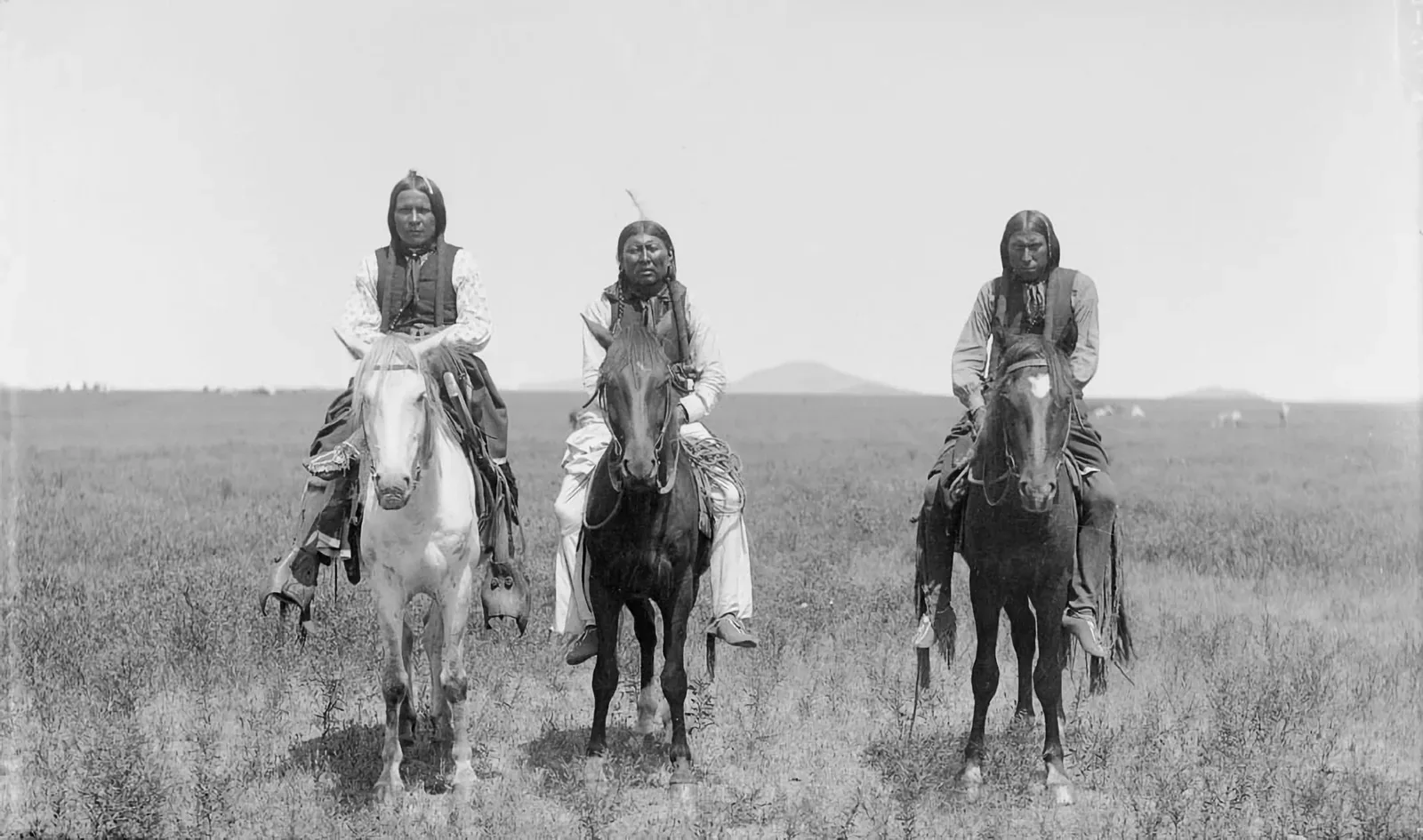
Long before the Texas Rangers existed, the land that would become Texas was shaped by firearms in ways most people skip past. The Caddo confederacy — whose word Tejas ("those who are friends") gave the state its name — were among the first Indigenous peoples in the region to encounter European firearms, through Spanish contact beginning in the early 1500s.
Spanish explorer Alonso Álvarez de Pineda mapped the Gulf Coast in 1519, and the subsequent wave of Spanish missions and presidios brought flintlock muskets and escopetas into a region already contested by the Lipan Apache, Comanche, Tonkawa, and dozens of other nations.
| Indigenous Nation | Primary Territory | Firearms Adoption Period | Notable Characteristics |
|---|---|---|---|
| Caddo Confederacy | East Texas | Early 1500s | First European firearm contact; "Tejas" origin |
| Comanche | Central/West Texas | Late 1700s | Most effective mounted warriors with firearms |
| Lipan Apache | South/Southwest Texas | Mid-1700s | Integrated firearms with traditional tactics |
| Tonkawa | Central Texas | Late 1700s | Allied with Texans against Comanche |
The Comanche Military Revolution
The Comanche deserve particular attention here. By the late 1700s, they had become arguably the most militarily effective mounted warriors on the continent, integrating firearms alongside their superior horsemanship and close-quarters weapons. Spanish colonial policy tried — largely unsuccessfully — to restrict firearms trade to Native nations across Texas, but those restrictions collapsed through French competition from Louisiana and the practical impossibility of controlling thousands of miles of frontier.
By the time Anglo-American settlers began arriving in force in the 1820s under Stephen F. Austin's empresario grants, the Comanche were already seasoned in the use of trade muskets and rifles.
Texas Revolution and "Come and Take It"
The Texas Revolution of 1835–1836 put firearms at the center of Texas identity in a way that has never fully faded. The Battle of Gonzales in October 1835 — often called the "Lexington of the Texas Revolution" — turned on a Mexican demand that colonists return a small cannon. The colonists' response, "Come and Take It," has been recycled on bumper stickers and rifle stocks ever since, but the original confrontation was genuinely about the right to bear arms for community defense. The colonists kept the cannon.
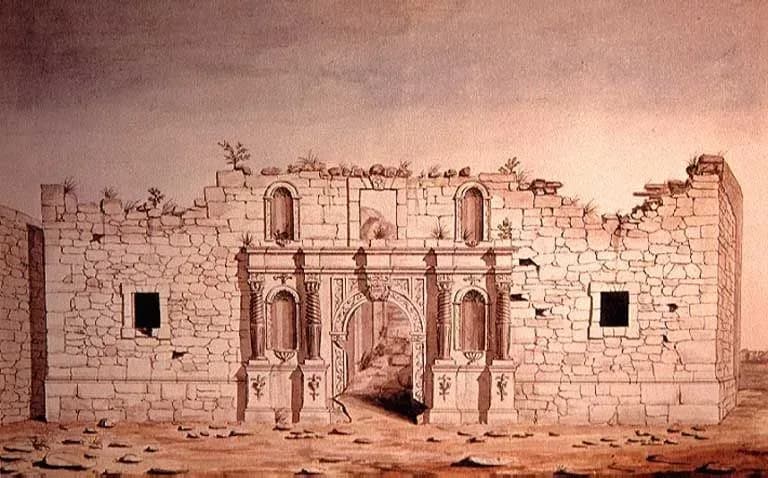
The Alamo, in February and March of 1836, cemented the connection between Texas independence and armed resistance. The roughly 180–200 defenders used a mix of flintlock long rifles, muskets, and a small artillery battery against General Antonio López de Santa Anna's forces. The weapons themselves — single-shot flintlocks requiring 20–30 seconds to reload — defined the tactical reality of the siege. An Alamo exhibit that opened in 2015 displayed more than four dozen period firearms, tracing the evolution from those flintlock single-shots through the percussion caps and repeating arms that followed.
The Republic of Texas (1836–1845) had no meaningful firearms regulations. The young nation's constitution guaranteed the right to keep and bear arms, and the practical reality of life on the frontier — Comanche raids, banditry, and a cash-strapped government that couldn't field a reliable standing army — meant that an armed citizenry was a genuine military necessity, not a political abstraction. The Texas Rangers, formalized under the Republic, initially operated with whatever weapons individual men brought. That changed when the Rangers got their hands on Samuel Colt's revolvers.
19th Century: Statehood, the Colt Revolver, and Frontier Gun Lawsedit
The Colt Partnership
Texas entered the Union on December 29, 1845, and almost immediately went to war. The Mexican-American War (1846–1848) saw Texas Rangers serving as scouts and irregular fighters under General Zachary Taylor, and their use of the Colt Paterson and early Colt Walker revolvers became part of the Ranger legend. Captain Samuel Walker of the Texas Rangers actually collaborated with Colt on the design of the Colt Walker in 1847 — a .44 caliber horse pistol heavy enough to bludgeon someone if you ran out of ammunition. It was the most powerful commercially produced handgun in the world at the time.
The partnership between a Texas Ranger and a Connecticut gunmaker produced one of the iconic firearms of the American frontier.
| Firearm Model | Year Introduced | Caliber | Significance | Texas Connection |
|---|---|---|---|---|
| Colt Paterson | 1836 | .36 | First practical revolver | Early Texas Rangers |
| Colt Walker | 1847 | .44 | Most powerful handgun of era | Co-designed by Texas Ranger |
| Colt Single Action Army | 1873 | .45 | "The Peacemaker" | Iconic cattle drive sidearm |
| Winchester Model 1873 | 1873 | .44-40 | "Gun that Won the West" | Standard long gun of trail drives |
Cattle Country Arsenal
The post-Civil War period brought the Colt Single Action Army (introduced 1873) and the Winchester Model 1873 — the two firearms most associated with the Texas cattle frontier. Neither was made in Texas. The SAA was manufactured in Hartford, Connecticut; the Winchester in New Haven. Both were bought, carried, and used throughout the Texas cattle country, and both became mythologized through the cattle drive era that ran roughly from 1866 to the late 1880s along the Chisholm Trail and Goodnight-Loving Trail.
Evolution of Texas Rangers' firearms from Republic era through frontier period
Frontier Gun Control Reality
Here's where the myth breaks hard from the history: frontier Texas had serious gun control.
The cattle towns of the Texas frontier — Abilene, Dodge City (technically Kansas, but the endpoint of Texas drives), and the Texas trail-head towns — routinely required cowboys to check their firearms upon entering town. The logic was practical: trail-hardened cowboys, months of back pay in their pockets, and whiskey available at every corner made for an obvious public safety problem. Abilene, Kansas passed ordinances in 1871 banning carry within city limits, enforced by Wild Bill Hickok as marshal. Texas cattle-receiving towns adopted similar rules.
Back in Texas itself, the state legislature passed House Bill 145 in 1871 — the first major Texas gun law — which prohibited carrying pistols, daggers, and Bowie knives. The law was a direct response to Reconstruction-era violence and the chaos following the Civil War. The Texas Supreme Court upheld the law in English v. State (1872), ruling that the right to keep arms did not necessarily include an unrestricted right to carry them everywhere. This is worth sitting with: Texas, in 1872, had a court ruling explicitly permitting handgun carry restrictions — a legal posture that wouldn't fully reverse until the 21st century.
The 1880s saw Texas range wars and fence-cutting conflicts — the Fence Cutting War of 1883–1884 being the most organized — where firearms were central to disputes over barbed wire and land rights. The Texas Legislature responded in 1884 by making fence cutting a felony, and local carry bans in the major cattle towns remained in effect. The Texas Rangers during this period were essentially a paramilitary force operating across a state where private citizens were heavily armed but local ordinances frequently restricted public carry.
The Winchester Model 1886 and later the Winchester Model 1894 became the dominant long guns of Texas ranch country by the 1890s. The '94 in .30-30 Winchester — still in production today — became the deer rifle of Texas for generations, a title it arguably still holds in much of rural Texas.
20th Century: Wars, Industry, and the Long Road Back to Carryedit
World Wars and Military Culture
World War I drew heavily from Texas. Camp Travis (later Fort Sam Houston) in San Antonio served as a major training installation, and Camp Bowie near Fort Worth processed tens of thousands of soldiers. Texas contributed approximately 200,000 men to the war effort. The military firearms of WWI — the M1903 Springfield and later the M1917 Enfield — came home with veterans who were already comfortable with long guns and added military training to that familiarity.
Defense Industry Impact
World War II transformed Texas's military-industrial footprint dramatically. Fort Hood (now Fort Cavazos), established in 1942 near Killeen, became one of the largest military installations in the world — home to armor and eventually the 1st Cavalry Division and III Corps. Dyess Air Force Base in Abilene, Randolph Air Force Base and Lackland Air Force Base in San Antonio, Sheppard Air Force Base in Wichita Falls — Texas became a training and logistics hub that shaped the state's relationship with military culture for the rest of the century.
How military presence shaped Texas firearms culture in the 20th century
Consolidated Aircraft (later Consolidated Vultee, then General Dynamics) operated the Fort Worth plant that produced B-24 Liberators during WWII and later became the home of F-111 and F-16 production. While not small arms manufacturing, the defense industry embedded military culture — and by extension firearms familiarity — into the Texas economy in ways that persist today through Lockheed Martin's massive Fort Worth operations.
On the small arms front, Texas did not become a major commercial firearms manufacturer during this period the way Connecticut or Massachusetts did. The state's contribution was cultural and military rather than industrial. Texas-based gunsmiths and custom shops existed, but no Texas manufacturer reached national scale in the 20th century's first half.
The Carry Prohibition Era
The carry law picture in the early 20th century was straightforward: Texas prohibited the carry of handguns in public. Period. Long guns had fewer restrictions, but the handgun ban was the law of the land. The 1925 Texas Penal Code codified these restrictions, and they remained largely intact for decades. A Texan who wanted to carry a handgun outside their home, vehicle, or business in 1960 was breaking the law regardless of how many generations their family had ranched the land.
UT Tower: A Turning Point
August 1, 1966 is a date that changed how Texas thinks about guns — though not in the direction you might expect. Charles Whitman climbed the University of Texas Tower in Austin and, using a Remington 700 in 6mm Remington among other firearms, killed 14 people and wounded 31 more over 96 minutes before being shot by Austin police officers Houston McCoy and Ramiro Martinez. Critically, armed civilians on the ground — UT students and Austin residents who retrieved rifles from their trucks and vehicles — provided suppressing fire that kept Whitman pinned and almost certainly reduced the casualty count.
The UT Tower shooting had a paradoxical long-term effect. Rather than building support for stricter carry laws, it reinforced among a significant portion of Texans the argument that armed citizens could and did respond to mass violence in the absence of police. That argument would resurface in every major Texas gun policy debate for the next six decades.
The Gun Control Act of 1968 — passed in the wake of the Kennedy, King, and Robert Kennedy assassinations — imposed federal licensing requirements on dealers, prohibited certain categories of buyers, and created the framework still in use today. Texas complied with federal requirements while maintaining its own prohibition on public handgun carry. The state's culture and its law were increasingly out of alignment by the 1980s, and the political pressure to change that built steadily through the decade.
Modern Era (2000–Present): Campus Carry, Constitutional Carry, and Mass Shootingsedit
The CHL Foundation (1995-2015)
The modern Texas firearms legal landscape was built on a foundation laid in 1995, when Governor George W. Bush signed House Bill 218 — Texas's first concealed handgun license law. The law had been debated for years and went through multiple failed attempts before passing. Texas became a shall-issue state: if you met the criteria, the state had to issue you a license. The Texas Department of Public Safety administered the program, and the Concealed Handgun License (CHL) became part of Texas life.
Campus and Open Carry Expansion
What most people forget is that the 1995 law still prohibited open carry of handguns. Texas — the state of the cattle drive and the Ranger — required that licensed handguns be concealed. Open carry of long guns in public was generally legal but oddly enough, openly carried handguns were not. This created a situation that activists found increasingly absurd, and organized open carry demonstrations in the 2010s — some featuring AR-pattern rifles carried into Chili's and Target — generated significant media attention and contributed to legislative action.
Senate Bill 11, signed in 2015, required public four-year universities and two-year colleges to allow concealed carry in campus buildings — the campus carry law. Universities could designate specific sensitive areas as exclusion zones but could not ban carry across the entire campus. The law was controversial at UT Austin in particular, where faculty members challenged it in federal court. The Fifth Circuit upheld it in 2017 in Glass v. Paxton.
The 2015 Legislature also passed House Bill 910, allowing licensed open carry of handguns effective January 1, 2016. The CHL was redesignated the License to Carry (LTC). For the first time since Reconstruction, Texans could legally carry a holstered handgun openly in public — though not on college campuses, in bars, in courthouses, or in locations that posted the appropriate statutory notice.
Mass Shootings and Policy Response
Then came a string of mass shootings that reshaped the political debate in ways that cut in multiple directions simultaneously.
| Date | Location | Fatalities | Injured | Firearm(s) Used | Legal/Policy Impact |
|---|---|---|---|---|---|
| Aug 1, 1966 | UT Tower, Austin | 14 | 31 | Remington 700, others | Armed citizen response precedent |
| Nov 5, 2017 | Sutherland Springs | 26 | 20 | Ruger AR-556 | Federal NICS reporting failure exposed |
| Aug 3, 2019 | El Paso Walmart | 23 | 23 | AK-pattern rifle | Anti-Latino hate crime focus |
| May 24, 2022 | Robb Elementary, Uvalde | 19 children, 2 teachers | 17 | Two Daniel Defense DDM4 | School security mandate (SB 11, 2023) |
November 5, 2017: Sutherland Springs. A gunman entered First Baptist Church and killed 26 people, wounding 20 more. A neighbor, Stephen Willeford — a former NRA instructor — retrieved his AR-15 and engaged the shooter as he left the church, wounding him and causing him to flee. The shooter, Devin Kelley, had been able to purchase his firearms because the U.S. Air Force failed to report his domestic violence court-martial conviction to the FBI's NICS database. The systemic failure was federal, not state.
August 3, 2019: El Paso. A gunman opened fire at a Walmart near Cielo Vista Mall, killing 23 people in what became the deadliest attack targeting Latino Americans in modern U.S. history. The shooter drove from the Dallas area and left a manifesto online before the attack. El Paso is one of the safest large cities in America by crime statistics — the attack was a deliberate ideological targeting, not a product of local conditions.
May 24, 2022: Uvalde. Nineteen students and two teachers were killed at Robb Elementary School by an 18-year-old who legally purchased two Daniel Defense DDM4 rifles shortly after his birthday. The law enforcement response — with hundreds of officers waiting in the hallway for over an hour while children called 911 from inside the classroom — became one of the most scrutinized and condemned failures of police action in American history. The Texas Senate and House both held investigative hearings. The Texas Tribune and ProPublica published detailed reconstructions of the response. No criminal charges were filed against law enforcement as of early 2026.
Uvalde produced enormous pressure for legislative action in both directions. Governor Greg Abbott initially floated raising the purchase age for semi-automatic rifles to 21. That proposal went nowhere in the Republican-controlled Legislature. What did pass was Senate Bill 11 (2023) — not to be confused with the 2015 campus carry law of the same number — which required school districts to have armed security, either through school marshals or school resource officers. The law was a direct response to Uvalde's lack of armed security.
Constitutional Carry Achievement
Constitutional carry — permitless carry for most Texans 21 and older — became law when Governor Abbott signed House Bill 1927 on June 16, 2021, effective September 1, 2021. Texas joined a growing list of states eliminating the permit requirement, though the LTC program remained in place for those who want reciprocity with other states. The law maintained existing prohibitions: no carry by prohibited persons, no carry in specific locations (schools, polling places, courts, bars over 51% alcohol revenue, amusement parks, churches without permission, and others), and no carry in locations posting the statutory 30.06 (concealed) or 30.07 (open carry) exclusion signs.
Legislative progression from prohibition to constitutional carry
The Texas LTC program, while now optional for in-state carry, remains popular because it provides reciprocity with roughly 30 other states and because the training requirement — 4–6 hours of classroom and range time — gives holders documented proficiency. As of 2024, approximately 1.6 million Texans held an active LTC.
Notable Figures & Manufacturersedit
Samuel Walker (1817–1847) is the Texas connection to the most important handgun development of the 19th century. The Walker Colt, co-designed with Samuel Colt, was adopted by the U.S. Mounted Rifles and saw use in the Mexican-American War. Walker was killed at the Battle of Huamantla in October 1847 — reportedly while carrying the revolvers that bore his name.
John Wesley Hardin (1853–1895) is the most notorious Texas gunfighter of the frontier era. Born in Bonham, Texas, Hardin claimed to have killed over 40 men. He was arrested by Texas Ranger John B. Armstrong in 1877 in Pensacola, Florida, convicted of murder, and served 15 years in prison. He was shot in the back at the Acme Saloon in El Paso in 1895. His life is probably the single best argument against the romance of frontier gunfighting — most of his killings were ambushes, accidents, or disputes that a functioning legal system would have handled differently.
Frank Hamer (1884–1955) led the Texas Rangers posse that ambushed Bonnie Parker and Clyde Barrow in Louisiana in May 1934. Hamer was a Ranger of the old type — relentless, hard, and not particularly interested in due process. The ambush used Browning Automatic Rifles, shotguns, and pistols; the two outlaws were hit by an estimated 130 rounds. Hamer is buried in Austin.
Hyrum "Hi" Oliver (1868–1931) founded H&H Arms in San Antonio in the early 1900s, one of the few Texas-based firearms businesses of that era to achieve regional significance. He supplied the Texas Rangers and border lawmen with custom-fitted holsters and repaired working guns for the trade.
On the modern manufacturing side, Taurus USA operates its North American headquarters and some production in Bainbridge, Georgia, not Texas — but sells heavily into the Texas market. The more relevant Texas manufacturing story is in the custom and semi-custom rifle space. Accurate Ordnance in Shiner, Texas and Christensen Arms (Utah-headquartered but with significant Texas dealer and custom network presence) represent the premium precision rifle segment. Alex Pro Firearms in Texas operates as a smaller-scale AR-platform manufacturer.
The honest answer is that Texas has never been a major commercial firearms manufacturing hub the way New England was. What Texas contributed was demand, culture, and political environment — not factories.
Sturm, Ruger & Co., founded in 1949 in Southport, Connecticut, later expanded to Newport, New Hampshire and opened a major manufacturing facility in Mayodan, North Carolina and later expanded to Prescott, Arizona. The Texas connection: Ruger's Single-Six and Blackhawk revolvers became ranch staples across Texas from the 1950s onward, filling the practical role the SAA had held a century earlier.
For the modern era, Daniel Defense — the maker of the rifles used at Uvalde — is headquartered in Black Creek, Georgia, not Texas. The political and legal aftermath of Uvalde put the company in an uncomfortable spotlight that has not fully faded.
Current Legal Landscapeedit
Texas gun law as of early 2026 sits in a specific place worth mapping out clearly.
What Texas Lacks
Texas does not have:
- A red flag / extreme risk protection order law
- A magazine capacity restriction
- An assault weapon ban
- A firearms registration requirement
- A permit requirement for purchase
- Background check requirements for private sales
- A waiting period
Current Carry Framework
| Location Type | Concealed Carry | Open Carry | Notes |
|---|---|---|---|
| Public Streets | ✓ Legal | ✓ Legal | Constitutional carry, 21+ |
| Private Business (no signs) | ✓ Legal | ✓ Legal | Owner may ask you to leave |
| Private Business (30.06/30.07) | ✗ Prohibited | ✗ Prohibited | Criminal trespass if posted |
| Schools/School Buses | ✗ Prohibited | ✗ Prohibited | Exception: school marshals |
| Courthouses | ✗ Prohibited | ✗ Prohibited | No exceptions |
| 51% Establishments | ✗ Prohibited | ✗ Prohibited | Bars deriving majority income from alcohol |
| Polling Places | ✗ Prohibited | ✗ Prohibited | Election day only |
| Campus Buildings | ✓ Legal (LTC only) | ✗ Prohibited | Concealed carry with license only |
Texas does have:
- Constitutional carry (HB 1927, effective September 1, 2021) for residents and non-residents 21+ who are not otherwise prohibited
- State preemption — local governments cannot enact firearms regulations stricter than state law
- Castle Doctrine and Stand Your Ground — no duty to retreat when legally present
- LTC program maintained for reciprocity purposes, shall-issue basis
- Campus carry for concealed carry in university and college buildings (with limited exclusion zones)
- 30.06 and 30.07 sign framework — private property owners can legally exclude concealed or open carry
- NFA weapons — Texas does not add state restrictions beyond federal law
Special Cases and Complications
The zip gun (improvised firearm) prohibition is one of the few Texas-specific restrictions that goes beyond federal law — manufacturing or possessing one is illegal under the Texas Penal Code.
Convicted felons in Texas occupy an unusual middle ground: under Tex. Penal Code § 46.04, a felon may possess a firearm in their residence once five years have elapsed from release from prison or parole — a provision with no federal equivalent and one that creates a legal complexity when federal law (which still prohibits felon possession absolutely) and state law intersect.
The duty to inform requirement applies only to LTC holders — if you're stopped by law enforcement and carrying under the LTC, you must disclose. Permitless carriers have no statutory duty to inform, though providing false information to a peace officer is separately prohibited.
The BGC Takeedit
Texas gun culture is real, but it's not monolithic — and the myth is running about 50 years ahead of the history.
The state spent most of its history as a republic and state with more restrictions on public carry than the mythology suggests. The frontier carry bans were real. The 1871 handgun carry prohibition was real. Texas only got concealed carry in 1995, open carry in 2016, and constitutional carry in 2021.
If you'd told a Texas Ranger from 1885 that it took until 2021 for Texans to carry without a government permit, he'd probably find that either funny or depressing depending on his mood. What's genuinely Texas-specific about the culture is the intensity. The state's identity is so wrapped up in independence, frontier mythology, and distrust of distant government that firearms carry a symbolic weight here beyond just practical tools.
The "Come and Take It" cannon story isn't just bumper sticker material — it reflects something accurate about why Texas fought for independence and what Texans think self-reliance looks like. That part is real.
The political landscape is shifting in ways worth noting honestly. The major urban centers — Austin, Houston, San Antonio, Dallas-Fort Worth — have growing populations that skew toward stricter gun laws. Every legislative session sees the rural-versus-urban fault line run right through the gun debate. The Republican legislative supermajority has so far held that line firmly, but the demographic math is changing. Post-Uvalde polling showed majority support in Texas for raising the purchase age for semi-automatic rifles — a proposal that went nowhere in the 2023 Legislature but isn't going away.
For a gun owner living in Texas today: it's one of the most permissive legal environments in the country. Constitutional carry, state preemption, no registration, no waiting period, NFA-friendly. The LTC is worth getting for reciprocity if you travel. The 30.06/30.07 sign system means you need to pay attention to where you're going, particularly in urban areas where businesses increasingly post exclusion signs.
The tension between the state's self-image and the political reality of mass shootings happening on Texas soil isn't going away. Sutherland Springs, El Paso, Uvalde — those names are part of Texas firearms history now, whether the mythology wants them there or not. How Texas works through that tension over the next decade will be more interesting than anything in the last thirty years.
Referencesedit
- Texas Penal Code § 46.02, § 46.03, § 46.04, § 46.05; Texas Government Code § 411.172, § 411.205, § 411.209
- English v. State, 35 Tex. 473 (1872)
- Glass v. Paxton, 900 F.3d 233 (5th Cir. 2017)
- Texas Legislature, HB 218 (1995), HB 910 (2015), SB 11 (2015), HB 1927 (2021), SB 11 (2023)
- Bullock Texas State History Museum, Texas History Timeline, thestoryoftexas.com
- Texas Tribune / ProPublica, "Uvalde: The Robb Elementary Shooting" investigative series, 2022
- Towerhistory.org, "Changes in Texas Gun Culture Since UT Tower Shooting"
- Texas Department of Public Safety, License to Carry Program statistics
- NRA-ILA, Texas State Gun Laws
- John Moritz, "Texas gun laws in the days of the frontier were far more restrictive," Corpus Christi Caller-Times, May 7, 2021
- Texas State Law Library, Gun Laws Research Guide, guides.sll.texas.gov
- Alamo Museum, Frontier Firearms Exhibit, 2015
- Texas Christian University, Addran College, "Texans and Their Guns" (dissertation prospectus)
- Texas Impact, "Texas Gun Legislation, 2009 to 2021" (PDF)
- CDC WISQARS, Firearm Mortality by State, 2021 data
Last Updated: February 24, 2026
- Quail Creek Plantation(Okeechobee, FL)
- 2aHawaii(Honolulu, HI)
- Boston Firearms(Everett, MA)
- Safeshoot(Kingston, NY)
Loading comments...