State Details
New Jersey

Overview | |
|---|---|
State | New Jersey (NJ) |
Capital | Trenton |
Statehood | 1787 |
Population | 9,290,841 |
Gun Ownership | 14.7% |
Active FFLs | 192 |
Carry Laws | |
Constitutional Carry | No |
Open Carry | No |
CCW Permit Available | Yes |
Permit Reciprocity | none |
Self-Defense | |
Castle Doctrine | Limited |
Stand Your Ground | No |
Duty to Retreat | Yes |
Regulations | |
State Preemption | No |
Red Flag / ERPO | Yes |
Waiting Period | 7 days |
Universal BGC | Yes |
NFA Items | No |
Assault Weapons Ban | Yes |
Magazine Limit | 10 rounds |
Key Legislation | |
| |
Notable Manufacturers | |
| |
New Jersey Firearms History: From Colonial Forges to the Nation's Strictest Gun Laws
Reference article
From The Boise Gun Club Handbook
Overviewedit
New Jersey has one of the most layered and politically contested firearms histories of any state in the union. It sits at an intersection most people don't expect: it was a manufacturing powerhouse for arms during the colonial and Revolutionary periods, a working-class hunting and sporting state through most of the 20th century, and then -- over roughly six decades of legislation -- it became the state that gun rights advocates point to when they want an example of where restrictive policy leads.
The arc isn't simple. New Jersey didn't start as an anti-gun state. It became one, incrementally, driven by urban politics, high-profile violence, and a legislature that found gun control to be durable political currency. Understanding that arc matters whether you're a New Jersey gun owner trying to make sense of your own state's laws, a historian, or just someone trying to understand how American firearms policy actually develops on the ground.
New Jersey has no provision in its state constitution protecting the right to keep and bear arms -- a fact that has shaped decades of litigation and legislation.
The state's Article I, Section 1 guarantees "unalienable" rights including defending life and protecting property, but courts have consistently declined to read that as a firearms guarantee equivalent to the Second Amendment.
What follows is the specific history of firearms in New Jersey -- the people, the ironworks, the legislation, the court cases, and the culture.
Colonial & Revolutionary Eraedit
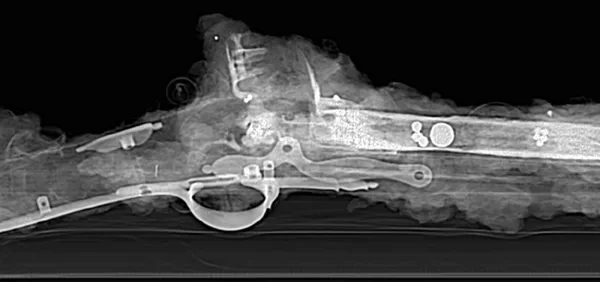
New Jersey's role in early American arms production is underappreciated. Morris County sat atop iron ore deposits that made it one of the most productive ironworking regions in colonial North America.
Iron Works and Military Production
| Iron Works | Location | Period | Military Contribution |
|---|---|---|---|
| Hibernia Iron Works | Morris County (Rockaway area) | 1760s-1780s | Cannon shot, camp equipment, iron components |
| Mount Hope Iron Works | Morris County | 1760s-1780s | Hardware for firearms, military supplies |
| Ringwood Iron Works | Passaic County | 1740s-1780s | Hudson River chain, cannon shot |
| Batsto Iron Works | Burlington County | 1766-1780s | Cannon, shot for Continental Army |
The Hibernia Iron Works, established in the 1760s near what is now Rockaway, and the Mount Hope Iron Works were producing iron goods -- including hardware for firearms -- well before the Revolution. When the war broke out, these facilities became strategically critical.
General George Washington used New Jersey not just as a military corridor but as a supply base. The Morristown encampments of 1776-77 and 1779-80 placed Washington's army squarely in the middle of New Jersey's ironworking country. The Hibernia Furnace and Ringwood Iron Works -- the latter managed by Robert Erskine, Washington's Surveyor General -- produced cannon shot, camp equipment, and iron components that supported Continental Army operations throughout the war. Erskine's ironworks at Ringwood supplied the iron chain stretched across the Hudson River at West Point to block British naval movement.
The Battle of Trenton (December 1776) and Battle of Princeton (January 1777) were fought on New Jersey soil, and the state's geography -- squeezed between Philadelphia and New York -- made it the most frequently contested ground of the entire war. Soldiers on both sides were armed with Brown Bess muskets, Pennsylvania rifles, and whatever could be procured locally. New Jersey militias were equipped in part through confiscation of Loyalist property and through arms produced or repaired at local forges.
By the time the war ended, New Jersey's iron industry had proven its military value. The Batsto Iron Works in Burlington County, operating from 1766, had produced cannon and shot for the Continental Army under the direction of Charles Read and later John Cox. These weren't peripheral operations -- they were part of the supply chain that kept Washington's army functional through some of the worst years of the war.
19th Century: Statehood, Industry & the Civil Waredit
New Jersey achieved statehood in 1787 as one of the original thirteen states.
Industrial Development
Through the first half of the 19th century, the state's firearms-related industry evolved from ironworks into more specialized manufacturing. Newark emerged as a center of precision metalworking and light manufacturing -- skills that translated directly into firearms components production.
The most significant New Jersey firearms manufacturer of the 19th century was arguably Schuyler, Hartley and Graham, a New York-based firm with deep New Jersey supply chain connections, but the state's most direct manufacturing contribution came through the Trenton and Newark metalworking trades. Newark's workshops produced everything from sword furniture to percussion caps.
Civil War Service
During the Civil War, New Jersey raised approximately 88,000 troops for the Union cause across infantry, cavalry, and artillery regiments. The New Jersey State Arsenal, established in Trenton, served as the primary storage and distribution point for state military arms. New Jersey regiments were equipped primarily with Springfield Model 1861 rifled muskets -- the standard Union infantry arm -- along with Enfield Pattern 1853 rifles procured from Britain. The 15th New Jersey Infantry and other regiments saw heavy action at Chancellorsville, Gettysburg, and through the Overland Campaign.
New Jersey's political situation during the Civil War was complicated. The state had a significant Copperhead (anti-war Democrat) faction, and Governor Joel Parker was a Democrat who frequently clashed with the Lincoln administration. New Jersey was the only northern state to vote against Lincoln in both 1860 and 1864. This political tension didn't prevent New Jersey men from serving and dying in large numbers, but it did color the state's relationship with federal authority -- a dynamic that resurfaces in different forms in later firearms policy debates.
Post-war, the state's light manufacturing economy continued to include firearms-related trades. Newark remained a center for metalworking, and several sporting goods and arms dealers established operations serving the densely populated corridor between New York and Philadelphia.
20th Century: Wars, Industry & the Turn Toward Regulationedit
Through the early 20th century, New Jersey gun culture looked a lot like the rest of the industrial Northeast -- working-class hunting, trap and skeet shooting at private clubs, and a strong tradition of sporting arms ownership.
Early 20th Century Gun Culture
The state had substantial white-tailed deer populations in the Pine Barrens and the northwestern highlands, and deer hunting was (and remains) a genuinely significant part of rural New Jersey life.
World War Military Production
Both World Wars drew on New Jersey's industrial capacity. Picatinny Arsenal, established in Morris County in 1880 as a storage facility and formalized as a manufacturing installation during World War I, became one of the most important military explosives and ammunition research facilities in the country. During World War II, Picatinny Arsenal employed thousands of New Jersey workers producing artillery shells, fuses, and propellants. The Arsenal remains active today as Picatinny Arsenal under the U.S. Army Combat Capabilities Development Command, and it is the single most significant military-industrial firearms-related installation in New Jersey history.
Camp Kilmer in Middlesex County served as a major staging and processing center for troops deploying to the European Theater during World War II. More than 2.5 million soldiers passed through Kilmer between 1942 and 1945.
The postwar period brought suburban expansion and demographic change to New Jersey at a pace few states matched. The populations of Newark, Camden, Trenton, and Paterson shifted dramatically, urban poverty concentrated, and by the late 1950s and early 1960s, urban violence became a defining political issue in the state. This is the context in which New Jersey's long march toward restrictive firearms legislation begins.
| Law | Year | Key Provisions | Impact |
|---|---|---|---|
| Sills Act | 1966 | FPIC for long guns, permits for handguns, waiting periods | Foundation of NJ gun law |
| Assault Firearms Law | 1990 | Named weapon bans, 15-round mag limit, registration | Strictest AWB in nation |
| Childproof Handgun Law | 2002 | Smart gun mandate trigger | Suppressed national smart gun development |
The Sills Act of 1966
The pivotal moment in New Jersey gun law history is 1966. That year, Attorney General Arthur Sills championed An Act Concerning Firearms and Other Dangerous Weapons -- what became known as the Sills Act.
The Sills Act was not a modest tweak; it was the most comprehensive state firearms regulatory framework in the country at the time.
The Sills Act required a Firearms Purchaser Identification Card (FPIC) for the purchase of rifles and shotguns, and a separate Permit to Purchase for each handgun acquisition -- both issued through local police with background checks. It imposed waiting periods, required sellers to maintain records, and established a permitting infrastructure that remains the backbone of New Jersey firearms law sixty years later.
The timing was deliberate. The 1964 Newark riots hadn't happened yet -- that came in 1967 -- but urban violence was already a live political issue, and the assassination of President John F. Kennedy in 1963 had accelerated national gun control conversations. New Jersey's legislators moved faster than Congress.
The Sills Act drew national attention almost immediately. A Rutgers University study published in the New Jersey Law Journal examined the law's mechanics, and Congressional proponents of federal gun control legislation pointed to New Jersey as a working model. When Congress was debating what became the Gun Control Act of 1968, New Jersey's system was cited repeatedly as evidence that comprehensive permitting was administratively feasible.
The law was challenged almost immediately. Burton v. Sills (1968) reached the New Jersey Supreme Court, which upheld the Sills Act against Second Amendment challenge, ruling that the Second Amendment applied only to the federal government and did not restrict state action -- the prevailing constitutional understanding before McDonald v. City of Chicago (2010). Siccardi v. State (1971) and Weston v. State of New Jersey (1972) produced further judicial affirmations of the state's permitting framework.
The 1967 Newark Riots
Five days of civil unrest in Newark in July 1967 -- 26 people killed, over 700 injured, more than 1,500 arrested -- hardened political will in Trenton for further firearms restrictions. The riots also produced the New Jersey National Guard's controversial armed deployment into Newark's streets. The political aftermath accelerated calls for tighter controls, particularly on handguns in urban areas. Newark's devastation became a recurring reference point in New Jersey firearms policy debates for decades.
The 1990 Assault Firearms Law
New Jersey's next landmark legislation came after a national wave of concern over semi-automatic rifles. Following the Stockton, California schoolyard shooting in January 1989, in which a gunman used an AKS rifle to kill five children, states began moving on semi-automatic rifle restrictions. New Jersey moved fastest and farthest.
P.L. 1990, Chapter 32 -- the New Jersey Assault Firearms Law -- was signed by Governor James Florio and took effect in May 1990. It was, at that moment, the strictest assault weapons law in the country. The law prohibited possession of specifically named firearms by make and model, as well as firearms deemed "substantially identical" to named weapons. It also banned magazines capable of holding more than 15 rounds (later reduced to 10).
Firearms classified as assault firearms that were acquired before May 1, 1990 could be retained if registered with the state. Owners who didn't register, sell, or render their firearms inoperable by the deadline faced felony charges.
Coalition of New Jersey Sportsmen v. Florio (1990) challenged the law in federal court. The challenge failed. The "substantially identical" language in the law -- meant to prevent manufacturers from making trivial modifications to circumvent named bans -- became one of the most litigated phrases in New Jersey firearms law. In 1996, the New Jersey Attorney General's office issued formal guidelines defining what "substantially identical" meant in practice, which themselves became sources of ongoing legal dispute.
Coalition of New Jersey Sportsmen, Inc. v. Whitman (1999) brought another federal challenge, again unsuccessful.
The 2002 Childproof Handgun Law
In 2002, New Jersey enacted legislation that had no precedent anywhere in the country: the Childproof Handgun Law, signed by Governor James McGreevey. The law mandated that within three years of a personalized ("smart") handgun becoming available for retail sale anywhere in the United States, all handguns sold by New Jersey dealers would have to be smart guns.
This wasn't a regulation of existing guns -- it was a regulatory trigger designed to force the eventual replacement of conventional handguns in the state's retail market. Gun rights advocates called it a backdoor handgun ban. The law effectively had the unintended consequence of suppressing smart gun development nationally: manufacturers feared that introducing a smart gun to the U.S. market would trigger the New Jersey mandate and create a political firestorm. Armatix's iP1 pistol came close to triggering the law in 2014 when a California dealer briefly offered it, but the episode ended when the dealer withdrew the gun amid controversy.
New Jersey partially walked back the mandate in 2019, amending the law to require that dealers offer at least one smart gun model for sale once the technology became available, rather than requiring that all handguns sold be smart guns.
Modern Era (2000–Present)edit
The 21st century in New Jersey has been defined by successive waves of legislative tightening, punctuated by federal court decisions that forced partial retreats and then new workarounds.
The Gun Safety Packages
Governor Phil Murphy, elected in 2017, made gun control a defining issue of his administration. Under Murphy, New Jersey enacted three distinct legislative packages.
| Package | Year | Governor | Key Provisions |
|---|---|---|---|
| Gun Safety 1.0 | 2018 | Murphy | 10-round mag limit, private transfer BGCs, .50 BMG ban |
| Gun Safety 2.0 | 2019 | Murphy | Red flag orders, DV confiscation, murder insurance ban |
| Gun Safety 3.0 | 2022 | Murphy | Extensive sensitive places post-Bruen |
Gun Safety Package 1.0 (2018) reduced the magazine capacity limit from 15 rounds to 10 rounds for semi-automatic pistols and rifles, and 6 rounds for semi-automatic shotguns. It also required background checks for private firearm transfers (closing the so-called "gun show loophole" under state law), required ammunition vendors to record sales, and banned .50 BMG caliber rifles.
Gun Safety Package 2.0 (2019) added a requirement for law enforcement to confiscate firearms when responding to domestic violence calls, created a process for issuing Extreme Risk Protective Orders (red flag orders) allowing courts to order firearms seizure from individuals deemed dangerous, and banned "murder insurance" (self-defense legal insurance products) through Executive Order No. 83.
Gun Safety Package 3.0 (2022) -- enacted in the immediate aftermath of the U.S. Supreme Court's decision in New York State Rifle & Pistol Association, Inc. v. Bruen -- was the most aggressive legislative response to Bruen of any state. Bruen (June 2022) struck down New York's "proper cause" standard for carry permits as unconstitutional, and because New Jersey's permit system used similar "justifiable need" language, the decision effectively converted New Jersey to a shall-issue carry permit state overnight.
The Murphy administration's response was immediate. Package 3.0 designated an extraordinarily broad list of "sensitive places" where carry was prohibited even with a valid permit -- including parks, beaches, libraries, museums, restaurants that serve alcohol, entertainment venues, casinos, healthcare facilities, schools, government buildings, and private property unless the owner explicitly posted permission. The practical effect was to make lawful carry in New Jersey nearly impossible in populated areas despite the shall-issue permit system.
Federal courts have been actively litigating New Jersey's sensitive places law since its enactment. Siegel v. Platkin (District of New Jersey) produced a preliminary injunction against several of the sensitive places designations in late 2022, blocking enforcement of some provisions while litigation continued. The case remained active as of early 2026, with the state defending the bulk of its restrictions.
Timeline of major New Jersey firearms legislation milestones
The Ghost Gun Ban
New Jersey enacted a comprehensive ban on unserialized firearms -- "ghost guns" -- making it illegal to manufacture, transport, sell, or possess an undetectable or untraceable firearm. The legislature framed New Jersey as the first state to comprehensively regulate self-made firearms, and the law predated the Biden administration's ATF Frame or Receiver Rule of 2022 at the federal level.
COVID-19 and the Essential Business Designation
In March 2020, Governor Murphy ordered non-essential businesses to close in response to the COVID-19 pandemic, initially designating gun stores as non-essential -- closing them. Within days, amid legal challenges and political pressure, Murphy reversed course and declared firearms dealers essential businesses, keeping them open. New Jersey gun retailers reported record demand during the early months of the pandemic, consistent with national trends.
Carry Permit Culture
Prior to Bruen, New Jersey's carry permit system operated under a "justifiable need" standard -- effectively a may-issue system that, in practice, issued almost no permits to ordinary citizens. Law enforcement officers, armored car guards, and a handful of others who could demonstrate specific, documented threats received permits. The average New Jersey resident had essentially no path to a carry permit.
Post-Bruen, applications surged. The New Jersey State Police reported a significant increase in permit applications in the second half of 2022 and into 2023. The sensitive places legislation, however, meant that many newly permitted carriers found their lawful carry options extremely limited in practice.
Post-Bruen legal and legislative response sequence
Notable Figures & Manufacturersedit
Robert Erskine (1735-1780) -- Manager of the Ringwood Iron Works and Washington's Surveyor General, Erskine's ironworks were central to Revolutionary War arms materiel supply. He died at Ringwood in 1780 and is buried on the property.
Arthur Sills -- The architect of New Jersey's 1966 firearms law, Sills built the regulatory framework that every subsequent New Jersey gun law has been layered onto. His legislation directly shaped the federal Gun Control Act of 1968.
James Florio -- Signed the 1990 Assault Firearms Law. The political backlash from gun owners contributed to his defeat by Christine Todd Whitman in 1993 -- one of the most-cited examples in American politics of a gun control law costing a governor re-election.
Picatinny Arsenal -- The most significant ongoing firearms-related installation in New Jersey history. Located in Wharton, Morris County, Picatinny Arsenal has operated continuously since 1880 and has been responsible for developing fusing systems, propellants, and ammunition that have been used in every American military conflict since World War I. It remains a major employer and research installation.
Phil Murphy -- The most aggressive gun control executive in New Jersey's modern history. Murphy's three legislative packages between 2018 and 2022, combined with his administration's post-Bruen legislative response, reshaped New Jersey gun law more thoroughly than any governor since Florio.
Frank Lautenberg (D-NJ) -- While a federal figure rather than a state one, Lautenberg's fingerprints are on significant federal gun legislation with direct New Jersey relevance. The Lautenberg Amendment (1996), which prohibited firearm possession by anyone convicted of a misdemeanor domestic violence offense, bears his name and has been extensively litigated in New Jersey courts.
New Jersey has not been home to major commercial firearms manufacturers in the modern era. The state's regulatory environment and high operating costs have not made it attractive for firearms industry investment. Smith & Wesson (Massachusetts), Glock (Georgia), and other major manufacturers do not have New Jersey production facilities. The state's firearms retail sector is relatively small given its population density, and several dealers have cited the regulatory burden as a constraint on business.
Current Legal Landscapeedit
New Jersey's current firearms law is among the most restrictive frameworks in the country. Here's what it actually requires:
Purchase Requirements
| Firearm Type | Requirements | Processing Time | Validity |
|---|---|---|---|
| Rifles/Shotguns | FPIC, fingerprints, BGC, references | 30 days (statutory), often months | 10 years |
| Handguns | FPIC + Permit to Purchase (each gun) | 30 days per permit | 90 days per permit |
| Carry Permits | Shall-issue post-Bruen, $200, training | 30-60 days | 2 years |
Purchasing Rifles and Shotguns -- You need a Firearms Purchaser Identification Card (FPIC). The FPIC requires fingerprinting, a background check through the State Bureau of Identification and State Police, mental health record searches, and multiple personal references. Cards issued after 2021 expire after 10 years. Processing times are supposed to be 30 days by statute; in practice, waits of several months have been common depending on the municipality.
Purchasing Handguns -- In addition to the FPIC, you need a separate Permit to Purchase for each handgun. One permit, one handgun. Each permit is valid for 90 days. The Permit to Purchase system creates de facto handgun registration -- a copy of every permit goes to the New Jersey State Police Firearms Investigation Unit.
Carrying Firearms -- Since Bruen, New Jersey issues Permits to Carry a Handgun on a shall-issue basis, but the sensitive places law severely limits where carry is lawful. The permit application costs $200, requires qualification shooting, and must be approved by the local police chief before going to a Superior Court judge. Open carry of handguns is not allowed for permit holders as of 2022.
New Jersey firearms purchase process flowchart
Prohibited Items
Prohibited Firearms and Accessories -- New Jersey bans:
- Assault firearms as defined under P.L. 1990, Chapter 32 and subsequent amendments
- Magazines capable of holding more than 10 rounds for semi-automatic pistols and rifles
- Magazines capable of holding more than 6 rounds for semi-automatic shotguns
- Short-barreled rifles and shotguns
- Suppressors
- .50 BMG caliber rifles
- Unserialized/ghost guns
| Prohibited Item | Legal Status | Notes |
|---|---|---|
| Assault firearms | Banned (with pre-1990 registration) | Named weapons + substantially identical |
| Standard capacity magazines | Banned (>10 rounds pistol/rifle, >6 shotgun) | Grandfathered pre-law ownership |
| Suppressors | Banned | No exceptions |
| SBRs/SBSs | Banned | Federal NFA items prohibited |
| Hollow-point ammo | Legal home/range, illegal carry | Unique restriction nationally |
Carry and Transport
Hollow-Point Ammunition -- Legal to purchase, legal to possess at home, legal to transport directly to and from a range or hunting location. Not legal to carry on your person in public, even with a valid carry permit. State v. Brian Aitken (a case that drew national attention when Aitken was convicted in 2009 for transporting hollow-point ammunition and an unloaded handgun in his car while moving between residences) is the reference case here, though Aitken's conviction was subsequently overturned on appeal.
Constitutional Carry -- No. New Jersey does not have constitutional carry and there is no realistic prospect of it under current legislative alignment.
Reciprocity -- New Jersey recognizes no other state's carry permit. No other state recognizes New Jersey's carry permit for reciprocity purposes, with the limited exception of Michigan recognizing New Jersey resident permits.
Red Flag Law -- New Jersey's Extreme Risk Protective Order law allows any person -- not just law enforcement or family members -- to petition a court for an order to confiscate someone's firearms based on a finding of significant risk. This is one of the broadest standing provisions for red flag petitions in any state.
State Preemption -- New Jersey has limited preemption. Local governments retain some ability to impose additional restrictions, and several municipalities have passed Second Amendment sanctuary resolutions, though these carry no legal force under current state law.
Ongoing Federal Litigation
Bruen Litigation -- The state's legal battle over its post-Bruen sensitive places law, primarily in Siegel v. Platkin, was ongoing as of early 2026. Federal courts have blocked enforcement of some provisions while upholding others, and the case is expected to continue working through the federal appellate system.
The BGC Takeedit
New Jersey is a complicated place to be a gun owner, and it's worth being honest about what that actually looks like on the ground.
The state has real gun culture -- it just gets almost no visibility. There are deer hunters in Sussex, Warren, and Hunterdon Counties who have been running the same ridgelines for three generations.
There are trap and skeet shooters at clubs in Morris and Somerset Counties who are genuinely serious competitors. There are a handful of gun stores that have survived by serving knowledgeable customers who know exactly what they're doing and are willing to navigate the paperwork. That culture is real, and it predates the current regulatory environment by a century.
But the regulatory environment is what it is.
New Jersey requires more paperwork to buy a handgun than most states require to get a driver's license.
The FPIC process, depending on your municipality, can take months. The Permit to Purchase system means that if you decide to buy a second handgun six months after your first, you're starting the process over. The sensitive places law post-Bruen is written so broadly that a permit holder in a typical New Jersey suburb would struggle to identify a route from their home to a restaurant that doesn't pass through a "sensitive place."
The 1966 Sills Act is genuinely worth understanding as history. It was a serious piece of policy built on a real permitting infrastructure -- not a symbolic gesture. It influenced federal legislation. Whatever you think of the policy outcome, it was competent legislation. What came after it, through the 1990 assault weapons law and the three Murphy-era packages, moved from infrastructure toward accumulation -- each layer adding restrictions without necessarily addressing the underlying mechanics that the 1966 law established.
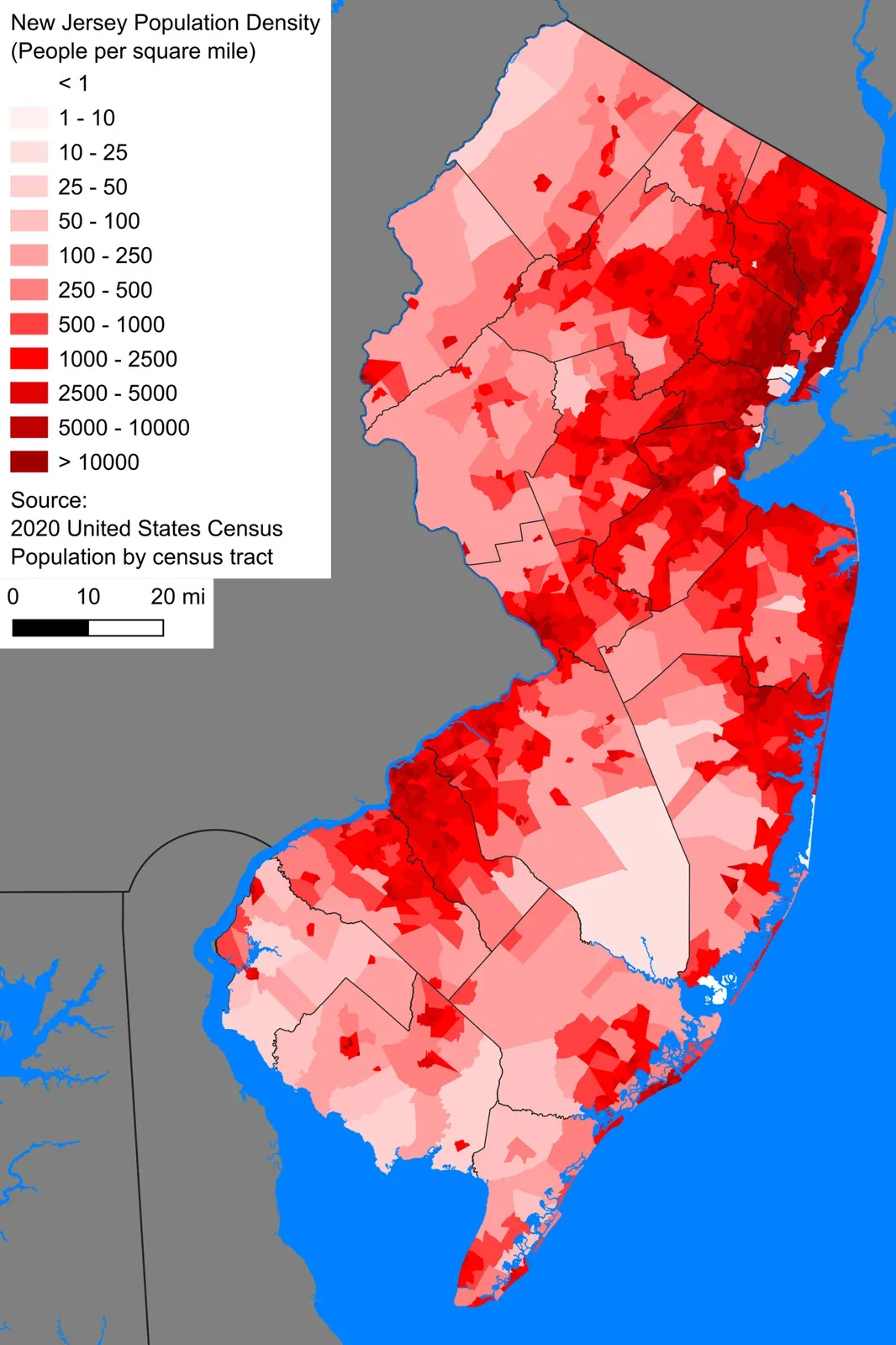
The political reality is straightforward: New Jersey's legislature is dominated by urban and suburban legislators from Essex, Hudson, Bergen, and Middlesex Counties, where gun ownership rates are low and gun control is a durable electoral asset. Rural northwestern New Jersey might as well be a different state politically. The firearms policy that comes out of Trenton reflects the population centers, not the Pine Barrens.
For gun owners in New Jersey, the practical advice is simple:
Know the law cold, because the consequences of getting it wrong here are felony-level serious.
Hollow-point ammunition, magazine capacity, what counts as an assault firearm, where your carry permit is and isn't valid -- these are not minor compliance issues. Get competent legal counsel if you have any question. The state's regulatory complexity has produced a cottage industry of New Jersey firearms attorneys for a reason.
The Bruen litigation isn't over. The sensitive places law is vulnerable in several provisions that courts have already signaled skepticism about. New Jersey's legal landscape in 2026 is more fluid than it's been in decades. That's worth watching.
Referencesedit
- NRA-ILA. New Jersey Gun Laws and Regulations. nraila.org. Last updated October 2020.
- Wikipedia contributors. "Gun laws in New Jersey." Wikipedia, The Free Encyclopedia. Accessed February 2026.
- njnics.com. New Jersey Library of Gun Control Legislation and Significant Events. Accessed February 2026.
- Giffords Law Center. New Jersey Gun Laws: A Complete Guide. giffords.org. Accessed February 2026.
- New Jersey State Police. N.J.A.C. Title 13 Chapter 54 -- Firearms and Weapons. nj.gov.
- Rutgers University Libraries. NJS: An Interdisciplinary Journal. "From Garden State to Gun Control State: New Jersey's 1966 Firearms Law." Summer 2020.
- ResearchGate. "From Garden State to Gun Control State: New Jersey's 1966 Firearms Law and the NRA's Rise as a Political Lobby." Accessed February 2026.
- Seton Hall Legislative Journal. "The New Jersey 'Assault Firearms Law' -- P.L. 1990, Chapter 32." scholarship.shu.edu.
- Township of Teaneck Police Department. Firearms Laws in New Jersey. trpolice.org. Updated 2021.
- Burton v. Sills, 53 N.J. 86 (1968).
- Siccardi v. State, 59 N.J. 545 (1971).
- Coalition of New Jersey Sportsmen v. Florio, 744 F. Supp. 668 (D.N.J. 1990).
- New York State Rifle & Pistol Association, Inc. v. Bruen, 597 U.S. 1 (2022).
- Siegel v. Platkin, U.S. District Court, District of New Jersey (2022-ongoing).
- State v. Brian Aitken, App. Div. (2011).
- Picatinny Arsenal official history. U.S. Army Combat Capabilities Development Command.
Last Updated: February 24, 2026
- Quail Creek Plantation(Okeechobee, FL)
- 2aHawaii(Honolulu, HI)
- Boston Firearms(Everett, MA)
- Safeshoot(Kingston, NY)
Loading comments...