State Details
Connecticut

Overview | |
|---|---|
State | Connecticut (CT) |
Capital | Hartford |
Statehood | 1788 |
Population | 3,617,176 |
Gun Ownership | 23.6% |
Active FFLs | 387 |
Carry Laws | |
Constitutional Carry | No |
Open Carry | Licensed |
CCW Permit Available | Yes |
Permit Reciprocity | limited |
Self-Defense | |
Castle Doctrine | Yes |
Stand Your Ground | No |
Duty to Retreat | Yes |
Regulations | |
State Preemption | No |
Red Flag / ERPO | Yes |
Waiting Period | None |
Universal BGC | Yes |
NFA Items | Partial |
Assault Weapons Ban | Yes |
Magazine Limit | 10 rounds |
Key Legislation | |
| |
Notable Manufacturers | |
| |
Connecticut Firearms History
Reference article
From The Boise Gun Club Handbook
Updated August 15, 2026. The law moved twice since this article was written. The $200 making and transfer tax on suppressors, SBRs, SBSs and AOWs was eliminated effective January 1, 2026 by the One Big Beautiful Bill Act. Then on August 5, 2026 a federal court in Silencer Shop Foundation v. ATF struck down the NFA registration and approval requirements for those same items, and that injunction took effect August 13. It covers only the plaintiffs, their members and their customers. Living in a plaintiff state does not make you covered. Machine guns and destructive devices are unchanged. Read the current guide: NFA Items in 2026: What Actually Changed.
Overviewedit
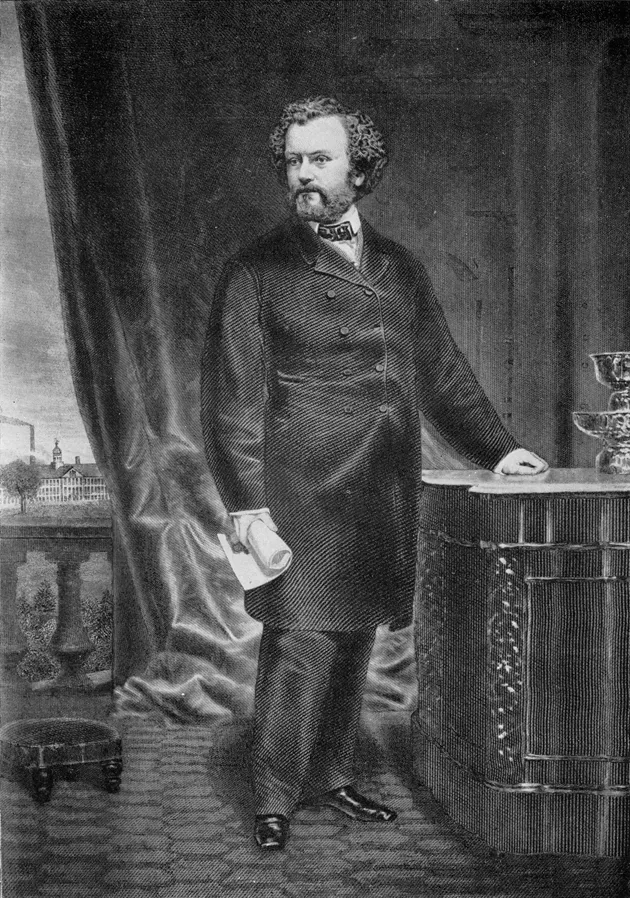
No state in America has a more contradictory relationship with firearms than Connecticut. It is the birthplace of Samuel Colt, the home of Eli Whitney's interchangeable parts revolution, the state that armed the Union Army at industrial scale, and the manufacturing heartland that gave the world the repeating rifle, the percussion revolver, and the lever-action carbine.
It is also the state where Sandy Hook Elementary School sits in Newtown, and where the political aftermath of December 14, 2012 produced some of the most restrictive firearms legislation in the country.
Connecticut has always been a blue state with a gun-industry backbone -- a place where factory workers built revolvers for generations while their elected officials debated how many rounds a magazine should hold.
That tension is not new. Connecticut has always balanced a gun-industry heritage with increasingly restrictive political governance. The industry that once defined Hartford's skyline has largely disappeared. The laws that replaced it are among the strictest on the East Coast. Understanding how Connecticut got here requires going all the way back to the colony's founding.
Colonial & Frontier Eraedit
Early Militia Requirements
Connecticut Colony's first formal relationship with firearms was statutory. The Connecticut Colony enacted militia laws as early as 1636, just one year after the settlement of Hartford, requiring able-bodied men to maintain arms for common defense. The Fundamental Orders of 1639 -- sometimes called the first written constitution in the Western world -- existed within a political framework that assumed armed citizens were the foundation of civil order.
Every male between 16 and 60 was expected to appear at muster with a serviceable firearm and sufficient powder and ball.
| Period | Key Events | Firearms Requirements |
|---|---|---|
| 1636 | Connecticut Colony militia laws enacted | Males 16-60 maintain arms for defense |
| 1639 | Fundamental Orders established | Armed citizens foundation of civil order |
| 1636-1638 | Pequot War | Flintlock muskets (English import) |
| 1675-1676 | King Philip's War | Local gunsmith repair prioritized |
| Mid-1700s | Metalworker network develops | Skilled craftsmen in Connecticut River Valley |
Colonial Conflicts and Supply Challenges
The Pequot War of 1636–1638 made that requirement urgent rather than theoretical. Connecticut colonists, fighting alongside Mohegan and Narragansett allies, depended on flintlock muskets supplied largely through English import. The colony had no domestic manufacturing capacity to speak of -- firearms came from England or were brought by settlers. Local gunsmiths repaired and maintained arms but could not produce them at volume.
The King Philip's War of 1675–1676, the bloodiest per-capita conflict in American history, exposed how dependent the Connecticut Colony remained on imported firearms. Supply chains from England were unreliable, and the colony passed laws compelling gunsmiths to prioritize militia repair work. The shortage pushed Connecticut leaders to think seriously about domestic production -- a concern that would take another century to fully resolve.
By the mid-1700s, Connecticut had developed a network of skilled metalworkers clustered in the Connecticut River Valley, particularly around Middletown, Hartford, and New Haven. These craftsmen worked primarily in pewter, brass, and iron goods, but their precision metalworking skills transferred directly to firearms work. The infrastructure for an arms industry was quietly assembling itself.
Revolutionary War Arsenal
During the American Revolution, Connecticut supplied arms, powder, and men to the Continental Army at a rate that earned it the nickname "The Arsenal of the Nation" -- a title it would carry, with full justification, into the 19th century. Governor Jonathan Trumbull Sr. ran Connecticut's wartime supply operation with remarkable efficiency, coordinating local production of flintlocks, cannon, and ammunition.
The state's iron furnaces in Salisbury produced high-quality iron that became cannon and shot. Connecticut regiments were generally better-armed than those from states without comparable industrial infrastructure.
19th Century: Statehood & Expansionedit
Whitney's Manufacturing Revolution
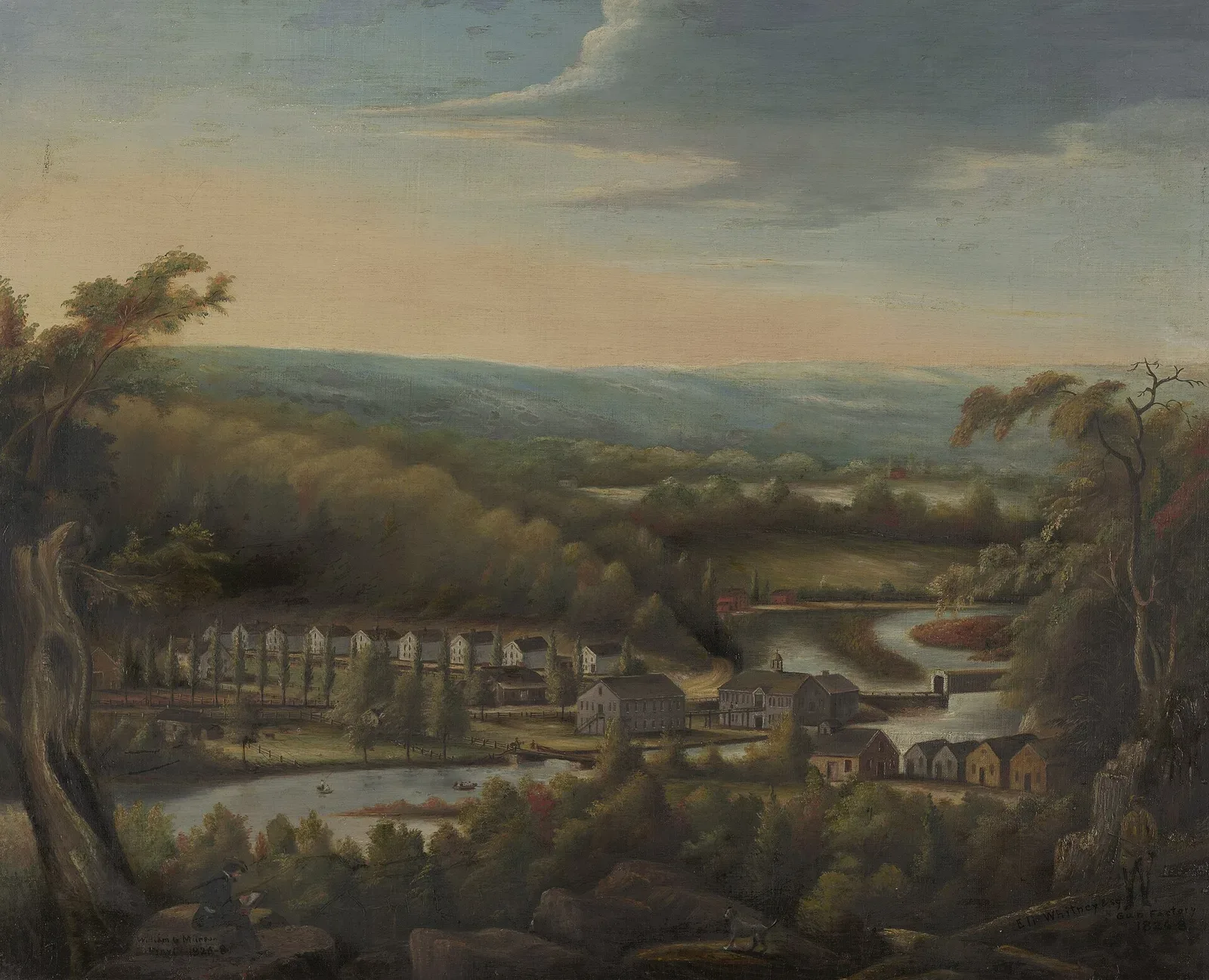
The event that set Connecticut on its manufacturing trajectory happened not in Hartford but in New Haven, and it predates Colt by half a century. Eli Whitney, after failing to profit from his cotton gin patent, turned to firearms. In 1798, he secured a federal contract for 10,000 muskets and established his armory on Mill Rock along the West River, just north of New Haven.
What Whitney actually pioneered there is still debated by historians -- his claim to have invented interchangeable parts manufacturing has been largely debunked, as his early muskets were not truly interchangeable -- but the concept he promoted, and the machinery he developed toward it, fundamentally shaped American manufacturing philosophy.
Whitney's armory operated continuously through the first half of the 19th century, eventually passing to his son Eli Whitney Jr. The Whitney Arms Company went on to become a significant Civil War contractor, producing Model 1861 rifle muskets at New Haven. The armory ran until 1888, making it one of the longest-operating private arms manufacturers in American history.
| Manufacturer | Location | Founded | Key Products | Notable Features |
|---|---|---|---|---|
| Whitney Arms | New Haven | 1798 | Model 1861 rifle muskets | Interchangeable parts pioneer |
| Colt Patent Firearms | Hartford | 1855 | Model 1851 Navy, Model 1860 Army, SAA | Blue-onioned dome factory |
| Winchester/New Haven Arms | New Haven | 1857/1866 | Lever-action rifles | Evolved from Volcanic Repeating Arms |
| Spencer Repeating Rifle | Manchester | 1860 | Seven-shot carbine | Lincoln personally tested |
| Sharps Rifle Company | Hartford | - | Breech-loading rifles | Union sharpshooter supplier |
Samuel Colt's Hartford Empire
Samuel Colt was born in Hartford on July 19, 1814. By age 21, he had patented a revolving-cylinder firearm mechanism in both England and the United States. His first manufacturing venture, the Patent Arms Manufacturing Company of Paterson, New Jersey, collapsed in 1842 after the U.S. Army showed little initial interest. Colt spent the next several years surviving on submarine telegraph cable work and other inventions before Captain Samuel Walker of the Texas Rangers approached him in 1847 with specifications for a new military revolver.
The resulting Walker Colt, manufactured under contract by Eli Whitney Jr.'s New Haven armory (the irony is worth noting), was the largest and most powerful cap-and-ball revolver ever produced. It resurrected Colt's career.
By 1848, Colt had established operations in Hartford. By 1855, he had built his crown jewel: the Colt Patent Firearms Manufacturing Company complex on the south meadows of the Connecticut River, anchored by the blue-onioned dome that still rises over Hartford's skyline today.
The Hartford factory was, by any measure, the most sophisticated manufacturing operation in mid-19th century America. Colt employed over 1,000 workers by the late 1850s and had installed more specialized machinery than any comparable facility in the world.
A dense wilderness of strange iron machines... a tangled forest of rods, bars, pulleys, wheels, and all the imaginable and unimaginable forms of mechanism. — Mark Twain describing the Colt Hartford factory, 1868
The factory produced the Model 1851 Navy, the Model 1860 Army, and the iconic Single Action Army -- the "Peacemaker" -- that became the defining revolver of the American West.
Colt also built Coltsville, a company town surrounding the factory that included worker housing, a church, and a beer hall. His wife Elizabeth Hart Jarvis Colt continued operating the company after Samuel's death in 1862, navigating the business through the Civil War era and into the consolidation years with considerable skill.
Civil War Production Boom
While Colt dominated Hartford, New Haven was developing its own firearms lineage. Horace Smith and Daniel Wesson formed a partnership in Norwich in the early 1850s before relocating, and their Volcanic Repeating Arms Company eventually reorganized into the New Haven Arms Company in 1857. A Winchester Repeating Arms Company investor and manufacturer Oliver Winchester gained control and renamed the operation the Winchester Repeating Arms Company in 1866.
Christopher Spencer of Manchester patented his seven-shot Spencer repeating carbine in 1860 and secured a Navy contract for 800 rifles -- with help from Connecticut's Gideon Welles, Abraham Lincoln's Secretary of the Navy and a native of Glastonbury. Lincoln personally test-fired a Spencer rifle on the White House lawn in August 1863 and ordered the Army to take it seriously.
The Sharps Rifle Company operated in Hartford and was the primary supplier of accurate breech-loading rifles to Union sharpshooters, including Berdan's Sharpshooters. The Starr Arms Company produced revolvers. Savage Revolving Firearms Company operated in Middletown. Parker, Snow & Company in Meriden -- which had been making kitchen utensils and sewing machines -- retooled entirely for musket production.
By the eve of the Civil War, Connecticut had become the most concentrated center of firearms manufacturing on earth.
20th Century: Wars, Industry & Regulationedit
World War Production
Connecticut's arms industry entered the 20th century at full steam. Colt's was producing the Model 1911 pistol -- John Browning's design, adopted by the U.S. Army in that year -- at the Hartford factory. The 1911 became the standard U.S. military sidearm for over 70 years, and Hartford made millions of them across two world wars. Winchester in New Haven was producing the Model 1894 lever-action rifle and gearing up for the Model 1897 pump shotgun.
World War I drove Connecticut's arms factories to wartime production levels that dwarfed anything from the Civil War era. Colt produced M1917 revolvers, machine guns, and 1911 pistols by the hundreds of thousands. Winchester shifted significant capacity to military contracts. The Marlin Firearms Company, which had relocated from New Haven to North Haven, produced the Browning Automatic Rifle (BAR) and other military contracts.
| Period | Major Legislation | Impact on Connecticut Industry |
|---|---|---|
| 1934 | National Firearms Act | Tax/registration for machine guns, suppressors |
| 1968 | Gun Control Act | Federal licensing for dealers/manufacturers |
| 1980 | Winchester lockout begins | 16-month labor dispute devastates workforce |
| 1993 | Connecticut assault weapons ban | State ban predates federal law by 1 year |
| 2006 | Winchester factory closes | Ends 140 years of production in Connecticut |
Labor Relations and Decline
Between the wars, the firearms industry contracted sharply. Colt entered a period of managed decline, its workforce shrinking from wartime peaks. Labor unrest was a persistent feature of Connecticut's gun factories -- Colt workers organized and struck in the 1930s, part of the broader industrial labor movement that reshaped American manufacturing. The company's relationship with the United Auto Workers (UAW) and other unions defined its mid-century operations.
World War II brought another production surge. Colt produced 1911s, M1 Carbines (partially), and the iconic Thompson submachine gun under license. Winchester's New Haven plant produced M1 Garand rifles alongside Springfield Armory's output. The Mossberg company, founded by Oscar Frederick Mossberg in New Haven, Connecticut in 1919, later relocating to North Haven, Connecticut, was producing military utility guns and would become a major postwar manufacturer.
Federal Regulation Era
The postwar period introduced a new dynamic: federal regulation. The National Firearms Act of 1934 had already created tax and registration requirements for machine guns, suppressors, and short-barreled rifles. The Gun Control Act of 1968 -- passed in the wake of the assassinations of Robert Kennedy and Martin Luther King Jr. -- imposed federal licensing on dealers and manufacturers, prohibited certain categories of buyers, and created the framework of modern federal firearms law. Connecticut's manufacturers had to adapt their operations to comply, though the state itself did not yet have particularly restrictive laws beyond the federal floor.
The Winchester factory in New Haven hit a low point in 1980 when Olin Corporation, its parent company, locked out workers during a bitter labor dispute. The 16-month lockout devastated the workforce and permanently damaged Winchester's New Haven operations. Olin eventually sold the Winchester firearms business to U.S. Repeating Arms Company, which continued manufacturing at the New Haven plant until the factory closed permanently in 2006 -- ending 140 years of Winchester production in Connecticut.
Modern Era (2000–Present)edit
The Sandy Hook Tragedy
The modern era in Connecticut firearms history is defined by two events: the Sandy Hook Elementary School shooting on December 14, 2012, and the legislative response that followed. Both reshaped Connecticut's relationship with firearms in ways that are still unfolding.
Before Sandy Hook, Connecticut had already enacted several restrictive measures. The state had an assault weapons ban modeled on the 1994 federal ban, which was enacted in 1993 -- one year before the federal law. Connecticut required a pistol permit to purchase handguns and to carry them. But the regulatory framework, while stricter than most states, was not dramatically different from neighboring New York or Massachusetts.
Legislative Response and SAFE Act
Adam Lanza used a Bushmaster XM15-E2S -- a Connecticut-made rifle, manufactured by Bushmaster Firearms (which had operations in Madison, Connecticut through its parent company Freedom Group) -- along with Glock and SIG Sauer handguns to kill 20 children and 6 adults at Sandy Hook Elementary School in Newtown. The shooting was the deadliest mass killing at an elementary school in American history.
Governor Dannel Malloy signed the Connecticut Public Act 13-3, known informally as the "SAFE Act" (Strengthen and Amend Firearms Enforcement), on April 4, 2013. The law:
- Expanded Connecticut's assault weapons ban to cover hundreds of additional models by name and feature
- Required registration of existing assault weapons and large-capacity magazines (a provision with no parallel in federal law at the time)
- Reduced the magazine capacity limit from 10 rounds to 10 rounds for new purchases, with existing magazines over 10 rounds banned from state possession after January 1, 2014
- Created a new "certificate of eligibility" requirement for long gun purchases
- Expanded background check requirements
- Added over 100 firearms to the banned list by name
| Connecticut SAFE Act Provisions (2013) | Details |
|---|---|
| Expanded assault weapons ban | Hundreds of additional models by name and feature |
| Registration requirement | Existing assault weapons and large-capacity magazines |
| Magazine capacity limit | 10 rounds for new purchases |
| Certificate requirement | New "certificate of eligibility" for long guns |
| Background checks | Expanded requirements |
| Banned firearms list | Over 100 firearms added by name |
| Compliance | Estimated 50,000-350,000 weapons unregistered |
The registration deadline produced notable civil disobedience. By the January 1, 2014 deadline, an estimated 50,000 to 350,000 assault weapons and an unknown number of large-capacity magazines went unregistered. State police acknowledged they had no practical mechanism to enforce compliance, and no mass prosecution followed. The gap between the law on paper and enforcement reality became a recurring source of frustration for both gun control advocates and firearms owners.
The Remington bankruptcy and the Sandy Hook families' lawsuit against Remington Arms (as successor to Bushmaster's parent company) became a landmark legal case. The families argued that Remington had marketed the XM15-E2S irresponsibly to civilians. In February 2022, Remington's insurers agreed to a $73 million settlement with the Sandy Hook families -- the first time a gun manufacturer had been held financially liable in connection with a mass shooting, working around the federal Protection of Lawful Commerce in Arms Act (PLCAA) through a Connecticut consumer protection statute, CUTPA (the Connecticut Unfair Trade Practices Act).
Industry Consolidation and Decline
On the manufacturing side, Colt Defense -- which had separated its consumer and military operations -- filed for Chapter 11 bankruptcy protection in June 2015. The company cited competition from other AR-15 manufacturers and the loss of a military contract for the M4 carbine. Colt emerged from bankruptcy in 2015 and was subsequently acquired by Czech firearms conglomerate CZ Group in 2021. The Hartford factory operations had long since been scaled back from their 19th-century peak.
O.F. Mossberg & Sons remains in North Haven and is one of the few major firearms manufacturers still operating in Connecticut. The company produces pump-action shotguns, rifles, and pistols, and has been one of the higher-volume American firearms makers throughout the 21st century. Stag Arms of New Britain was fined by the ATF in 2015 for record-keeping violations related to approximately 3,000 unregistered pistols and surrendered its federal firearms license, a significant enforcement action by any measure.
The Coltsville National Historical Park was designated by Congress in 2014, preserving the historic factory complex -- including the blue-domed Church of the Good Shepherd that Elizabeth Colt built as a memorial to Samuel -- as a unit of the National Park System. The designation came, with some awkwardness, just two years after Sandy Hook, and required navigating the tension between celebrating Connecticut's arms-making heritage and the political climate surrounding gun violence.
Notable Figures & Manufacturersedit
Samuel Colt (1814–1862) was born in Hartford and died there, leaving behind the factory, the revolver, and a manufacturing philosophy that shaped American industry for a century. His contributions went beyond the gun -- his factory was among the first to implement true assembly-line production using specialized machinery, and his management of intellectual property through patents set templates that other industrialists followed.
Elizabeth Hart Jarvis Colt (1826–1905) is underappreciated in most accounts. After Samuel's death, she ran the company through the Civil War production boom, served as a significant Hartford philanthropist, and shaped Coltsville as a civic institution. The Church of the Good Shepherd on Wyllys Street, built as a memorial to her husband and children, is one of the finest examples of High Victorian Gothic ecclesiastical architecture in New England.
Eli Whitney (1765–1825) and his son Eli Whitney Jr. (1820–1895) represent a Connecticut manufacturing dynasty that predates Colt by two generations. The elder Whitney's New Haven armory proved that a factory town could anchor industrial production at a scale previously associated with government arsenals. Whitney Jr.'s decision to manufacture the Walker Colt under contract gave Samuel Colt his second chance.
Christopher Spencer (1833–1922) of Manchester invented the seven-shot Spencer repeating carbine, which was adopted by the Union Army after Lincoln's personal endorsement. Spencer later invented an automatic screw machine that became foundational to metalworking manufacturing -- a second act as consequential as the first. He is buried in South Manchester.
Benjamin Tyler Henry (1821–1898) worked as a gunsmith and plant superintendent for the New Haven Arms Company and designed the Henry rifle -- the 15-shot lever-action repeater that became the Winchester Model 1866's direct ancestor. Henry received little credit or compensation for his design and spent years in legal battles with Oliver Winchester over recognition and profit.
Winchester Repeating Arms Company operated in New Haven from 1866 to 2006, producing the Model 1873 ("The Gun That Won the West"), the Model 1894 lever-action (still in production elsewhere), and dozens of other models. At its peak, the New Haven factory employed several thousand workers. Its closure ended one of the longest continuous manufacturing legacies in American industrial history.
Marlin Firearms had a complex Connecticut footprint. Founded in New Haven in 1870 by John Mahlon Marlin, the company moved to North Haven and was eventually acquired by Remington. After Remington's bankruptcy, Ruger acquired the Marlin brand in 2020 and restarted production in Mayodan, North Carolina -- the manufacturing left Connecticut, but the brand survives.
O.F. Mossberg & Sons relocated to North Haven and remains the largest manufacturer still operating in the state. Founded in 1919, Mossberg has been one of the more consistent American manufacturers, producing affordable, durable pump-action shotguns -- particularly the Model 500 and Model 590 -- that have found both civilian and military/law enforcement markets.
Current Legal Landscapeedit
Permit System
Connecticut operates under a permit-to-carry system with no constitutional carry. You need a Connecticut Pistol Permit (CTPP) to carry a handgun, and the permit process runs through local police authorities -- which introduces meaningful variation in how "shall-issue" the process actually is in practice. The state is nominally shall-issue, but local police chiefs retain some discretion, and urban departments in cities like Bridgeport and Hartford have historically applied more scrutiny than rural departments.
To purchase a handgun in Connecticut, you need either a CTPP or a Pistol Permit from another state that Connecticut recognizes -- which it doesn't, meaning you need the CTPP. To purchase a long gun, you need a Long Gun Eligibility Certificate (LGEC) or a CTPP. Both require a background check, a safety course, and an application process. Private sales of handguns must go through a licensed dealer for the background check.
| Requirement | Handgun Purchase | Long Gun Purchase | Carry |
|---|---|---|---|
| Permit needed | Connecticut Pistol Permit (CTPP) | Long Gun Eligibility Certificate or CTPP | CTPP |
| Process authority | Local police | Local police | Local police |
| Background check | Required | Required | Required |
| Safety course | Required | Required | Required |
| Reciprocity | None recognized | N/A | No reciprocal agreements |
Assault Weapons and Capacity Limits
Connecticut's assault weapons ban, as expanded by the 2013 SAFE Act, prohibits the sale, transfer, or manufacture of firearms defined as assault weapons under a dual criteria system -- banned by name (over 100 listed) or by feature (semi-automatic centerfire rifles that accept detachable magazines and have certain features like a pistol grip, folding/telescoping stock, thumbhole stock, grenade launcher, or flash suppressor).
Prohibited assault weapons features include:
- Semi-automatic centerfire rifles that accept detachable magazines and have a pistol grip
- Folding or telescoping stock
- Thumbhole stock
- Grenade launcher
- Flash suppressor
The pre-2013 banned weapons that were registered before the deadline may be kept by their owners but cannot be transferred within Connecticut.
Magazine capacity is limited to 10 rounds for new acquisitions. Magazines over 10 rounds that were lawfully possessed before April 4, 2013 could be retained but not transferred or brought into the state if taken out.
Connecticut does not honor any other state's carry permits, and no state currently honors Connecticut's permit on a reciprocal basis in a meaningful way. If you're coming from a state with constitutional carry, your status changes the moment you cross the Connecticut state line.
Enforcement and Compliance
Red flag law: Connecticut enacted one of the first Extreme Risk Protection Order (ERPO) laws in the country in 1999 -- predating the Sandy Hook-era legislation by 14 years. A Connecticut ERPO (called a gun violence restraining order in some states, but here operating under the risk warrant statute) allows law enforcement to petition a judge to temporarily remove firearms from a person deemed a risk. The law was little-used until after Sandy Hook, when its application increased substantially.
The ATF has a field office in New Haven and has been active in Connecticut enforcement. The state police Special Licensing and Firearms Unit (SLFU) administers the permit system and tracks compliance with registration requirements.
For hunters: deer hunting with rifles is permitted in Connecticut, though shotgun-only zones exist in more densely populated areas. Sunday hunting on private land was permitted starting in 2019 -- a change that took decades of lobbying from sportsmen's organizations to achieve. The Connecticut Department of Energy and Environmental Protection (DEEP) administers hunting licenses.
The BGC Takeedit
Connecticut is genuinely complicated to assess, and anyone who gives you a simple answer is selling something. If you're a gun owner moving to Connecticut from a free state, the adjustment is real. The permit requirements, the magazine limits, the assault weapons definitions -- they create friction that doesn't exist in most of the country.
The registration scheme from 2013 produced mass non-compliance, which tells you something about how gun owners in the state feel about the direction the laws took after Sandy Hook. There's a significant population of Connecticut gun owners -- hunters, competitive shooters, collectors, people who inherited Granddad's 1911 -- who are quietly furious about legislation they see as punishing them for something they didn't do.
At the same time, you're living in the state that built the guns. The Hartford factories, the Winchester plant in New Haven, the Spencer carbine from Manchester -- this is where American firearms manufacturing grew up. Gun culture in Connecticut is older and deeper than most of the state's current political leadership seems to understand. The guys who worked the Colt line for 30 years, whose fathers worked it before them -- they're not the people Sandy Hook legislation was aimed at, and they know it.
The company that Samuel Colt built in 1855, that armed the Union, that made the 1911 for 70 years of American military service, filed for bankruptcy in 2015 and is now owned by a Czech conglomerate.
The Colt situation is worth sitting with. The manufacturing legacy that made Connecticut famous is largely gone -- what's left is Mossberg in North Haven and a few smaller operations. The state didn't exactly drive them out with legislation, but it didn't make staying easy either.
For practical purposes: Connecticut is a workable state for law-abiding gun owners who are willing to navigate the paperwork. The CTPP process takes time and costs money, but it isn't designed to be impossible. Ranges are available. Hunting exists. Competitive shooting communities exist. The Connecticut Citizens Defense League (CCDL) is an active state-level advocacy organization that has fought legal battles against the 2013 legislation with mixed results.
The cultural vibe is a state that is aware of its firearms heritage without particularly celebrating it, governed by a political majority that views guns primarily through a public health lens. Those two things coexist awkwardly, and that awkwardness isn't going away anytime soon.
Referencesedit
- Nelson, Dean E. "Connecticut Arms the Union." Connecticut Explored / ConnecticutHistory.org, January 11, 2020.
- "The Colt Patent Fire-Arms Manufacturing Company." ConnecticutHistory.org.
- Cohen, Jeff. "Connecticut Left to Reconcile Tragedy With Its Proud Gun History." Connecticut Public Radio / KUER, December 27, 2012.
- "Quietly, a storied Connecticut gun industry shrinks sharply." CT Post, 2019.
- Duke Center for Firearms Law. "Firearms Law Workshop Mini-Symposium, Part IV: Regulation, Not Rights -- The Early History of a National Firearms Industry." August 2019.
- Connecticut General Statutes §§ 29-28 through 29-38m (pistol permits and firearms regulations).
- Connecticut Public Act 13-3 (2013 SAFE Act).
- History of CAGV. CT Against Gun Violence, cagv.org.
- Connecticut SDE. "Colt's Firearms History: Labor and Government Help Regulate the Workplace, 1900–1950." portal.ct.gov.
- Soto v. Bushmaster Firearms International, LLC, Connecticut Supreme Court, 2019.
- Sandy Hook families' settlement with Remington insurers, February 2022.
Last Updated: February 24, 2026
- Quail Creek Plantation(Okeechobee, FL)
- 2aHawaii(Honolulu, HI)
- Boston Firearms(Everett, MA)
- Safeshoot(Kingston, NY)
Loading comments...